The digital retail landscape is undergoing a profound structural evolution with the rise of agentic ecommerce, a paradigm shift where artificial intelligence systems operate independently to navigate multi-step commercial tasks for both shoppers and merchants. Unlike conventional e-commerce automation or basic chatbot tools that provide singular answers and halt, modern AI agents actively evaluate current store inventories, dynamically adjust their problem-solving strategies, and execute authorized actions across connected enterprise systems.
For the consumer, this translates to end-to-end purchasing assistance—ranging from initial product discovery and complex comparison metrics all the way to secure cart compilation and checkout authorization. For merchants, agentic commerce offers a collaborative partner capable of shouldering burdensome operational workflows, such as automated catalog updates, dynamic inventory audits, targeted promotion generation, and nuanced order management.
What firmly separates agentic ecommerce from legacy automation is an agent’s capacity to pivot and alter its methodology when novel data emerges, rather than rigidly adhering to a pre-programmed sequence of operations. This inherent flexibility places a renewed premium on precise digital data infrastructure, robust software integrations, infallible checkout pipelines, and unambiguous governance regarding what permissions an autonomous agent is granted. Fundamentally, an experience becomes truly "agentic" when an AI system can actively pursue a multifaceted commercial objective by interpreting live store datasets, autonomously deciding its next strategic move, and executing permitted operations within the digital storefront.
To achieve this, the agent does not require total, unbridled access to a company’s digital infrastructure. Instead, it operates safely within structured operational boundaries, leveraging precisely the amount of data and system access necessary to advance the task while remaining strictly tethered to the limits established by either the shopper or the merchant.

How Agentic Ecommerce Differs from Traditional AI in Retail
Agentic ecommerce represents a specialized class within the broader ecosystem of artificial intelligence tools deployed in retail. While many traditional AI applications are built to solve isolated, single-variable tasks, an ecommerce agent evaluates the outcome of an initial step to determine its subsequent course of action, maintaining persistent momentum toward a unified shopping or store-management objective.
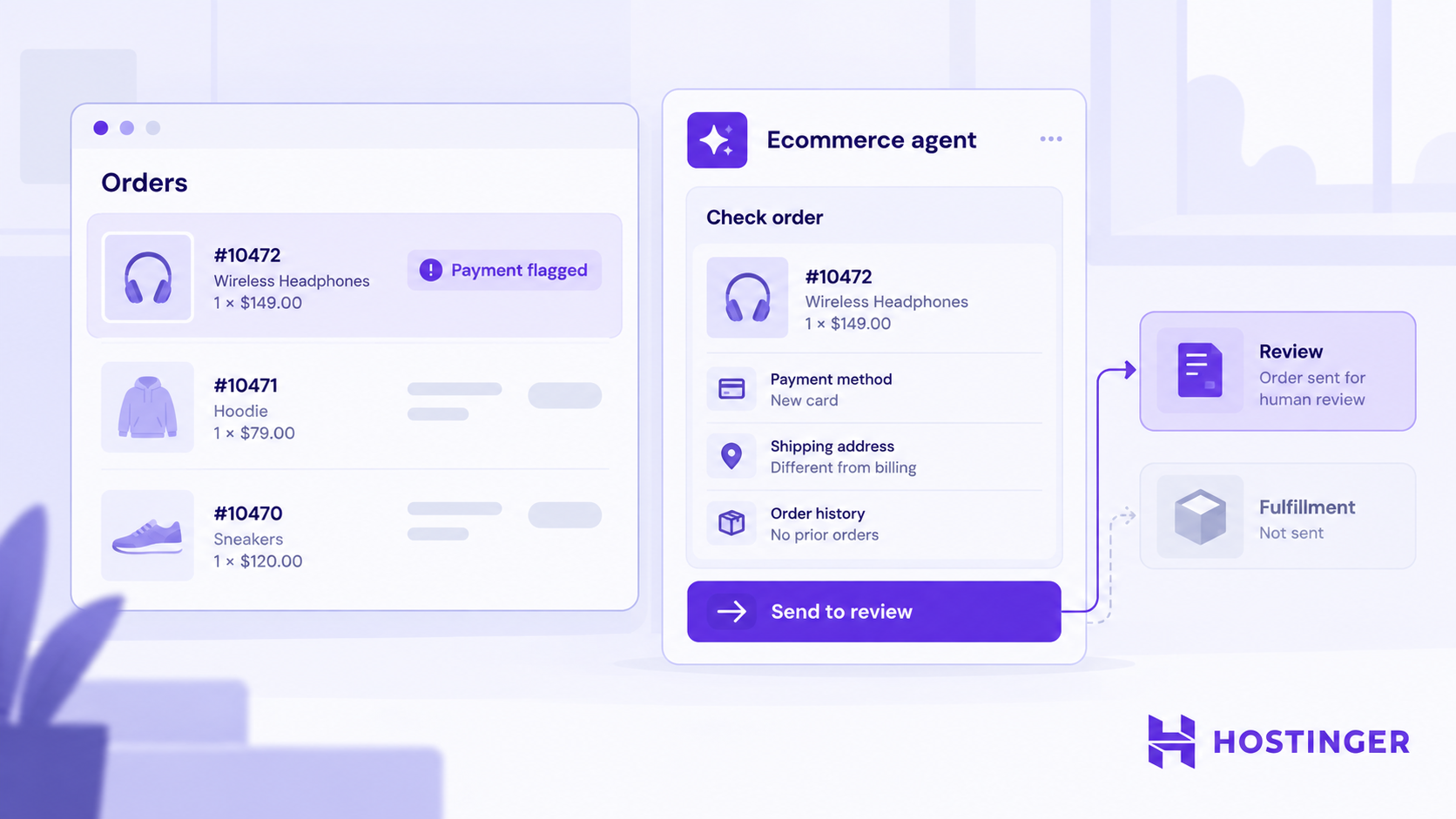
Consider standard legacy tools: a fraud-detection algorithm evaluates the risk profile of an incoming transaction, while a recommendation engine suggests complementary goods based on historical user behavior. Both are valuable components of modern retail technology, but neither operates independently as a planning entity capable of orchestrating actions across a larger, multi-phase commercial workflow. By contrast, an advanced ecommerce agent integrates these disparate capabilities. If a payment gateway flags a transaction as suspicious, the agent dynamically adjusts its workflow, halting the fulfillment sequence and routing the order for manual review instead of blindly proceeding down a standard processing pipeline.
This operational autonomy stands in stark contrast to traditional ecommerce automation, which relies entirely on rigid, pre-defined rule sets. Standard automation might trigger a promotional email exactly 24 hours after a cart abandonment event, or dispatch a low-stock alert the moment inventory drops below a specific threshold. Human operators must explicitly define the trigger, the corresponding action, and the subsequent path.
An agent, however, can be handed a broader, higher-level objective—such as finding a way to recover lost sales from abandoned carts. It can independently verify whether the items in question remain in stock, analyze the total cart value, and autonomously decide whether to formulate a targeted discount or initiate direct communication with the shopper, all without requiring human intervention to map out every conceivable contingency in advance.
Buyer-Side Versus Merchant-Side Ecommerce Agents
The practical applications of ecommerce agents generally bifurcate into two distinct categories based on who assigns the task and the scope of access provided: buyer-side agents and merchant-side agents.
Buyer-side agents act as personal delegates for consumers, designed to streamline the arduous process of discovering, vetting, and purchasing products. These agents may be accessed directly through a retailer’s proprietary website, an expansive digital marketplace, or an independent AI shopping assistant. For example, a consumer might issue a natural language prompt requesting a waterproof jacket under a specific price point, in a designated size, with guaranteed delivery by a certain date. The agent parses these criteria, surveys available inventory across digital catalogs, contrasts features and pricing structures, filters out items that fail to meet delivery timelines, and compiles the viable options.
When equipped with appropriate cart access and explicit consumer authorization for payment, these buyer-side agents can even finalize transactions within approved spending and delivery boundaries. However, their operational reach is strictly governed by the access parameters provided by individual merchants and payment processors; they cannot simply execute arbitrary commands across the broader internet.
Conversely, merchant-side agents are deployed to assist businesses with internal store administration, operating directly within ecommerce dashboards or connected administrative software. If a retailer stocks multiple variations of a seasonal product, a merchant can task the agent with isolating items characterized by high inventory levels and zero sales over a specific timeframe, followed by the generation of a targeted promotional discount for the remaining units, provided healthy profit margins are maintained.
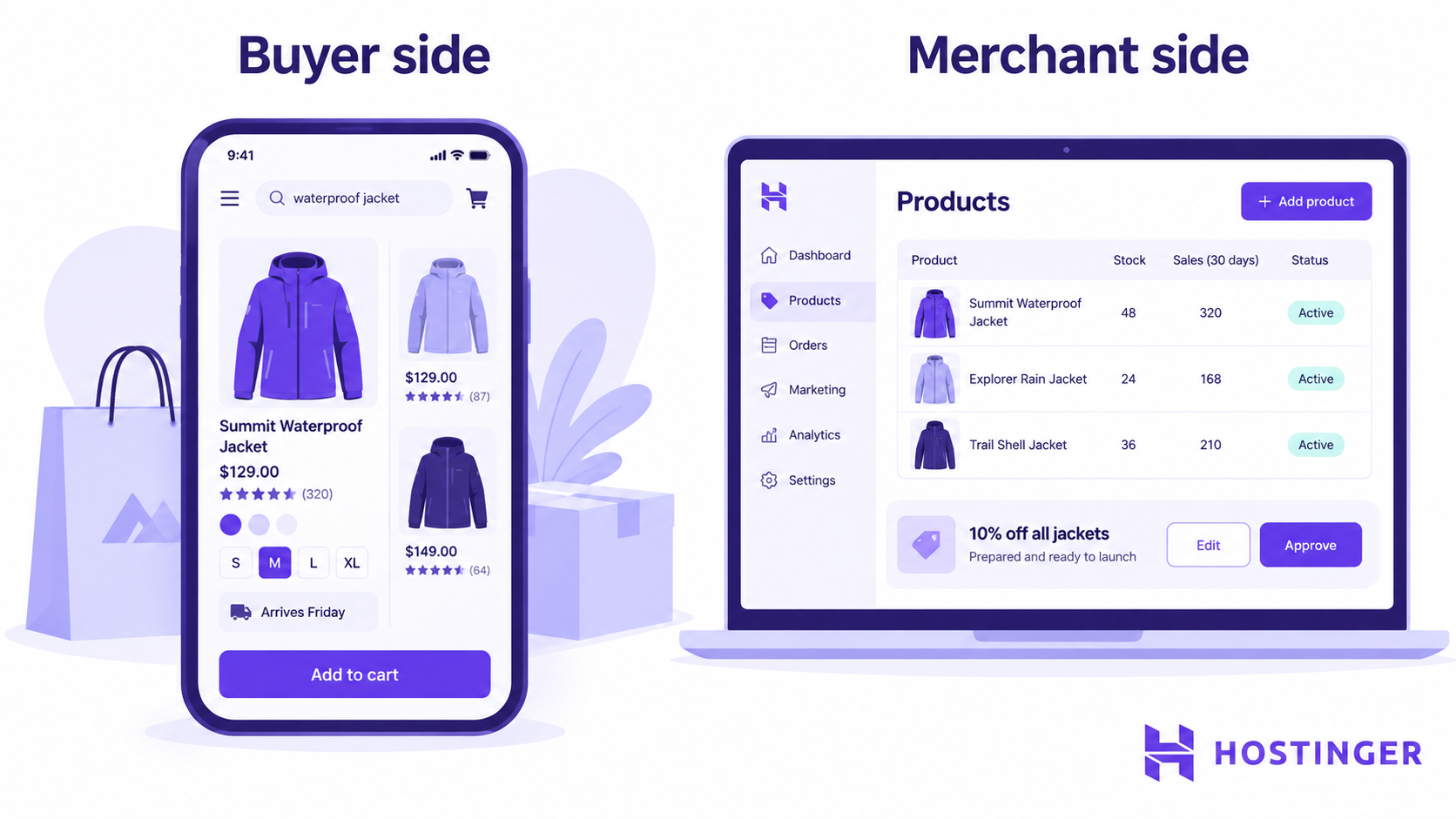
The agent scans internal sales histories, live inventory counts, and cost data to draft the promotion. Crucially, the merchant retains absolute control over the agent’s permission boundaries, deciding whether the AI is authorized to independently update product listings or if it must pause to secure human approval before altering prices or publishing discounts.
The Operational Mechanics of Agentic Workflows
At its core, agentic ecommerce relies on allowing artificial intelligence to leverage store data and authorized utility tools across interconnected digital systems to resolve complex tasks. The process invariably originates from a user prompt delivered via an AI interface—whether that interface is a customer-facing assistant on a brand’s website or an administrative dashboard used by store operators.
While the exact parameters of the task vary wildly, the underlying agentic workflow remains consistent. When a shopper interacts with an AI shopping assistant, the system initiates a continuous loop of reasoning and action. It interprets the user’s intent, queries the merchant’s database using structured application programming interfaces, evaluates the returned data against the user’s constraints, and determines the most logical next step.
This capability underpins emerging use cases across the retail sector, spanning product discovery, automated cart building, order tracking, and comprehensive inventory management. While product discovery and comparison features are already widely deployed in existing retail tools, fully autonomous cross-store purchasing, automated refunds, and deeply integrated merchant-side operations remain more selective and subject to specific technical integrations.

In the realm of product discovery and comparison, modern AI tools excel at juxtaposing consumer specifications against live inventory data. A shopper searching for a household appliance with strict noise constraints and specific performance features can rely on an agent to translate those needs into precise technical queries, filtering through available inventory and returning only the viable matches. Early iterations of these capabilities are already visible in major tech ecosystems, such as AI-driven shopping features on search engines and voice-activated retail assistants.
Cart and agent-assisted checkout systems represent a more complex tier of development, requiring absolute precision regarding consumer consent and payment handling. Initiatives like universal cart frameworks are gradually integrating cross-retailer product storage and streamlined checkout protocols, allowing items from disparate merchants to be gathered in a unified interface. These systems operate through tightly regulated shopping and payment pathways, ensuring that AI tools never receive open-ended permission to execute unauthorized transactions across arbitrary websites.
Within fulfillment and customer support, agents significantly reduce friction by granting immediate access to order data. When a customer inquires about the status of a shipment, an agent with appropriate permissions can instantly retrieve and relay live tracking information without requiring human customer service intervention. However, handling sensitive, irreversible financial actions—such as issuing refunds—demands rigorous safeguards. An agent must verify order details, check return eligibility, confirm customer identity, and request explicit human sign-off unless operating under exceptionally narrow, auditable merchant policies.
The Crucial Infrastructure Underpinning Agentic Commerce
The successful deployment of agentic ecommerce is entirely contingent upon robust foundational infrastructure, including accurate store data, reliable software connectivity, secure payment pipelines, and strict access controls.
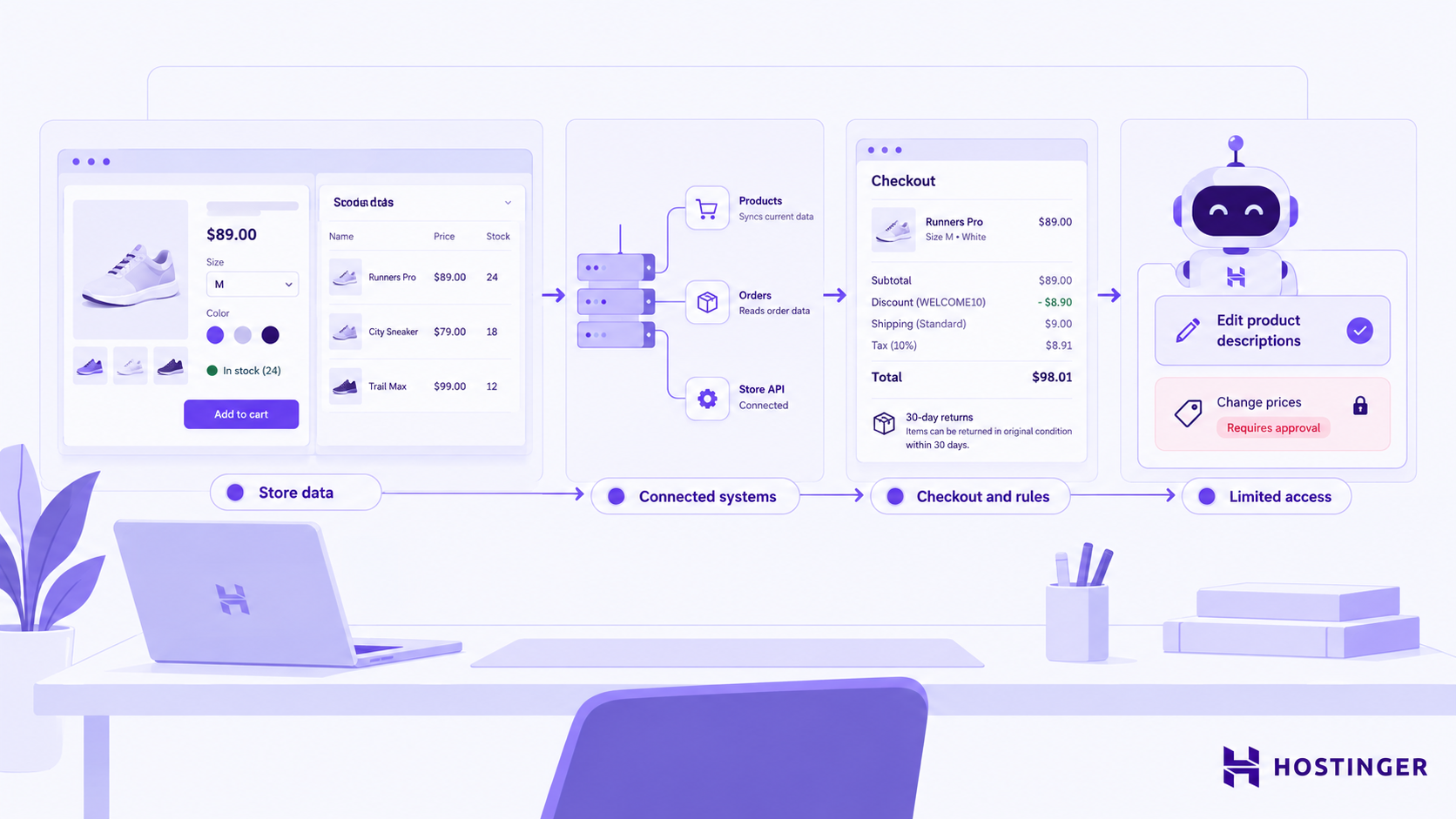
Chief among these requirements is the adoption of structured product data. For an AI agent to accurately interpret a catalog, product attributes—such as sizing, color palettes, materials, dimensions, and unique product identifiers—must be stored in dedicated, machine-readable data fields rather than buried deep within unstructured marketing prose. Without structured data, agents frequently misinterpret specifications or overlook suitable products entirely.
Furthermore, stores require dependable mechanisms for external software to safely query inventory levels, pricing structures, and order statuses. Traditionally achieved through application programming interfaces, these connections dictate precisely what an AI system is permitted to read or modify. To prevent the proliferation of bespoke integrations for every emerging AI platform, industry stakeholders are increasingly looking toward standardized commerce protocols. Shared frameworks provide universal rules for how external agents interact with merchant checkouts, catalogs, and cart systems, reducing technical friction while preserving store security.
Balancing Merchant Benefits and Operational Limitations
For merchants, embracing agentic ecommerce unlocks new acquisition channels by making products easily discoverable through conversational AI interfaces, while simultaneously reducing the labor overhead associated with routine administrative tasks. Because agents can dynamically adjust their behavior in response to fluctuating inventory levels or shifting market conditions, they offer a level of operational agility that traditional automation simply cannot match.
However, these systems are not without limitations. Chief among them is the absolute reliance on pristine, accurate data integrity. In the absence of strict safeguards and clear access limitations, improperly configured agents risk recommending obsolete products, executing unintended purchases, or modifying store configurations far beyond their designated scope. Moreover, as consumers increasingly route their shopping journeys through third-party AI assistants, merchants face the challenge of maintaining brand visibility and direct customer relationships in an environment intermediated by artificial intelligence.

Preparing an ecommerce store for the agentic era requires a deliberate focus on foundational hygiene. Merchants must audit their product catalogs to ensure pricing, inventory, and variant details are meticulously organized in standard fields. They must test their API integrations and checkout pipelines rigorously, utilizing sandbox environments to confirm that pricing consistency and tax calculations remain flawless throughout simulated transactions. Finally, businesses must adopt a measured approach to permissions, granting agents access to small, easily reversible tasks first, and gradually expanding their operational purview only after reliability has been definitively proven.
As the retail sector continues to adapt to autonomous commerce, the foundational imperative for merchants remains unchanged: establishing a reliable, structured, and securely connected digital storefront is the essential first step toward thriving in an agent-driven economy.