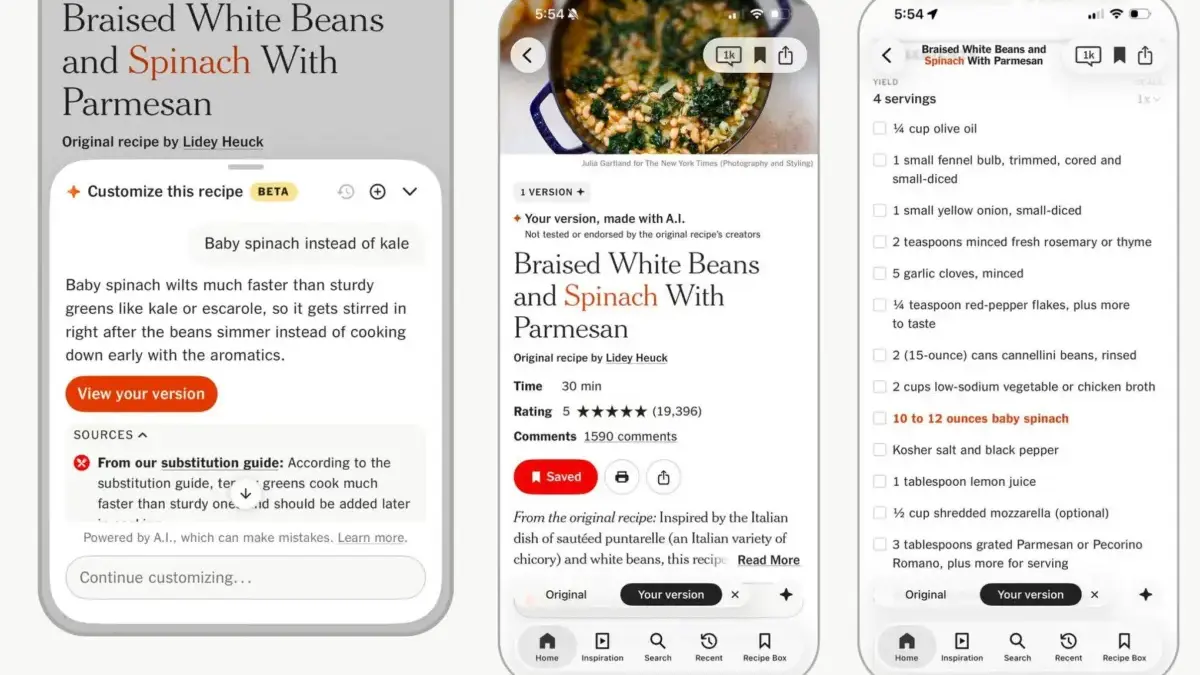
Announced last Friday by NYT Cooking senior editor Genevieve Ko, the new tool is designed to provide intelligent ingredient and equipment substitutions, scale recipes dynamically to
any specified number of servings, and generally tailor the publication’s extensive library of culinary guides to fit the specific needs and constraints of a home cook at any given moment.
According to details shared by the publication, the feature can handle practical kitchen dilemmas, such as swapping out one leafy green for another. In one example highlighted in the announcement, a user requested to substitute baby spinach for kale in a dish. The AI-powered feature successfully advised that because baby spinach wilts significantly faster than kale, it should be introduced at a later stage in the cooking process to ensure optimal texture and flavor. Ko noted that the underlying technology is also capable of adapting recipes to accommodate different types of pans, cookware, and kitchen tools available to the user.

To maintain the privacy and personal utility of the tool, customized recipes generated through the feature remain strictly private to the individual user and cannot be published, shared, or distributed via the app’s community features. The AI modification tool is currently being rolled out gradually as the publication closely monitors its performance, user reception, and technical stability. At present, the feature is available to all NYT Cooking subscribers using the iOS app, with a broader rollout expected to follow soon.
Despite the practical utility advertised by the publication, the introduction of the feature has encountered immediate pushback from a segment of the readership. In the comment section of the announcement article, numerous users voiced their discontent, raising concerns over the broader environmental impact associated with the widespread adoption of resource-intensive artificial intelligence systems. Others expressed dismay over how automated features might alter the overall user experience of a platform that has long prided itself on human-curated culinary content, personal notes from diverse contributors, and a traditional, community-driven approach to cooking.
The friction between traditional users and the platform’s technological trajectory was evident in the reader responses. When one concerned subscriber inquired whether there would be an option to completely disable or opt out of the AI feature, Ko responded directly, stating that there was no way to turn it off at that time, while emphasizing that using the feature itself is entirely optional.
The sentiment among disappointed subscribers was underscored by another user who commented that it was unbelievably disappointing to see the shift, noting that they had always loved NYT Cooking and felt saddened that the AI mandate had reached what was previously a wonderful and simple collection of recipes and personal notes contributed by all sorts of different people.

This latest update is not the publication’s first foray into utilizing automated technology within the Cooking application. Ko pointed out that automated systems had previously been employed two years ago to convert traditional imperial volume measurements into metric weight measurements across the recipe database. Furthermore, a utility was introduced last year that automatically recalculates ingredient quantities to halve or double original serving sizes.
As the debate grew heated in the comment section, the publication eventually closed the comments on the announcement post. However, NYT spokesperson Jordan Cohen explained to The Verge that closing the discussion was entirely in line with standard operating procedure for the media outlet. Cohen noted that comments on the article remained active for four days, during which editors from the Cooking team took care to answer questions, address subscriber concerns, and engage directly with readers.
Cohen added that the conversation was kept open to give readers a meaningful opportunity to share feedback and hear directly from the team, and that closing comments on older articles is standard practice at The Times to allow moderators to focus their attention on new discussions. The spokesperson also noted that the publication is pleased to see many members of the Cooking community taking an interest in exploring the new tool, trying it out on the iOS app, and reporting positive results.