After a spirited run on CSS-Tricks.com, the publication’s regular newsletter feature, "What’s !important," is officially coming to a close with its final site-hosted issue. However, front-end developers and web designers mourning the loss need not worry for long, as the beloved curation is transitioning directly into an expanded, direct-delivery format under the revived CSS-Tricks newsletter banner.
The timing of the final on-site issue aligns with Halloween, prompting a playful bit of seasonal framing from the editorial team regarding tricks and treats. The official launch date for the revamped newsletter is slated for November 10th. This upcoming release
marks the end of a prolonged four-year hiatus for the publication’s dedicated email dispatch. Industry professionals are already being encouraged to secure their spot on the mailing list to resume receiving the hand-written and hand-curated news, external links, and deep editorials that have long characterized the platform’s independent voice.

True to its parting nature, the final issue is heavily packed with resources, spanning both long-held editorial pieces that had been kept under wraps prior to the site’s recent revitalization earlier in the week, alongside fresh developments from the bleeding edge of web development.
GTA 6 Website and Advanced Scroll Effects
Among the most talked-about creative showcases in the final issue is Rockstar Games’ newly deployed website for the highly anticipated Grand Theft Auto VI. The promotional page has drawn significant attention for its sophisticated scroll-based visual effects, offering developers a masterclass in modern browser capabilities—though humorously, it comes with a known compatibility quirk that prevents it from functioning properly in Firefox.
To help break down the technical wizardry behind the rollout, the issue highlights a comprehensive walkthrough video by developer Kevin Powell. Titled Recreating GTA 6’s awesome scroll effect, Powell’s video analysis deconstructs the underlying mechanics of the design, providing developers with an engaging look at how high-end production studios implement complex layout interactions while the broader gaming community waits for the title’s official release.
Modern Scrollspy Techniques
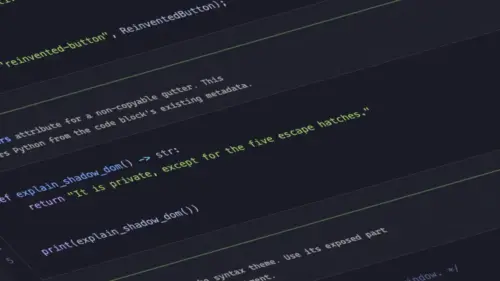
Moving from high-profile commercial sites to practical utility, developer Mojtaba Seyedi recently demonstrated how to construct a functional scrollspy using modern CSS capabilities. For those unfamiliar with the pattern, a scrollspy utility automatically tracks the user’s viewport position relative to long-form page content, dynamically highlighting the corresponding navigation link as the reader scrolls through distinct sections of a document. Seyedi’s implementation highlights how recent advancements in the language have streamlined what once required heavy JavaScript dependency.
Embracing Playful Imperfection with the CSS random() Function
Design aesthetics also took center stage as Brecht De Ruyte showcased and explained a series of visual demonstrations utilizing the emerging CSS random() function. Explored further in recent industry analyses, these implementations lean into playful imperfection, allowing developers to introduce organic variations into layouts directly through style sheets without relying on procedural scripts. The demonstrations illustrate how native randomness can revolutionize repetitive UI patterns, bringing a more organic, hand-crafted feel to automated web components.
The Future of Web Icons
Looking ahead at architectural standards, Lea Verou published an exhaustive deep dive detailing the various methodologies for implementing icons on the web. Verou’s analysis looks far beyond current practices, mapping out upcoming CSS features expected to shape the platform in 2026 and beyond. Among the anticipated tools discussed are Linked Parameters, the ident() function, native @mixin and @apply rules, and the expanded potential of the @property shorthand. The thorough examination offers a glimpse into an increasingly powerful and modular future for stylesheet architecture.
Proposing a Universal Pseudo-Selector
The ongoing evolution of selectors also sparked debate following a proposal by Kilian Valkhof, who advocated for the introduction of a universal pseudo-selector in CSS. While the traditional universal selector (*) efficiently targets all elements within a document, it has historically failed to reach pseudo-elements. This limitation has long forced developers to manually couple structural selectors with common pseudo-elements in routine snippets, such as applying global box-sizing rules:
*,
::before,
::after
  box-sizing: border-box;
With the modern web expanding to include a growing roster of standardized pseudo-elements—such as ::backdrop and ::details-content—Valkhof suggests the adoption of a native ::* syntax to streamline global styling declarations and reduce boilerplate code across large-scale codebases.
Design Systems, Textareas, and Wavy Dividers
Front-end architecture continues to benefit from recent HTML and CSS specifications, a subject explored in depth by Declan Chidlow regarding modern design systems. Standout features highlighted for component libraries include the text-box property, the utility of sibling-index() and sibling-count() functions, structural encapsulation via @scope, and the flexibility of @custom-media.

Complementing these systemic updates are specific layout tricks shared across the community. Adam Argyle demonstrated a technique utilizing modern CSS anchor positioning to make <textarea> elements automatically adapt their height to fit their contents natively, mimicking the behavior of contenteditable fields. Meanwhile, Temani Afif expanded the creative use of math and shape functions, outlining methods to construct dynamic, organic wavy dividers using a combination of the random() and shape() functions.
New Tooling for Contrast and Gradients
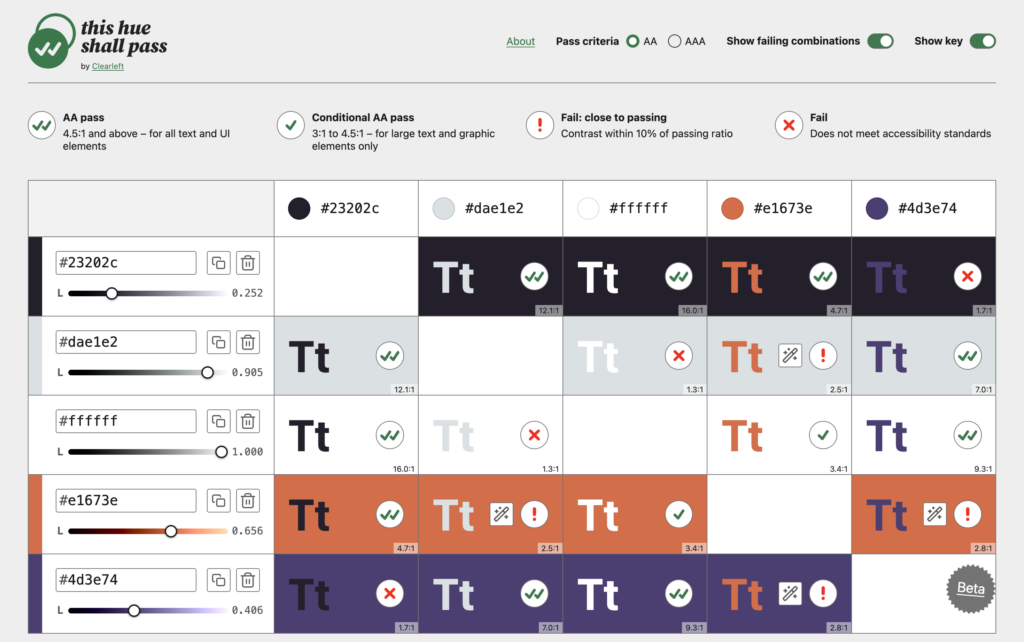
Practical developer tooling received notable additions with the release of This hue shall pass, a new color contrast checker developed by Clearleft. Unlike traditional binary validators, the tool evaluates every possible combination within a palette, explicitly distinguishing between strict failures and combinations that narrowly miss compliance targets. It allows designers to dynamically adjust lightness values until contrast ratios successfully meet strict accessibility guidelines.
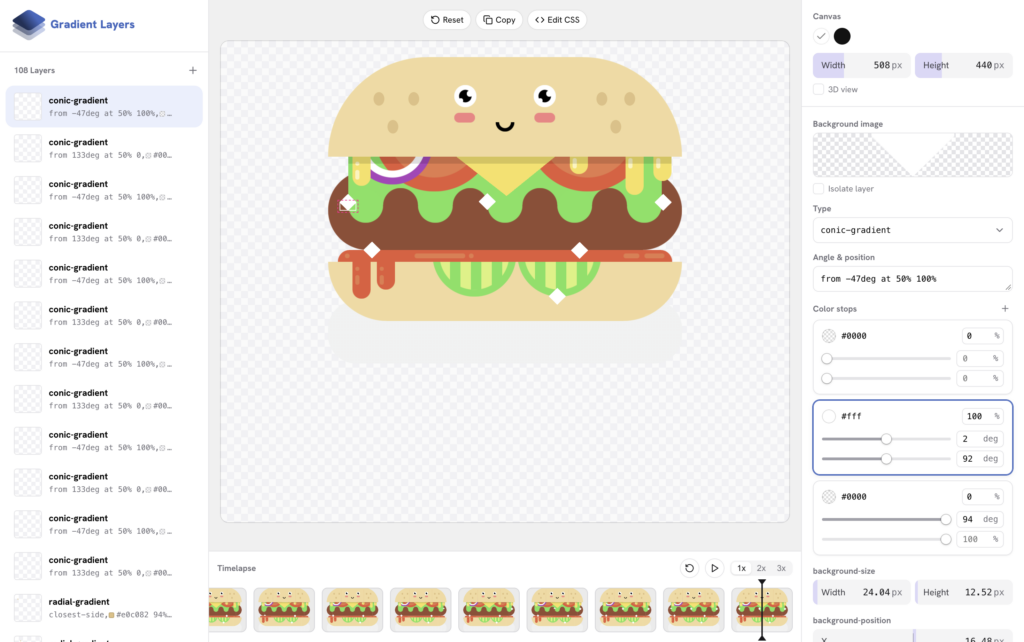
Concurrently, Ahmad Shadeed introduced Gradient Layers, a visual debugging and creation tool housed within his development lab. The utility allows developers to construct and fine-tune complex, multi-layered gradients visually rather than manually drafting dense stylesheet declarations.

This focus on gradients is timely, as the W3C CSS Working Group drafts indicate that two advanced gradient types are currently on the horizon. Explored in technical documentation by Josh Tumath, future specifications are set to introduce native mesh-gradient and freeform-gradient types. Examples provided in the drafting notes demonstrate how these features move far beyond traditional linear and radial transitions, allowing developers to render organic, multidimensional color fields natively in the browser through syntax such as:
background-image: mesh-gradient(red, blue; green, yellow);background-image: freeform-gradient(red top left, yellow bottom right);As the digital landscape prepares for these upcoming platform capabilities, the transition of the CSS-Tricks newsletter marks a new chapter for the community. Subscribers will find the same high-caliber curation of front-end engineering insights and platform updates delivered directly to their inboxes starting November 10th.