
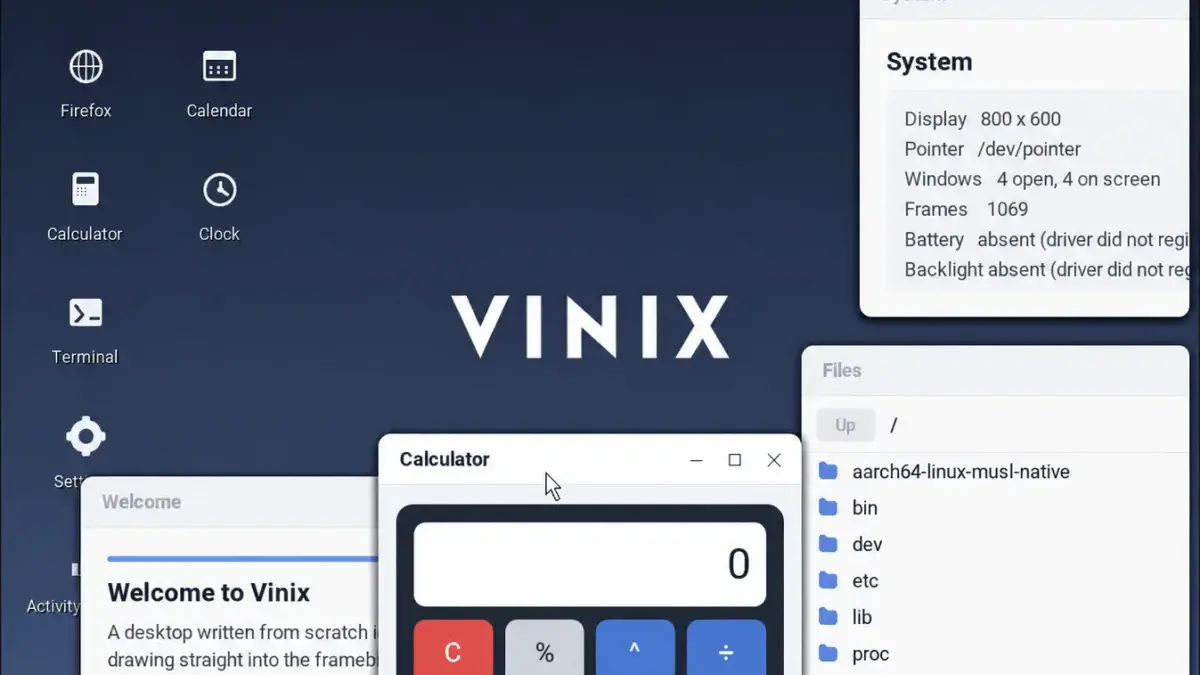
The landscape of personal computing operating systems has long been dominated by corporate giants, proprietary codebases, and increasingly heavy software suites. For users of Apple’s line of MacBooks, recent years have brought growing concerns over software bloat and performance sluggishness with every major macOS release. While the open-source community has traditionally relied on Linux to escape such constraints, running standard Linux kernels on modern Apple Silicon hardware presents significant engineering hurdles. Enter Vinix, an ambitious, independent operating system designed from the ground up to offer a fast, minimal, and entirely open-source computing experience tailored initially for Apple Silicon MacBooks.
At its core, Vinix is not Linux, nor is it proprietary. It is a custom, monolithic operating system built primarily around the V programming language, paired with components written in C and assembly. Booted via the Limine bootloader, Vinix aims to provide a lightweight environment where nothing runs in the background unless explicitly initiated by the user. By avoiding the architectural complexity and heavy resource footprint associated with mainstream operating systems, the project achieves remarkable efficiency, requiring a mere 50 megabytes of RAM immediately after boot and roughly one gigabyte of disk space once fully installed.
Despite operating outside the traditional Linux ecosystem, Vinix has achieved a surprising degree of functional compatibility with standard Linux applications, bridging the gap between its custom kernel and the wider world of open-source software.
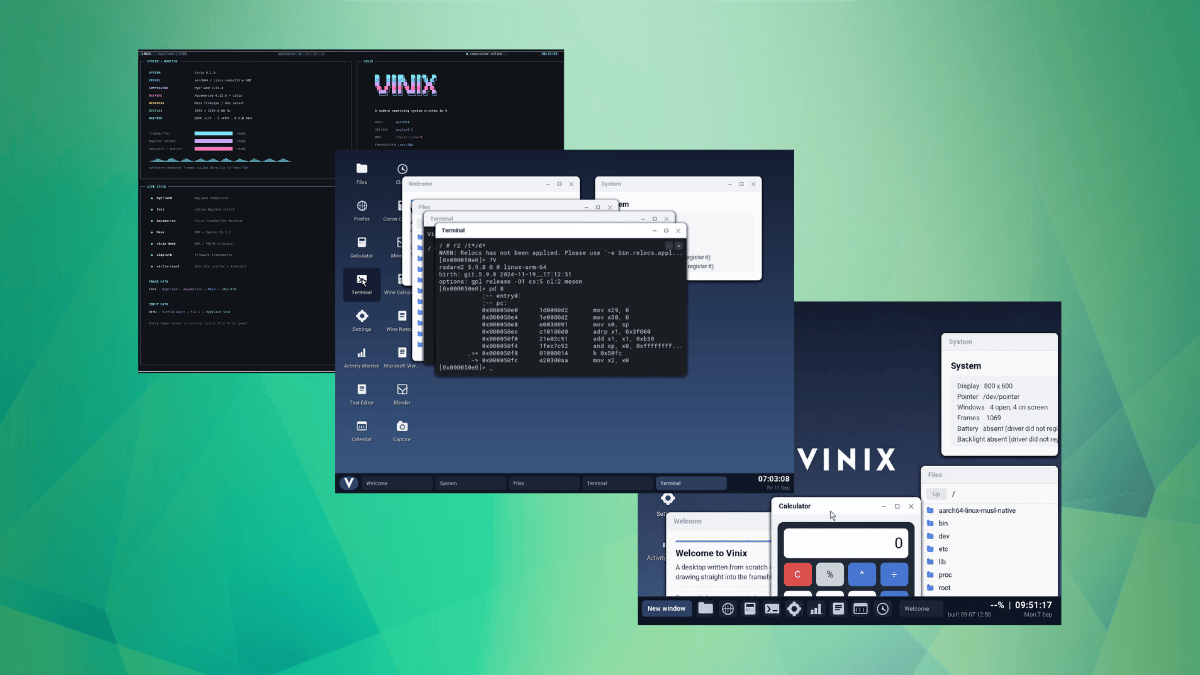
Bridging the Gap: Running Docker and Linux Apps on a Custom Kernel
One of the most remarkable feats of the Vinix project is its ability to execute containerized workloads and native Linux applications without relying on a traditional Linux kernel. Operating systems that are neither proprietary nor powered by the Linux kernel typically struggle to support complex containerization tools like Docker. However, to solve this challenge, the developers of Vinix implemented their own versions of essential kernel features, including namespaces, control groups (cgroups), overlayfs, and seccomp.
These native implementations allow a stock Alpine Linux Docker engine to run smoothly on ARM64 hardware within the Vinix environment. While the integration remains a work in progress—notably lacking support for bridge networking and iptables rules—the achievement demonstrates the viability of the operating system’s custom architecture. Beyond containerization, Vinix runs QEMU version 9.1.2 via software emulation, enabling users to boot a second instance of Vinix inside a window of the first. Gaming enthusiasts will also find experimental support, including the ability to run DOOM, a DOOM 3 demo achieving roughly 13 frames per second under software rendering, a Gothic II demo via OpenGothic, and Minecraft Java Edition running in interpreter mode on a single CPU core.
The secret to Vinix’s broader application compatibility lies in its target environment. The operating system natively supports Alpine Linux’s aarch64 packages, leveragingAlpine’s lightweight, security-focused architecture built around musl and BusyBox. Because Vinix answers the system calls made by Linux applications and natively handles the ELF binary format and musl behavior, standard Linux binaries can run directly on the system without requiring heavy virtualization or translation layers.

Users can install new applications using pkg, a command-line tool that pulls packages directly from Alpine’s ARM64 repositories. Well-known open-source software such as Chromium, GIMP, Sublime Text, and Gnumeric have been verified to work, alongside Wine, the widely adopted compatibility layer for running Windows applications. However, these capabilities remain limited to ARM64 architecture and selected packages, meaning software relying on un-implemented Linux kernel features may not function correctly. Furthermore, while Apple’s M1 chip is currently supported, development is actively underway to expand compatibility to the M3, M4, and M5 processor lineups, alongside ongoing efforts to develop native GPU drivers.
A Minimalist Philosophy Rooted in the V Programming Language
The driving motivation behind Vinix stems from a desire to push back against the increasing complexity of modern computing. As major operating systems grow heavier and more resource-intensive, Vinix offers an alternative designed to be small enough for a single developer to read through. The project completely omits systemd, adhering instead to a strict design philosophy featuring a single init system, a unified desktop environment, a dedicated package manager, and a consistent binary format.
Memory management within Vinix is handled manually by the kernel rather than relying on a traditional garbage collector. This deliberate design choice ensures that background cleanup passes cannot unexpectedly interrupt crucial system calls or interfere with the desktop compositor. Security is another foundational pillar of the operating system, with security models heavily inspired by OpenBSD. Vinix incorporates features akin to pledge and unveil, requiring applications to explicitly opt-in, while user memory is restricted from being both writable and executable by default. However, verifying the integrity of the bootloader, kernel, and root filesystem remains an unimplemented feature for now.
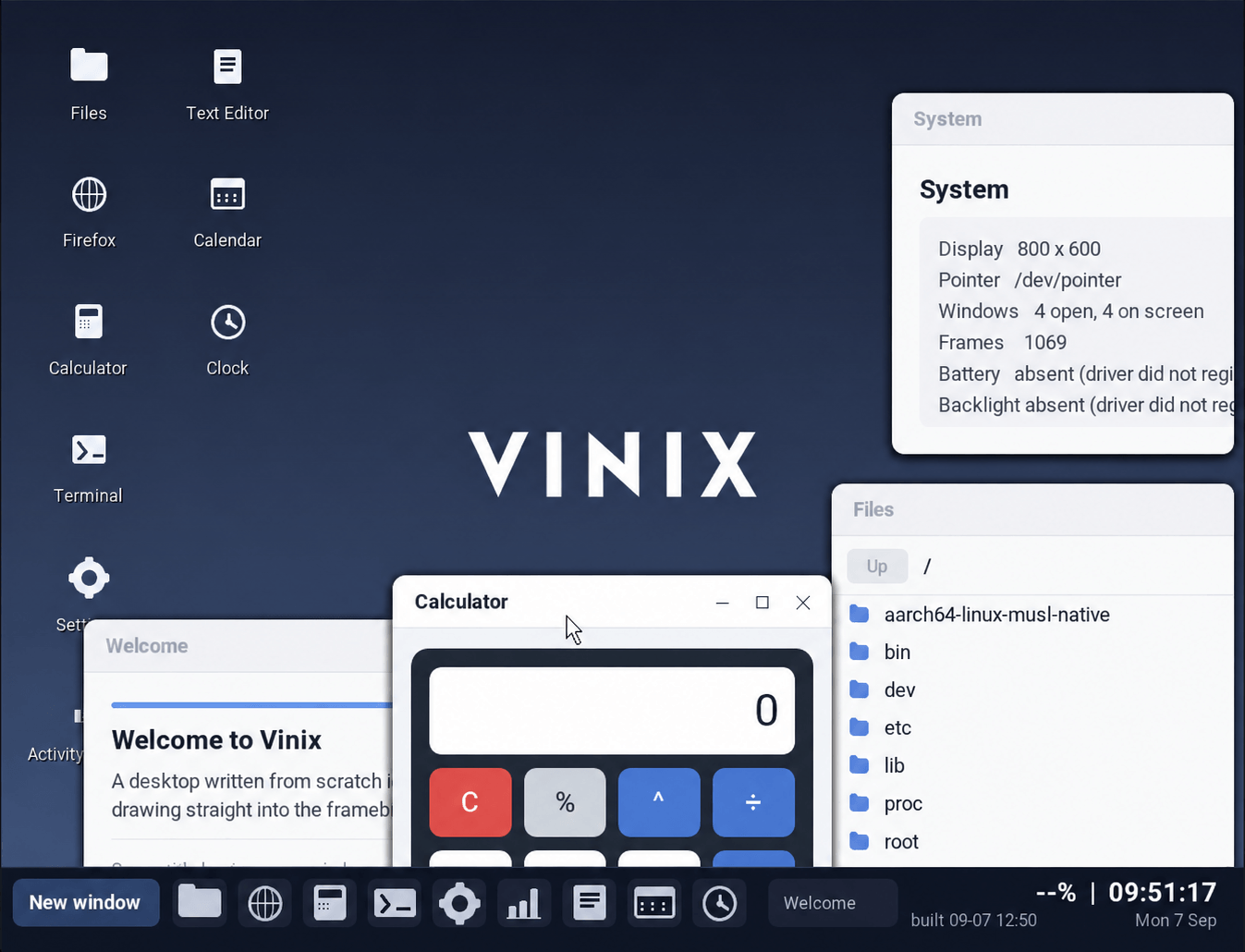
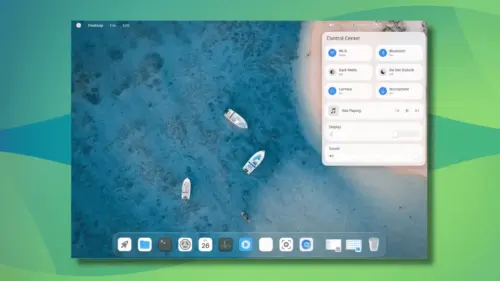
The entire operating system is built upon a foundation of the V programming language, chosen specifically for its fast compilation speeds, clean syntax, and small, readable design. In addition to serving as a functional operating system, Vinix acts as an extensive testbed for bare-metal programming in V. The system features a native desktop environment built using V UI2 that renders directly through the framebuffer, while X.org and Hyprland sessions are also available as alternative options on ARM64.
Development History and Availability
The history of Vinix spans several years of independent open-source development. The earliest code commits on GitHub date back to March 2021, with the original kernel core—including the physical and virtual memory managers and the task scheduler—built by Mintsuki, the creator of the Limine bootloader. Following a development hiatus of approximately two years, Alexander Medvednikov, the author of the V programming language, stepped in as the project’s maintainer.
Since the leadership transition, Vinix has expanded significantly, gaining robust storage, networking, input, and graphics support, alongside a complete Unix-style userspace and the Alpine Linux compatibility layer that defines its modern capabilities.
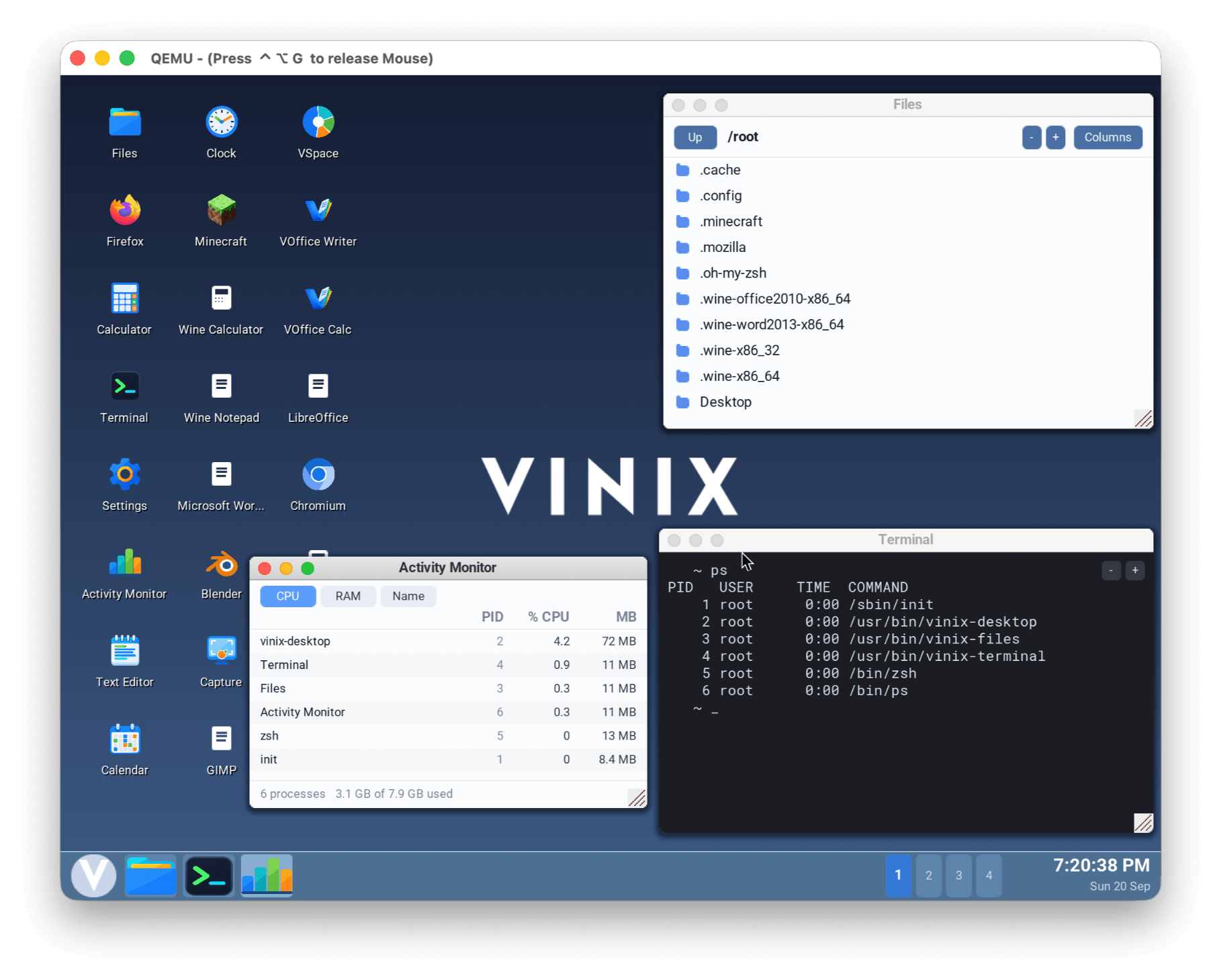
For developers, enthusiasts, and researchers interested in exploring early-stage operating system development, Vinix is available through its official website, which offers a DMG installer file tailored for M1 Macs. Additionally, the project’s official GitHub repository hosts distinct ISO images: an ARM64 version targeted at QEMU and VirtualBox environments on Apple Silicon hardware, and an x86_64 version designed for traditional Intel and AMD systems.
Running the operating system in a virtual machine requires modest system resources, needing at least four gigabytes of memory and four gigabytes of storage space, though users also have the option to build the system entirely from source code. As an experimental project, Vinix is not intended for daily use or production environments, but it stands as a fascinating exploration of alternative kernel design, minimal system architecture, and open-source collaboration on modern hardware.


Leave a Reply