
As artificial intelligence coding agents increasingly take on complex development tasks—such as autonomously selecting software development kits, invoking external tools, and building complete features—the gap between what works smoothly for a human developer and what trips up an automated model has become more apparent. While modern AI assistants can write functional code blocks or handle boilerplate generation with ease, they frequently stumble when navigating intricate dependency trees, interpreting vague tool descriptions, or dealing with poorly documented application programming interfaces.
To address these persistent reliability challenges, Microsoft has introduced Scope, an open-source evaluation framework designed specifically to test, score, and analyze the performance of existing coding agents. Released under the permissive MIT license, Scope aims to establish a rigorous methodology for what Microsoft refers to as the Developer Agent Experience, or DevAx. By driving popular coding agents through standardized real-world scenarios, Scope gives engineering teams a systematic way to measure how well AI models execute complex development workflows.
How Scope Evaluates Coding Agent Performance
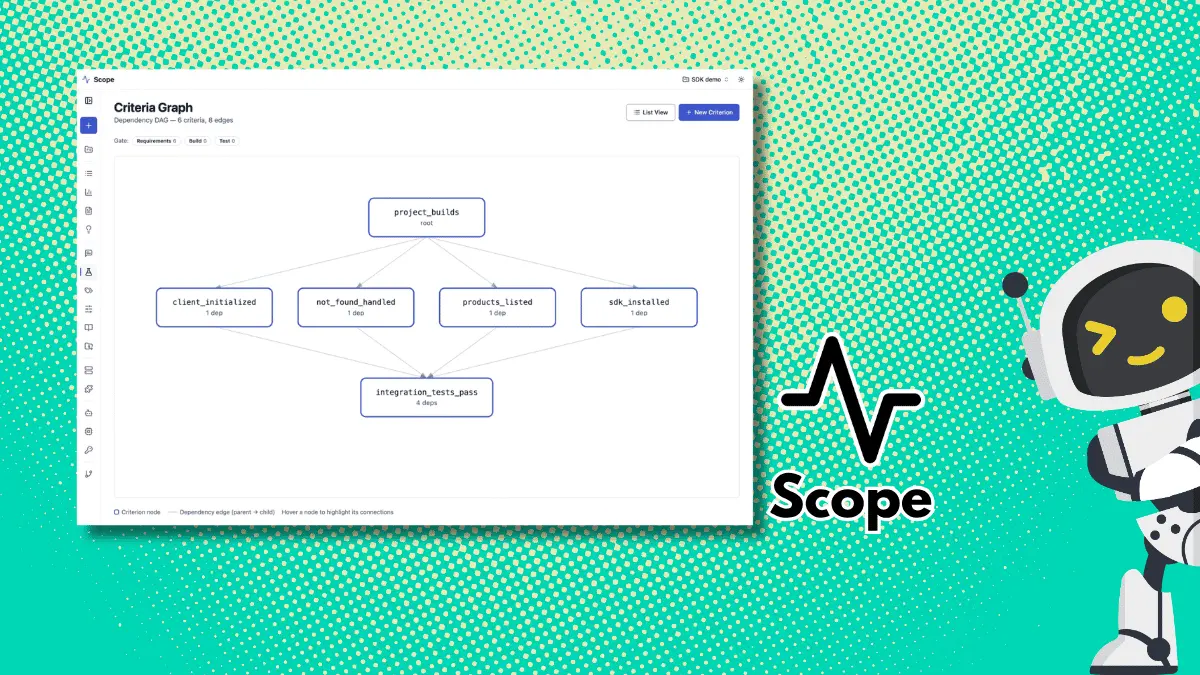
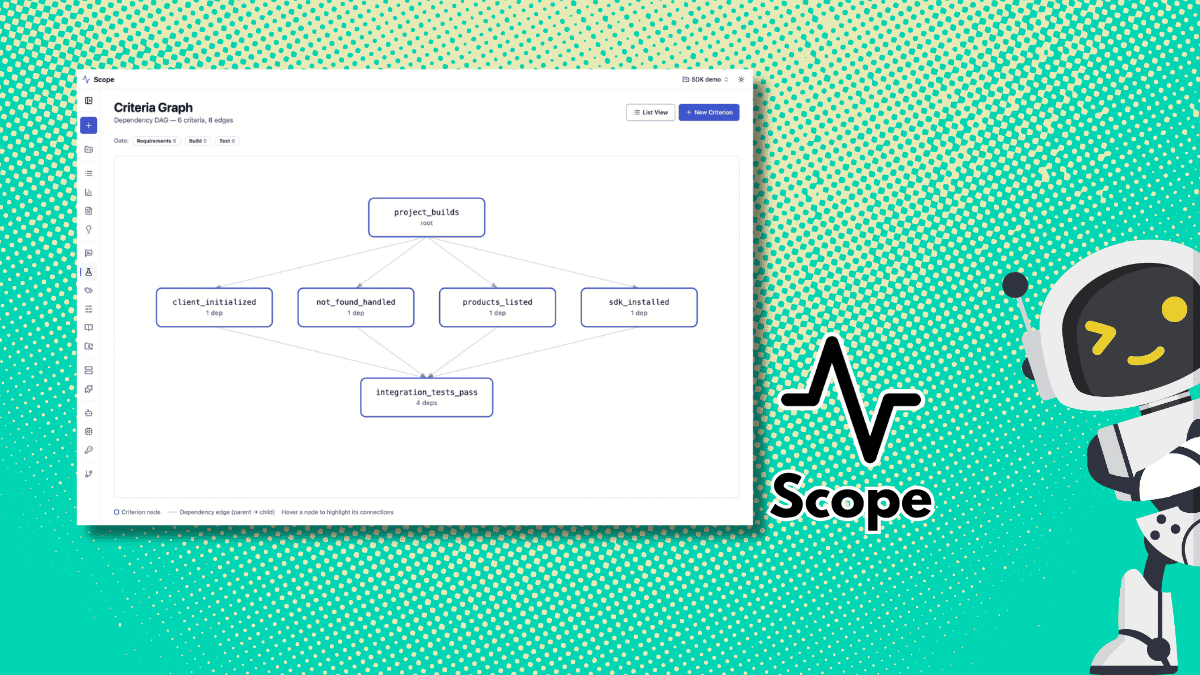
At its core, Scope operates by taking a predefined task, an optional starting codebase, and a specific agent configuration, and then steering existing coding assistants—such as GitHub Copilot and Claude Code—through the execution process. Rather than relying on simple text completion metrics, Scope defines success through criteria organized into a dependency graph, where one validation check can conditionally gate subsequent tests. For instance, a basic evaluation scenario might task an agent with creating a functional Node.js server and subsequently verify that the application successfully exposes a specific GET /health route returning a valid JSON payload.
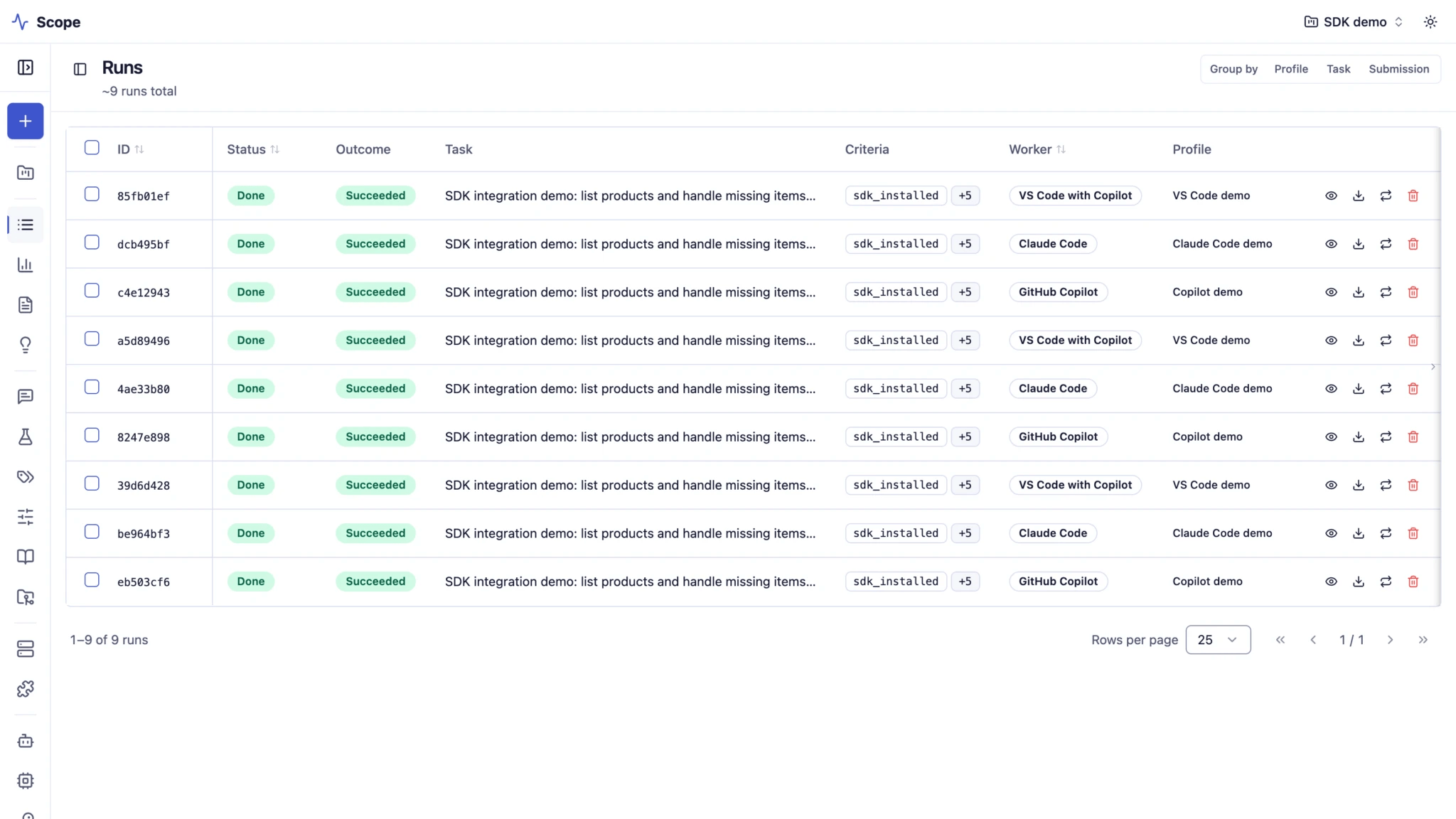
To assess whether an agent has met these criteria, Scope utilizes a large language model-based Judge service that analyzes the outputs and artifacts of each run. Because automated LLM judges are not infallible, Microsoft emphasizes that important evaluation conclusions still warrant careful human review. Every test run captures comprehensive operational data, including live execution logs, newly generated files, workspace snapshots, and detailed traces of every tool call made by the agent. When a specific criterion fails, developers can trace the failure step-by-step through the recorded workspace history to pinpoint exactly where the agent went off track.

To ensure consistency and reproducibility, Scope incorporates versioned profiles that save the exact state of the agent, the underlying model, loaded skills, Model Context Protocol servers, and associated extensions. Developers can easily swap out a single variable, rerun the exact same task, and compare the outcomes. Because LLM behavior can vary from attempt to attempt, repeating tasks multiple times helps distinguish between a recurring systemic flaw in an agent’s reasoning and a random, one-off execution error.
Additionally, Scope features configurable user personas that allow teams to simulate different viewpoints, skill levels, and tones for the simulated user interacting with the agent. Developers can review the resulting scores and traces through a dedicated web portal, or they can integrate the evaluation data into continuous integration scripts and automated pipelines using Scope’s command-line interface and REST application programming interface.
Practical Applications Across the Software Ecosystem
The versatility of the Scope framework lends itself to several distinct use cases across the software development lifecycle, particularly for technical documentation teams, SDK maintainers, and tool developers. Documentation writers can use the platform to monitor instructions or tutorials that coding agents consistently misinterpret or miss entirely across successive runs. Once a problematic documentation page is identified and fixed, the scenario can be rerun immediately to verify whether the update successfully resolves the agent’s confusion.
Similarly, software development kit maintainers can deploy Scope to evaluate whether an AI agent naturally discovers and selects their specific SDK when faced with a relevant coding prompt. Teams can also test whether introducing newly written sample code or specialized agent skills alters the likelihood that an agent will successfully adopt their libraries. For maintainers of command-line interfaces and Model Context Protocol servers, the detailed execution traces reveal exact points where an agent stalls, pointing directly to vague tool descriptions or unhelpful error messages that leave the AI guessing its next move.

System Requirements and Deployment Considerations
While Scope is freely available as an open-source project under the MIT license, it is not currently offered as a managed, cloud-hosted software-as-a-service product. Teams wishing to utilize the framework must configure and run the infrastructure themselves. A local development environment requires several core components, including Docker with Compose version two, Node.js version twenty-two, pnpm, mkcert for local transport layer security certificates, and the GitHub CLI. Microsoft provides comprehensive local development documentation to help engineers navigate the initial setup process.
For standard worker execution, the system typically requires an active GitHub Copilot entitlement, while the underlying Judge service needs valid credentials for a supported model provider. Teams looking to establish a shared, collaborative deployment within an organization can deploy Scope on Kubernetes using the provided Helm chart. The source code and associated documentation are hosted publicly on GitHub, though developers wishing to contribute code modifications will need to review and agree to the standard Microsoft Contributor License Agreement.
Leave a Reply