
A federal magistrate judge has ordered Meta to disclose the identities of employees who made, authorized, or approved decisions to download copyrighted books via BitTorrent from shadow libraries for its artificial intelligence training datasets. The ruling marks a major development in ongoing copyright litigation and punctures Meta’s defense that its torrenting activities were merely decentralized technical decisions rather than corporate actions.
The order, issued by Magistrate Judge Thomas Hixson, addresses a persistent dispute in intellectual property lawsuits targeting Meta’s acquisition and use of unauthorized literary works. While courts previously ruled that training AI models on copyrighted books constitutes fair use—a bittersweet victory for the tech giant—claims regarding BitTorrent infringement and unauthorized distribution remain fiercely contested.
For months, publishers and authors have sought to uncover the inner workings of how Meta gathered datasets for its large language models. The latest legal battle centers not just on what happened on Meta’s servers, but on who greenlit the process, a question that could significantly impact findings of willfulness and contributory copyright infringement.
The Evolution of the Discovery Dispute
The controversy stems from consolidated class-action lawsuits and individual publisher complaints, including a high-profile case brought by Entrepreneur Media, the publisher of Entrepreneur magazine. Plaintiffs have accused Meta of contributing to digital piracy by utilizing peer-to-peer networks to ingest massive amounts of data from unauthorized repositories such as Library Genesis (LibGen) and Anna’s Archive.

Last month, Magistrate Judge Hixson ordered Meta to hand over the command histories of the servers it used to torrent pirated books. Those logs are expected to reveal how Meta’s torrent clients were configured, including whether adjustments were made to upload settings that facilitated the sharing of files back to the public network.
However, obtaining server logs was only part of the plaintiffs’ strategy. Entrepreneur Media also demanded that Meta identify every individual who "made, authorized, or approved" the decisions to acquire shadow library datasets through BitTorrent.
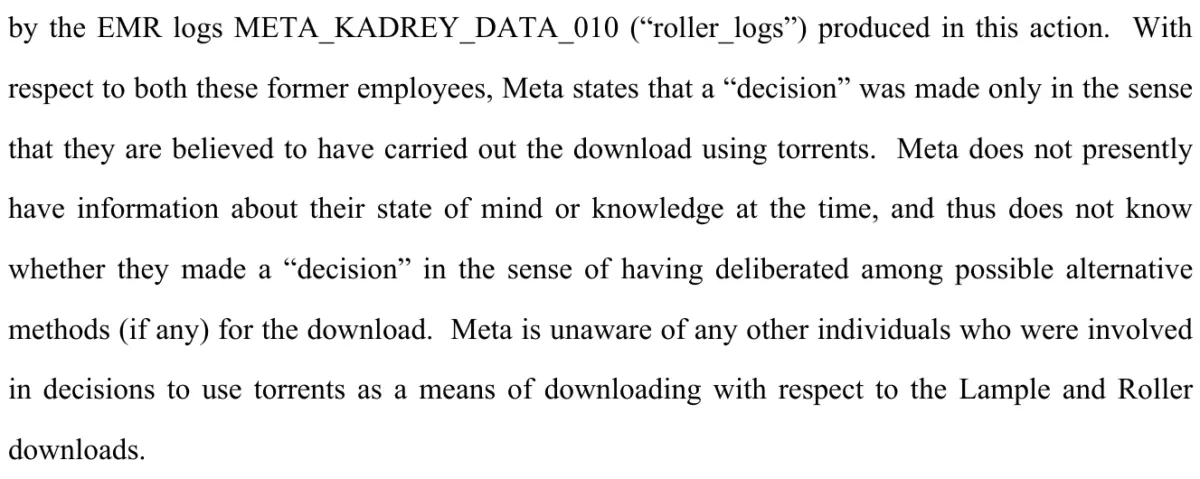
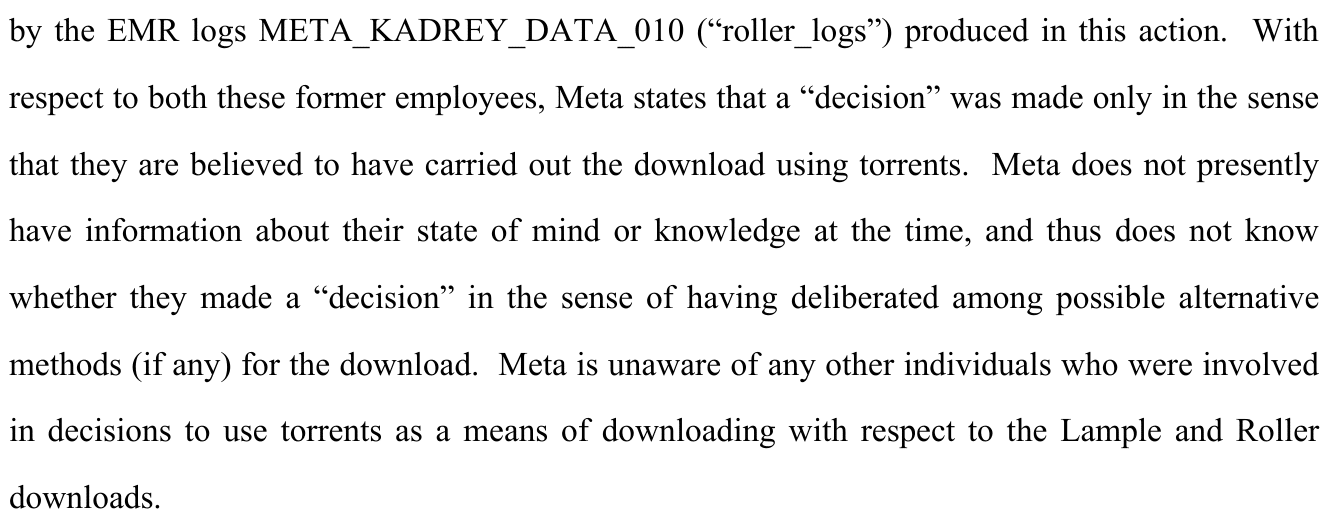
In response, Meta provided the names of several employees involved in data operations generally. Crucially, however, the company maintained that it could not identify anyone who "formally" made or approved decisions to acquire or use books for its first two Llama models. Meta argued that those decisions were the result of collaborative team consensus rather than top-down directives. When pressed specifically on the torrenting activity, Meta pointed to the engineers who executed the downloads, framing their actions as routine technical choices.
Furthermore, Meta noted that its acquisition of data from Anna’s Archive underwent an internal legal review in early 2024 involving in-house counsel. Yet, by declining to name higher-ranking executives or specific managers who authorized the deployment of BitTorrent protocols, Meta effectively presented a scenario where, structurally, no one at the company decided to use torrents, despite the fact that shadow libraries were repeatedly downloaded onto corporate infrastructure between 2022 and 2024.
Entrepreneur Media forcefully challenged this logic in court filings. "On that construction no one at Meta decided to torrent anything, yet Meta torrented shadow libraries repeatedly from 2022-2024," the publisher argued.

‘Legally Not Okay’
The question of corporate awareness and internal dissent became even more pronounced as internal company communications came to light. Testimony from engineers who handled the LibGen data indicated that the legal and operational implications of seeding—the process of uploading file fragments to other peers on a BitTorrent network—were actively discussed internally, with some staff members explicitly advising caution.
An internal Meta logbook reviewed by an employee prior to initiating a download from Anna’s Archive starkly illustrates these internal deliberations. According to excerpts cited in Entrepreneur Media’s court filings, the logbook recorded a conscious choice to bypass peer-to-peer protocols for specific reasons.
"Decided to go with direct file uploads without using torrents for the following reasons: Using torrents would entail seeding the file such as sharing content outside. This would be legally not okay," the logbook read.
Despite such documented internal concerns, Meta does not dispute that it ultimately utilized BitTorrent to download LibGen’s Scimag collection alongside data from Anna’s Archive. While the company insists it knows of no individual who explicitly authorized the distribution or uploading of copyrighted material, its lawyers have pointed out that various technical measures were implemented in attempts to mitigate seeding.
The scale of actual distribution remains a moving target in the litigation. Last year, an expert retained by Meta estimated that uploads from the company’s Amazon Web Services (AWS) servers accounted for roughly 30 percent of the total data volume downloaded during torrent operations between April and July 2024.
The Court’s Ruling on ‘Everyone in the Group’
Magistrate Judge Hixson’s recent ruling decisively dismantled Meta’s defense regarding collective ambiguity. Noting that Meta had previously informed the court it possessed no additional information on the torrenting decisions, the judge found the company’s responses inadequate and overly narrow.
Judge Hixson emphasized that the plaintiffs’ interrogatories were not restricted to formal, top-down executive sign-offs. Furthermore, he noted that Meta’s previous answers focused primarily on the subsequent use of the data rather than its initial acquisition and downloading methods.
Addressing Meta’s defense that decisions were made by consensus, the judge held that group collaboration does not excuse a company from identifying decision-makers. If a decision was reached by a team, every member of that team involved in the choice must be named.
Consequently, the court ordered Meta to identify all individuals who participated in the discussions preceding the 2023 LibGen torrent download. The tech giant must also name the specific people who approved the transition to BitTorrent, as well as those who greenlit the April 2024 data acquisition from Anna’s Archive.
Crucially, the scope of the order extends directly to anyone who decided "whether or how to seed, or to mitigate seeding," when Meta utilized BitTorrent for these collections.

For plaintiffs like Entrepreneur Media, compiling this roster of names is a critical step. The publisher contends that these revelations bear directly on the legal standard of willfulness, which can significantly influence statutory damages, as well as foundational questions surrounding contributory copyright infringement and unauthorized distribution.
With the parameters of discovery now firmly set by the court, the legal battle moves closer to addressing the core merits of the remaining claims. While the broader question of whether Meta’s AI training methodologies constitute fair use has largely been settled in the company’s favor, the accountability surrounding its utilization of peer-to-peer pirate networks remains open for judicial determination.


Leave a Reply