Every year, the Office of the United States Trade Representative (USTR) undertakes a comprehensive review to identify foreign piracy sites and services that rights holders view as the most severe threats to intellectual property. This resulting publication, widely known as the notorious markets list, traditionally focuses its lens on decentralized torrent hubs, commercial cyberlockers, and unauthorized streaming portals. In recent years, however, the scope of these submissions has broadened to include internet service providers, hosting companies, and various digital intermediaries that facilitate copyright infringement on a global scale.
Last week, the Entertainment Software Association (ESA), the prominent trade organization that represents many of the world’s leading video game development and publishing companies, submitted its latest round of recommendations to the federal agency. While the filing includes several familiar targets that have long appeared on government radar, it also introduces a novel adversary that possesses no traditional website or public-facing storefront of its own.
A Game Cracker as a Piracy ‘Market’
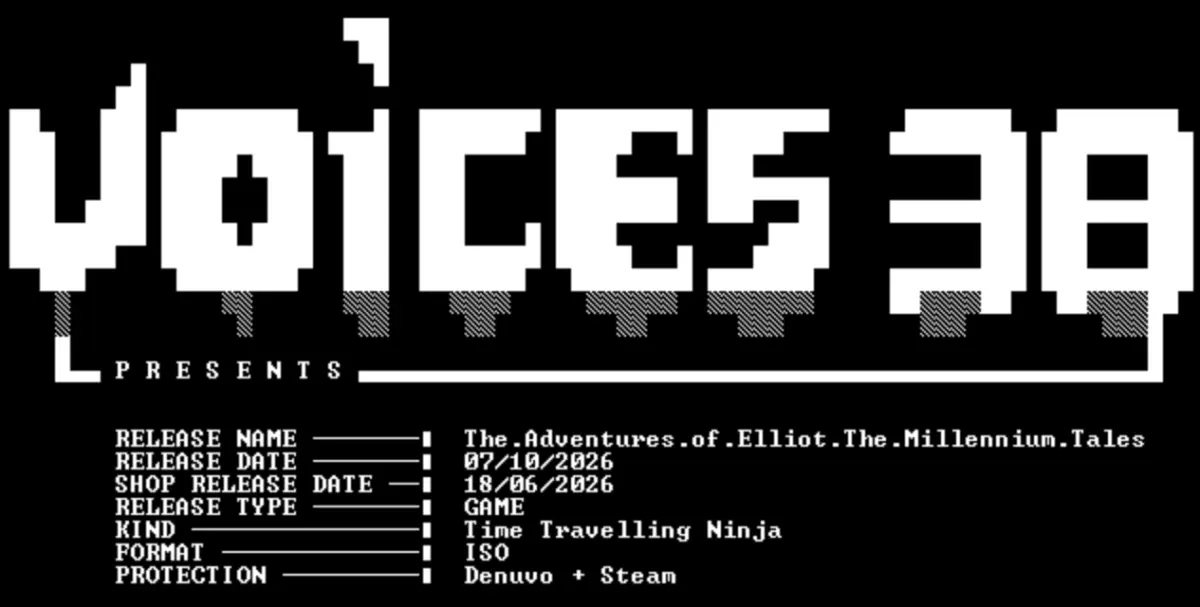
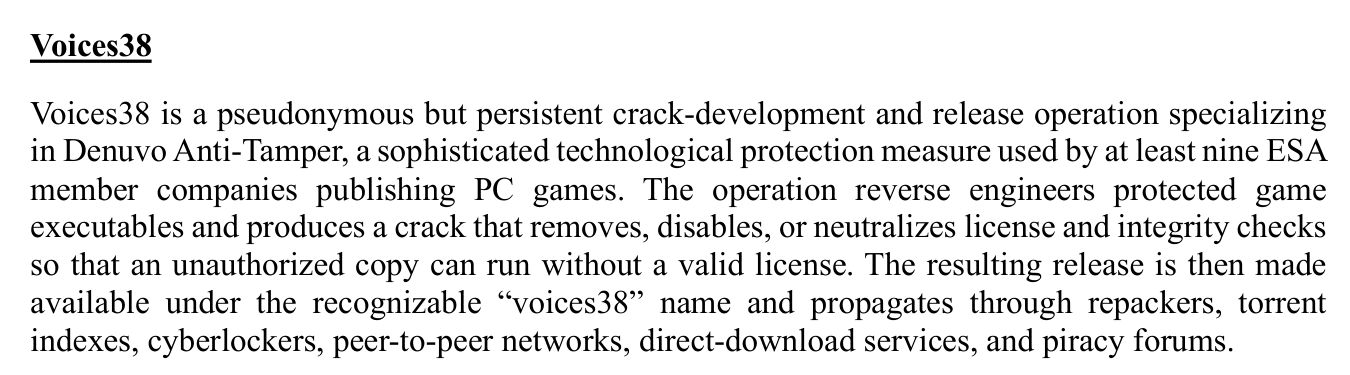
At the center of the ESA’s newest wave of recommendations is an anonymous digital actor designated as "voices38." In its formal submission to the USTR, the game industry group characterizes this elusive figure as a persistent and highly specialized operation dedicated to defeating Denuvo Anti-Tamper, the sophisticated digital rights management (DRM) and technical protection measure utilized by at least nine major ESA member companies to safeguard their software titles from immediate unauthorized duplication.
According to data cited by the ESA, indexing references on Reddit’s r/CrackWatch community attribute roughly two dozen successfully cracked or completely bypassed video game releases to the handles associated with voices38. The gaming organization emphasizes that this individual or collective occupies a critical upstream position within the broader software piracy ecosystem. Their releases are routinely harvested and redistributed by secondary downstream operators, including popular repackers, public and private torrent trackers, commercial cyberlockers, and dedicated piracy forums.

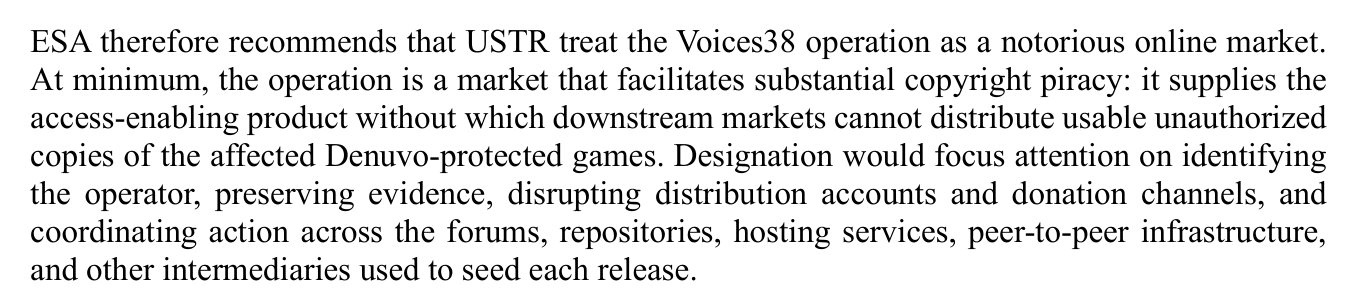
"Each crack therefore unlocks an entire downstream market for an unauthorized copy of that title. For a title that no other actor has made usable, but for Voices38’s crack there would be no functioning pirated copy for those markets to offer," the ESA notes in its filing. The organization argues that focusing regulatory and enforcement attention solely on downstream platforms ignores the foundational source. "Treating only those downstream services as markets would overlook the upstream operation that determines whether protected games can be offered by them at all."
The reality that this particular cracker operates without a public personal identity or a traditional homepage should not preclude official inclusion on a notorious markets designation, the trade group insists. On the contrary, the ESA maintains that an official designation could catalyze coordinated international efforts to unmask the operator. Such a listing would focus much-needed attention on identifying the individuals behind the operation, preserving digital evidence, disrupting financial distribution accounts and cryptocurrency donation channels, and orchestrating cross-border actions against the forums, code repositories, hosting services, and peer-to-peer infrastructure utilized to seed every illicit release.
Ideally, the ESA hopes to pierce the anonymity surrounding the popular release handle to identify the real-world parties responsible. This strategic objective aligns with parallel legal maneuvers currently unfolding in the United States judicial system.
Lawsuit Doesn’t Stop the Cracks
The pressure from rights holders extends far beyond administrative trade filings. Last month, Denuvo initiated formal legal action against the entity known as voices38 in a U.S. federal court located in California. In connection with that ongoing litigation, the anti-tamper provider recently petitioned the court for permission to issue third-party subpoenas to major technology platforms, including Discord, Valve, and Reddit, in an effort to uncover identifying information and financial records tied to cryptocurrency transactions associated with the account. The ESA’s recent U.S. trade submission does not explicitly reference this active federal lawsuit, keeping its focus squarely on broader governmental designation.
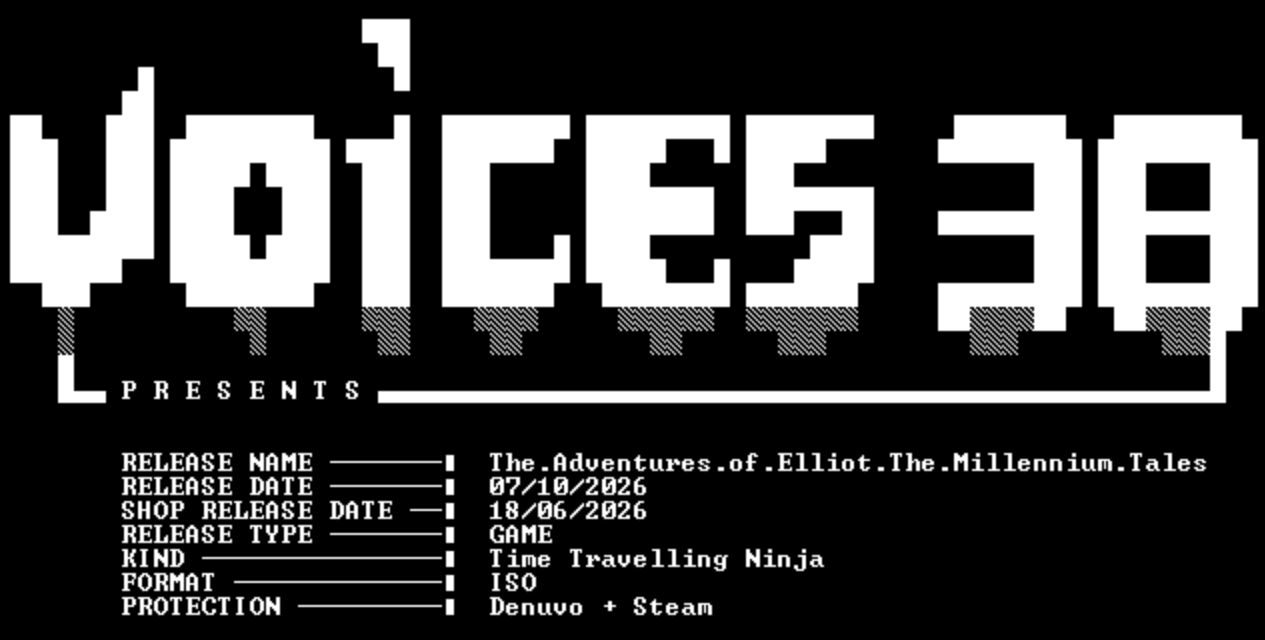
Despite the mounting legal pressure and administrative scrutiny, the flow of cracked software has continued unabated. Following a brief period of apparent quiet, the voices38 handle published full cracks for several prominent titles, alongside a dedicated technical fix for another high-profile remake.
These freshly minted unauthorized releases quickly traversed the usual digital channels, migrating seamlessly onto peer-to-peer torrent networks and commercial file-hosting cyberlockers. Before long, prominent software repacker FitGirl integrated the files into her own distribution network, drawing renewed attention from the trade association and highlighting the interconnected nature of the digital piracy landscape.
Billion-Dollar FitGirl
FitGirl, a fixture of the software modification and repacking scene, is already a familiar name to the USTR, having been featured prominently in the notorious markets lists for both 2024 and 2025. In its latest filing, the ESA has formally requested that the operation remain targeted in the upcoming review cycle.
Although the primary web domain associated with FitGirl faces active government-mandated ISP blocking measures in several European jurisdictions, including Germany, Italy, and Spain, the trade association notes that these geographic access restrictions have yielded minimal practical impact on the platform’s overall traffic or availability. According to the ESA’s submission, the repacking portal still managed to attract approximately 41.77 million visits in the month of August alone, continuing to offer unauthorized versions of video games published by ESA member studios.
"FitGirl’s scale and persistence demonstrate that prior blocking and designation have not induced meaningful remediation by its operator. ESA’s takedown notices to the site are ignored, with zero links removed between August 2025 and August 2026," the organization writes in its official filing.
To underscore the perceived economic damage inflicted by these operations, the video game companies calculated a staggering financial loss figure down to the exact cent. Between March and August of 2026, the ESA claims its monitoring detected 15,484,145 active users participating in peer-to-peer download swarms for video games that had been compressed and redistributed by FitGirl. Multiplying that aggregate user count by a standard baseline retail price of $69.99 per title, the trade group arrived at an estimated theoretical lost market value of $1,083,735,308.55.
Other major distribution hubs exhibit a similar lack of responsiveness to intellectual property enforcement notices. According to the industry filing, another prominent repacking collective, DODI-Repacks, removed only 22 percent of the infringing links reported to them. Meanwhile, RuTracker, a major Russian-language torrent portal that recently re-entered the crosshairs of western video game conglomerates, complied with a meager three percent of the removal notices submitted by the ESA over the past year.
Even in the face of widespread non-compliance, the trade association emphasizes that analyzing the financial trails of these operations—particularly cryptocurrency transactions routed through platforms compliant with Know Your Customer (KYC) regulations, such as Binance—presents a viable pathway toward unmasking anonymous operators.
Handheld Consoles as ‘Superfakes’
The current iteration of the USTR’s annual review places a distinct emphasis on high-quality physical counterfeit goods, commonly referred to in trade enforcement circles as "superfakes." The ESA seized upon this policy focus to draw a direct parallel to the hardware market, highlighting specialized handheld emulation consoles that come preloaded with vast libraries of unauthorized video games.
The trade group formally nominated Anbernic.com, the official online storefront for a widely distributed series of portable emulation devices. The ESA contends that these hardware units are routinely marketed, sold, or shipped with integrated memory cards containing hundreds or thousands of pirated software titles, and notes that these devices are readily available through mainstream e-commerce platforms such as Amazon and eBay.
Beyond unauthorized hardware and traditional file-sharing networks, the extensive ESA submission also targets secondary digital marketplaces like G2A, FunPay, and Eldorado.gg, where verified user accounts and virtual in-game items are frequently bought and sold. Furthermore, the filing takes aim at hardware cheat manufacturers, specifically citing products like the Cronus Zen. The industry group argues that the sale of commercial cheating devices warrants inclusion on international piracy watchlists because such tools function by circumventing the robust technological protection measures and digital locks integrated into modern video game software.
It now falls to the Office of the United States Trade Representative to evaluate the extensive record of recommendations and determine which entities will ultimately be codified into the final Notorious Markets list. With the preceding edition having been released in March, stakeholders and observers may face a prolonged wait before the federal government issues its definitive findings.