The digital landscape of live sports piracy has suffered a significant blow following the sudden and unexpected shutdown of Streamed, a prominent "Piracy-as-a-Service" provider that acted as the vital technical backbone for dozens of unauthorized streaming websites across the internet. The platform, which supplied ready-made video players and underlying infrastructure allowing third-party pirate sites to broadcast live sports without hosting the media themselves, went dark without prior warning, leaving millions of monthly visitors and dependent portals scrambling.
The closure marks a dramatic turning point in the ongoing global battle between copyright holders and online streaming operations. Streamed’s departure affects a vast network of interconnected websites that relied entirely on its robust servers to deliver high-demand athletic events to global audiences. While the exact motivations behind the sudden shutdown remain shrouded in mystery, the timing coincides with intense regulatory scrutiny and escalating pressure from major Hollywood studios and sports broadcasting coalitions.
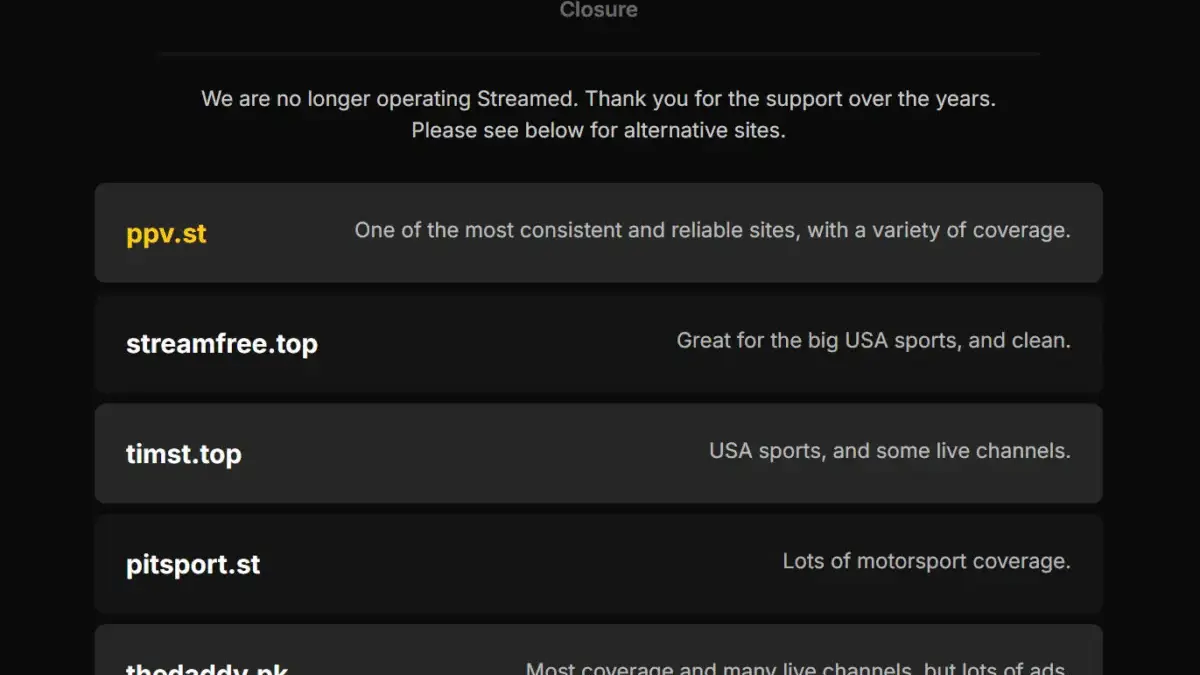
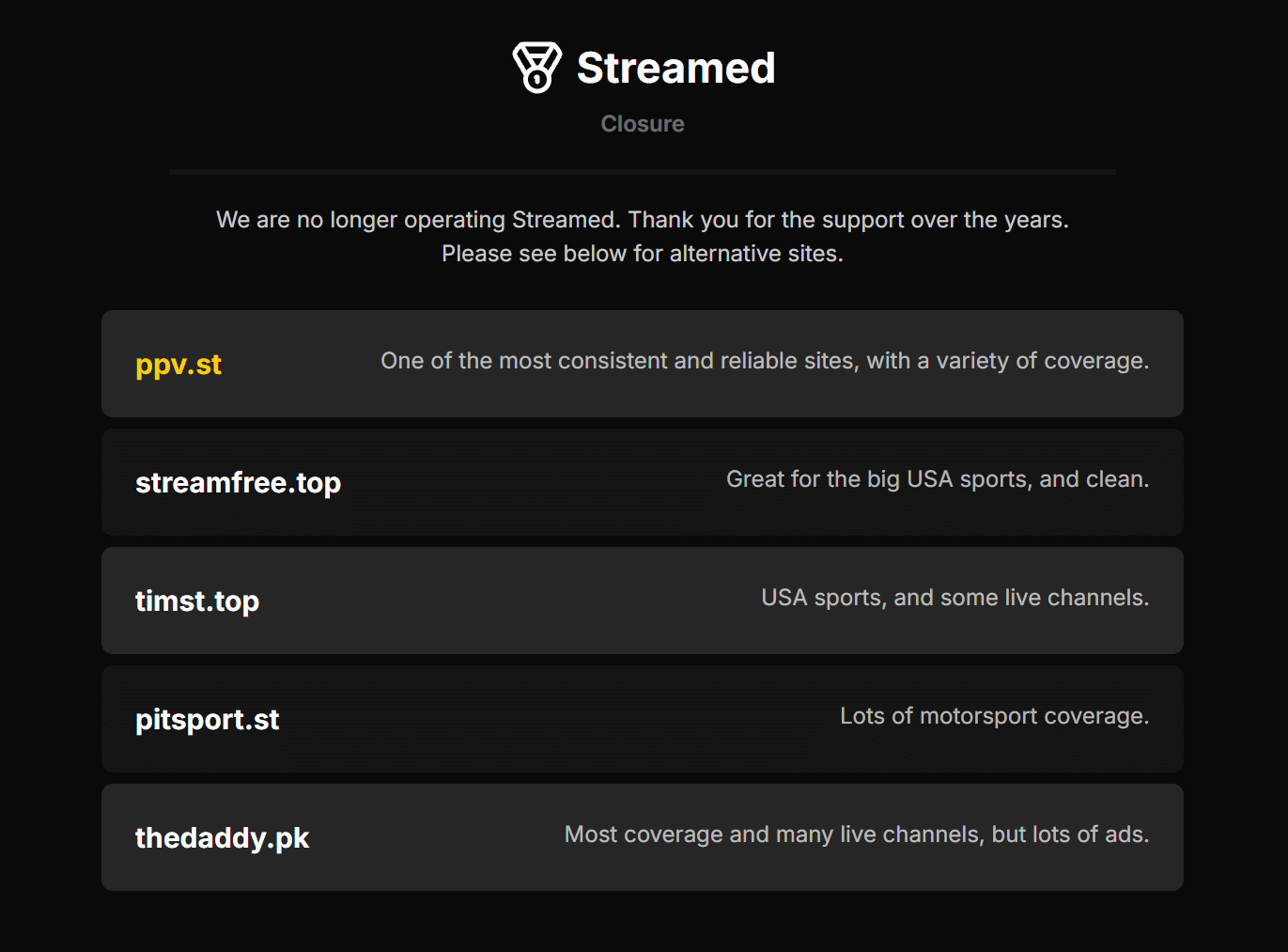
According to notices posted across its primary network of domains—including streamed.pk, strmd.link, and streamed.st—the platform’s operators have officially pulled the plug on their infrastructure. Visitors attempting to access the homepages are now greeted by a brief, understated farewell message that brings an abrupt end to years of operation.

"We are no longer operating Streamed. Thank you for the support over the years," the message reads, offering no technical details, legal explanations, or hints regarding the identities of those behind the service.
The sudden vanishing of Streamed is particularly disruptive because of its operational model. Rather than serving as a traditional consumer-facing pirate website where users browse through a catalog of links and advertisements, Streamed operated firmly behind the scenes. In the ecosystem of digital copyright infringement, such entities are frequently categorized as "Piracy-as-a-Service" or PaaS providers.
By building and maintaining complex video streaming infrastructure, Streamed allowed entrepreneurial webmasters to launch new live sports portals with minimal technical overhead. These downstream sites simply embedded Streamed’s video players into their own pages, letting the PaaS provider handle the heavy lifting of bandwidth, stream ingestion, and server maintenance. Consequently, a single disruption at the source level has the immediate effect of cascading failures across an entire constellation of dependent websites.
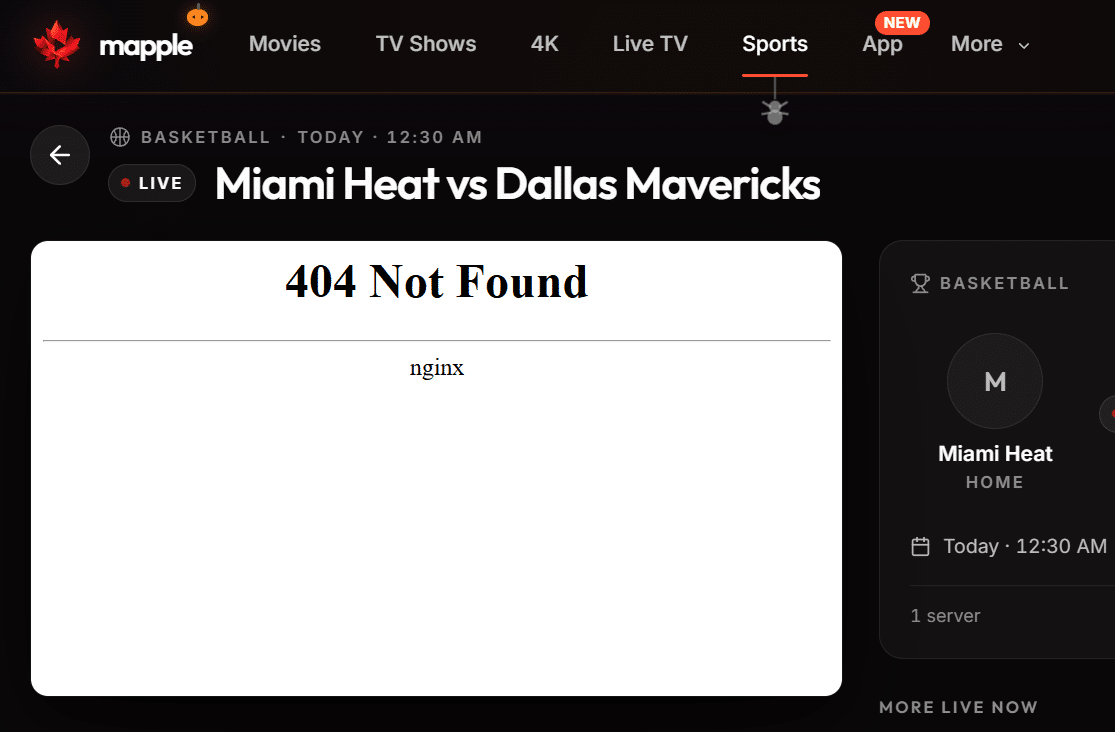
The immediate fallout of the closure was swift. Popular aggregation hubs and "hydra sites"—so called because they frequently spawn alternative domains to evade blocks—found their live sports feeds severed almost overnight. Among the casualties is Mapple, a prominent multi-faceted piracy portal that relied heavily on Streamed’s infrastructure. Following the shutdown, attempts to access live sports streams on Mapple and similar platforms are increasingly met with standard 404 error codes, rendering their broadcast sections completely defunct.

Despite pulling down its own operations, the team behind Streamed did not simply vanish into the digital ether without leaving directions for their former users. In an unusual twist for a major piracy shutdown, the farewell page actively points visitors toward alternative destinations, listing five competing sports streaming sites and offering brief editorial descriptions of their respective niches.
Among the recommendations are platforms such as ppv.st, pitsport.st, and thedaddy.pk. Notably, the operators appended a candid warning to their recommendation for thedaddy.pk, explicitly noting that the alternative site features "lots of ads." Other domains mentioned in the handover notice include additional streaming alternatives that continue to weather ongoing enforcement efforts.
The inclusion of these recommendations highlights the resilient and hydra-headed nature of the modern digital piracy market, where the elimination of a central infrastructure provider often leads users and operators to scatter across a fragmented landscape of smaller or competing services. However, the loss of Streamed removes one of the most stable and heavily utilized technical pillars that supported the ecosystem for years.
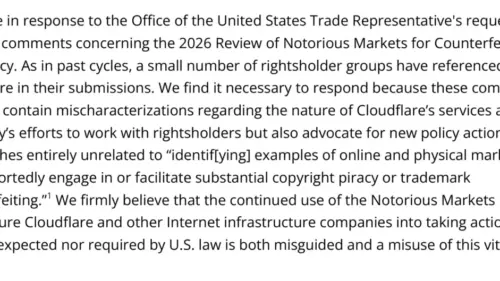
The timing of the closure has drawn intense interest from industry observers, largely due to the escalating spotlight placed on the platform by anti-piracy organizations. Just weeks prior to the shutdown, the Motion Picture Association spotlighted Streamed as a rapidly expanding and severe threat in its official annual submission to the Office of the United States Trade Representative. In its extensive filing cataloging notorious global piracy markets, the MPA explicitly characterized Streamed as a dominant Piracy-as-a-Service operator fueling the growth of unauthorized sports broadcasting.
Citing comprehensive web analytics data provided by Similarweb, the MPA detailed the staggering scale of Streamed’s operations. The industry group reported that approximately 30 distinct pirate websites relied on Streamed’s embedded infrastructure during the summer months, generating a combined total of 463 million visits. This represented a substantial escalation compared to the previous year, during which the MPA tracked 29 dependent sites drawing 134 million visits.
The MPA’s dossier emphasized that none of the downstream portals hosted live content independently. Instead, all traffic and data flow were funneled entirely through Streamed, which leveraged its dedicated infrastructure to sustain the massive audience numbers. Furthermore, the domain streamed.pk itself experienced explosive direct growth, pulling in nearly 20 million visits in September alone—a striking 56 percent increase over the preceding month. Geographic metrics indicated that nearly half of this direct traffic originated within the United States, with significant secondary audiences coming from Canada and the United Kingdom.
The MPA’s targeting of Streamed places the service alongside other prominent streaming giants that have recently vanished under mysterious circumstances. In its submission to trade officials, the MPA previously took credit for the sudden and unexpected closures of high-profile platforms such as Cineby and AnimeFLV. Both of those services had similarly gone dark without issuing explicit public statements regarding anti-piracy enforcement, leaving industry watchers to speculate on the behind-the-scenes legal pressure or domain seizures orchestrated by rights holders and coalition groups.
Despite the heavy focus from the MPA and its sister organization, the Alliance for Creativity and Entertainment, the closure of Streamed presents several ambiguous elements. Unlike high-profile law enforcement actions coordinated by international police agencies or major media conglomerates, the site currently displays no official seizure warrants, law enforcement splash screens, or legal warning banners. Neither the MPA nor ACE immediately responded to media inquiries regarding whether formal legal settlements, coordinated private enforcement actions, or cease-and-desist letters directly prompted the platform’s sudden demise.
At the same time, the fact that Streamed’s farewell page openly directs traffic toward competing commercial pirate sites complicates the theory that the shutdown was the result of a negotiated legal settlement with Hollywood studios or sports leagues. Typically, legal agreements resulting in voluntary surrenders require operators to forfeit domains to copyright holders or display standardized anti-piracy redirection notices rather than promotional guides for rival illicit services.
As the digital dust settles on the sudden departure of one of the internet’s most prolific sports streaming backbones, the broader implications for online piracy remain unfolding. While downstream portals work to rebuild their technical pipelines or pivot to alternative providers, the action—whether driven by direct legal pressure, fear of impending prosecution, or internal operator burnout—demonstrates the vulnerability of centralized infrastructure in the continuous cat-and-mouse game between global content creators and unauthorized streaming networks. Representatives from the MPA and ACE have not yet issued further public statements regarding the operational status of the remaining sites listed in Streamed’s farewell directory.