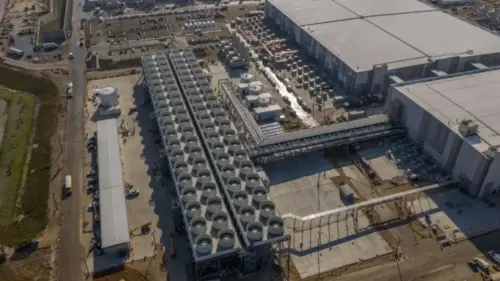
According to projections highlighted in a report covered by Bloomberg, by the year 2030, the ongoing buildout and operation of U.S. data centers will be outputting as much carbon dioxide annually as the entirety of Mexico. This staggering volume of greenhouse gas emissions threatens to effectively neutralize and push back decades of hard-fought national and industrial progress on greenhouse gas reduction by as much as 15 years. The revelation underscores a profound and escalating tension between the rapid commercial deployment of advanced technologies—particularly resource-intensive innovations like artificial intelligence—and global climate stabilization goals.
For years, environmental scientists, policy analysts, and energy regulators have watched the exponential growth of server farms with cautious eyes. These facilities, which house thousands of high-powered computers, cooling systems, and networking gear operating continuously around the clock, demand vast quantities of electricity. Historically, a significant portion of this electrical power has been drawn from conventional electrical grids heavily reliant on fossil fuels such as natural gas and coal. While major technology companies have increasingly pledged to transition toward renewable energy sources, the sheer speed at which data center construction is outpacing the development of new clean energy infrastructure has created a severe supply deficit.
The Sierra Club’s latest projections bring this looming crisis into sharp focus by translating abstract energy metrics into concrete climate consequences. By equating the projected carbon output of American data centers at the end of this decade to the total annual emissions of an industrialized nation the size of Mexico, the organization illustrates the sheer scale of the energy challenge at hand. Mexico, a country of more than 120 million people with extensive industrial sectors, transportation networks, and power generation infrastructure, currently produces hundreds of millions of metric tons of carbon dioxide equivalent each year. That a localized sector focused on digital data processing could match this national output highlights the extraordinary power intensity of modern computing facilities.
This sudden surge in energy demand is driven largely by the explosive proliferation of artificial intelligence models, cloud-based enterprise services, and massive data storage requirements. Training large language models, running complex machine learning algorithms, and processing real-time digital queries require computing power on a scale previously unseen. As tech giants and independent infrastructure developers race to secure real estate, electrical grid capacity, and cooling water resources, the environmental cost of this digital gold rush is becoming impossible to ignore. Local communities near proposed and existing data center hubs have increasingly raised concerns about grid reliability, rising household electricity bills, and the local environmental degradation associated with rapid industrial development.
The potential setback of 15 years in greenhouse gas reduction progress represents a critical blow to broader climate strategies. Over the past two decades, various sectors of the U.S. economy—including transportation, manufacturing, and traditional commercial buildings—have made incremental, often painful progress in cutting their carbon footprints through efficiency improvements, regulatory compliance, and a transition to cleaner energy sources. The realization that the data center sector alone could absorb and erase a significant fraction of these net gains highlights a structural vulnerability in national climate planning. If digital infrastructure growth continues on its current path without a massive, immediate intervention in clean energy supply and energy efficiency, the broader climate targets set by government bodies and corporate sustainability boards risk becoming mathematically unattainable.
Industry stakeholders, policymakers, and environmental advocates are now grappling with how to reconcile the commercial imperative for digital expansion with planetary boundaries. Grid operators across key regions in the United States are already reporting unprecedented spikes in peak load forecasts, forcing some utilities to reconsider plans to phase out coal and gas-fired power plants. In certain instances, energy companies have even explored keeping aging fossil-fuel plants operational or bringing retired facilities back online simply to meet the relentless power demands of incoming server farms.
At the same time, technology companies are facing mounting pressure to invest directly in new, additional clean energy generation—such as dedicated wind, solar, and advanced nuclear projects—rather than merely purchasing existing renewable credits from the grid. However, the lengthy timelines required to permit, finance, and construct new power plants and transmission lines mean that bridging the gap between digital growth and clean energy availability will remain a formidable challenge for the remainder of the decade. As the debate intensifies, the intersection of technology policy, energy regulation, and environmental protection has emerged as one of the most critical battlegrounds for the future of global climate action.