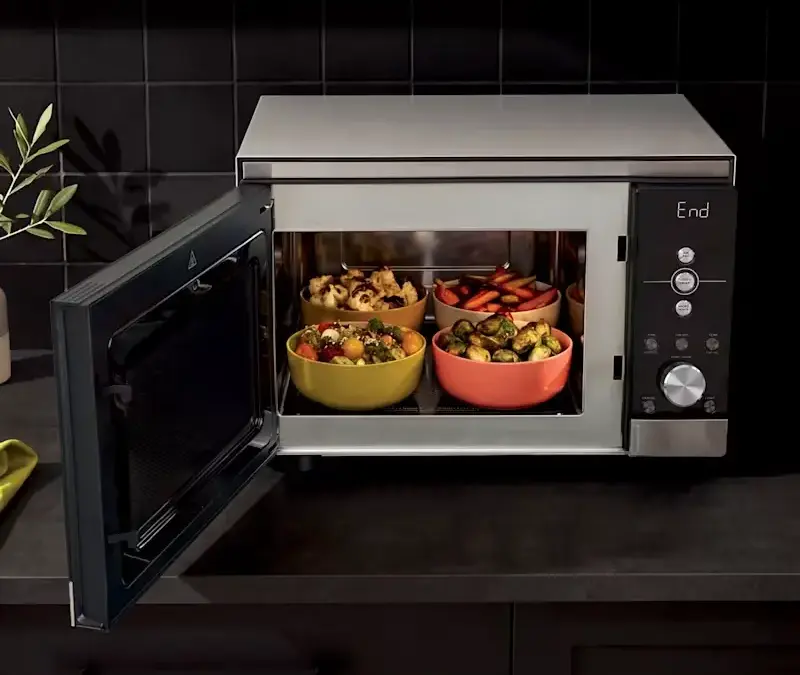
When it comes to kitchen appliances, few things are as universally relied upon—and occasionally quietly loathed—as the standard microwave. While indispensable for quickly heating liquids or thawing frozen ingredients, traditional microwaves have a well-earned reputation for ruining the texture of leftover foods, turning once-crispy pizza crusts, french fries, and breaded chicken into sad, soggy disappointments. For years, the workaround has involved keeping multiple gadgets on the counter, dividing kitchen territory between a microwave for speed and a standalone air fryer for texture.
Now, Ninja is making a strong case for streamlining the countertop with the introduction of the Ninja Crispi Microwave and Air Fryer. Priced at $449.99, the hybrid machine is designed to tackle a common culinary dilemma by combining a powerful microwave with a built-in air fryer system. The goal is to speed up everyday cooking tasks, restore crunch to leftovers, and ultimately free up valuable workspace in kitchens where every square inch counts.
Despite carrying a price tag that places it well outside the realm of budget-friendly kitchen electronics, this is far from an ordinary heating appliance. Under the hood, Ninja has paired a robust 1,000-watt microwave with a 1,700-watt air fryer system. The core of the machine’s performance relies on the company’s proprietary FusionCrisp technology, which is engineered to blend the raw speed of microwave cooking with the golden, crispy results typically expected from dedicated air frying units.
The primary promise of this dual-threat design is the elimination of the traditional compromise between speed and texture. Instead of choosing whether to heat food quickly or keep it from getting soggy, users can theoretically achieve results that are piping hot and juicy on the interior while maintaining a deliciously crisp, golden finish on the exterior. Foods that usually suffer in a standard microwave—such as leftover pizza, chicken tenders, and fries—are positioned as the prime beneficiaries of this technology.
While combination appliances that attempt to merge microwave capabilities with other cooking methods are not entirely unprecedented in the consumer market, they remain a niche category. Established brands like Smeg have previously explored the concept, and numerous modern microwaves on the market incorporate secondary cooking functions such as convection or grilling. However, the Ninja Crispi Microwave attempts to differentiate itself by engineering its FusionCrisp technology to genuinely integrate the two cooking methods rather than simply housing separate heating elements under one roof.

Hardware-wise, the appliance includes a 5.5-quart glass cooking dish accompanied by a nonstick crisper plate. When users want to air fry or impart a crunchy finish to their meal, the crisper plate sits directly on top within the glass dish. Another notable design choice is the omission of a traditional rotating glass turntable inside the cooking cavity. By removing the spinning plate, Ninja has opened up significantly more usable interior space, allowing cooks to fit larger dishes or prepare multiple items at once without the physical constraints imposed by a circular rotating track.
This expanded spatial configuration opens up new possibilities for multi-stage cooking tasks that go far beyond simply reheating yesterday’s takeout. For instance, when preparing a homemade pasta bake, the microwave component can efficiently cook the pasta through, while the air fryer function simultaneously engages to brown and crisp up the layer of cheese on top, all within the same vessel and machine.
Even so, potential buyers must weigh several practical considerations before committing to the investment. Measuring 20.3 by 17.56 by 14.1 inches, the appliance is decidedly substantial and takes up a significant footprint on a kitchen counter. While the device is intended to eliminate clutter by replacing two separate machines, its physical dimensions mean it may not represent an ideal solution for smaller apartment kitchens or galley layouts where counter space is already at an absolute premium.
The $449.99 retail price also demands careful thought. It is a considerable amount of money to spend on a single kitchen appliance, especially when a basic, entry-level microwave can handle standard everyday reheating duties for a small fraction of the cost. Yet, for households that find themselves regularly utilizing both a microwave and an air fryer on a daily basis, the convenience of a unified, space-saving hybrid device may ultimately justify the steep entry cost.