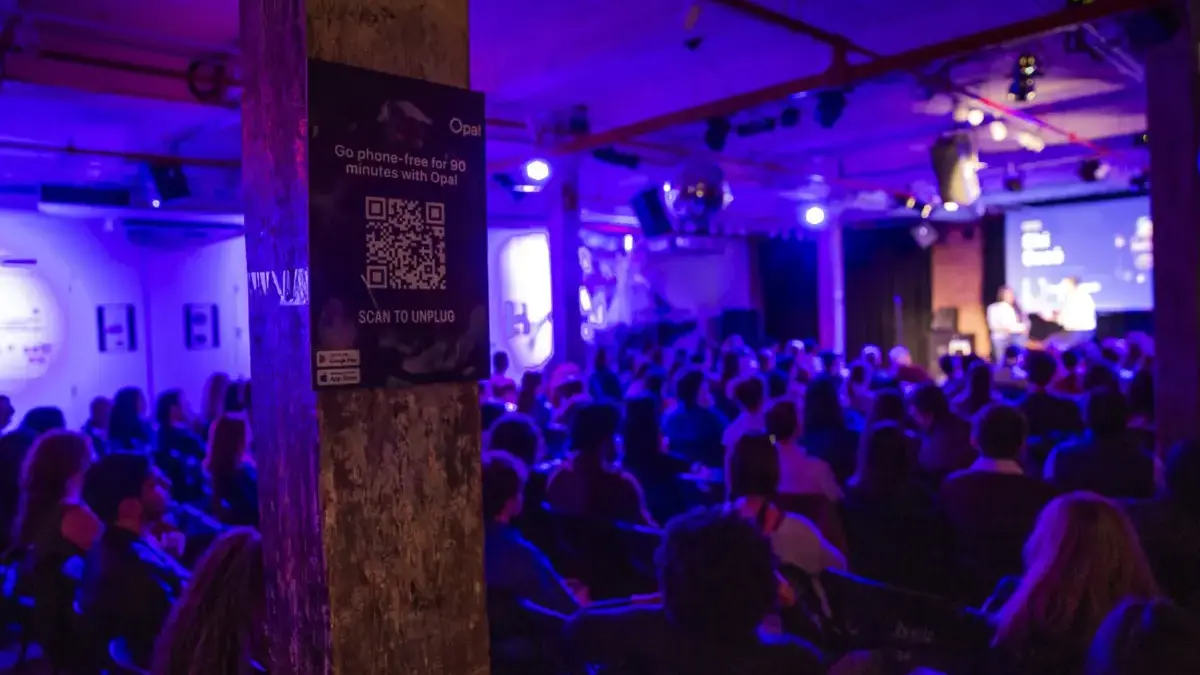
On a crisp Thursday evening in Brooklyn, stepping into a dimly blue-lit warehouse meant entering a familiar yet increasingly scrutinized ecosystem. Dressed in neon yellow heels and a floral mini dress—a nod to the sartorial freedom of New York—the scene was instantly recognizable to anyone embedded in the media, tech, and policy worlds. The room was already filling up fast for an event hosted by Newsreel, the media company founded by former Forbes and Newsweek reporter Jack Brewster, designed to get people talking about politics just days before the midterm elections.
The lineup on paper was built for the insider crowd. Kenneth Schlenker, co-founder of the focus app Opal, sat down for a fireside chat on “the state of attention,” while Aryan Banjan, creator of the campaign management software Barza, delivered a midterm forecast. Throughout the venue, panels and discussions were slated to cover everything from local electoral dynamics to media trends. Yet, as the evening progressed, a singular, massive undercurrent consumed nearly every conversation: artificial intelligence, the physical footprint of data centers, and a rapidly escalating backlash against the technocracy.
For tech reporters, the chasm between Silicon Valley and the rest of the country has never felt wider. Days spent interviewing ambitious founders and optimistic engineers—people entirely focused on the boundless benefits of artificial intelligence—can easily create a bubble of perception. Stepping outside that bubble reveals a starkly different reality. Far from being abstract concepts discussed in venture capital boardrooms, AI and data centers have morphed into visceral, ballot-box issues capable of swaying midterm races across the nation.
Recent data paints a vivid picture of this friction. A report from Data Center Watch revealed that nearly $200 billion worth of data center projects were delayed, stalled, or blocked in the first half of the year alone, all due to intense political and community opposition. States including Pennsylvania, Georgia, Texas, New York, and Virginia are actively considering stricter guardrails and transparency mandates to manage the dizzying pace of development. Virginia, already dubbed the “data center capital of the world,” faces hundreds of new proposed facilities, igniting fierce debates over land use and resources.

The mood at the Brooklyn warehouse reflected this growing anxiety, beginning with a fireside chat featuring New York City Council member Chi Ossé. When the conversation inevitably turned toward artificial intelligence near the end of his session, Ossé admitted he rarely uses the technology. Rather than staking out a deeply pro- or anti-AI stance, he focused his critique on accountability, arguing that trillionaires like Elon Musk should be taxed more heavily. Describing himself as a democratic socialist with a law-and-order philosophy, Ossé argued that when tech CEOs champion a technology with the disruptive potential to dramatically impact human civilization, they should be publicly called to testify before Congress.
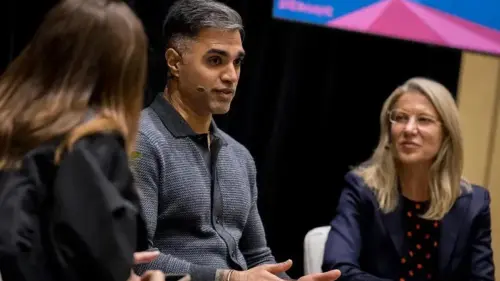
That tone of skepticism carried directly into the following panel focused on data centers, moderated by a discussion featuring Maia Woluchem, a technology and human rights researcher, and Hilary Flint, an environmental and public health advocate. Taking the stage and testing the room with a direct question—“Who here is pro-AI data center?”—was met with an immediate chorus of boos.
The ensuing conversation traversed a range of grievances. Communities across the country are growing increasingly frustrated by major technology companies accused of cutting secret deals with local officials to fast-track billion-dollar facilities. In many jurisdictions, opaque zoning rules ensure that residents remain unaware of what is being built until it is too far along to effectively protest.
At the same time, everyday citizens grappling with the rising cost of living are fighting to preserve their economic security, while tech leaders openly debate whether AI will replace human labor entirely. For many, these industrial-scale facilities have become the physical embodiment of their fears, anger, and alienation toward the tech elite.

Addressing the argument that some communities benefit economically from data center investments, Flint cut straight to the core of the community resistance. “What is a life worth?” she asked, noting that residents continue to protest because they value their health and environment far more than a temporary economic check.
Even panels ostensibly organized around entirely different topics found themselves inexorably pulled into the same gravitational orbit. A subsequent discussion featuring NewsNation host Batya Ungar-Sargon, political strategist Morris Katz, and Vox’s Astead Herndon was ostensibly scheduled to analyze the future of the Democratic Party. Yet it quickly pivoted back to infrastructure and technology.
Ungar-Sargon pointed out that certain labor unions support data center developments because of the promise of construction jobs. However, studies show that while these projects generate significant employment during their initial building phase, those jobs are largely temporary once construction concludes.
Drawing a historical parallel, Ungar-Sargon noted that Rust Belt communities once took immense pride in massive, industrial buildings because they represented shared prosperity, stability, and a tangible piece of the American dream. Today, however, that sense of shared destiny is missing.

Herndon highlighted a similar dynamic, noting that political figures like Vivek Ramaswamy have faced harsh pushback in states like Ohio for touching on the same core issue: a profound lack of local consent. Katz echoed these sentiments with sharp skepticism, describing big tech as the latest iteration of institutional powers that have systematically undermined labor and working people, returning now to capture the remaining resources.
Along the warehouse walls, sticky notes posted by attendees posed provocative questions, including whether big money could ever be removed from politics. One handwritten response captured the prevailing sentiment: “God, I hope so.”
When the panels concluded and the music shifted to high-tempo electronic beats, attendees broke into small clusters, continuing the debate in private conversations. Jack Brewster, reflecting on the evening, admitted he was struck by how completely AI and data centers dominated the discourse.
Notes collected from RSVPs showed it was the second most common topic submitted by attendees, proving that the issue has penetrated even dense urban centers like New York, where data centers are largely hidden from view. Brewster noted that while the backlash in rural communities centers on fears of displacement, in places like Brooklyn, the friction is rooted in questions of wealth distribution and economic fairness.

Before leaving the venue, conversations with various attendees revealed the cultural ripple effects of the tech boom. Founders traded notes on emerging AI assistants, while non-tech attendees pointed to the saturation of deepfakes and AI-generated art. Some noted that algorithmic media is increasingly signaling cheapness, pointing to luxury brands moving in the opposite direction—such as Prada’s hand-drawn holiday campaigns and Hermès highlighting handmade artisan work on social media.
A software engineer sharing stories on her way out mentioned hearing about a Halloween manicure that sparked a joking debate over whether the orange polish was a tribute to an enterprise IPO. She also noted that data centers are quietly emerging in her Southern California hometown, embedded within a Chinese immigrant community where neighbors have begun posting yard signs depicting dragons choking data centers, complete with translations across multiple languages.
Reflecting on that imagery on the way out into the New York night, it became clear just how deeply the physical and cultural footprint of the tech industry has woven itself into the fabric of everyday life—and how starkly the aspirations of Silicon Valley continue to clash with the realities on the ground.