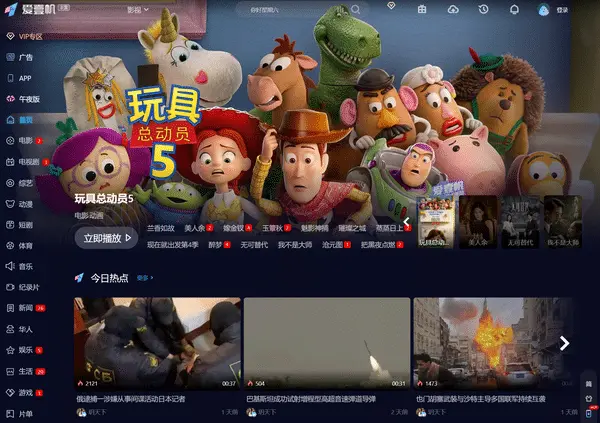
Chinese streaming giant iQIYI has scored a significant, albeit partial, victory in a U.S. federal court against Aiyifan, a prominent pirate streaming network catering to Chinese-speaking audiences residing outside of China. While a Florida federal judge ruled that the operators are liable for copyright and trademark infringement, the final monetary damages awarded represent just a fraction of the astronomical sum requested by the streaming platform.
The legal battle in the United States mirrors a broader, transnational crackdown on digital piracy by major Chinese entertainment companies. Just last month, rival Chinese streaming titan Tencent won the preliminary phase of its own U.S. legal battle against another pirate platform, Olevod, proving that domestic platforms are increasingly willing to cross international borders to protect their intellectual property. In the case of Aiyifan—which operates concurrently under alternative names such as YFSP and IYF across domains including aiyifan.tv, yfsp.tv, and iyf.tv—the scale of operation is substantial. According to web analytics firm Similarweb, the yfsp.tv domain alone pulled in roughly 14 million visits during the month prior to the ruling.
Unlike Olevod, which has mounted a defense in court, Aiyifan’s operators chose not to appear in the U.S. proceedings, and no individual human defendants were formally named in the American complaint. Consequently, a default was entered by the court in July 2025. However, the absence of a defense in Florida does not mean the platform’s backers have escaped unscathed. In a parallel development halfway across the globe, the legal net has already closed tightly around one of the key figures behind the illicit network’s technological infrastructure.
Operator Jailed in China

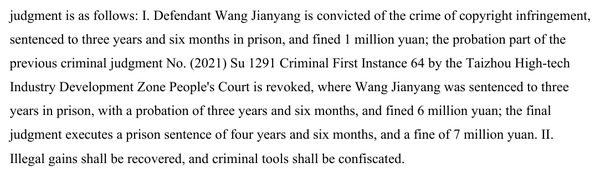
While civil litigation has played out in the United States, criminal enforcement in China has yielded tangible, severe consequences for those responsible for Aiyifan’s day-to-day operations. In August, legal representatives for iQIYI updated the Florida federal court regarding a definitive criminal ruling handed down by the Shanghai Third Intermediate People’s Court, which upheld the conviction of Wang Jianyang.
Court documents submitted to the U.S. docket describe Wang as one of the core principals of the Aiyifan enterprise. Operating out of a company based in Chongqing, Wang managed the technical architecture that kept Aiyifan’s websites and mobile applications functional. In addition to technical support, his responsibilities included orchestrating advertising and promotional campaigns for the pirate service, a role he maintained from 2022 onward.
Chinese law enforcement authorities detained Wang in March 2024, more than a year before iQIYI initiated its civil lawsuit in the Southern District of Florida. Wang was hardly a newcomer to intellectual property enforcement agencies. Back in 2021, a court in Jiangsu province convicted him of establishing and operating an entirely separate pirate streaming website. For that prior offense, he received a three-year prison sentence, which was suspended, alongside a hefty fine of 6 million yuan.
Despite being on probation, Wang proceeded to launch and support Aiyifan. Consequently, in March of this year, a Shanghai district court revoked his suspended sentence, appending an additional three-and-a-half-year prison term and a 1 million yuan fine. Combined with the activation of his prior sentence, Wang now faces an aggregate prison term of four and a half years and total fines amounting to 7 million yuan.
Wang actively appealed the Shanghai district verdict, arguing that the evidence presented against him was insufficient and that his involvement was strictly limited to providing technical support rather than directing the enterprise. The Shanghai appeals court summarily rejected these arguments, concluding that his contributions were integral to the functioning of the illicit platform. With the appeals process exhausted, that conviction is now final.

Florida Court Cuts Down $196 Million Claim to $1.96 Million
Back in the United States, iQIYI’s civil lawsuit aimed not only to establish liability but to secure a definitive financial blow that would deter similar operations. Because Aiyifan’s operators completely ignored the U.S. litigation, iQIYI moved for a default judgment and initially requested an enormous $196.55 million in statutory damages.
The bulk of that staggering figure was calculated by applying the maximum statutory penalty of $150,000 per work to 776 registered titles cataloged on the platform. Thousands of additional unregistered works featured on the site were leveraged to claim another $78.55 million in proposed damages.
In January, U.S. District Judge Melissa Damian ruled that Aiyifan was indeed liable for infringement. However, she balked at the sheer scale of the financial request, rejecting the proposed damages award because it lacked adequate legal and evidentiary support. In response, iQIYI submitted a revised request totaling $54.4 million, which the court once again found excessive.
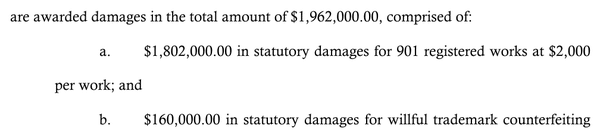
In the final order issued by Judge Damian, the court adopted a more measured approach. The judge awarded $1,000 per registered work, doubling the figure to account for the willful nature of the infringement. This calculation encompassed a total of 901 works, as iQIYI had managed to process additional copyright registrations while the litigation was actively moving through the court system.
When combining the copyright awards with an additional $160,000 allocated for trademark claims—and declining to award any statutory damages for the approximately 5,000 unregistered works on the platform—the final judgment settled at $1.96 million. This final figure represents roughly one percent of the streaming company’s initial multi-million-dollar demand.
Judge Rejects Broad Domain Transfers and Third-Party Bans
The reduction in monetary damages was not the only limitation placed on iQIYI by the federal court. The streaming company had also sought a sweeping injunction designed to cripple Aiyifan’s technical capabilities by forcing the complete forfeiture of its domain names and rerouting them to iQIYI’s official web properties. Furthermore, the platform asked the court to order internet service providers, content delivery networks, hosting providers, payment processors, and even messaging platforms like WeChat to completely cease providing services to Aiyifan.
While iQIYI eventually dropped most of the third-party service providers from its amended motion, it continued to press heavily for the complete seizure and transfer of the pirate network’s domain names. Judge Damian, however, was not persuaded that such a broad remedy was appropriate under the circumstances.
During the proceedings, iQIYI conceded that it could not definitively prove what percentage of the content hosted across the various domains was explicitly infringing, nor could it rule out the possibility that some materials on the sites might be properly licensed. Because Aiyifan streams a substantial volume of content that is not exclusively owned or licensed by iQIYI, executing a total domain takeover would overreach the boundaries of fair equitable relief.
The court’s written order explicitly acknowledged that while some judges within the same judicial district have historically adopted a more liberal and expansive approach toward granting injunctive relief, Judge Damian chose to align her decision with the Eleventh Circuit’s stringent requirement that injunctions must be narrowly tailored to address specific harms.
Registrar Provisions Present Practical Hurdles
Rather than ordering the outright transfer of domain ownership, the final judgment directs domain registrars to cancel specific web pages and subdomains that prominently feature iQIYI’s copyrighted television shows, movies, or registered trademarks, provided that iQIYI submits a specific list of offending URLs. The order further stipulates that if a registrar fails to comply with this directive, the registry must move the domain name over to a registrar selected by iQIYI, changing the administrative registrar without altering the underlying ownership of the domain itself.
Legal and technical analysts have questioned the practical viability of these registrar provisions. A domain registrar fundamentally controls the registration status of a top-level domain name rather than the granular content hosted on individual web pages or subdomains. Consequently, the primary operational tools available to a registrar typically involve suspending or redirecting an entire domain as a single entity—precisely the kind of broad, heavy-handed outcome that the court expressly sought to avoid.
Even targeting specific subdomains presents logistical challenges. For instance, two of the prominent URLs listed in the judgment—m.yfsp.tv and www.yfsp.tv—share an identical root domain. A registrar generally lacks the capability to disable one specific subdomain unless it exercises direct control over the domain’s underlying Domain Name System configuration.
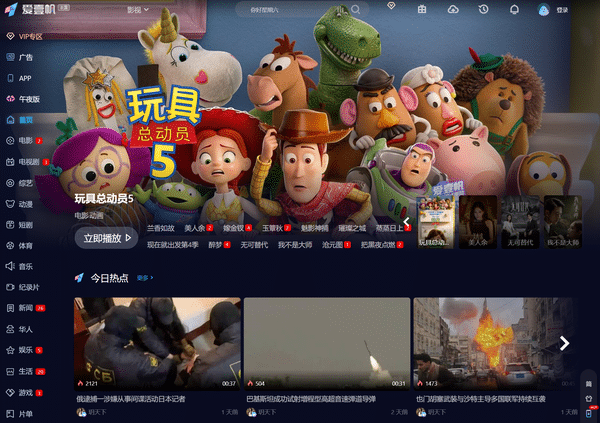
For the time being, the various Aiyifan domains remain active and accessible online. Given that the site’s operators have refused to participate in the U.S. legal proceedings, it remains an open question whether iQIYI will successfully recover any portion of the nearly $2 million judgment awarded by the Florida court.