A federal magistrate judge has ordered Meta to disclose the identities of every employee involved in decisions to torrent pirated books and shadow library datasets for the training of the company’s Llama artificial intelligence models. The ruling marks a significant escalation in ongoing legal battles over copyright infringement, pushing past Meta’s defense that its actions were merely technical choices managed through team consensus rather than directed by top-level executives.
The directive comes from Magistrate Judge Thomas Hixson, who last month ordered Meta to hand over the command histories of the servers it used to download materials via BitTorrent. Those underlying server logs are expected to shed light on how Meta’s torrent clients were configured, including whether adjustments were made to upload and seeding settings.
While the technical logs will reveal the mechanics of what transpired on Meta’s machines, publishers like Entrepreneur Media are seeking accountability regarding corporate responsibility. Entrepreneur Media, which publishes Entrepreneur magazine, filed one of several related lawsuits accusing Meta of contributory copyright infringement and illegal distribution by uploading works to third parties via peer-to-peer networks.
The Evolution of the Legal Battle
The legal challenges facing Meta stem from its utilization of extensive datasets comprising pirated texts to train its powerful Llama AI models. In a prominent class-action lawsuit filed by authors including Richard Kadrey and Sarah Silverman, a federal court previously ruled that training AI models on copyrighted books constituted fair use under United States copyright law.
That partial ruling handed Meta a major victory, narrowing the scope of the litigation significantly. However, claims centered around BitTorrent usage and the unauthorized seeding of copyrighted materials survived, leaving them as the primary live issues in the case.

Entrepreneur Media’s parallel lawsuit similarly targets Meta’s acquisition methods. To advance its claims of contributory infringement and willful distribution, the publisher formally asked Meta to identify every person who "made, authorized, or approved" the decisions to obtain shadow library datasets through BitTorrent networks.
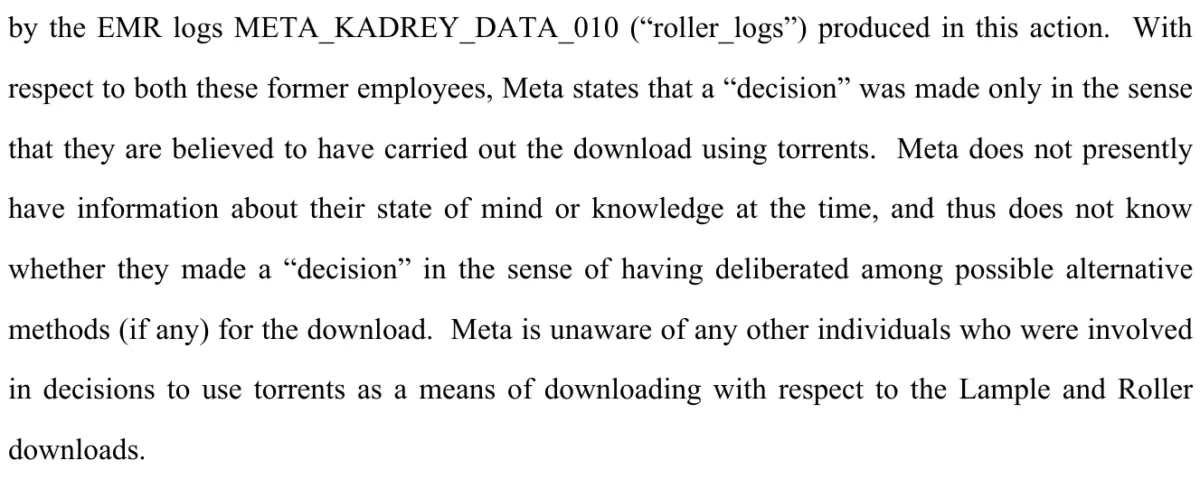
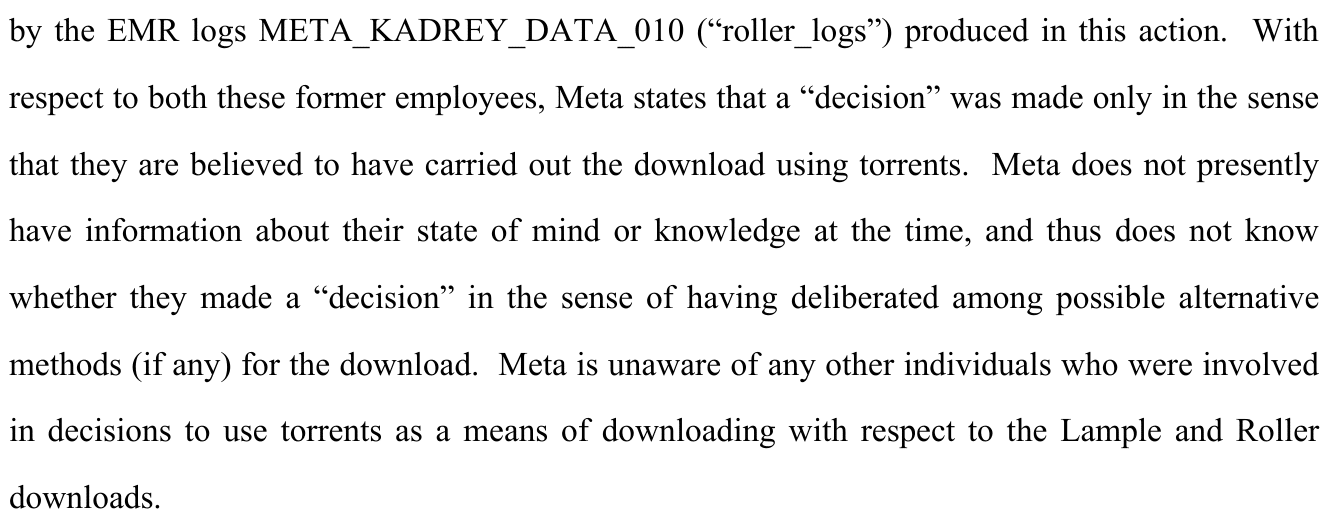
In response, Meta identified several individuals associated with general data-handling decisions. However, the tech giant maintained that it could not pinpoint anyone who "formally" made or approved the decision to acquire or utilize books for its first two Llama iterations. Meta argued that those data acquisitions typically materialized through collaborative team consensus rather than top-down executive directives.
When pressed specifically on the mechanics of downloading via BitTorrent, Meta characterized the actions of its employees as routine technical decisions. The company also noted that its acquisition of data from Anna’s Archive underwent an internal legal review in early 2024, involving its internal legal department. Yet, the company’s disclosures stopped short of naming higher-level leadership who might have greenlit the use of BitTorrent protocols.
This defense drew sharp criticism from the plaintiffs. "On that construction no one at Meta decided to torrent anything, yet Meta torrented shadow libraries repeatedly from 2022-2024," Entrepreneur Media countered in court filings.
Internal Warnings and ‘Legally Not Okay’
The question of corporate authorization takes on added weight given internal hesitancy documented within Meta’s own records. Testimony and internal logbooks indicate that the legal and operational risks of BitTorrent networks were recognized by employees during the data collection process.

One engineer who participated in downloading data from Library Genesis (LibGen) previously testified that the issue of seeding—the process of simultaneously uploading files to other users on the network—was discussed internally, prompting some employees to take steps to limit upload activity.
A particularly revealing internal logbook reviewed by an employee prior to initiating a download from Anna’s Archive explicitly addressed the hazards of peer-to-peer file sharing. According to excerpts cited in Entrepreneur Media’s court filings, the logbook recorded a deliberate internal choice to avoid torrent protocols.
"Decided to go with direct file uploads without using torrents for the following reasons: Using torrents would entail seeding the file such as sharing content outside. This would be legally not okay," the logbook stated.
Meta does not dispute that it utilized BitTorrent to download LibGen’s Scimag collection and data from Anna’s Archive. However, the company maintains that it is unaware of any individual who specifically "made, authorized, or approved" a decision to upload or distribute the material to external parties. Meta’s legal counsel emphasized that technical measures were implemented to mitigate seeding.
The exact scale of data shared externally remains a subject of ongoing dispute. Last year, an independent expert retained by Meta estimated that uploads originating from the company’s Amazon Web Services (AWS) servers accounted for roughly 30 percent of the total volume downloaded during BitTorrent sessions between April and July 2024.
The Court Weighs In on Decision-Makers
Ruling on the discovery dispute, Magistrate Judge Hixson rejected Meta’s narrow interpretation of the plaintiffs’ interrogatories. The judge noted that the requests were not restricted solely to formal, top-level decisions, pointing out that Meta’s previous responses focused primarily on the subsequent use of the data rather than its initial acquisition and downloading.
Judge Hixson also dismissed Meta’s argument that collaborative team consensus shields the company from naming specific participants. The court held that because the interrogatories explicitly sought information regarding all decision-makers, every individual involved in a group consensus must be formally identified.
Under the new order, Meta must identify all employees who participated in the discussions preceding the 2023 LibGen torrent download. The tech giant is similarly required to name the individuals who approved the transition to BitTorrent, as well as those who greenlit the April 2024 data acquisition from Anna’s Archive.
Crucially, the scope of the order extends to anyone who deliberated or decided "whether or how to seed, or to mitigate seeding," during the downloading of the LibGen Scimag collection and Anna’s Archive.
For publishers like Entrepreneur Media, compiling these names is vital for establishing the legal foundation of their claims. The plaintiffs argue that uncovering who knew what and when bears directly on the question of willfulness, which is central to proving contributory copyright infringement and unauthorized distribution.

With the parameters of discovery now firmly set by the court, the immediate legal battlefield centers on identifying the personnel behind the operations. Broader legal questions—including whether Meta’s torrenting practices qualify as fair use and whether the company illegally distributed pirated books to external third parties—remain pending as the litigation moves forward.