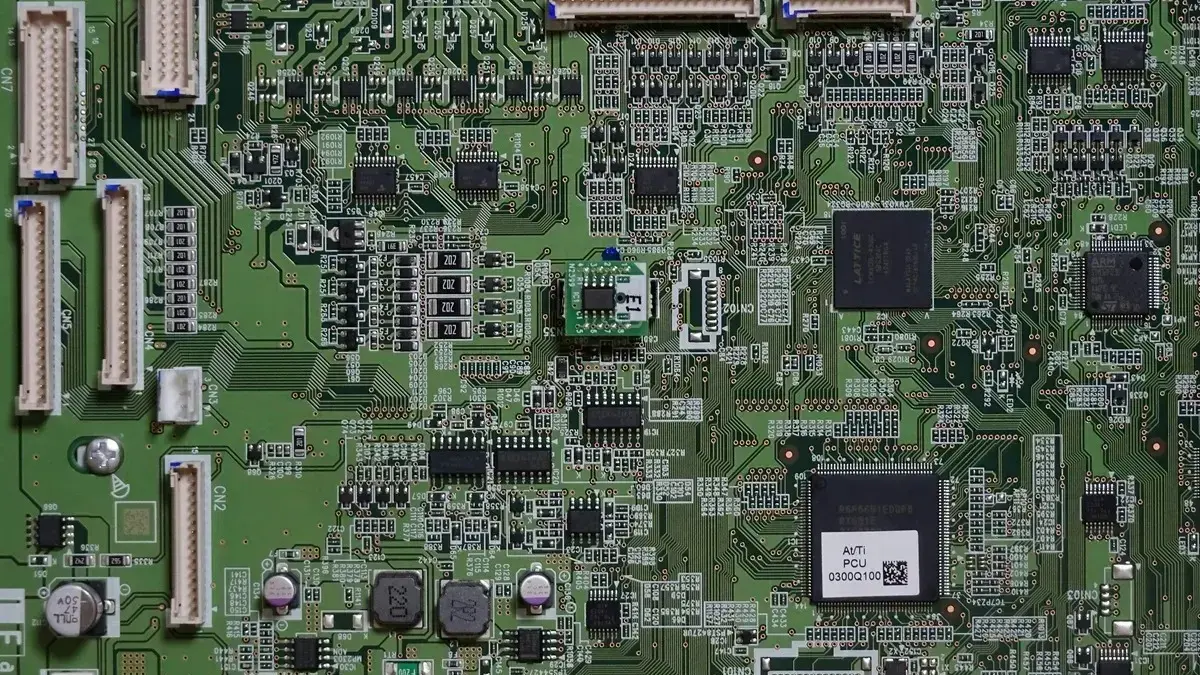
The rapid evolution of modern electronics has brought about a significant engineering paradox: as devices shrink in overall size, the internal complexity and density of their printed circuit boards (PCBs) grow exponentially. This ongoing trend toward component miniaturization is creating unprecedented thermal challenges for ball grid array (BGA) rework operations. With smaller components and drastically denser boards populating the modern manufacturing landscape, the margins for error in thermal management have nearly vanished.
In contemporary high-density assemblies, miniature passive components can now be located within a millimeter or two of rework targets. This spatial compression severely tightens thermal profile windows and dramatically raises the operational stakes for precision heat delivery. Traditional hot-air systems that historically operated with great reliability at larger scales are increasingly struggling to meet the rigorous demands of today’s advanced high-density assemblies. As manufacturing standards push the envelope of physical geometry, the industry is forced to rethink how heating physics, board architecture, and rework equipment interact.
The SMT Miniaturization Trend Behind Modern PCB Design
The relentless industry drive toward achieving higher functional capabilities within smaller form factors has pushed surface mount technology (SMT) miniaturization firmly to the forefront of PCB design priorities. Modern hardware designers are tasked with packing progressively more components into constrained spaces, resulting in the widespread adoption of passive components featuring ultra-small 0201 and 01005 footprints in high-density applications.
According to the International Electronics Manufacturing Initiative (iNEMI) electronics roadmap, component miniaturization and increased packing density serve as primary industry drivers. As manufacturers push toward finer geometries, high-density interconnect (HDI) microvia sizes continue to shrink correspondingly. This overarching industry trend creates a cascading series of new challenges for rework operations, many of which were originally engineered around much larger geometries and more forgiving spatial margins.
The consequences of this miniaturization ripple through every phase of assembly and repair. When an engineer attempts to remove or replace a defective BGA on a densely populated board, the physical proximity of neighboring devices turns a routine procedure into a high-stakes thermal balancing act.

Proximity and Warpage Risks in High-Density Assemblies
As component spacing tightens across the board, the physical gap between a target BGA and its neighboring 0201 or 01005 passives can easily fall below a single millimeter. Standard hot-air nozzles, by design and historical application, were never engineered for this level of extreme proximity. Consequently, airflow that is originally intended to reflow a single target package can inadvertently reach adjacent passives, causing unintended reflow, component misalignment, or complete physical displacement.
Beyond the immediate danger to neighboring passives, modern PCB architectures face severe structural threats from thermal stress. Thinner substrates and increasingly complex multi-layer stackups introduce acute warpage concerns. When uneven thermal gradients sweep across the board during heating and cooling cycles, the physical stress can warp the PCB, compromising structural integrity.
Proper thermal profiling practices consistently demonstrate that warpage occurs when temperature gradients exceed acceptable operational limits. To combat this, manufacturing facilities are increasingly utilizing bottom-side preheaters equipped with adjustable nozzles to help reduce localized substrate stress and maintain better overall board flatness.
Academic and industry research underscores the critical nature of these interventions. A peer-reviewed heat shield study revealed that strategic heat shield placement resulted in up to an 8.18% reduction in adjacent-component peak temperatures. Furthermore, the study found that maintaining center and corner BGA temperatures below 195 degrees Celsius and 210 degrees Celsius, respectively, cut solder joint cracking rates by more than half. To achieve these tighter thresholds, some advanced facilities are reportedly adopting focused laser rework systems and micro-convection stations capable of establishing much narrower, highly controlled thermal zones.
Solder Voids and Capillary Effects at Micro Geometries
The physical dynamics of soldering change dramatically as dimensions approach the sub-millimeter scale. Thermal profile windows tighten noticeably as solder ball diameters shrink. At the micro-scale of modern SMT miniaturization, airflow turbulence generated by conventional convective heating can actively disrupt the delicate surface tension of molten solder. This turbulence introduces a severe risk of manufacturing defects, including capillary wicking or vapor-pressure-driven voiding, particularly in underfilled fine-pitch BGAs.

Furthermore, even minor package or PCB warpage during the critical cooling phase can instigate catastrophic failures. Such warpage can easily cause solder bridging between adjacent balls or, conversely, create open joints where electrical contact fails to establish entirely. Under these conditions, the allowable margin for error becomes nearly invisible.
Heating methods that worked reliably at a 0.5-millimeter pitch frequently struggle when applied to a 0.3-millimeter pitch. Achieving success at a finer pitch inherently requires tighter process control windows and significantly more precise thermal delivery systems than what was previously deemed acceptable in standard manufacturing environments.
How Convective Hot Air Heating Works
Understanding the limitations of current technology requires examining the foundational physics of convective heating. In convective systems, energy transfer occurs primarily through circulated airflow that is directed onto the target area via specifically sized nozzles. Responsive electronic control over ramp rates and cooling phases has historically made this method exceptionally effective for a wide array of general rework scenarios.
However, as component geometries continue to shrink, maintaining the necessary airflow uniformity becomes increasingly challenging. Any microscopic disruption in that uniformity directly affects thermal delivery consistency.
For example, a standard nozzle sized for a 15-millimeter BGA can easily create edge effects or turbulent eddies when operators attempt to confine and focus the heat onto a much smaller 5-millimeter device that happens to be tightly surrounded by delicate passives. The fundamental physics of convective airflow clearly favor larger-scale applications where spatial margins are generous enough to allow air to spread predictably across the surface.

The Physics Behind Radiant and Infrared Heating
In contrast to convective systems, radiant heating—including infrared (IR) technology—delivers energy via electromagnetic radiation rather than relying on circulating airflows. While this alternative approach effectively eliminates concerns regarding airflow turbulence, it simultaneously introduces an entirely different set of complex variables for engineers evaluating the BGA rework process.
Top-to-bottom thermal uniformity in radiant systems depends heavily on whether the rework station includes a focused bottom hot-air feature. Stations that lack this complementary feature often struggle to ensure that radiant energy is distributed evenly from the top of the BGA all the way down to the bottom of the PCB. To compensate for this thermal imbalance, operators are frequently forced to raise under-heater temperatures, resulting in a required temperature delta that varies significantly across different equipment designs.
The capabilities of both hot air and IR stations become critically important when manufacturing facilities demand consistent, repeatable results on high-density boards. On such assemblies, even minor thermal imbalances can readily cause joint failures or irreversible physical damage to nearby packages.
Data indicates that temperatures can vary by up to 100 degrees Celsius from the software setpoint in certain machines. Because of this potential variance, rigorous calibration and continuous monitoring of temperatures are essential practices for creating a reliable and safe thermal profile.
Thermal Profiling for High-Density PCB Rework
Ultimately, the selection of appropriate rework equipment comes down to matching the underlying physics of heating methods to the specific architecture of the circuit board. While traditional convective systems offer excellent ramp control, they frequently struggle with the severe proximity constraints imposed by modern high-density layouts.

Conversely, radiant approaches can successfully mitigate turbulence-related issues, but engineering teams must pay meticulous attention to achieving proper top-to-bottom thermal uniformity. To assist in this evaluation, the IPC-7530 thermal profiling standard provides a formal framework for temperature profiling in mass soldering processes like reflow. This established standard gives engineering teams a consistent, standardized basis for evaluating and comparing the real-world capabilities of various rework equipment options.
Why Heating Method Choice Now Defines Rework Success
Choosing the correct heating method has evolved from a secondary logistical detail into a primary equipment decision for electronics manufacturers. As physical geometries continue to shrink and assembly densities steadily rise, the precise physics of thermal delivery in the BGA rework process directly dictates manufacturing yield in high-value electronic assemblies.
Carefully matching rework heating systems to current and future board designs is essential for protecting overall production efficiency and long-term assembly integrity. As industry projections indicate that engineers will push even further into sub-millimeter spacing in the coming years, mastering the thermal dynamics of high-density rework will remain a defining factor for manufacturing success.