The Linux desktop landscape is undergoing a monumental architectural shift. As mainstream environments and distributions systematically phase out the decades-old X11 display server architecture in favor of the modern Wayland protocol, the computing community finds itself at a historical crossroads. While major players like KDE and GNOME actively sunset their native X11 sessions, a dedicated movement of open-source developers is refusing to let the technology fade into obscurity.
For decades, the X Window System—typically deployed via the X.Org Server, or Xorg—has served as the fundamental graphical bedrock of the Unix and Linux experience. It handles vital communication between applications, input devices, and display hardware, leaving window management and compositing to secondary components. However, the industry consensus has decisively pivoted toward Wayland, a streamlined display protocol where the compositor acts directly as the display server to streamline graphics pipelines and eliminate persistent issues like screen tearing.

With KDE confirming that Plasma 6.7 will mark its final release featuring a native X11 session, and GNOME having already excised its own X11 implementation, the writing appears to be on the wall for traditionalists. Although legacy applications continue to function seamlessly within Wayland environments via the Xwayland compatibility layer, a growing contingent of users and developers still prefer native X11 workflows. Rather than accepting the inevitable obsolescence of their preferred environment, several independent developer groups and open-source projects are actively stepping up. Some are maintaining and forking existing codebases, while others are embarking on ambitious engineering feats to rewrite X11 servers completely from scratch.
A survey of the current open-source ecosystem highlights eight distinct projects that have shown active development over recent months. Spanning tailored desktop environments, foundational compatibility layers, modernized server forks, and ground-up rewrites in memory-safe languages, these initiatives demonstrate that the X11 ecosystem still harbors a surprising degree of vitality.

1. SonicDE
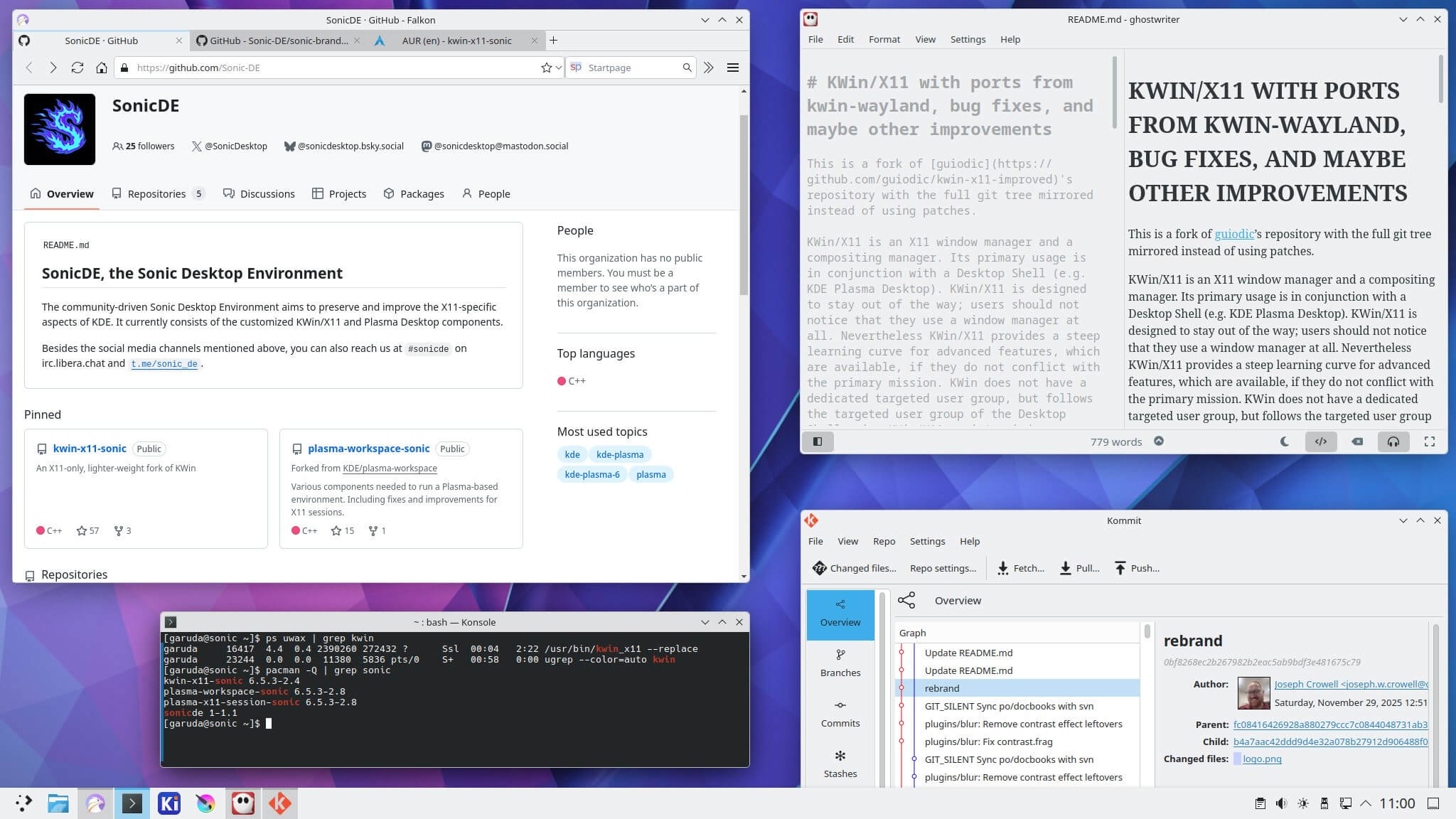
At the desktop environment level, SonicDE has emerged as a prominent project bridging the gap between modern KDE infrastructure and a persistent preference for X11. Branching directly off KDE Plasma 6, SonicDE places X11 front and center. The initiative originated in 2025 as a patched variant of KWin and X11 known as kwin-x11-improved. Over time, that preliminary work evolved into sonic-win, a dedicated window manager and compositor designed to keep KWin/X11 functional by integrating selected code patches from KWin/Wayland alongside custom engineering fixes.
Beyond the window manager itself, the SonicDE team is systematically forking foundational KDE components and stripping away Wayland-only dependencies. Development is currently underway on a Vulkan graphics backend, with maintainers committed to sustaining X.Org Server compatibility for as long as technical feasibility allows. In addition to these structural changes, the desktop environment incorporates practical user conveniences, such as global hotkeys for push-to-talk functionality, OBS Studio recording toggles, and integrated screen recording capabilities within remote desktop software like TeamViewer. Readily available installation packages cater to a wide array of Linux distributions, including Arch-based systems, Artix, Manjaro, Gentoo, Void, and Slackware.
2. Trinity Desktop Environment
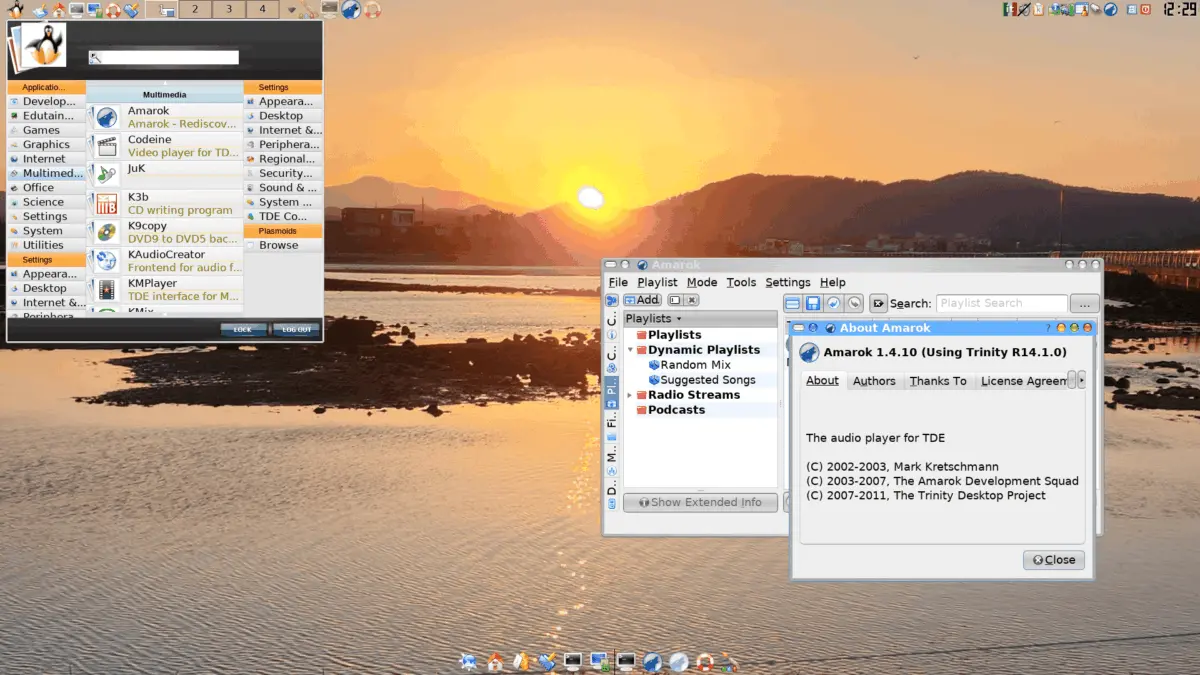
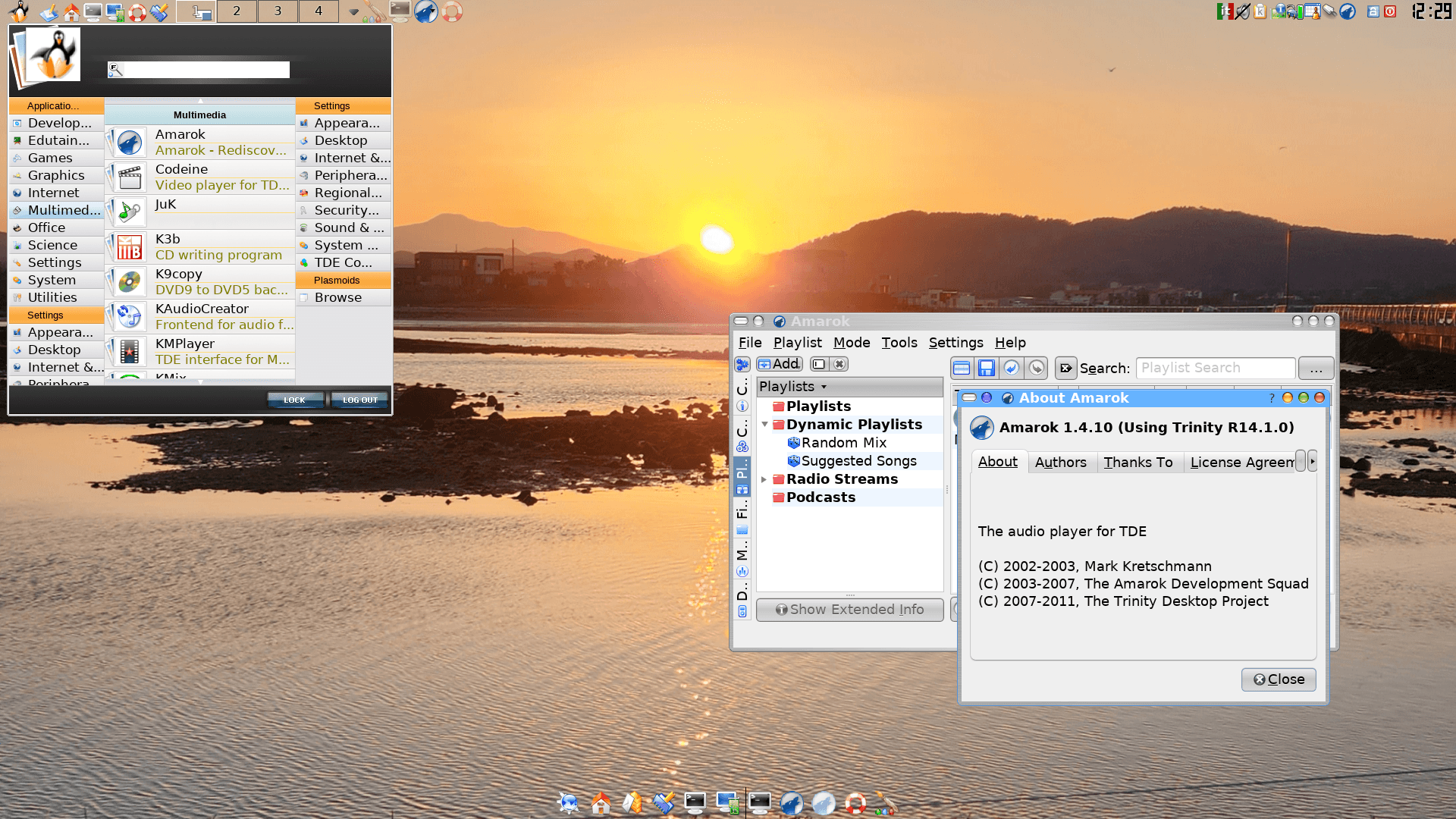
While SonicDE modernizes the KDE Plasma paradigm, the Trinity Desktop Environment takes a different approach by preserving a classic era of Linux computing. TDE maintains the historic KDE 3.5 codebase as a fully independent desktop environment, fulfilling a mission to safeguard the look, feel, and workflow of a traditional desktop while remaining exceptionally lean and capable of running smoothly on modest hardware.
Unlike its mainstream counterparts, TDE steadfastly continues to offer a traditional X11-based desktop environment rather than transitioning to Wayland. Its feature set includes a built-in X11 compositor, with project contributors actively maintaining all underlying components required to sustain the classic desktop experience. Maintenance updates continue to roll out regularly, focusing on critical fixes such as improved window tiling for maximized windows, refined visual branding, and resolutions for persistent transparency issues. Furthermore, updates have introduced practical UI enhancements like a 3D border option for the Kicker panel and dedicated navigation shortcuts in the Konqueror web browser. TDE remains widely accessible across numerous Linux distributions as well as FreeBSD.
3. Wayback
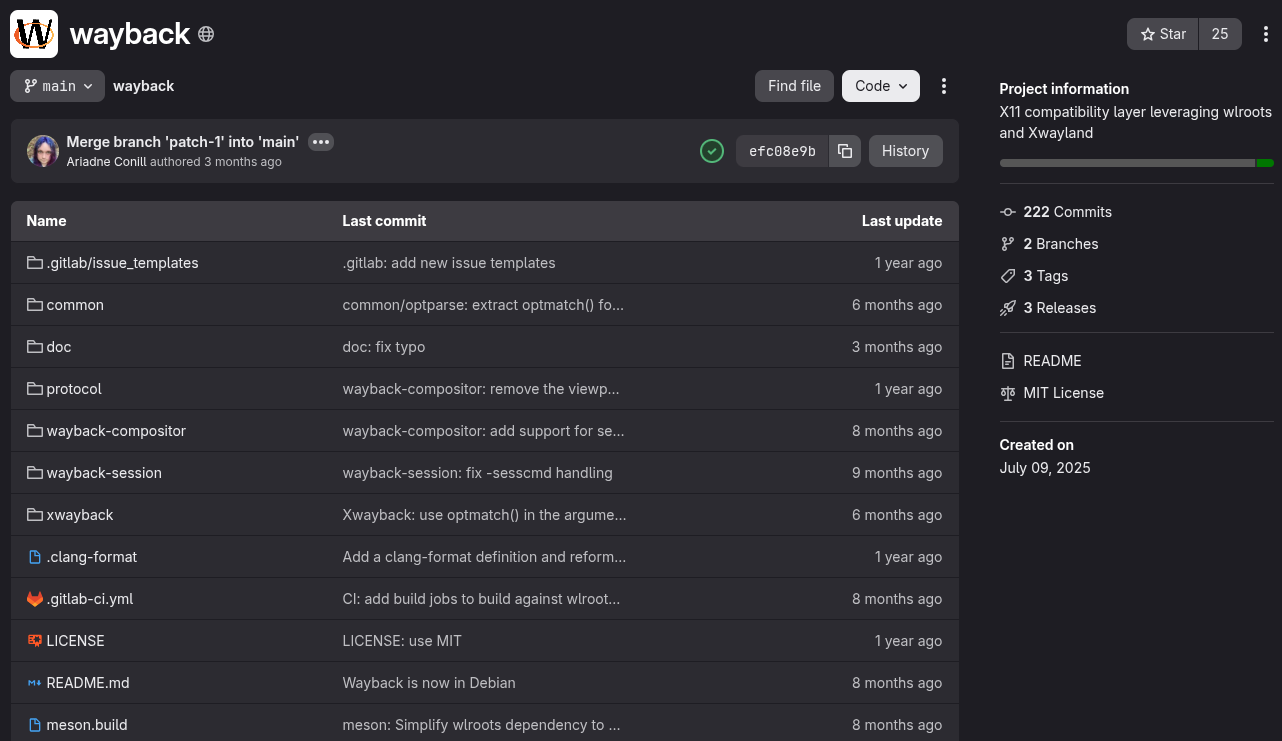
For those who wish to maintain traditional X11 desktops and clients without relying on the aging Xorg server binary, Wayback offers a unique structural alternative. Rather than replacing X11 clients or user-facing desktop environments, Wayback targets the foundational layer directly underneath them.
Developed by Ariadne Conill of Alpine Linux, Wayback is a lightweight Wayland compositor constructed using the wlroots library. It incorporates only the bare minimum Wayland functionality required to execute Xwayland in rootful mode, thereby allowing an entire X11 desktop environment to operate seamlessly within it. The primary objective is to render the traditional Xorg server binary entirely unnecessary while preserving full compatibility for existing X11 desktops, particularly within resource-constrained environments like Alpine Linux. Although the MIT-licensed project remains experimental and carries alpha-quality status with infrequent release cycles, it represents an innovative bridge between architectural paradigms.
4. XLibre
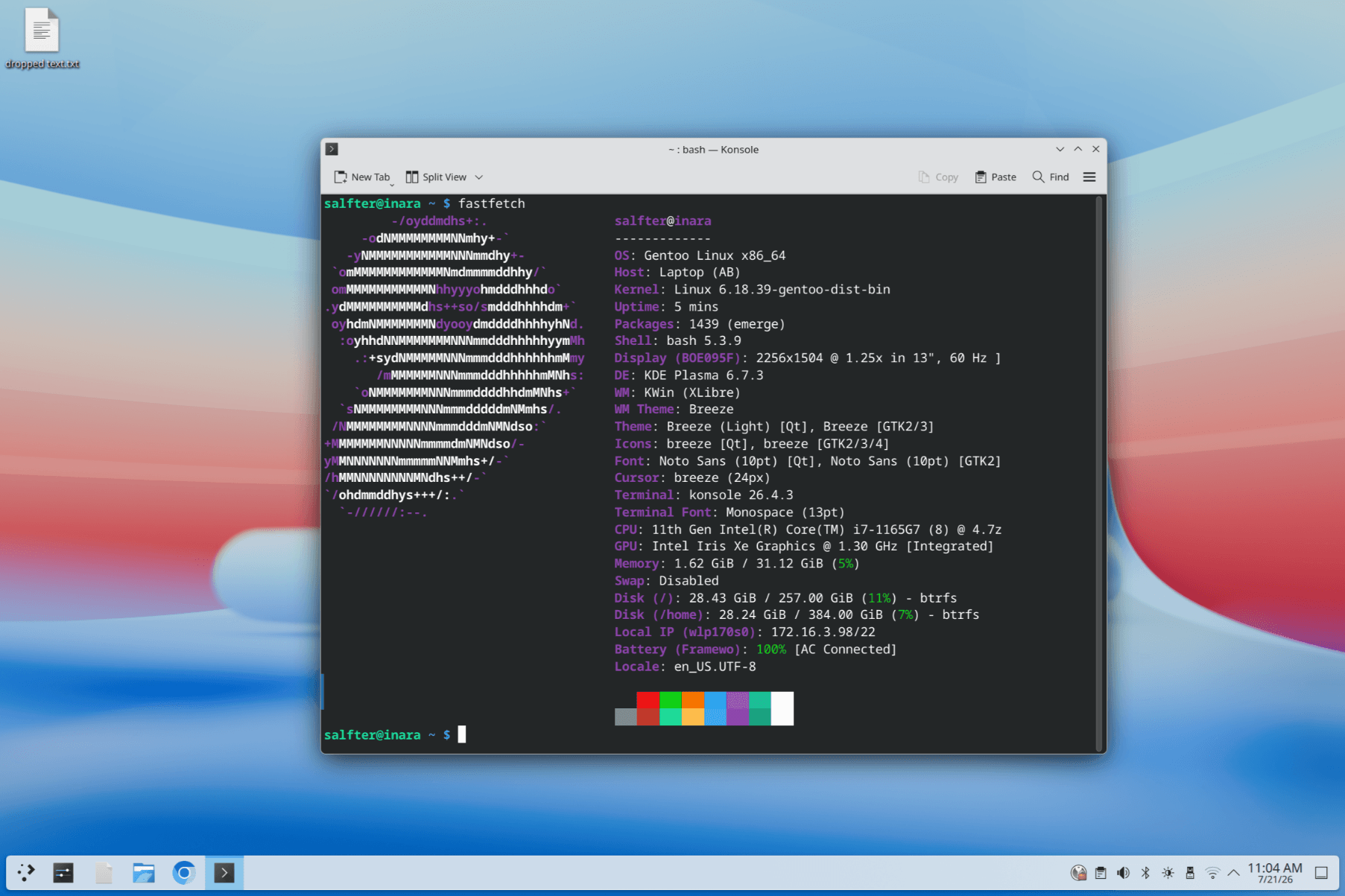
Moving away from Wayland-adjacent layering, projects like XLibre focus squarely on breathing new life into the traditional X server codebase. XLibre is a community-maintained fork of the X.Org Server explicitly designed to keep X11 viable by continuing active development on the existing code. Crucially, the project integrates long-standing improvements and optimizations that were never officially merged into the upstream X.Org Server, including specialized features previously restricted to Xwayland.
The practical advantages introduced by XLibre are immediately noticeable to end users. TearFree modesetting is enabled by default out of the box, with atomic modesetting available as an optional configuration. Additionally, the project introduces Xnamespace, an innovative extension engineered to effectively isolate individual X clients, alongside native support for seat management via seatd as a lightweight alternative to systemd-logind. Maintaining continuous integration builds across Linux, the BSD variants, macOS, and Windows, XLibre has already begun seeing adoption by distributions seeking to bypass the Wayland transition entirely, such as PeppermintOS.
5. Yserver
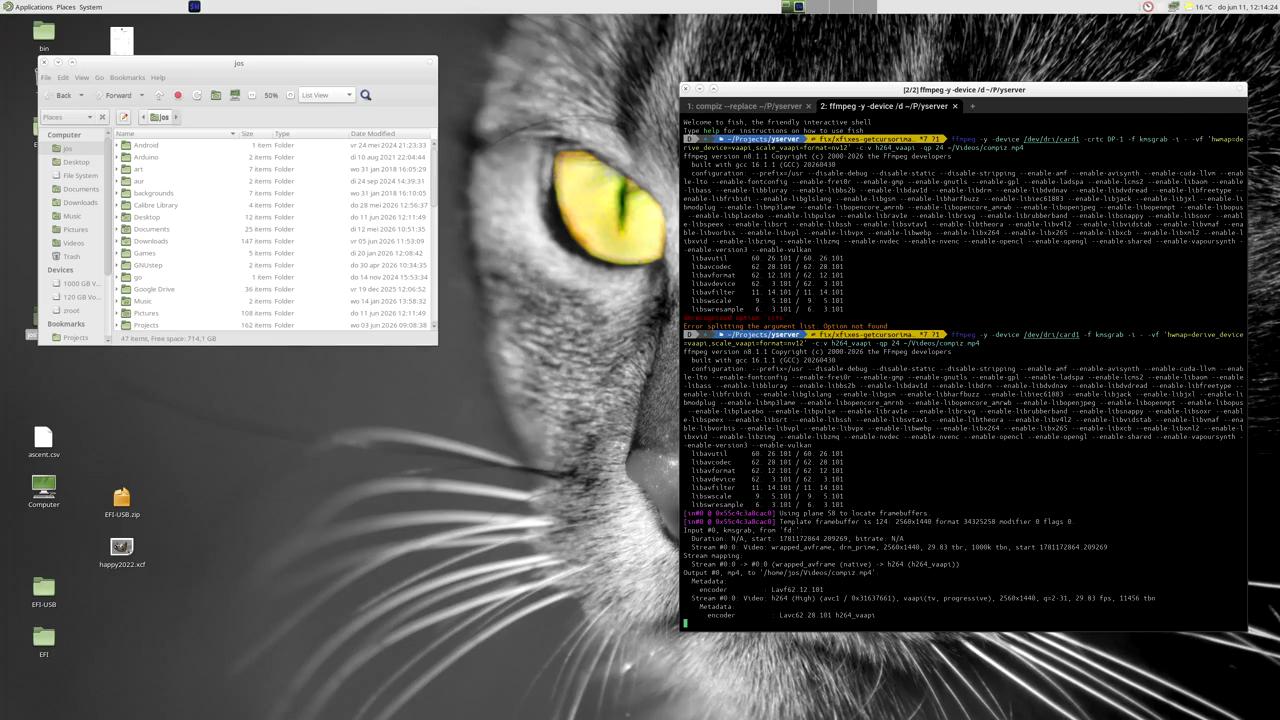
Pushing the boundaries of server modernization even further, yserver represents a radical, ground-up rewrite of the X server written entirely in the Rust programming language. Authored by Jos Dehaes and distributed under the MIT license, yserver does not attempt to serve as a feature-complete clone of every legacy Xorg capability. Instead, it deliberately streamlines the architecture by omitting complex or obsolete elements such as indirect GLX, the legacy DDX driver interface, non-TrueColor visuals, and clients utilizing swapped byte order.
By default, clients connect to yserver over Unix sockets, while traditional TCP transport and XDMCP support remain available as optional build-time features. Despite its intentionally reduced scope, yserver has proven remarkably capable, successfully running complete MATE, Xfce, and Cinnamon desktop sessions. It has also been thoroughly tested alongside independent window managers like FVWM3, Window Maker, Openbox, i3, and Enlightenment. While the project utilizes the official X.Org X Test Suite to gauge protocol compatibility and remains under active development rather than serving as a drop-in replacement, it highlights the potential of memory-safe languages in legacy graphics stacks.
6. XQuartz
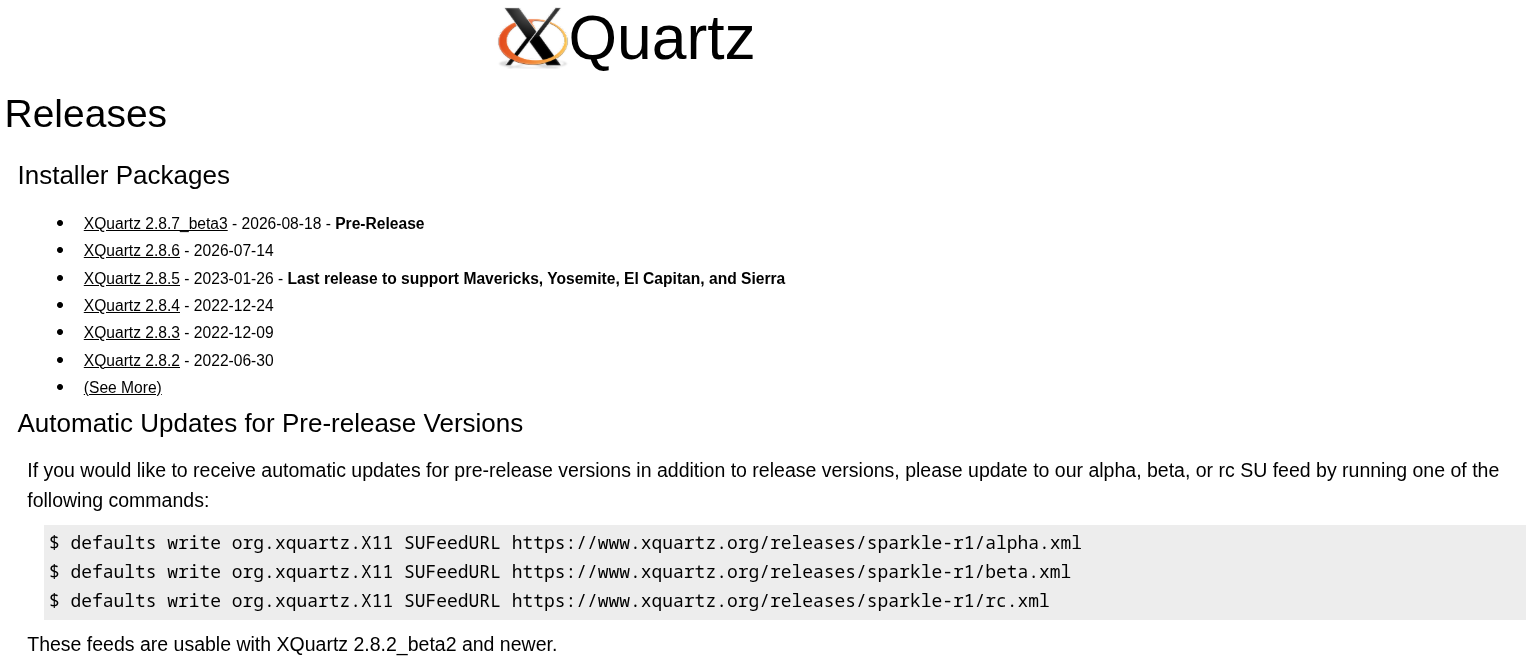
While the majority of X11 preservation efforts focus on Linux and Unix-like operating systems, the XQuartz project continues its long-standing mission within the Apple ecosystem. Unlike Linux-centric alternatives attempting to replace or modernize the Xorg server, XQuartz builds upon X.Org’s foundational X Window System specifically for macOS, enabling users to execute complex X11 applications side-by-side with native Mac software within a unified desktop session.
Regular maintenance releases continue to modernize the platform, updating core bundled components to remediate historical security vulnerabilities and resolving persistent rendering bugs affecting modern Apple Silicon hardware. Supporting modern macOS releases from version 10.13 onward, XQuartz remains an essential utility for developers and scientists relying on cross-platform graphical tools in a macOS environment.
7. Phoenix
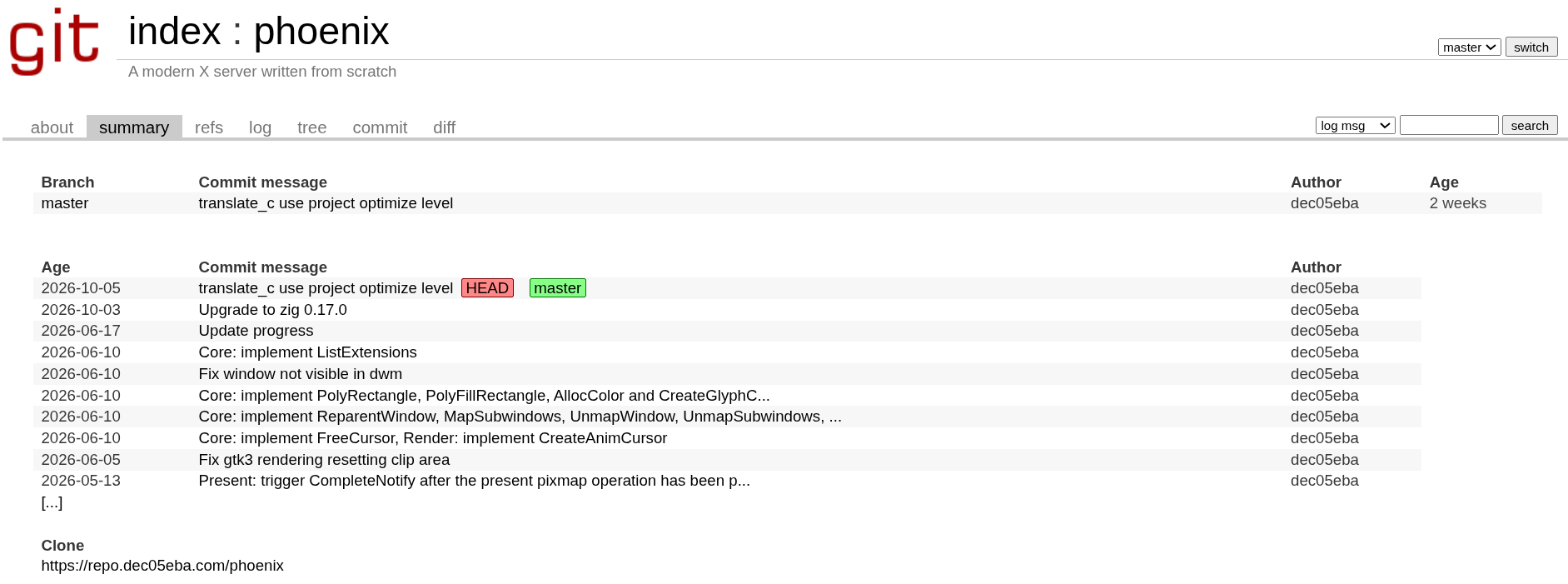
For developers experimenting with entirely new systems programming languages, Phoenix offers another compelling vision for an X server built from scratch. Developed in Zig and released under the GNU General Public License version 3, Phoenix rejects the traditional Xorg fork model in favor of a clean implementation designed to support a curated subset of the X11 protocol, with a sharp focus on modern applications and contemporary graphics hardware.
The project’s roadmap places heavy emphasis on enhanced security and advanced graphics capabilities. Architectural plans include automated protocol message parsing, default isolation between running applications, and restricted clipboard access limited strictly to focused windows, alongside an optional configuration to restore classic Xorg behavior. Additional long-term objectives encompass tear-free rendering, a native built-in compositor, superior multi-monitor configurations involving mixed refresh rates, and high dynamic range support. While Phoenix currently operates strictly nested within existing X servers—where it can successfully render hardware-accelerated GTK 3, GLX, EGL, and Vulkan applications—it remains a work in progress not yet tailored for daily production use.
8. Frame
Perhaps the most unconventional entry in the ongoing X11 preservation movement is Frame, an experimental X server written entirely in Netwide Assembler (NASM) for x86_64 Linux systems. Created by Geir Isene to support the custom CHasm desktop environment, Frame deliberately bypasses standard user-space dependencies like libc and Xlib, communicating directly with the X11 protocol while interacting with the Linux kernel through DRM/KMS and evdev.
Despite its low-level implementation, Frame is already capable of serving up to 128 simultaneous clients and supports crucial protocol extensions including SHAPE, RANDR, XInput2, and MIT-SHM. Released under the permissive Unlicense, the project demonstrates the extreme lengths to which passionate developers will go to maintain absolute control over their graphical computing environments as the broader industry marches steadily toward Wayland.