
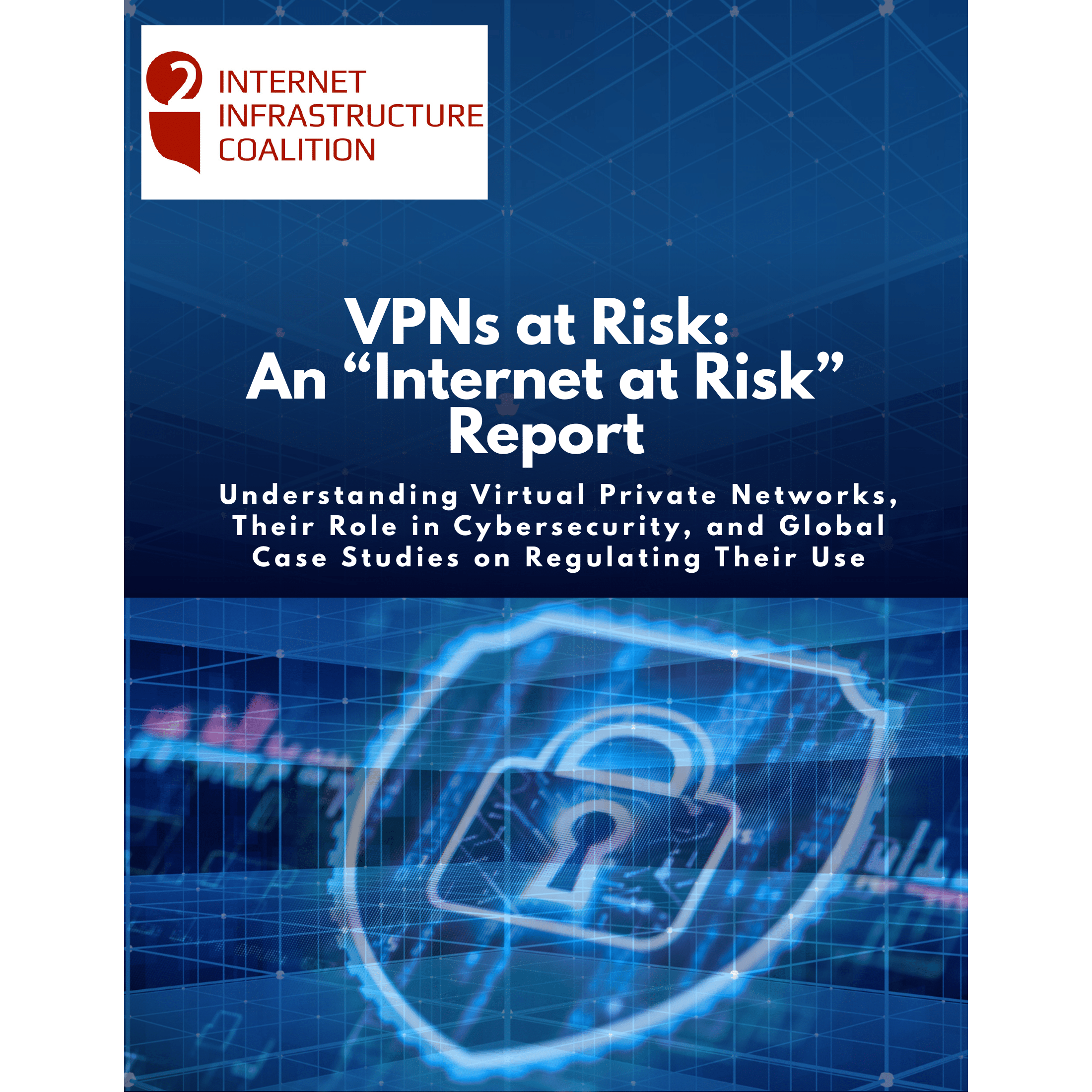
As the global debate over online piracy enforcement intensifies, major technology infrastructure advocates are pushing back against legislative and judicial efforts that seek to turn privacy tools into policing mechanisms. On Global Encryption Day, the Internet Infrastructure Coalition (i2Coalition) published a comprehensive new report titled “VPNs at Risk,” sounding the alarm over the growing trend of compelling Virtual Private Network (VPN) providers to block pirate websites.
The release of the report arrives amid a volatile legislative and legal climate. In the United States, competing site-blocking bills have drawn sharp battle lines over whether VPNs should be conscripted into the fight against digital piracy. Meanwhile, European courts—particularly in France—have already begun issuing sweeping injunctions ordering prominent consumer VPN services to block hundreds of unauthorized sports streaming domains.
By releasing “VPNs at Risk,” the i2Coalition aims to steer policymakers away from broad mandates that undermine neutral internet infrastructure. The report mirrors concerns raised in the coalition’s previous “DNS at Risk” publication, warning that expanding liability up and down the technical stack threatens fundamental security protocols, consumer privacy, and the stability of the internet at large.
From Pirate Sites to VPNs
Copyright enforcement has increasingly become a primary driver behind government efforts to regulate or restrict VPN technologies. Because consumer VPNs effectively mask user locations and traffic destinations, they are frequently utilized to bypass regional blocking measures imposed by internet service providers. Furthermore, these services can complicate the efforts of rightsholders and investigators attempting to identify copyright infringers or enforce strict geographic licensing agreements for media content.

France has emerged as a frontline laboratory for this style of judicial intervention. In May 2025, a court in Paris ordered major VPN providers—including NordVPN, CyberGhost, Surfshark, ExpressVPN, and Proton VPN—to block more than 200 pirate sports streaming domains following a legal challenge by French broadcaster Canal+. Subsequent court orders from other sports entities followed, cementing a controversial precedent.
The i2Coalition report highlights these foreign legal battles as a cautionary tale about regulatory creep. According to the document, these cases illustrate how obligations originally imposed at one specific layer of the internet can easily migrate to deeper infrastructural layers whenever users find alternative technical pathways around court-ordered restrictions.
This dynamic raises critical policy questions. For the coalition, the core issue is not simply which internet intermediaries can be legally compelled to implement blocking filters, but whether such heavy-handed measures genuinely reduce online piracy, and what collateral damage they inflict on lawful, everyday users.
The French legal saga remains very much ongoing and fluid. Although the report characterizes the initial decisions as pending appeal, subsequent twists have further complicated the landscape. On September 30, the Paris Court of Appeal temporarily put on hold an appeal brought by NordVPN, Proton, and CyberGhost against a similar blocking order obtained by the French professional football league, the LFP. The appellate court decided to await a crucial ruling from France’s highest court, the Cour de cassation, regarding related DNS blocking cases. Just a week later, the Paris court also refused a request from beIN Sports to levy daily penalties against VPN providers and Cloudflare for failing to completely block the targeted sites.
Christian Dawson, Executive Director of the i2Coalition, noted that while the group is closely tracking these ongoing judicial proceedings and the pending Cour de cassation outcome, the core message of the report remains unchanged. These developments reinforce the coalition’s broader concerns regarding the long-term implications of extending blocking obligations to general-purpose VPN providers.
Target the Right Layer
Rather than lobbying for a blanket exemption from all laws and regulations, the i2Coalition report urges lawmakers to exercise precision and target interventions where they are technically and legally appropriate.
The publication argues that policymakers must carefully evaluate where meaningful knowledge and control actually reside before shifting legal burdens deeper into foundational internet infrastructure. When regulatory interventions move further away from the specific activity being regulated, the risk of causing unintended disruptions for unrelated users and services grows exponentially.
This principle is especially vital when evaluating VPN technologies. Consumer-facing VPN applications and secure corporate enterprise networks rely heavily on the exact same underlying technologies and standard cryptographic protocols, such as OpenVPN and WireGuard. The report points to aggressive efforts by authoritarian governments, such as Russia’s reported blocking of these core protocols, to demonstrate just how difficult it is to cleanly separate different types of network traffic at the infrastructural level without damaging legitimate connectivity.
When addressing legal liability, the i2Coalition draws parallels to recent U.S. jurisprudence. Earlier this year, the U.S. Supreme Court issued a notable ruling in the Cox Communications case, confirming that continuing to provide an ordinary internet service while knowing that a minority of customers may misuse it is insufficient on its own to establish contributory copyright infringement.
While the coalition views the principles established in the Cox ruling as highly relevant to the VPN debate, it stops short of claiming the matter is completely settled across all jurisdictions. If infrastructure providers face severe legal liability simply because their general-purpose tools can be abused by bad actors, they may develop powerful incentives to terminate users, restrict access preemptively, or aggressively monitor traffic even when they possess limited knowledge of actual underlying conduct.
Consequently, the report argues that legal obligations must accurately reflect what an intermediary can reasonably know, control, and remediate. Dawson emphasized that while these legal principles inform the broader debate, the outcome of any specific VPN liability case will ultimately depend on its unique facts and applicable laws.
Despite these regulatory pressures, VPN providers are not entirely absolved of responsibilities. The report suggests that providers can actively reinforce consumer trust through independent technical audits and transparent cooperation with legitimate legal processes. Voluntary industry frameworks, such as the VPN Trust Initiative’s Trust Seal program, offer complementary methods for demonstrating accountability. In turn, lawmakers are encouraged to proactively engage VPN providers and technical experts from the earliest stages of policy development.

Silent on U.S. Bills
Notably, the new i2Coalition report does not explicitly address pending site-blocking legislation currently moving through the United States Congress, leaving specific mentions of the American Copyright Protection Act (ACPA) and the DEFEND IP Act out of the text.
This omission is particularly striking given the direct threat the ACPA poses to the industry. Introduced last month by Rep. Darrell Issa, the ACPA would grant courts the explicit authority to target and name VPN providers that maintain 100,000 or more monthly U.S. users or subscribers in site-blocking orders. Conversely, the competing DEFEND IP Act, introduced days later by Rep. Zoe Lofgren and Sen. Thom Tillis, takes the opposite approach by explicitly excluding services that exclusively offer VPN capabilities.
When asked why the report omits direct analysis of these two competing U.S. proposals, Dawson explained that the current publication chose to focus on a distinct set of global developments rather than attempting to capture every pending legislative measure. He noted that the coalition expects to revisit domestic U.S. legislation in future updates as the political debate continues to evolve.
With both U.S. bills remaining pending, time is running short in the current legislative session. Rep. Issa is set to retire at the end of the year, and Sen. Tillis’s term concludes in January, meaning any legislative movement on either bill would need to occur before the current congressional session officially closes.