As mainstream Linux desktop environments and distributions systematically phase out the legacy X11 display architecture in favor of the modern Wayland protocol, a dedicated movement of open source developers is stepping up to ensure the traditional X11 experience does not vanish entirely.
For decades, the X Window System—typically deployed via the X.Org Server, or Xorg—has served as the foundational graphical backbone of the Linux desktop. It manages everything from graphical outputs to input communications between local applications and hardware displays. However, the computing landscape has shifted toward Wayland, a leaner display protocol where the compositor functions directly as the display server to handle output, input, and window management with greater efficiency and security.

Major desktop environments have already crossed the Rubicon. GNOME has removed its native X11 session entirely, and KDE has recently confirmed that Plasma 6.7 will mark the final release to feature a native X11 session. While X11 applications can still run seamlessly inside Wayland environments via the Xwayland compatibility layer, users and administrators who rely on native X11 sessions face an inevitable obsolescence of their preferred workflows.
Yet, the open source community is proving remarkably resilient. A diverse wave of projects has emerged to keep the X11 ecosystem alive. These initiatives range from active desktop environments branching off modern codebases to experimental X servers written from scratch in modern programming languages like Rust, Zig, and even raw assembly. Eight distinct open source projects have shown measurable development activity, offering a lifeline to those who prefer or require traditional X11 infrastructure.

SonicDE
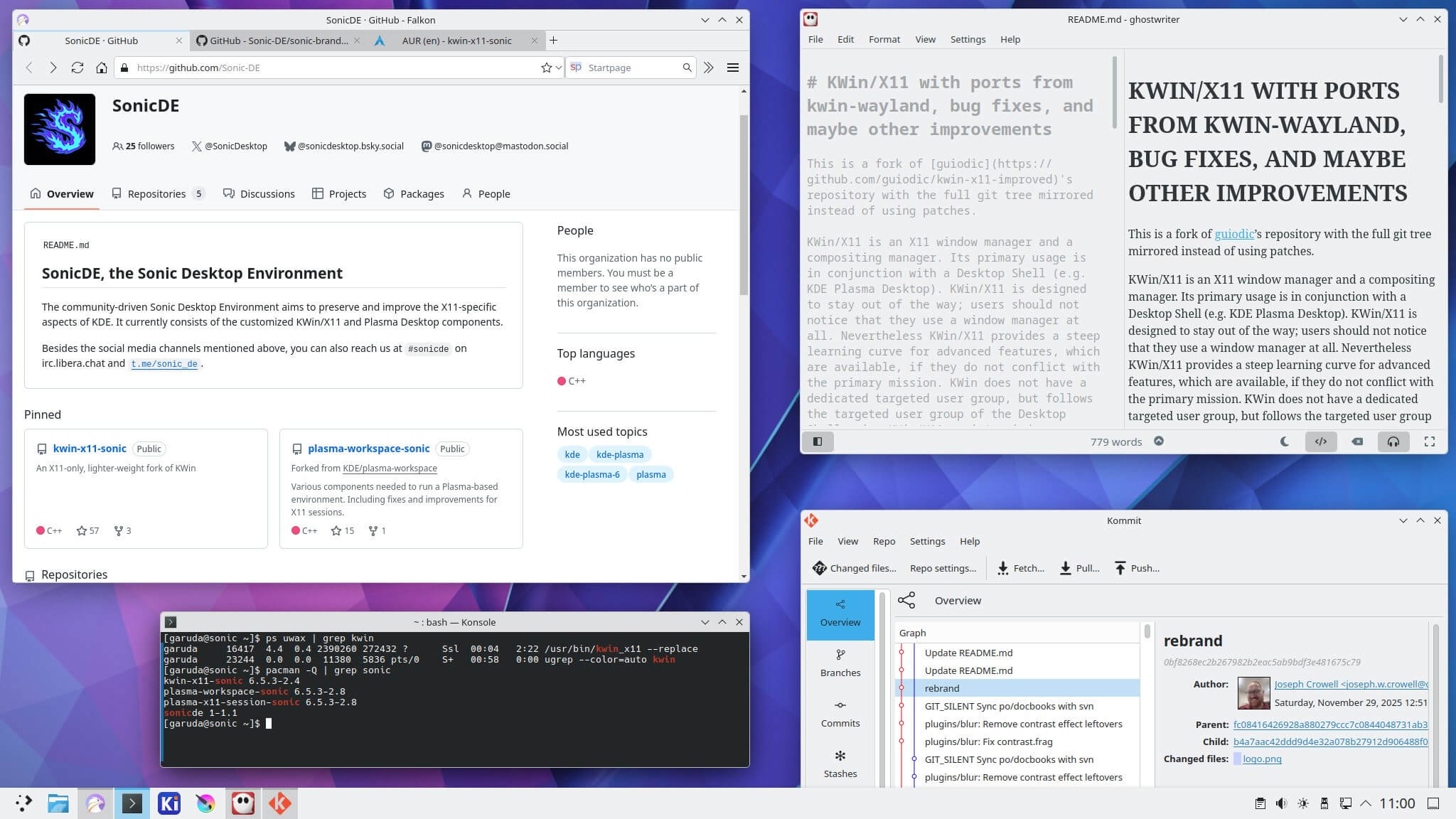
SonicDE represents a comprehensive effort to branch off KDE Plasma 6 while keeping X11 at the forefront of the user experience. The project originated in 2025 as a patched version of KWin and X11 known as "kwin-x11-improved." Over time, this evolved into "sonic-win," a dedicated window manager and compositor designed to sustain KWin/X11 by integrating code borrowed from KWin/Wayland alongside custom patches and fixes.
Beyond the window manager, SonicDE is actively forking various KDE components while systematically stripping out Wayland-only codebases. Developers are currently working on a Vulkan backend and intend to maintain compatibility with the X.Org Server for as long as it remains technically feasible. The environment also introduces several practical user conveniences, including global hotkeys for push-to-talk functionality, OBS Studio recording toggles, and integrated screen recording capabilities within remote desktop software like TeamViewer. Installation packages are widely distributed across Arch-based Linux distributions, Artix, Manjaro, Gentoo, Void, and Slackware.
Trinity Desktop Environment
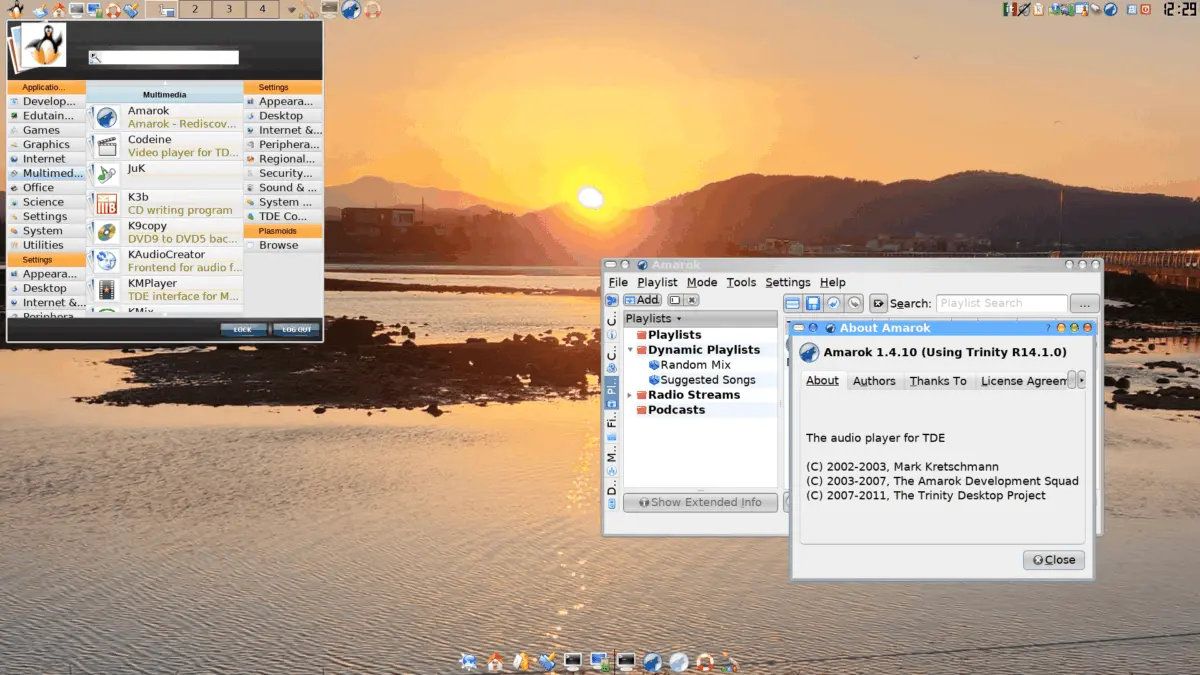
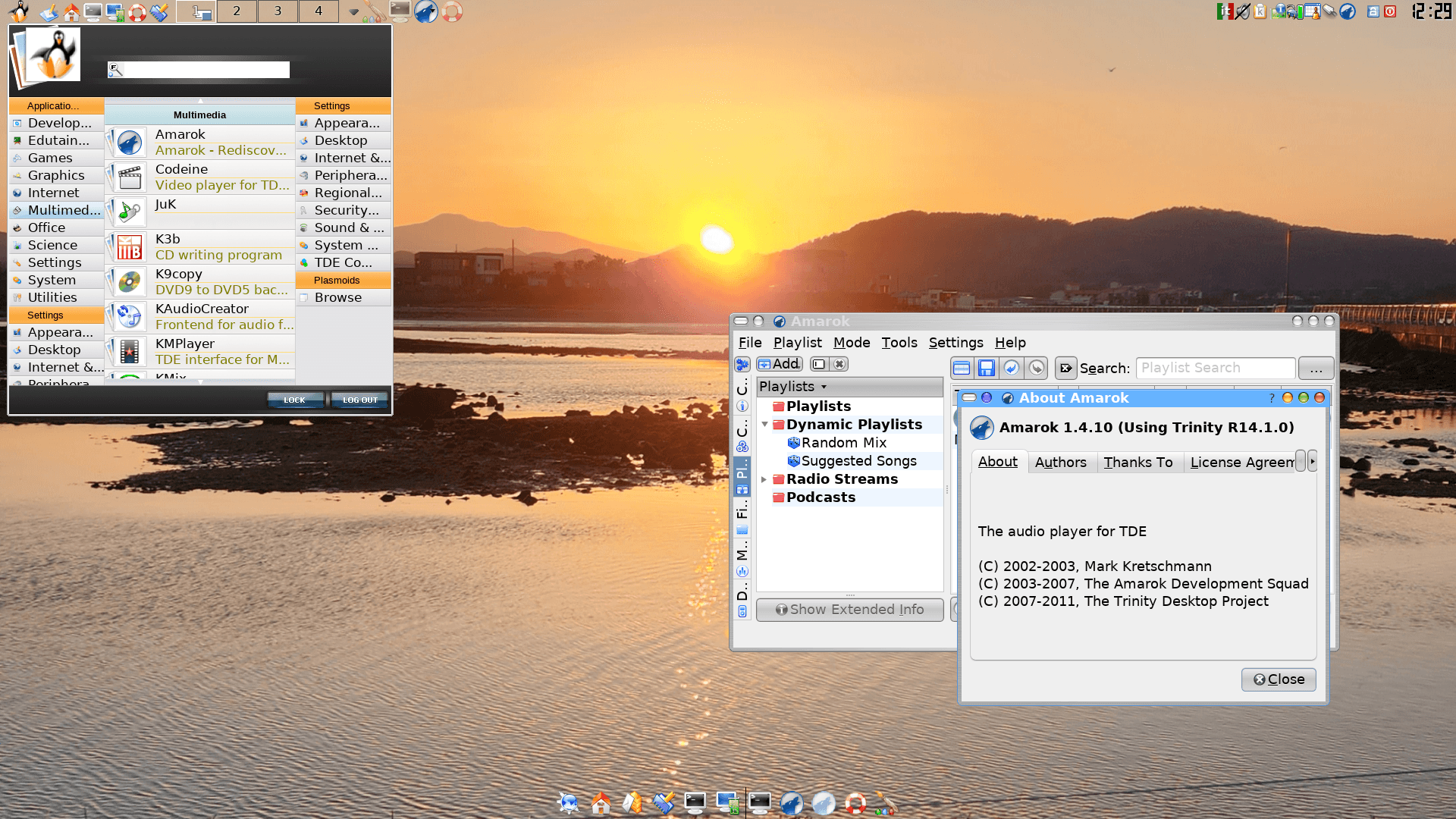
Unlike projects attempting to adapt modern codebases, the Trinity Desktop Environment, or TDE, preserves the historic KDE 3.5 architecture as a fully realized, independent desktop environment. The primary mission of TDE is to maintain the distinct look, feel, and workflow of a traditional UNIX-like desktop while remaining exceptionally lean and capable of running on modest or older hardware.
While mainstream powerhouses like KDE Plasma and GNOME abandon X11, TDE continues to provide a robust, traditional X11-based desktop experience complete with a built-in X11 compositor. The project regularly rolls out maintenance updates, such as the R14.1.6 release. This update cycle successfully addressed window tiling anomalies for maximized windows, refined system branding, resolved persistent transparency bugs, introduced a 3D border option for the Kicker panel, and added a dedicated "Go to Desktop" action to the Konqueror file manager and web browser. TDE remains available across a wide variety of Linux distributions as well as FreeBSD.
Wayback
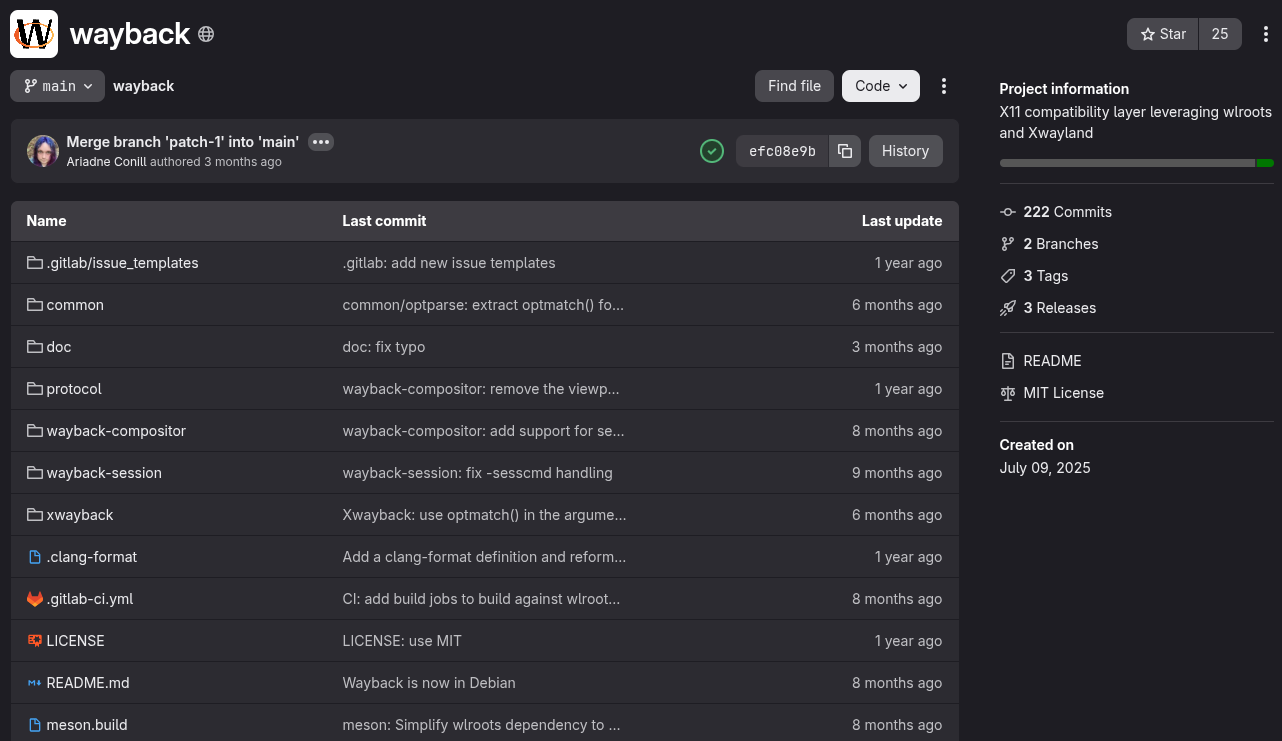
Rather than replacing X11 clients or desktop environments, Wayback targets the foundational layer operating directly beneath them. Developed as a lightweight Wayland compositor built using the wlroots library, Wayback carries precisely the minimal functionality required to execute Xwayland in rootful mode, enabling an entire X11 desktop environment to operate safely within it.
The long-term objective of the project is to eliminate the necessity for the traditional Xorg server binary while preserving native support for existing X11-centric desktop configurations, particularly within lightweight operating systems like Alpine Linux. Initiated by Ariadne Conill of the Alpine Linux community, the project is distributed under the permissive MIT license and hosted on freedesktop.org’s GitLab instance. Because it remains in an alpha development stage, release intervals are infrequent and full compatibility is not guaranteed.
XLibre
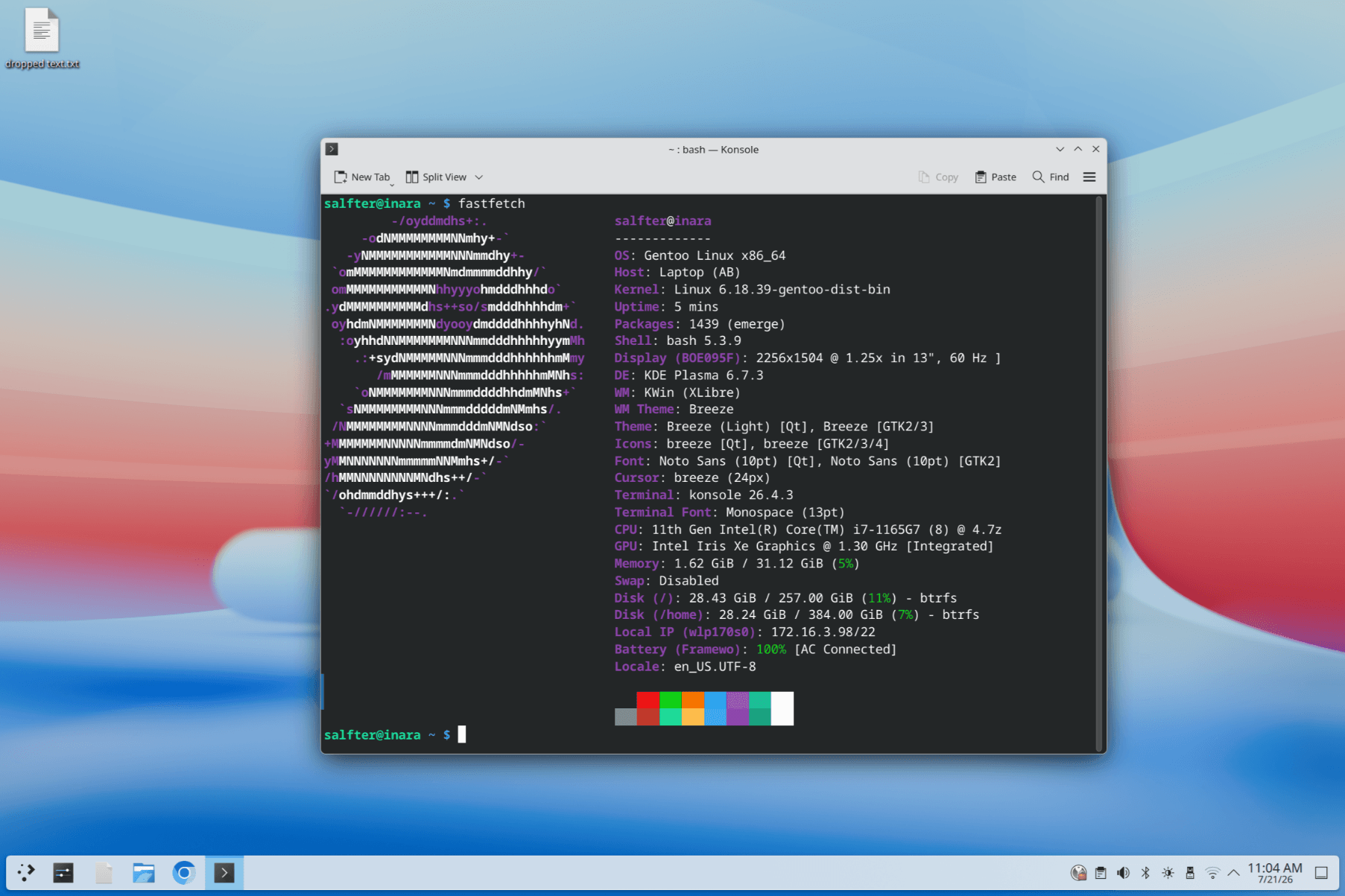
XLibre operates as a community-driven fork of the traditional X.Org Server with the explicit goal of keeping X11 viable by actively maintaining and modernizing its existing codebase. The project integrates critical performance improvements that never made it into the official X.Org Server, including advanced features previously restricted exclusively to Xwayland.
The practical enhancements introduced by XLibre are significant for daily users. TearFree modesetting is enabled by default out of the box, with atomic modesetting available as an optional configuration. Furthermore, XLibre introduces Xnamespace, a specialized security extension designed to isolate individual X clients from one another, alongside robust support for seat management via seatd as an alternative to systemd-logind. The project maintains continuous integration builds spanning Linux, the Berkeley Software Distributions, macOS, and Windows, though platform support depth varies. Notably, distributions like PeppermintOS have begun migrating from standard Xorg to XLibre to bypass the transition to Wayland.
Yserver
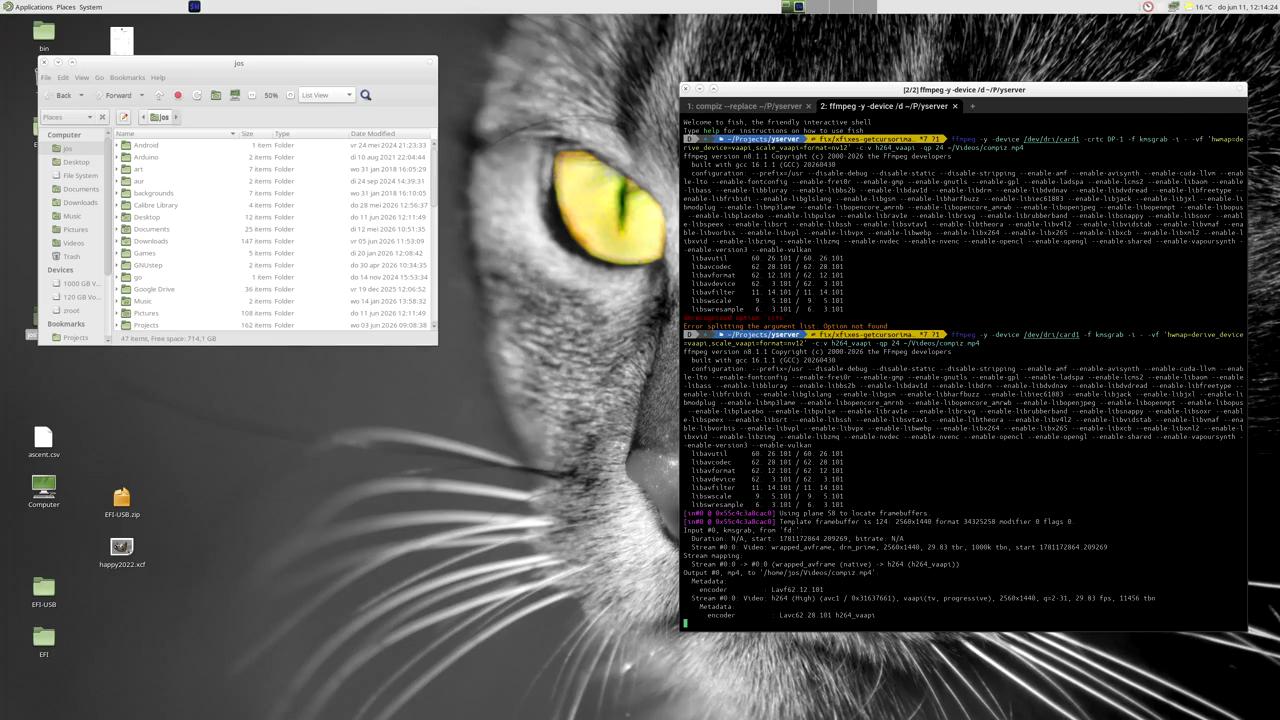
In an ambitious move toward architectural modernization, Jos Dehaes has undertaken a ground-up rebuild of an X server written entirely in the Rust programming language, distributed under the MIT license. Designated as yserver, the project does not seek to replicate every complex feature found in legacy Xorg implementations. Components such as Indirect GLX, the obsolete DDX driver interface, non-TrueColor visuals, and clients utilizing swapped byte orders are intentionally omitted to maintain a lean architecture.
Clients connect to yserver via Unix sockets by default, while optional TCP transport and XDMCP support can be enabled during the build process. Despite its narrower scope, yserver is already capable of executing complete MATE, Xfce, and Cinnamon desktop sessions. It has also been successfully tested alongside traditional window managers including FVWM3, Window Maker, Openbox, i3, and Enlightenment. The project evaluates its protocol compatibility by running the official X.Org X Test Suite, though development remains ongoing and it is not intended to serve as a drop-in binary clone of Xorg.
XQuartz
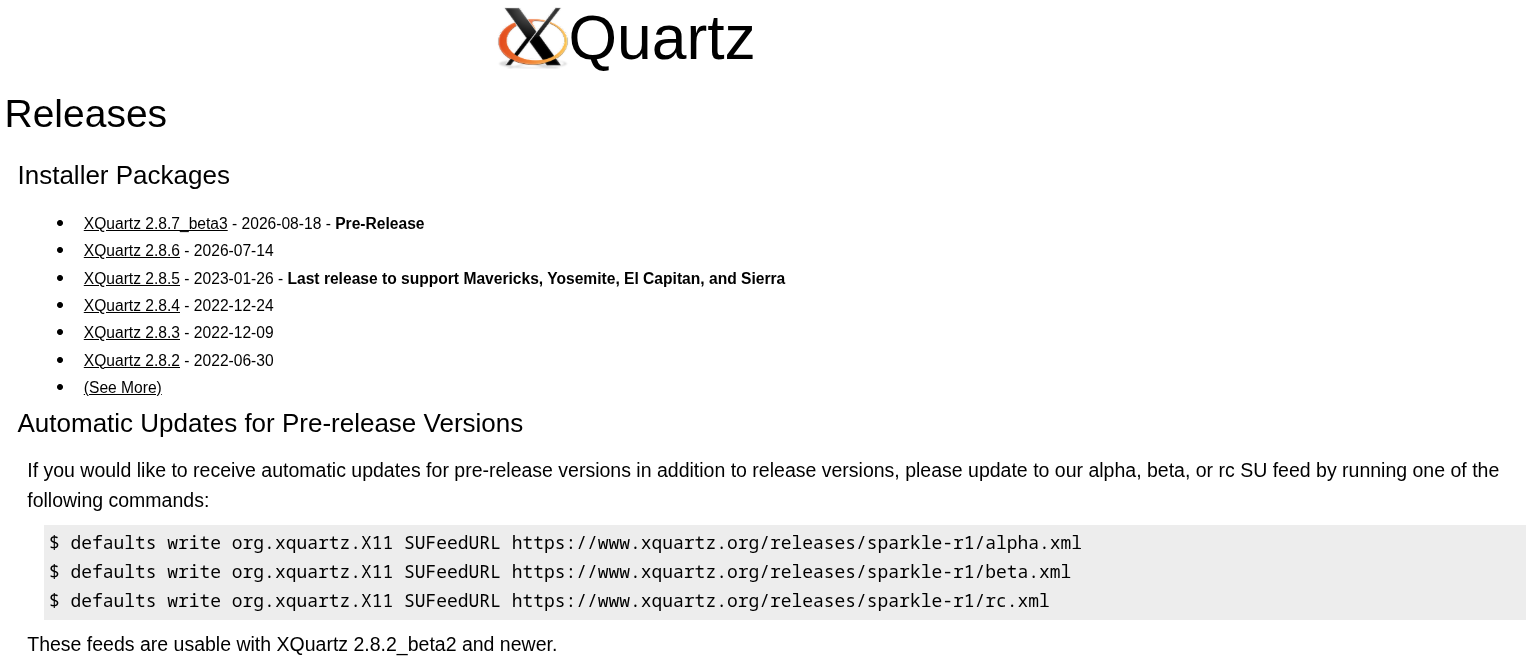
XQuartz occupies a unique space within the ecosystem, as its primary objective is not to preserve an X11 desktop on Linux or replace the Xorg server with an alternative implementation. Instead, XQuartz builds directly upon X.Org’s X Window System architecture specifically for macOS, enabling users to run legacy X11 applications seamlessly alongside native Mac software within the same desktop session.
Stable maintenance updates continue to address platform-specific challenges. Recent releases have updated various bundled system components to remediate older security vulnerabilities and resolved critical rendering issues impacting Apple Silicon hardware. XQuartz continues to support modern macOS environments starting from version 10.13 onward.
Phoenix
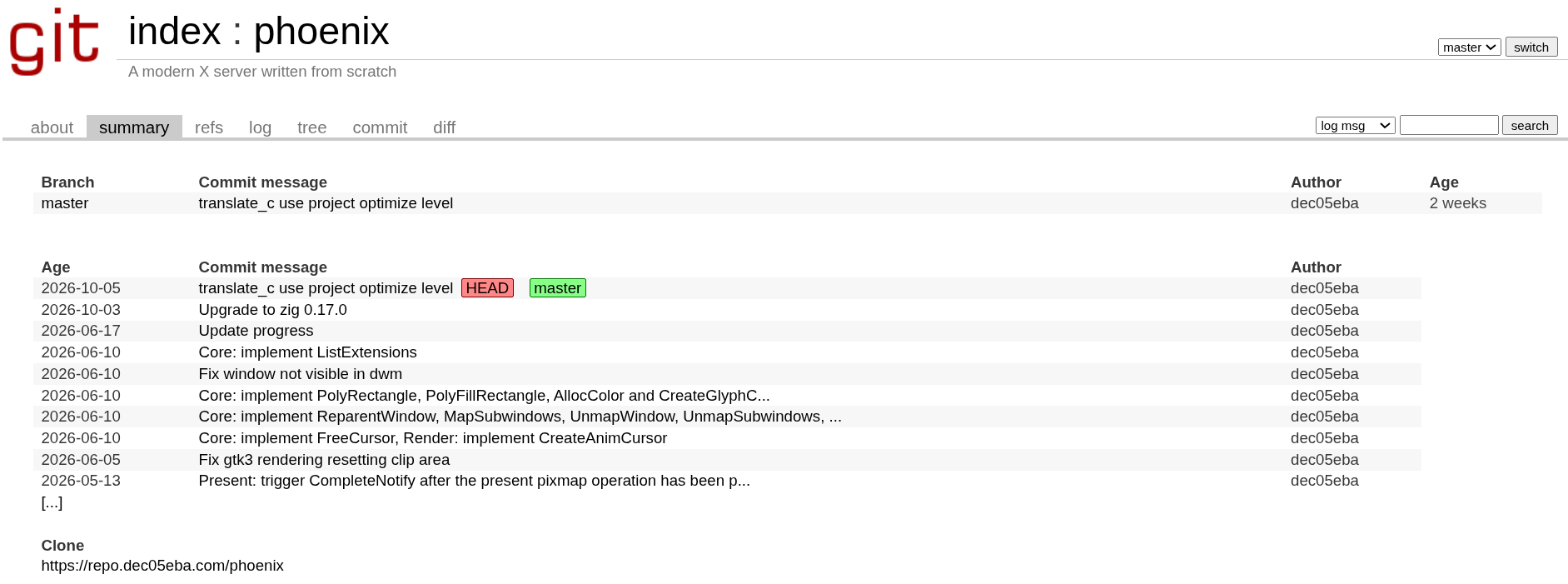
Phoenix is an experimental X server written completely from scratch in the Zig programming language under the GPL-3.0-only license, intentionally bypassing the legacy Xorg code tree. The core philosophy of Phoenix is to construct a streamlined, secure server by supporting a carefully curated subset of the X11 protocol, focusing primarily on modern hardware acceleration and contemporary applications.
The project’s architectural roadmap emphasizes security and graphics performance. Protocol messages are designed for automated parsing, applications are isolated from one another by default, and clipboard access is restricted to currently focused applications, with options available to restore traditional Xorg-like behavior. Additional long-term targets include tear-free rendering, an integrated compositor, and enhanced multi-monitor support capable of handling disparate refresh rates and High Dynamic Range content. When features like HDR exceed the limitations of the existing X11 protocol, the project plans to introduce custom protocol extensions. Currently, Phoenix operates nested within an existing X server, where it successfully renders GTK 3, GLX, EGL, and Vulkan applications using hardware acceleration.
Frame
Representing one of the most unconventional approaches to X server development, Frame is an X server designed for x86_64 Linux systems and written entirely in Netwide Assembler (NASM) assembly language. By bypassing standard user-space dependencies such as libc and Xlib, Frame communicates directly with the X11 protocol while interacting with the operating system kernel through Direct Rendering Manager, Kernel Mode Setting, and the Linux input subsystem.
Created by Geir Isene to support the CHasm desktop environment—with the ultimate goal of supporting both the desktop and standard X11 clients—Frame is currently capable of serving up to 128 simultaneous clients. It features working implementations of core X11 protocol extensions including SHAPE, RANDR, XInput2, and MIT-SHM. The project is released into the public domain under the Unlicense, reflecting a grassroots dedication to keeping low-level X11 engineering alive in an increasingly Wayland-centric computing world.