
In the vast landscape of open-source computing, the standard remedy for users seeking a change of pace from their current operating system is simple: try a different Linux distribution. While this advice has served the community well for decades, it fundamentally overlooks a distinct segment of enthusiasts who are not merely looking to switch from Ubuntu to Fedora, or from Arch to Debian, but are instead seeking an alternative to the Linux kernel itself.
For those interested in exploring the broader horizons of open-source software without the familiar presence of Tux the penguin, several alternative operating systems offer fully functioning, independent environments. Each of these systems provides its own ISO image or installer capable of booting on modern hardware, and remarkably, many of them retain a degree of compatibility that allows them to execute native Linux applications. Think of these systems as close relatives in the open-source family—compatible and friendly, yet distinct enough to run entirely on their own terms.
Among these alternative platforms, several notable projects stand out, ranging from traditional Berkeley Software Distribution (BSD) derivatives to desktop-first systems and experimental kernels built using modern programming languages.

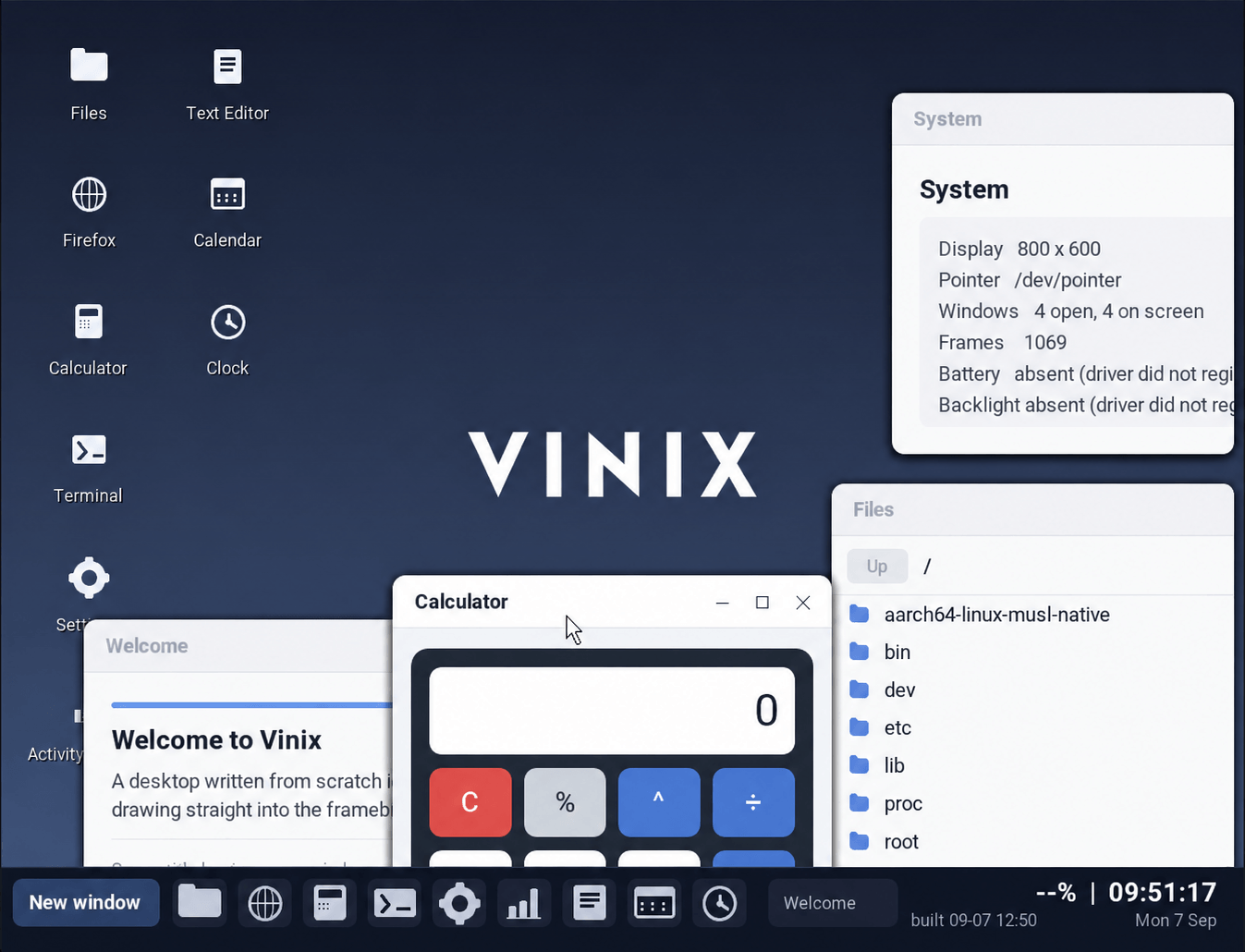
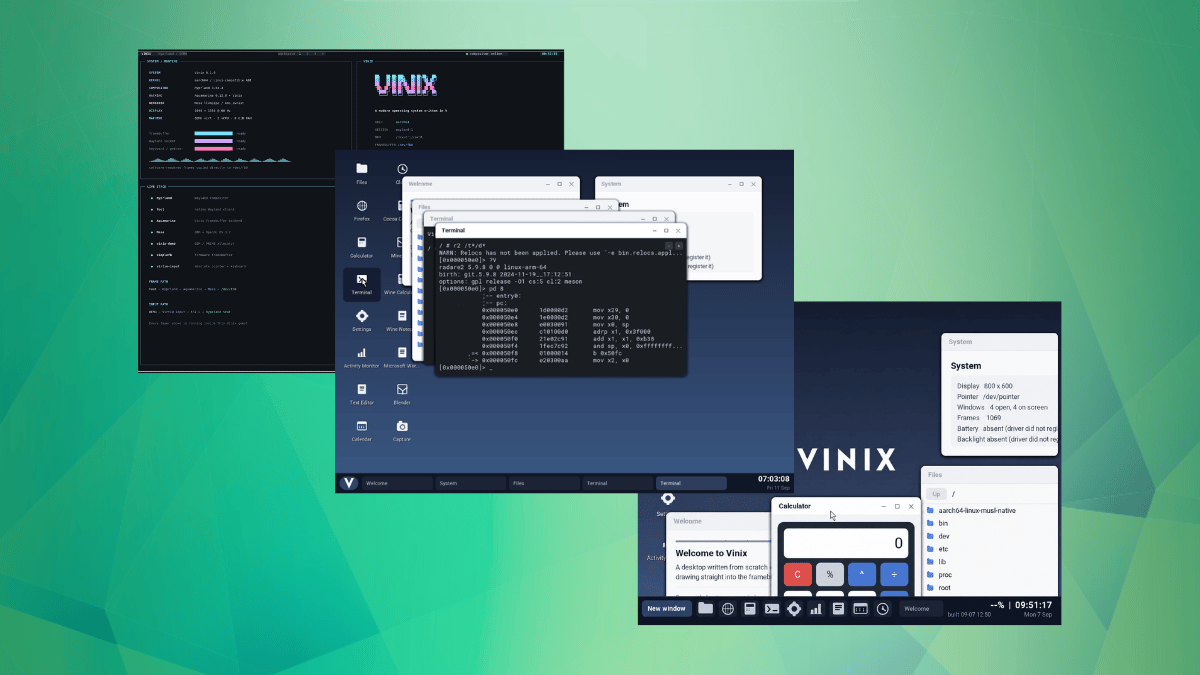
One of the more specialized entries in this space is Vinix, an operating system tailored specifically for owners of early Apple Silicon MacBooks who want an alternative to both macOS and traditional Linux distributions. Maintained by Alexander Medvednikov, the creator of the V programming language, Vinix currently provides support for the original M1 chip. The system utilizes a monolithic kernel written primarily in V, with supplementary components implemented in C and assembly language. Because memory management in Vinix is handled manually, the system operates without a garbage collector that might otherwise interrupt critical system calls. Furthermore, its security model draws inspiration from certain design concepts found in OpenBSD. On ARM64 architecture, Vinix is capable of running Alpine Linux binaries natively, while the package manager pkg can install software directly from Alpine’s aarch64 repositories. Developers and enthusiasts can also access ISO images for both x86-64 and ARM64 architectures, making it viable for virtual machine testing.
For developers tracking the integration of memory-safe programming languages into core infrastructure, Asterinas NixOS offers a fascinating glimpse into the future of operating system design. Users who install this platform are essentially deploying a NixOS configuration where a Rust-based kernel, known as Asterinas, replaces the standard Linux kernel. Because the Asterinas kernel implements the Linux system call interface, existing applications compiled for the Linux platform can run seamlessly on top of it. Configuration of the distribution is handled through the standard Nix mechanism, mirroring traditional NixOS environments. To maintain security, unsafe Rust code is restricted to a small framework called OSTD, whereas the remainder of the kernel and its accompanying device drivers are written entirely in safe Rust. While fully supported on x86-64 hardware, with ARM64 and RISC-V available as secondary tiers, the project remains in an experimental phase and is targeted primarily at early adopters and systems enthusiasts.
Moving away from experimental kernels, FreeBSD represents a mature, complete operating system derived directly from the original UNIX version developed at the University of California, Berkeley. Maintained by a vast global community, FreeBSD operates under a permissive license that allows commercial entities to utilize and modify the code while keeping their proprietary changes private. At the heart of FreeBSD’s architecture are advanced enterprise features such as OpenZFS, jails for containerization, and a built-in hypervisor. OpenZFS is integrated directly into the base system, enabling boot environments that allow administrators to roll back faulty system updates instantly through filesystem snapshotting. With the recent release of FreeBSD version 15.1, the operating system continues to support a wide array of hardware platforms, including AMD64, AArch64, Armv7, PowerPC, and RISC-V, making it a foundational choice for servers, storage infrastructure, and networking hardware.
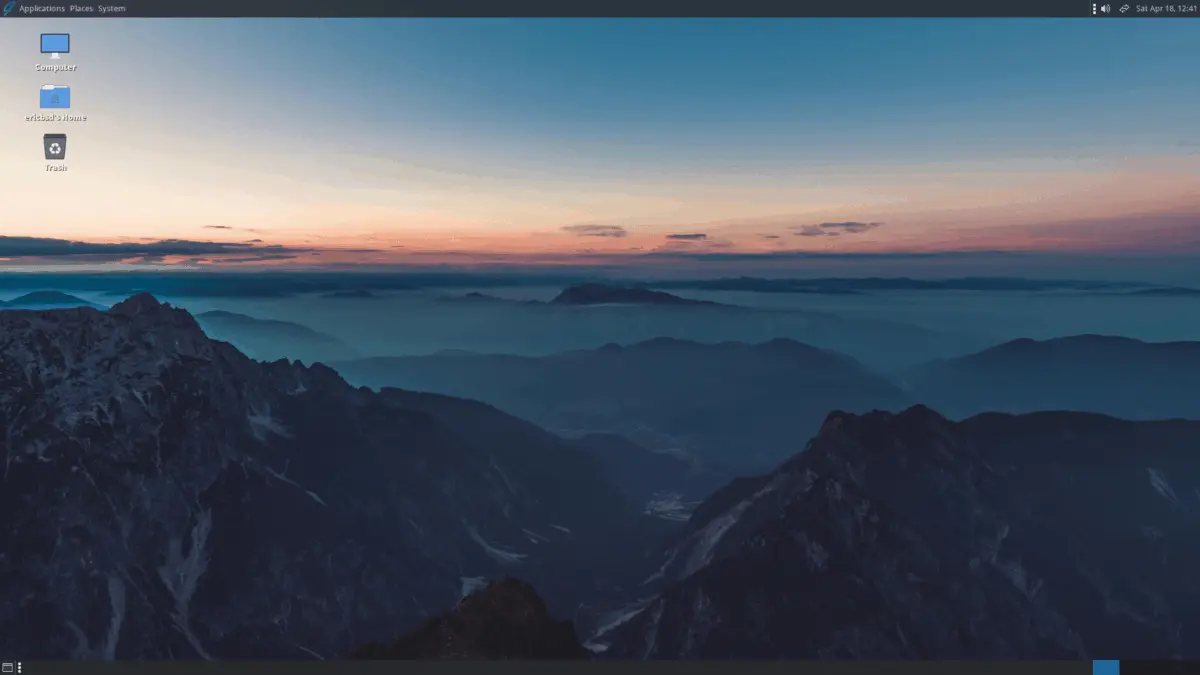
For users who appreciate the architectural robustness of FreeBSD but desire a ready-to-use desktop environment without manual configuration, GhostBSD bridges the gap. The project pairs the stable FreeBSD base with the MATE desktop environment, delivering a familiar and accessible user interface out of the box. The name GhostBSD originates from its historical roots as a project representing GNOME hosted by FreeBSD; although the system now ships with MATE—itself a continuation of the classic GNOME 2 interface—the spirit of the original nomenclature remains. GhostBSD follows a deliberate, slow-rolling update schedule, prioritizing system stability over the rapid feature adoption seen in many fast-moving Linux distributions. Additionally, the system comes preconfigured with Linux binary compatibility and features an installation routine built on top of OpenZFS, ensuring that newcomers can transition to a BSD-based desktop with minimal friction.

Another prominent entry in the realm of personal computing alternatives is Haiku, an open-source operating system inspired by the legacy BeOS architecture. Haiku is developed by a dedicated team that simultaneously writes both the kernel and the core desktop applications, an integrated approach that yields a remarkably consistent and uniform user interface. Beneath this interface lies a heavily multithreaded kernel optimized for low latency and high responsiveness. The system utilizes the Be File System (BFS), which incorporates indexed metadata to allow Tracker, the default file manager, to execute rapid, database-style queries across storage drives. Software distribution is handled through a package management system that mounts applications directly into the file system, preserving historical states to facilitate easy rollbacks in the event of a problematic update.
Rounding out the spectrum of non-Linux operating systems is ReactOS, a project that comes with explicit warnings for prospective users. Classified firmly as alpha-level software, ReactOS makes no guarantees regarding system stability, file integrity, or compatibility with specific hardware configurations. Beneath this cautionary stance, however, lies an ambitious operating system featuring a Windows-style graphical user interface written completely from scratch, supported by user-mode code derived largely from Wine, the well-known compatibility layer. By default, ReactOS requires installation onto a FAT16 or FAT32 partition, with support for modern filesystems like Btrfs remaining in an experimental state. It stands as an intriguing experiment in discovering the limits of an open-source reimplementation of the Windows architecture.
For those interested in exploring these distinct operating system environments, experienced developers generally recommend deploying them within a virtual machine before attempting bare-metal installation. Testing these systems in a sandboxed environment allows users to evaluate whether their daily workflows and habits align with the unique paradigms offered by non-standard kernels and desktop environments. Once a suitable alternative is chosen and deployed, maintaining regular updates ensures protection against newly discovered vulnerabilities, while highly sensitive setups continue to benefit from air-gapped isolation.
Leave a Reply