
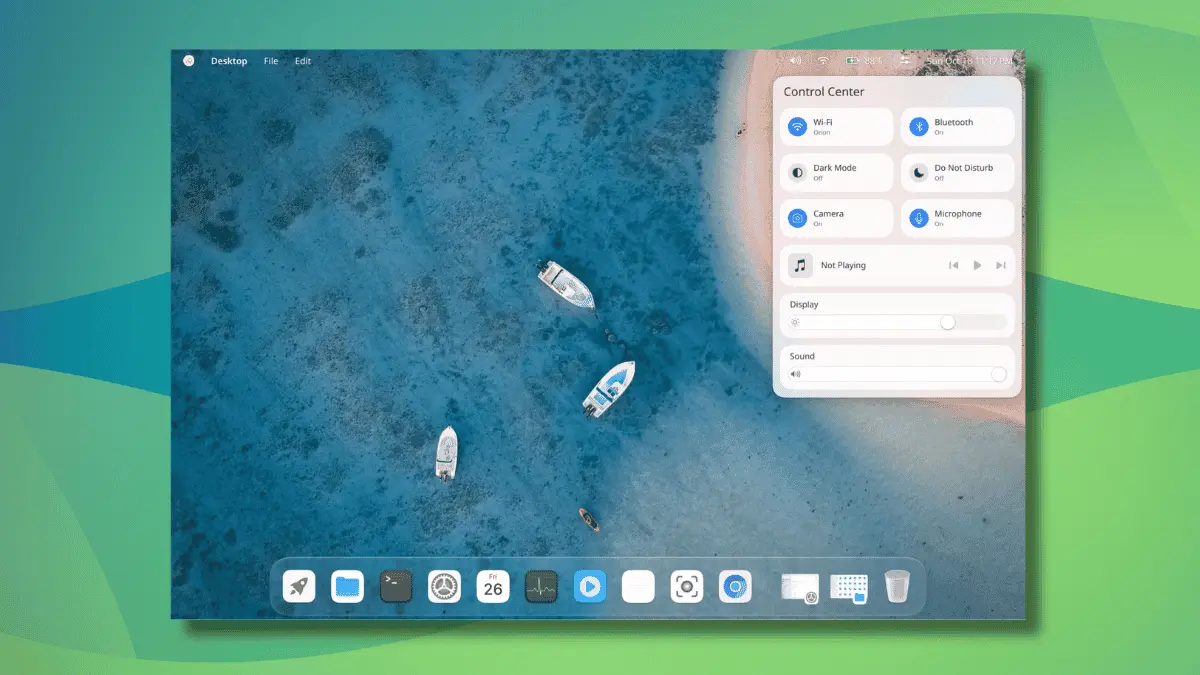
The ever-evolving landscape of Linux desktop environments has taken a fascinating and unexpected turn. CutefishOS, a distribution that initially captured the attention of the open-source community several years ago, is back in the spotlight with a radical transformation. Creator and lead developer Reion Wong has revealed that the new Cutefish Desktop has been entirely rewritten using Anthropic’s advanced Fable 5.1 and Opus 5.5 artificial intelligence models.
Reion Wong, who continues to spearhead the project and manage its official communication channels, recently showcased the revamped desktop environment through an extensive demonstration video and a series of detailed screenshots. According to Wong, his current development workflow relies heavily on prompting advanced AI agents and observing what they produce, signaling a new paradigm in how independent open-source software projects might be built in the future.
Is It Really Built From Scratch?
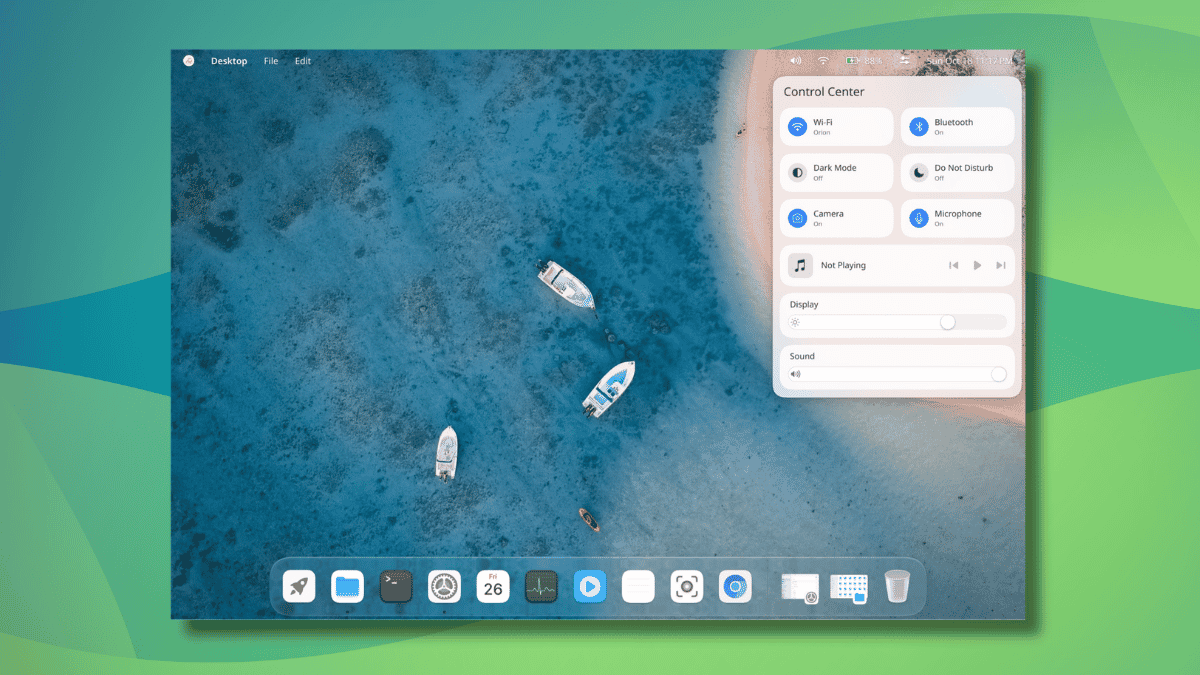
The announcement immediately sparked curiosity and skepticism within the Linux community regarding the authenticity of the "built from scratch" claim. Addressing these questions directly, the project shared a first look at the interface, emphasizing that every single line of code was rewritten using the Fable 5.1 and Opus 5.5 models.
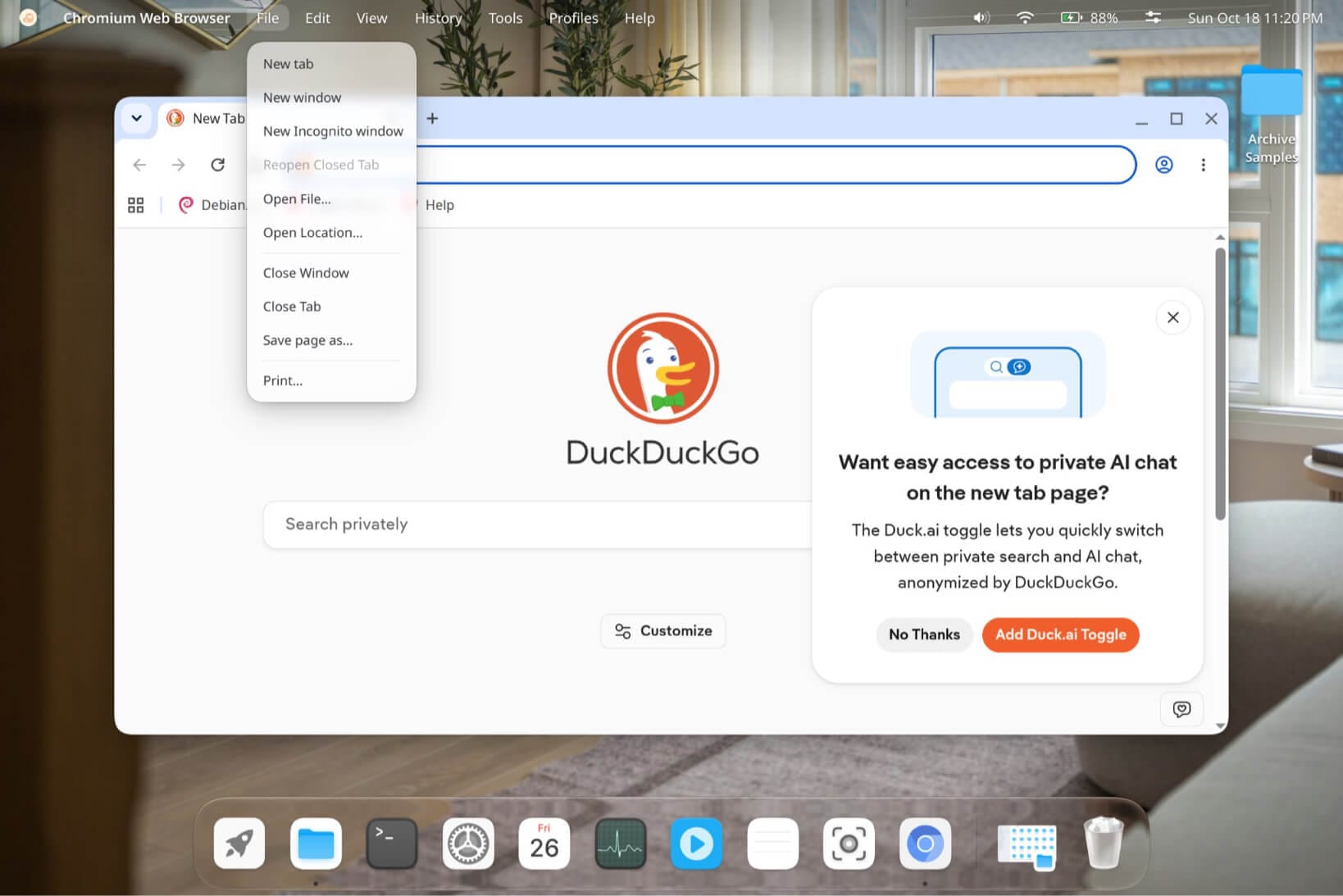
Crucially, the project asserts that the new iteration does not rely on pre-existing heavy frameworks like GTK or Qt. Instead, it features its own custom-built Wayland compositor and an independent graphics library alongside an entirely new suite of system applications. The demonstration video highlights remarkably swift application launch times, showcasing a fluid and responsive user experience.

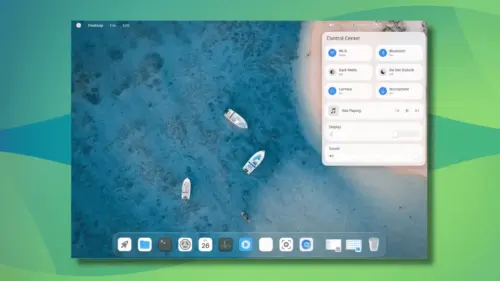
Visually, the interface retains the clean, polished aesthetic that originally drew users to CutefishOS, bearing a distinct resemblance to macOS. The layout incorporates a top status bar housing a Control Center panel, a Notification Center, and standard status widgets. The Control Center provides quick access to essential toggles including Wi-Fi, Bluetooth, dark mode, Do Not Disturb, camera controls, and microphone settings, complemented by media controls and interactive sliders for display brightness and audio volume.
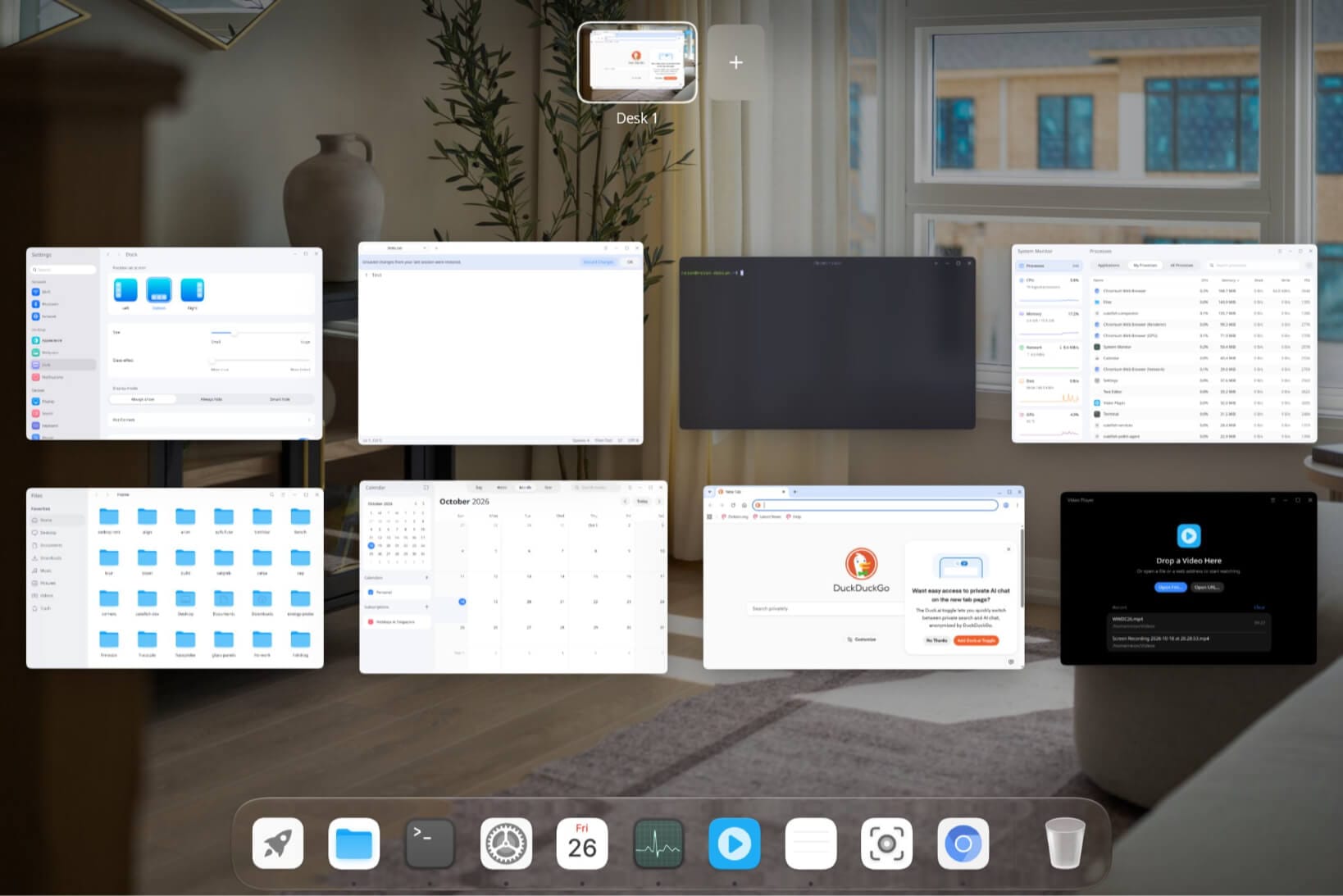
Furthermore, the desktop features a highly configurable Dock that users can position at the bottom, left, or right of the screen. The Dock includes customization options for size and glass transparency effects, alongside operational modes such as always show, always hide, and smart hide. Borrowing conceptual utility from environments like GNOME, the Cutefish Desktop includes an Overview mode that spreads open windows across a neat grid. From this view, users can effortlessly manage and create new workspaces—referred to by the project as "Desks"—using a dedicated button located at the top of the interface.
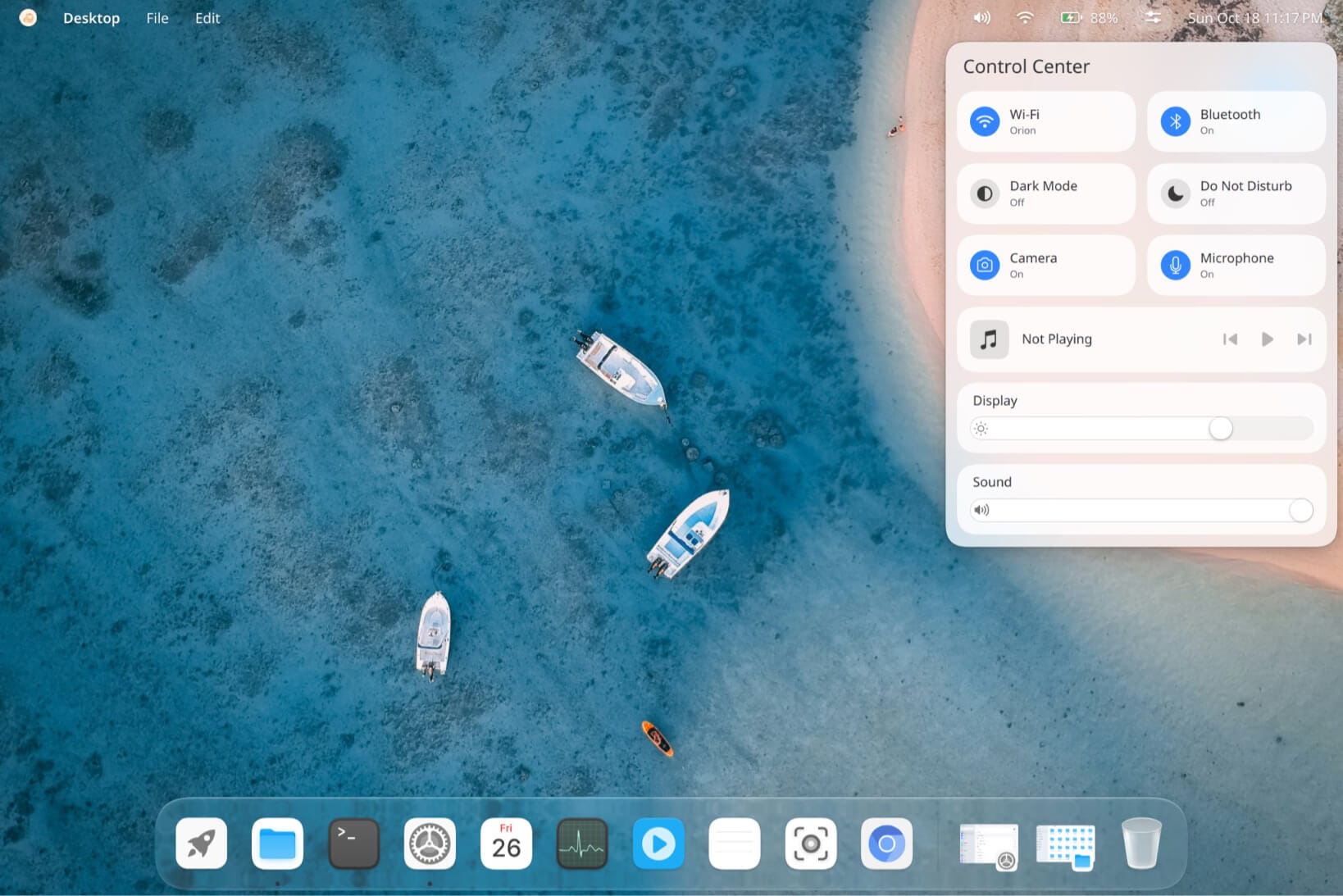
The newly built ecosystem is accompanied by a robust set of bundled native applications. Purpose-built system utilities include a file manager, terminal emulator, calendar, system monitor, text editor, video player, screenshot utility, and image viewer. In addition to these proprietary system tools, popular third-party applications such as Chromium, Firefox, KeePassXC, Ghostty, and LibreOffice seamlessly integrate into the application launcher as fully functioning desktop software.
A Look Back at CutefishOS
The resurgence of CutefishOS marks a notable chapter in a rather tumultuous history. The project first emerged in 2021 as a promising beta Linux distribution built upon Debian 11, centered around the macOS-inspired CutefishDE desktop environment. At the time, it won over enthusiasts with its sleek design, global application menu integrated into the status bar, and a cohesive collection of native applications.
However, momentum stalled dramatically by 2022. The official project website went offline, and repository activity on GitHub ground to a near-halt. The vacuum prompted concern within the community, leading a Reddit user to initiate plans for a community-driven fork to keep the desktop alive. Ultimately, those formal forking efforts were abandoned after updates surfaced on the official GitHub repository indicating that the project was returning and a refreshed website was in development.
Despite the excitement surrounding the latest AI-assisted demonstration, prospective users will have to exercise patience. The project has not yet announced an official release date for the new desktop environment. When enthusiastic community members inquired about testing the software after viewing the demo, the project clarified that considerable time remains before a public build will be available for evaluation.
An examination of the project’s public GitHub organization currently reveals no dedicated repository explicitly listing the new desktop code. Given Reion Wong’s history of managing the distribution’s development, observers and testers are advised to monitor the main CutefishOS GitHub repositories for the eventual release of the source code.
This development also aligns with a broader, emerging trend within experimental open-source circles. Cutefish Desktop is not an isolated experiment in AI-assisted desktop creation; other experimental implementations, such as the Starling desktop environment, have similarly explored the boundaries of utilizing advanced language models and autonomous agents to construct functional Linux interfaces, pointing toward an intriguing intersection between artificial intelligence and open-source software development.

Leave a Reply