
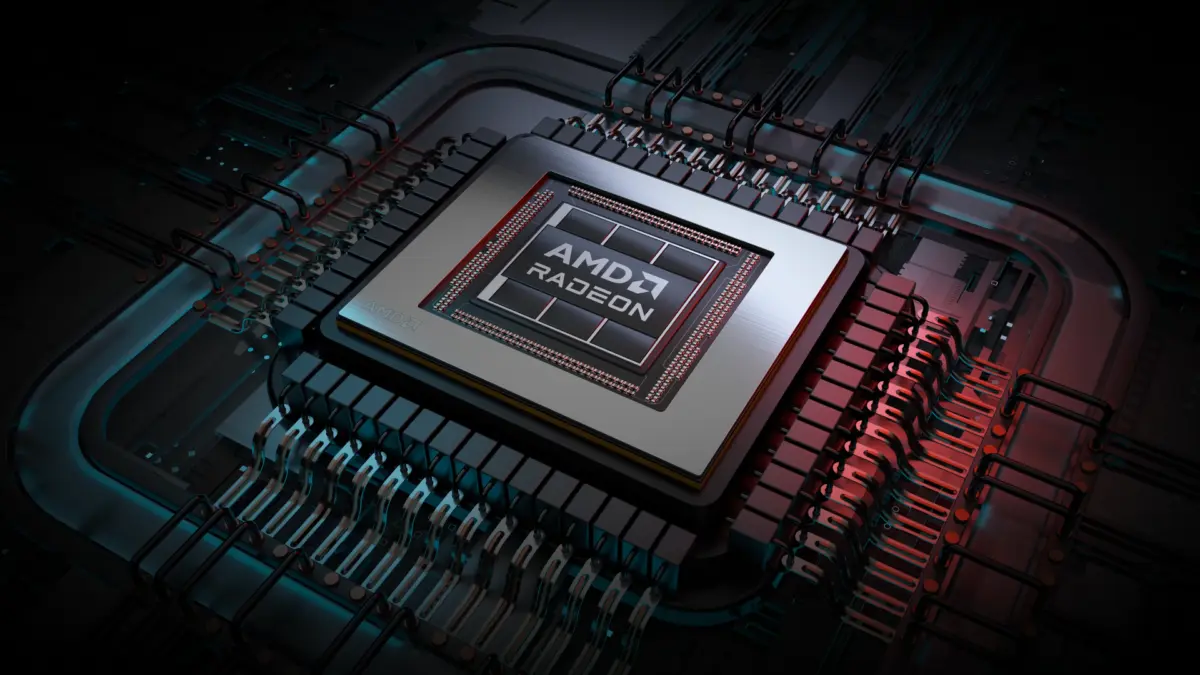
Earlier this year, AMD made waves in the graphics card and PC gaming market by bringing its previously RX 9000-exclusive FidelityFX Super Resolution 4 (FSR 4) upscaling technology to Radeon RX 7000-series graphics cards. At the time of that initial rollout, the company had promised an early 2027 release for the older RX 6000-series products, asking owners of RDNA 2 hardware to exercise a bit more patience as the engineering teams worked to scale down and adapt the cutting-edge upscaler.
However, it turns out that Christmas has come early for RDNA 2 and many other Radeon gamers across the globe. AMD senior vice president and general manager of the Computing and Graphics Business Group Jack Huynh has officially announced the rollout of an FSR 4.1 release that dramatically expands the reach of AMD’s advanced upscaling technology. The new update brings FSR 4.1 not only to the anticipated Radeon RX 6000 series cards running on the RDNA 2 architecture, but also extends support to Xbox Series X and Series S consoles, Ryzen Z-series handheld gaming devices, and machines powered by Ryzen AI Max and AI 9 chips.
This unexpected expansion arrives much sooner than the previously projected early 2027 window, offering a major performance and visual fidelity boost to a massive installed base of hardware that might otherwise have been left behind by the rapid evolution of neural network-based upscaling. The strategic decision highlights AMD’s ongoing commitment to supporting older architectures and diverse form factors, ensuring that gamers running hardware from previous generations can still take advantage of modern graphics advancements.
To accomplish this technical feat across such a wide array of disparate hardware, AMD had to rethink how the upscaler’s neural network model operates. Unlike the high-end Radeon 9000-series cards, which feature dedicated, high-precision FP8 matrix acceleration hardware capable of processing heavy machine-learning workloads natively, older and more power-constrained devices do not possess the exact same specialized silicon. To bridge this gap, AMD says it meticulously tweaked FSR 4.1’s underlying neural network model so that it could effectively and efficiently support INT8 shader hardware. This crucial adaptation allows the complex machine-learning algorithms required for high-quality upscaling to run smoothly on hardware that lacks native FP8 matrix acceleration, unlocking advanced visual clarity on older GPUs without imposing an unmanageable performance penalty.
The engineering challenge was even more pronounced when looking at mobile and handheld form factors. Handheld gaming PCs and compact consoles have strict thermal envelopes and power constraints, making efficiency just as critical as raw performance. To address this, the version of FSR 4.1 specifically tailored for handhelds has been slimmed down even further. According to AMD, the handheld-optimized iteration is less than half the size of the full desktop version, ensuring that devices powered by Ryzen Z-series chips and similar mobile processors can handle the processing load while preserving battery life and maintaining playable frame rates.
The inclusion of Xbox Series X and Series S consoles in this rollout is another significant development, pointing toward broader adoption and optimization of AMD’s graphics technologies in the console space. Because both current-generation Microsoft consoles rely on custom AMD architecture, optimizations made to the FSR 4.1 pipeline for these systems could potentially pave the way for smoother, higher-fidelity gaming experiences on the living room hardware. Similarly, the integration of FSR 4.1 into machines equipped with Ryzen AI Max and AI 9 chips demonstrates AMD’s broader vision of leveraging on-chip artificial intelligence accelerators for everyday graphics tasks, merging the worlds of AI processing and PC gaming performance.
For owners of Radeon RX 6000-series graphics cards, the arrival of FSR 4.1 represents a valuable extension of their hardware’s lifespan. When these cards launched, real-time neural network upscaling was largely seen as a futuristic feature destined solely for upcoming hardware generations. By backporting and adapting the technology to fit RDNA 2 via INT8 shader support, AMD is allowing millions of gamers who have held onto their RX 6700, RX 6800, or RX 6900 series cards to enjoy modern visual fidelity enhancements and sharper image reconstruction in the latest titles.
The announcement by Jack Huynh has been met with considerable enthusiasm within the PC gaming community, particularly among users of handheld gaming PCs who have eagerly awaited more efficient upscaling solutions to squeeze better performance out of demanding modern releases. As the gaming industry continues to embrace AI-driven rendering techniques as a standard method for balancing high resolutions with high frame rates, AMD’s aggressive push to democratize FSR 4.1 across multiple generations of silicon and varied device form factors ensures that its user base will not be left behind in the transition.
Leave a Reply