
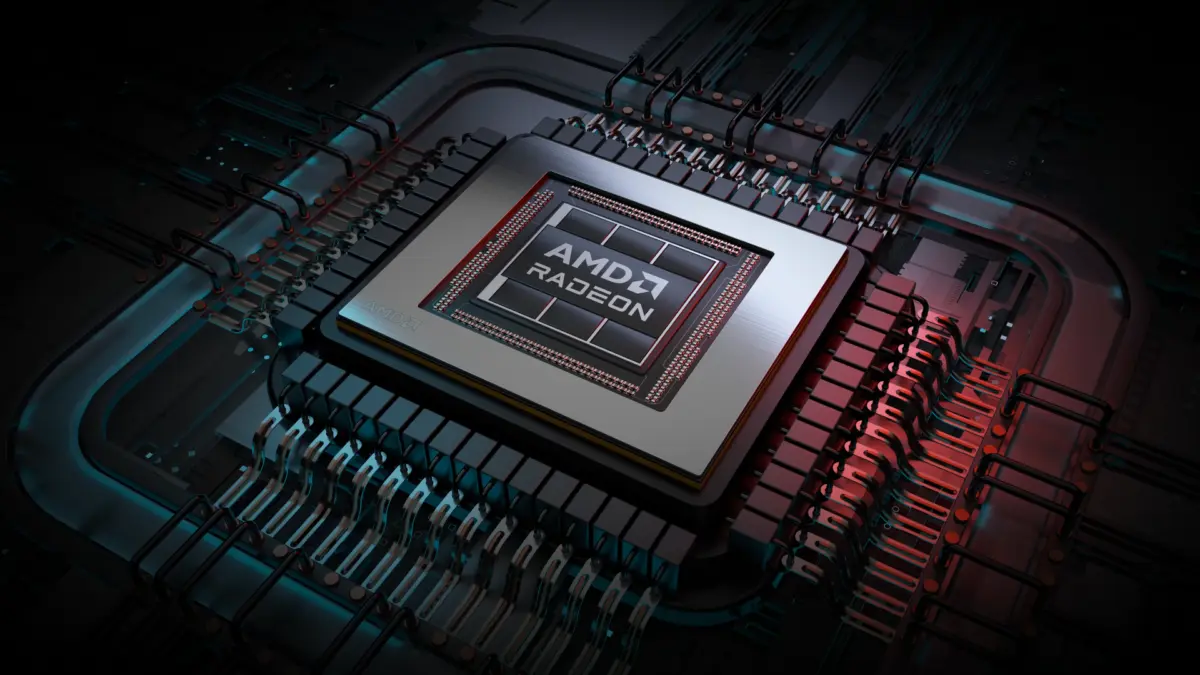
In a surprise holiday-season announcement for PC and console gamers alike, Advanced Micro Devices has vastly accelerated its timeline for bringing cutting-edge upscaling technology to older hardware. Earlier this year, AMD made headlines when it brought its previously RX 9000-exclusive FidelityFX Super Resolution (FSR) 4 upscaling technology to Radeon RX 7000-series graphics cards. At that time, the company had mapped out a conservative timeline, promising an early 2027 release for the older RX 6000-series products. However, plans have changed significantly, and the wait is nearly over for a vast segment of the PC gaming community.
Radeon leadership has officially confirmed that a specialized FSR 4.1 release is coming much sooner than anticipated. Jack Huynh, head of AMD’s Computing and Graphics Business Group, took to social media to announce that the expanded rollout will not only encompass the Radeon RX 6000 series, but will also extend to Microsoft’s Xbox Series X and Series S consoles, popular Ryzen Z-series gaming handhelds, and systems powered by Ryzen AI Max and AI 9 chips. This sweeping deployment represents a massive leap forward for millions of users who were previously expected to miss out on the latest advancements in neural upscaling technology due to hardware architectural differences.
The journey of FSR 4 has been closely watched by the PC hardware and gaming community since its inception. Initially designed hand-in-hand with the latest generation of graphics architecture, the upscaling suite relies heavily on advanced machine learning algorithms to deliver sharper images, reduced ghosting, and superior temporal stability compared to older spatial and simpler temporal upscaling methods. When AMD first launched the technology alongside its flagship RX 9000-series cards, the feature was heavily tied to the specialized, high-performance FP8 matrix acceleration hardware built directly into the newest silicon. This created a technical barrier for older architectures, leading many industry analysts to believe that bringing FSR 4 to past generations would be a slow, iterative, and hardware-constrained process.
Overcoming this technical hurdle required a substantial engineering effort from AMD’s software and graphics teams. To accomplish the feat of bringing FSR 4.1 to older and more constrained hardware, AMD engineers had to fundamentally re-engineer aspects of the underlying technology. Rather than relying exclusively on the high-precision FP8 matrix acceleration hardware found on newer flagship cards, AMD says it successfully tweaked FSR 4.1’s neural network model to support INT8 shader hardware. This crucial adaptation allows the complex machine learning models required for high-fidelity upscaling to execute efficiently on the integer arithmetic units available in RDNA 2 architecture and various other silicon designs, effectively opening the door for millions of legacy and current-gen devices to run advanced neural upscaling without crippling system performance.
The engineering challenge was even more pronounced when looking beyond traditional desktop graphics cards toward portable gaming form factors and living-room consoles. Handheld gaming devices, such as those powered by Ryzen Z-series processors, operate under strict thermal and power envelopes, making computational efficiency paramount. To ensure that portable players are not left behind, AMD developed a specialized variant of the technology specifically tailored for handhelds. According to the company, this dedicated version has been slimmed down significantly, reducing its footprint to less than half the size of the full desktop implementation while still retaining the core visual and performance benefits of the FSR 4.1 ecosystem.
This extensive cross-platform deployment highlights AMD’s broader strategy of unifying its gaming and AI software stack across a diverse array of hardware. By bridging the gap between desktop graphics cards, console architectures, handheld processors, and AI-focused chips, the company is establishing a more standardized upscaling ecosystem for developers and consumers alike. Gamers utilizing RDNA 2 graphics cards, such as the Radeon RX 6000 series, will soon be able to experience vastly improved visual fidelity and framerate stability in modern titles that incorporate the updated upscaling suite. Similarly, console players on the Xbox Series X and Series S, alongside users of mobile Ryzen AI platforms and handhelds, stand to gain significant performance headroom as developers adopt the new iteration of AMD’s software tools.
As the rollout of FSR 4.1 draws closer, the gaming community prepares for a substantial visual upgrade across a wide spectrum of devices that span multiple generations of hardware. By successfully adapting its neural network models to run on more widely available INT8 shader hardware and optimizing slimmed-down builds for portable systems, AMD has managed to deliver on its hardware longevity promises well ahead of its original 2027 schedule, redefining what older graphics architectures and specialized gaming devices are capable of achieving in modern titles.

Leave a Reply