
The Linux desktop landscape is witnessing a fascinating experiment in software development, as artificial intelligence takes center stage in reviving a once-dormant operating system project. CutefishOS, a Linux distribution that captured the attention of the open-source community several years ago with its sleek, macOS-inspired aesthetic, is making a comeback. However, the method behind its resurrection is entirely unprecedented. The project’s creator has utilized advanced AI models to completely rewrite the desktop environment, sparking discussions across the open-source world about the future of software creation, the definition of building from scratch, and the emerging trend of "vibe-coded" Linux desktops.
Reion Wong, the original creator and primary developer of CutefishOS who also manages the project’s presence on social media platforms like X, recently took to the internet to announce the return of the desktop environment. To showcase the project’s rebirth, Wong shared a comprehensive demo video alongside a series of high-resolution screenshots. According to the developer, the core workflow involved prompting advanced AI agents—specifically leveraging Anthropic’s Fable 5.1 and Opus 5.5 models—and then reviewing and refining whatever the systems produced.
Is It Really Built from Scratch?
The announcement immediately raised eyebrows and triggered debates within developer communities regarding the phrase "built from scratch." In a post accompanying the demonstration, the official CutefishOS account stated that every single line of code for the new desktop has been rewritten using Fable 5.1 and Opus 5.5. Furthermore, the project claims to feature its own independent Wayland compositor, a custom graphics library, and an entirely new suite of system applications. Perhaps most boldly, the announcement highlights that applications launch almost instantly.
When inquired about the underlying foundations—specifically whether the desktop environment relies on established toolkits like GTK—Wong clarified that the new software stands entirely on its own. It is neither based on Qt nor GTK, diverging from the traditional frameworks that anchor the vast majority of Linux desktop environments.

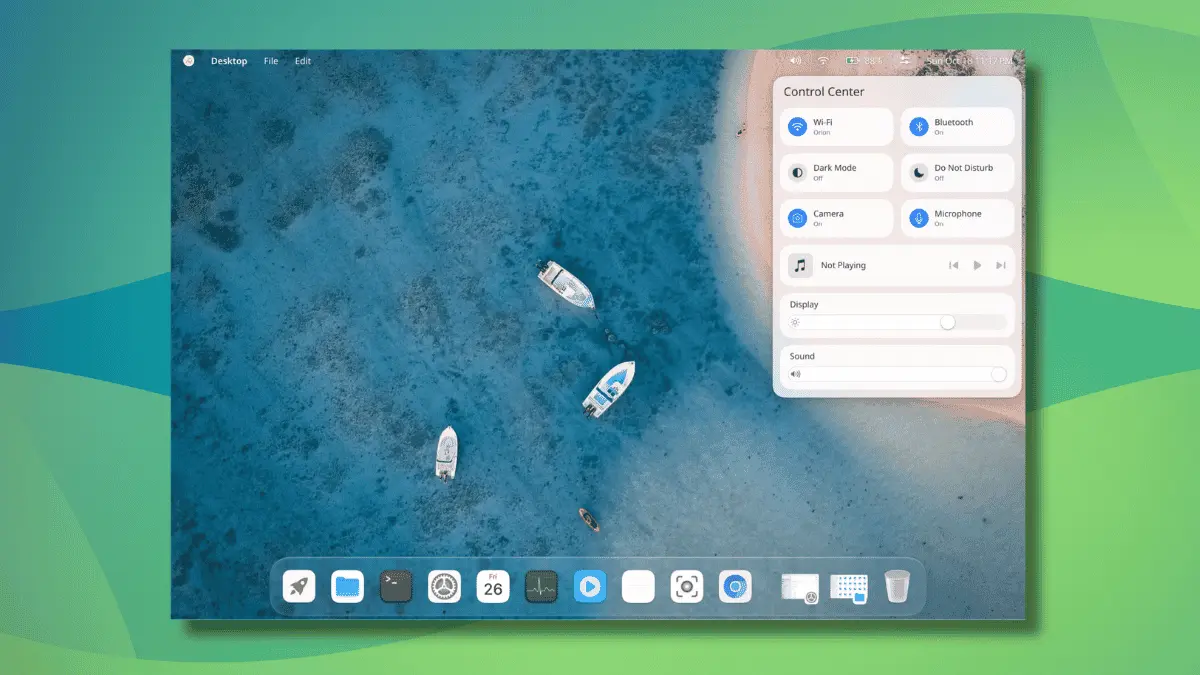
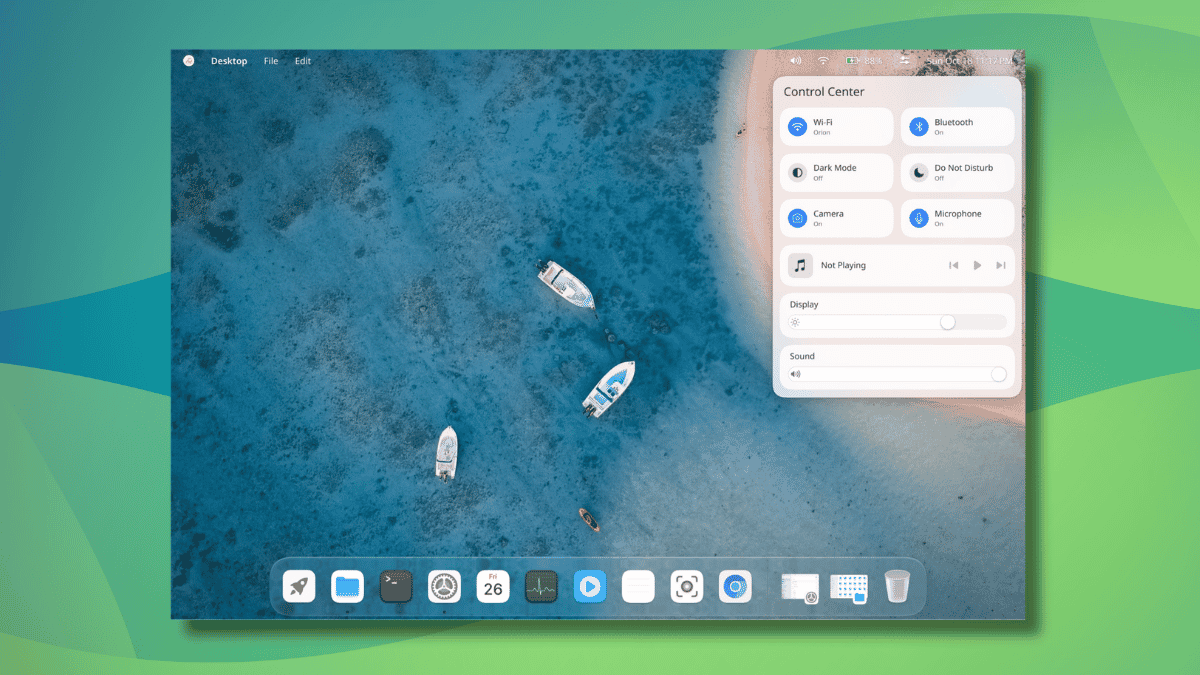
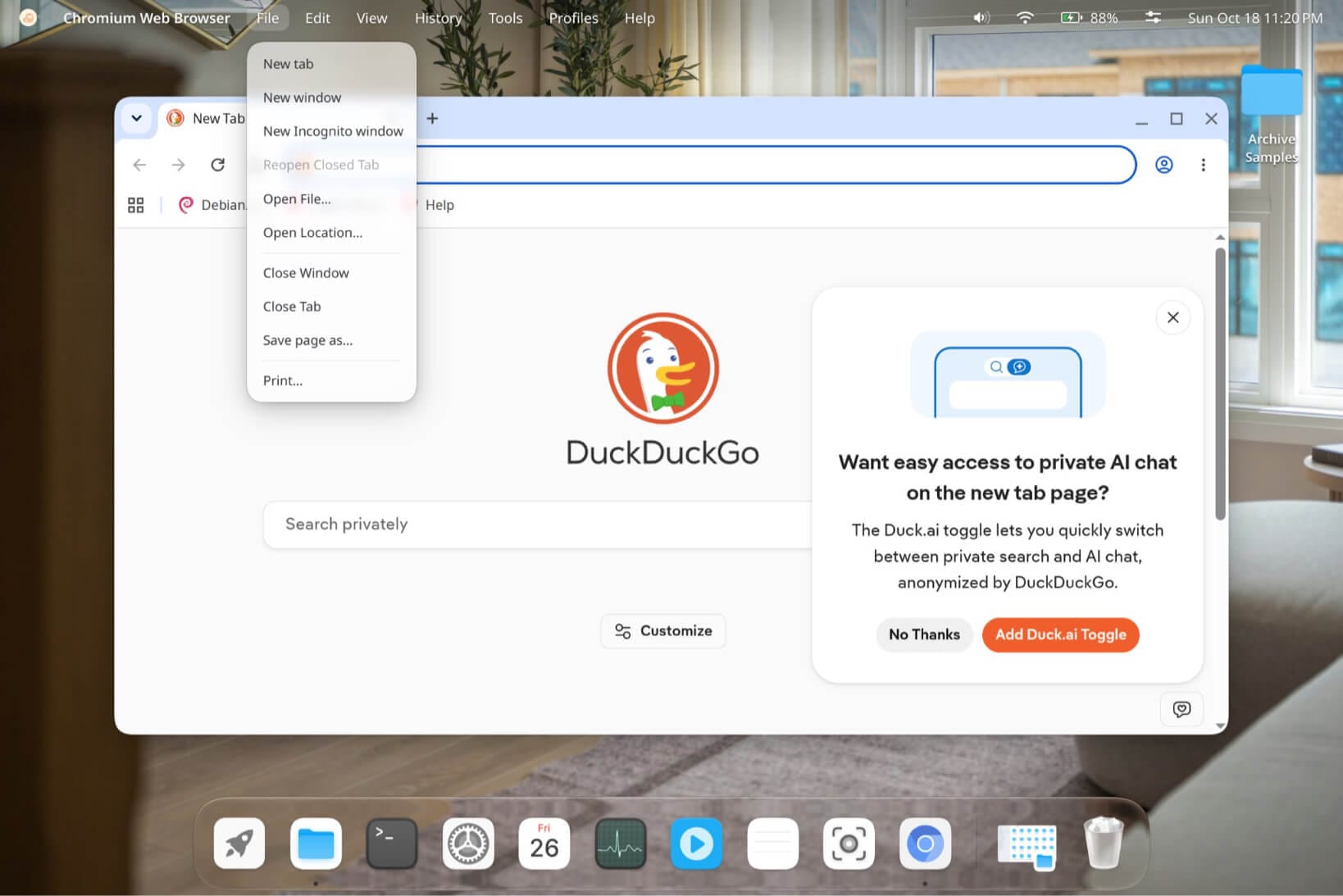
A closer examination of the video demonstration reveals an interface heavily reminiscent of macOS, maintaining the design philosophy that originally defined CutefishDE when the distribution first emerged. A clean, minimalist top bar houses a Control Center panel, a Notification Center, and standard status widgets. The Control Center provides direct access to toggles for Wi-Fi, Bluetooth, dark mode, Do Not Disturb, camera controls, and microphone access. It also integrates media playback controls alongside sliders for fine-tuning display brightness and sound levels.
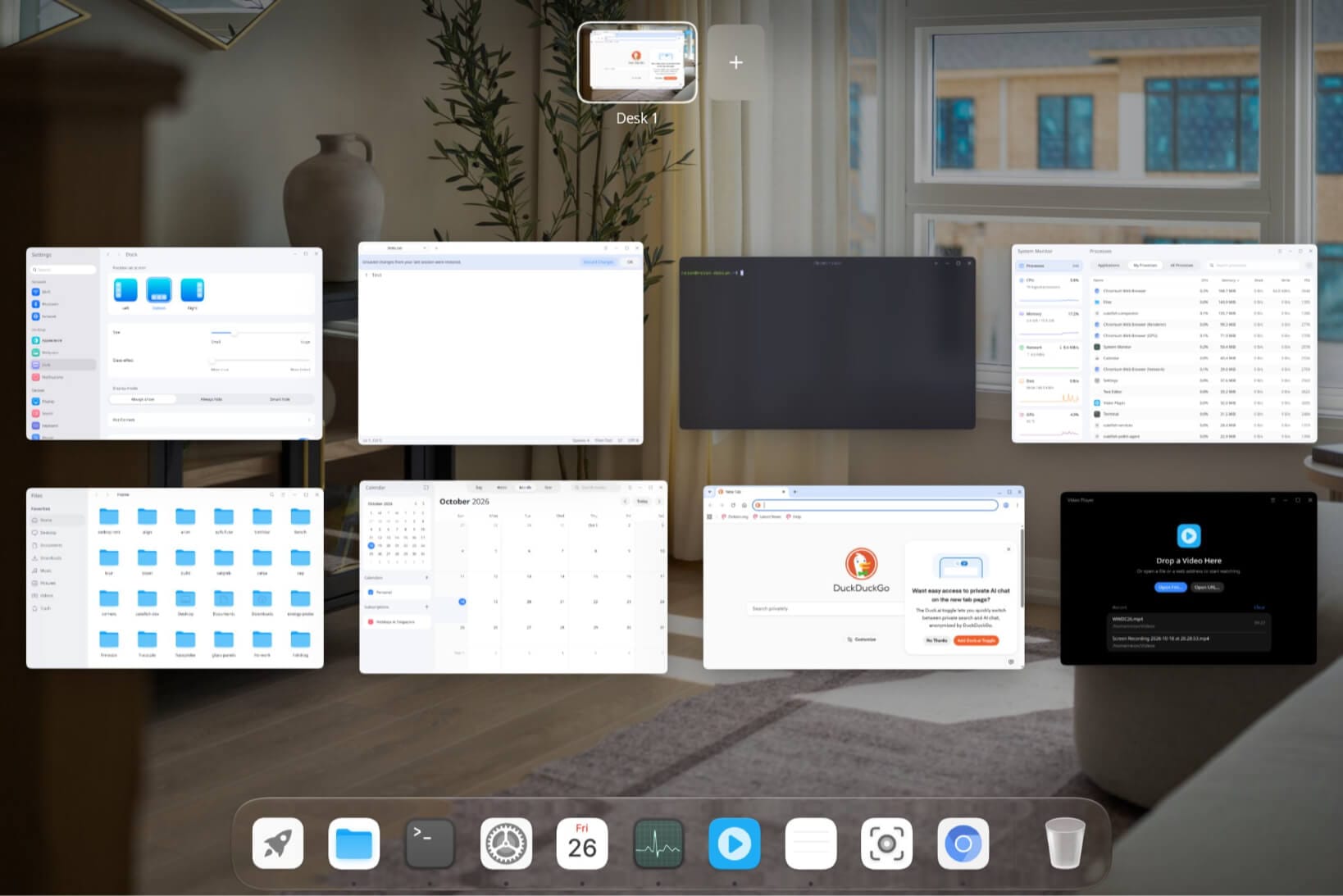
The desktop environment also incorporates a highly configurable Dock. Users can position the dock at the bottom, left, or right of the screen, and customize its appearance using sliders for size and glass-morphism visual effects. Operational modes for the dock include options to always show, always hide, or utilize a smart hide feature. Additionally, borrowing design cues popularized by GNOME, the Cutefish Desktop features an Overview mode. This interface spreads open windows across a grid layout, enabling users to manage and add new workspaces—referred to by the project as "Desks"—via a convenient control button located at the top of the screen.
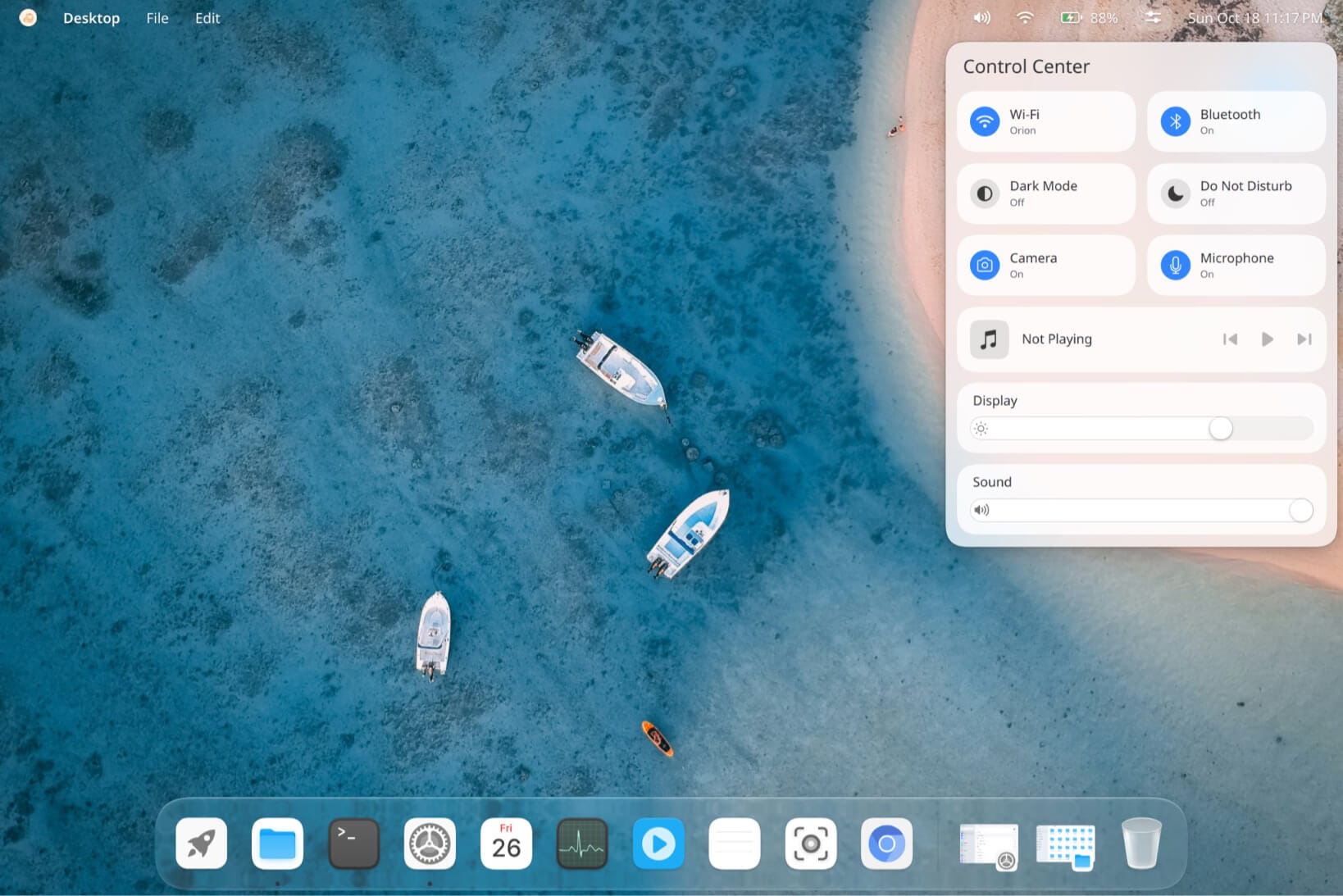
The bundled applications showcased in the new environment include a purpose-built file manager, terminal application, calendar, system monitor, text editor, video player, screenshot utility, and image viewer. Beyond these native tools, the application launcher displays third-party software such as Chromium, Firefox, KeePassXC, Ghostty, and LibreOffice running seamlessly within the newly generated desktop space.
A Look Back at CutefishOS
To understand the significance of this current AI-driven revival, it is helpful to look back at the history of CutefishOS. The project first entered the public sphere in 2021 as a beta distribution built upon Debian 11. At its core was CutefishDE, a desktop environment characterized by its elegant, streamlined interface, global application menu integrated into the status bar, and a curated set of native applications.
Momentum slowed dramatically in 2022. The official project website went offline, and activity across code repositories dropped to a near standstill. The hiatus prompted concern among users, leading at one point to a community member attempting to organize a fork of the operating system on Reddit. However, those plans for a community fork were quickly shelved after the original GitHub repository updated to announce that the project was returning alongside plans for a fresh website.
Despite the excitement surrounding the recent demonstration of the AI-rewritten desktop, prospective users will need to exercise patience. No official release date has been provided by the developer. When an enthusiastic user on social media expressed eagerness to test the new software immediately, the project replied that considerable time would still be required before a public testing phase could begin.
A search through the official CutefishOS GitHub organization page reveals that a dedicated repository for this newly rewritten desktop environment has not yet been published. Based on where Wong has traditionally managed development for the operating system, observers and testers are advised to keep a close watch on the project’s official GitHub profile for the eventual publication of the source code.
The emergence of CutefishOS under this new development paradigm highlights a broader, emerging trend within the open-source ecosystem. The project joins a small wave of experimental, AI-assisted or "vibe-coded" desktop implementations appearing across the Linux landscape, signaling that the intersection of generative artificial intelligence and traditional operating system development is entering a new and highly unpredictable chapter.
Leave a Reply