
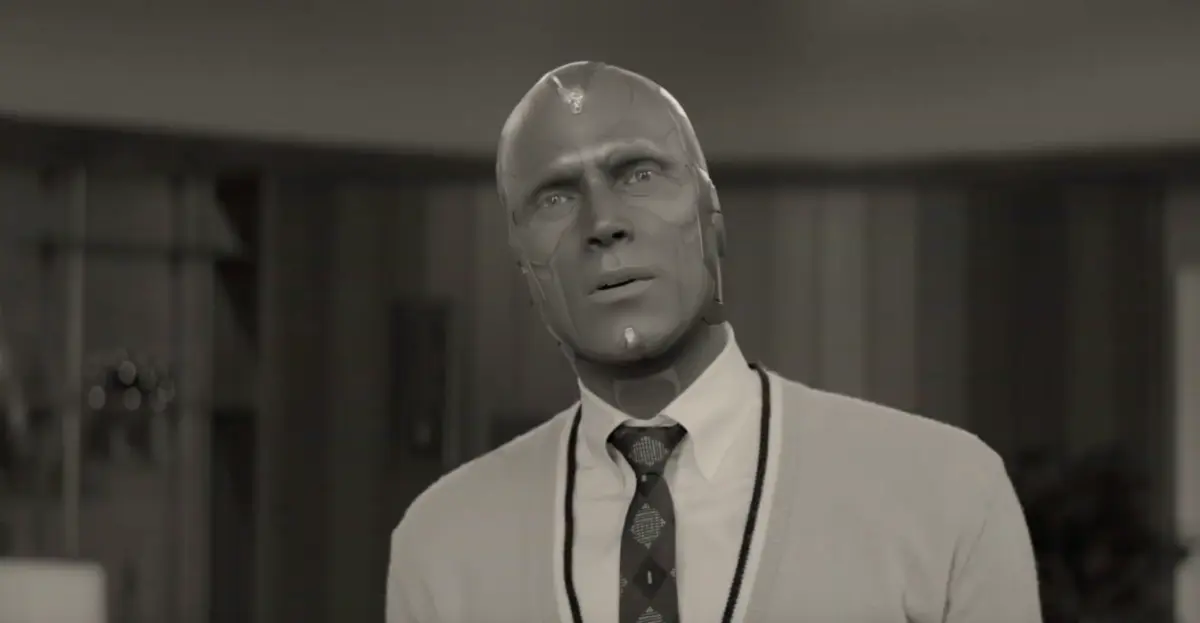
Old-school Marvel Comics fans tuning into the latest episodes of Disney Plus’s VisionQuest received a massive piece of comic book lore during the show’s fourth episode. The reference ties deep into the foundational history of Marvel publishing, bridging a gap between the modern Cinematic Universe and its Golden Age roots.
A persistent subplot throughout the run of VisionQuest has centered on a string of high-profile murders committed by an elusive killer known as the Butcher Bird. Investigators have discovered that the victims all shared a common background: they were the original founders of a company called AI Research and Development. Years prior to the events of Iron Man, the enterprise was sold to Stark Industries. Recognizing a pattern, Vision, played by Paul Bettany, and the artificial intelligences residing within his digital consciousness deduce that the next and final target will be the last surviving founder of the firm. To intercept the threat, Vision and Tommy, portrayed by Ruaridh Mollica, attend a public benefit where the elderly co-founder is scheduled to deliver a speech.
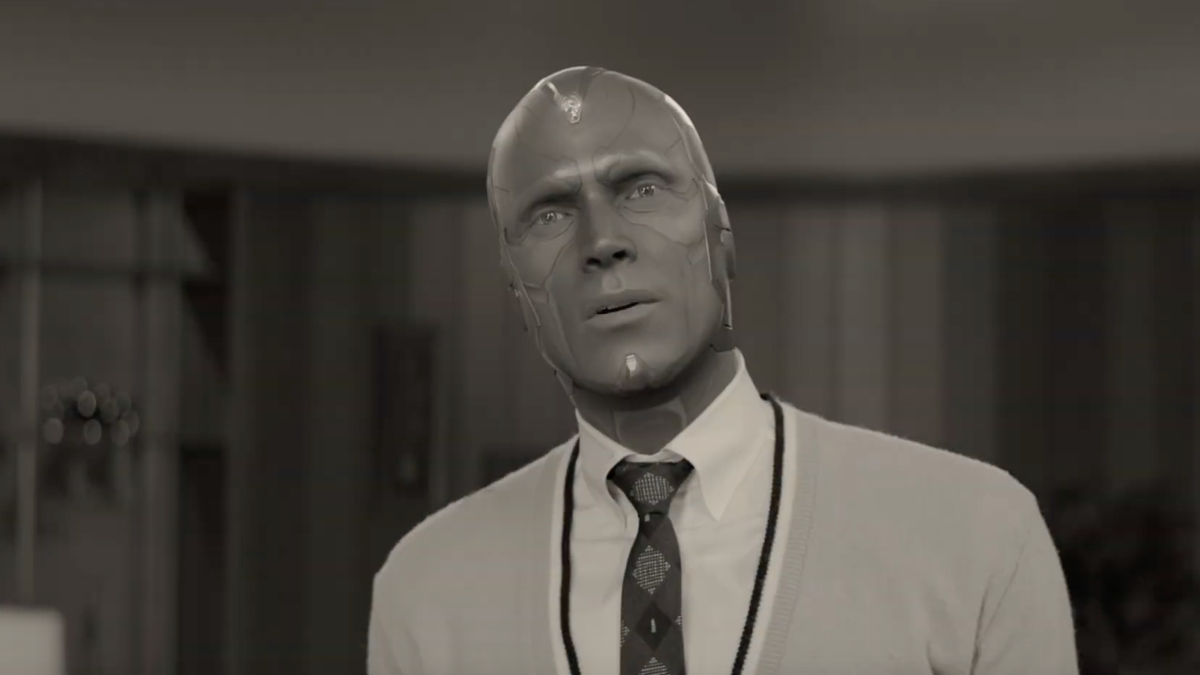
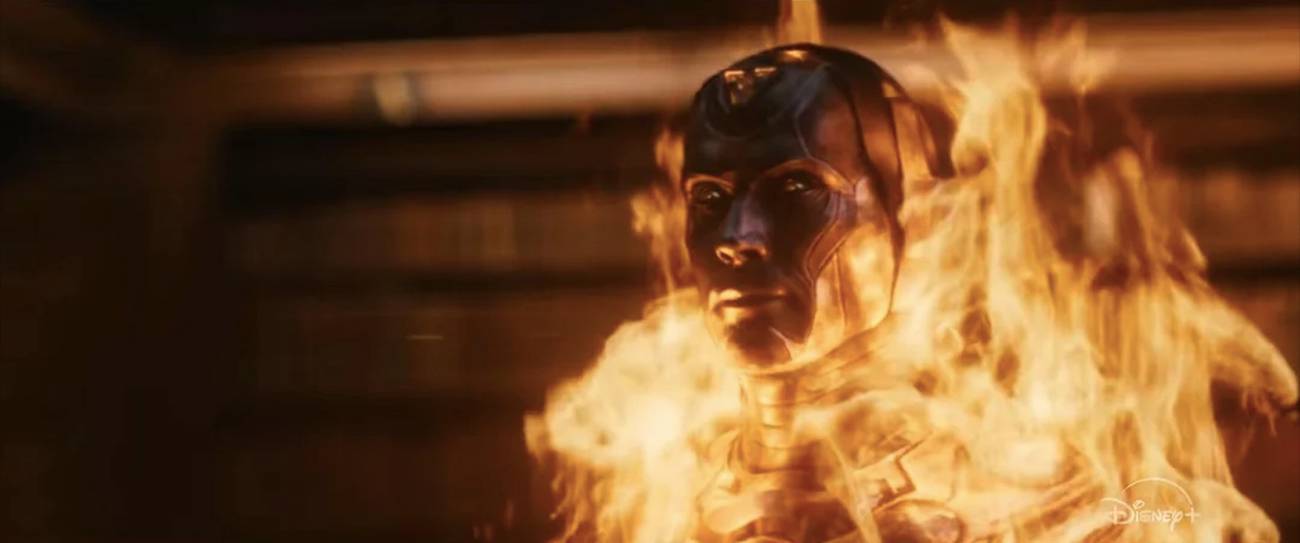
During her presentation on stage, the co-founder invokes the name of Dr. Phineas Horton, whom she introduces to the audience as the "great-grandfather of robotics." She continues by explaining that Horton was the visionary behind "the first automaton AI," historically recognized as "JIM" or "the synthetic man." Following this revelation, Vision elaborates for Tommy, noting that JIM was indeed the very first artificial intelligence ever created, describing him as "miraculous and flawed. His mind was obsolete from conception." Vision goes on to detail the tragic mechanics of the early creation, explaining that JIM’s inability to process complex emotions caused his internal clockwork to operate at an unsustainable pace. This psychological strain flooded his solar cells with oxygen until his entire physical form was consumed in fire.
This narrative dialogue was further corroborated by a promotional clip released by Marvel on October 17, which offers viewers a clear look at JIM’s appearance within the series. In the footage, the character is depicted as a copper-colored robot portrayed by Paul Bettany, engulfed in flames. For casual viewers, the name and concept might seem like a brand-new invention for the television series, but the roots of Dr. Phineas Horton and his fiery creation stretch back to the earliest days of Marvel’s publishing history.

Marvel’s Original Human Torch
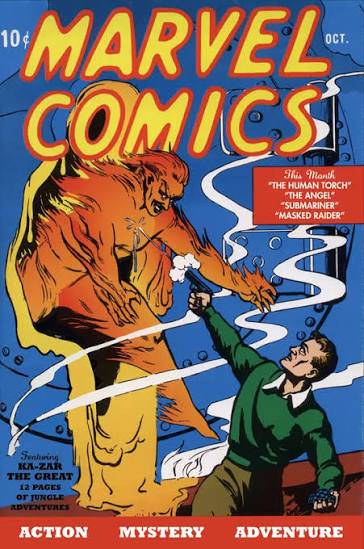
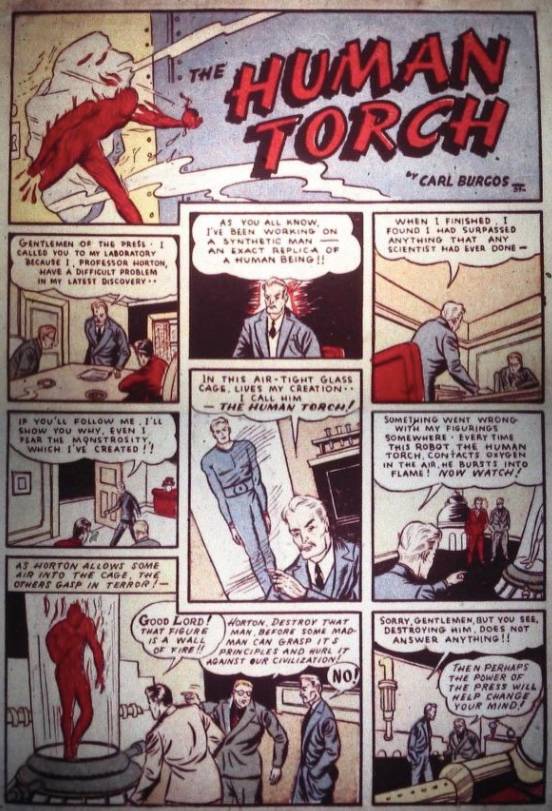
Before the company officially adopted the moniker Marvel Comics, it operated under the name Timely Comics. Founded in 1939 by publisher Martin Goodman, Timely launched its publishing legacy with Marvel Comics #1. That historic inaugural issue featured the debut of Namor the Submariner alongside the origin story of a superhero known as the Human Torch. Crucially, this is not the Human Torch popularized decades later as a member of the Fantastic Four, but an entirely different entity that predated Johnny Storm by many years.
The original Human Torch was conceived and engineered by the brilliant but reckless scientist Dr. Phineas Horton. On the opening page of Marvel Comics #1, Horton gathers members of the press to witness the public unveiling of his exact replica of a human being, proudly introducing it as a "synthetic man." However, Horton is forced to admit that his creation suffers from a catastrophic design flaw: upon direct exposure to oxygen, the synthetic body spontaneously bursts into intense flames. Naturally, the assembled journalists view this volatile defect as an unacceptable danger to the public. While Horton initially resists demands to destroy his life’s work, he eventually yields to the pressure and agrees to entomb the creature within a sealed block of cement until he can refine the underlying science.
The concrete block is subsequently buried, but unforeseen by Horton, a minute structural fissure allows a small stream of air to seep into the tomb. As oxygen gradually accumulates inside the enclosure, the synthetic man is violently reactivated, catching fire and shattering the cement block from the inside out. In his initial moments of freedom, the synthetic man lacks memories of his origin or an understanding of why everything he touches bursts into flame. However, over the course of several issues in Marvel Comics, he learns to harness and control his abilities, eventually adopting the human identity of Jim Hammond and establishing himself as a premier hero of the era.
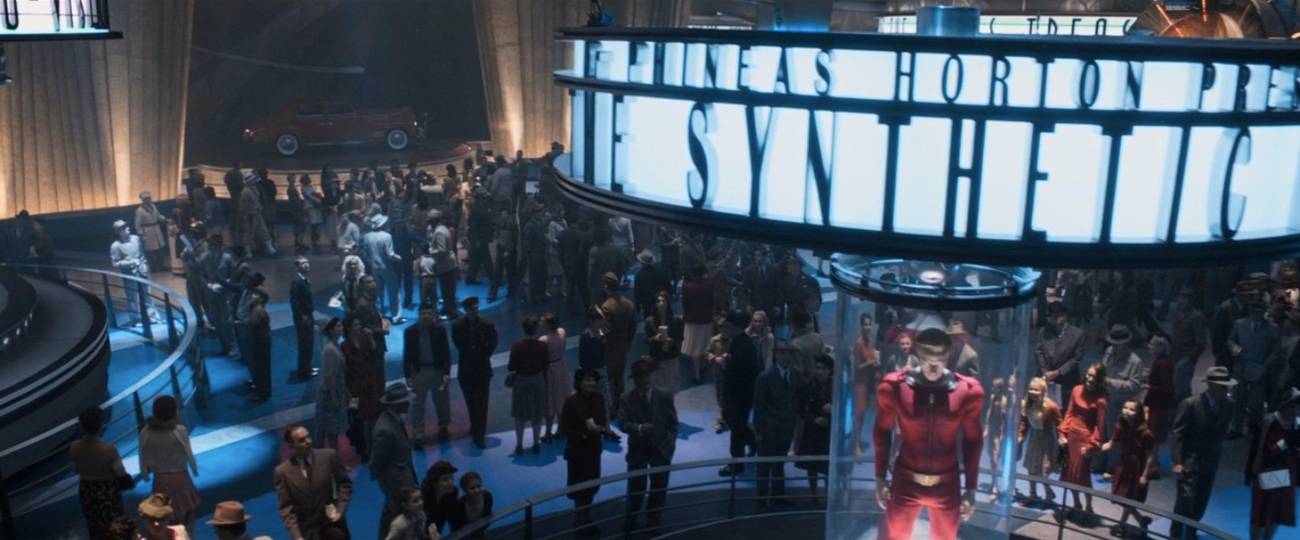
Along with Namor the Submariner and Captain America, the original Human Torch stood as one of Timely Comics’ signature champions during the 1940s. The character’s historical footprint has even been referenced in the MCU before, notably in Captain America: The First Avenger. During the sequence early in the film where Steve Rogers, played by Chris Evans, and Bucky Barnes, played by Sebastian Stan, visit the 1943 World Expo, keen-eyed viewers can spot an exhibit labeled "Dr. Phineas Horton Presents: The Synthetic Man." The display features a figure resembling a man clad in a red suit enclosed within a glass tube, mirroring the exact visual presentation from the 1939 comic book page.
As the post-war era set in, public interest in superheroes waned, and the Human Torch—alongside several other Golden Age characters—faded into obscurity during the 1950s, ceasing publication for more than a decade. Dr. Phineas Horton likewise disappeared from the active narrative landscape, though neither character was gone for good.
The Legacy and Evolution of the Synthetic Man
The modern era of Marvel Comics officially commenced in 1961 with the explosive debut of the Fantastic Four. As the universe expanded, continuity established that Johnny Storm was well aware of his predecessor and had adopted the mantle of the Human Torch as a tribute to the original hero. In a 1966 comic book issue, Horton confronts Johnny Storm, furious that a new hero has usurped the name of his creation. At that time, the original Human Torch had been entombed beneath the Nevada desert after burning out in 1954.
That status quo shifted when a Fantastic Four adversary, the Thinker, resurrected the original Human Torch—stripping away portions of his memories—and set him against Johnny Storm in combat. The original Torch ultimately lost the confrontation and was buried within the wreckage of the laboratory. Horton, meanwhile, slipped further into personal disgrace and alcoholism, embittered by a lifetime of professional failures. Decades later, comic book continuity would reveal that Horton had previously been employed by the Kang variant Victor Timely during the period when he first constructed the Human Torch.
In 1968, the narrative took a darker turn when the battered body of the Human Torch was recovered by Ultron. The villain also kidnapped the disgraced Dr. Horton, forcing him to assist in repairing the Torch and utilizing components of his technology to forge a new, perfect physical form. Readers familiar with the overarching mythos will recognize the thematic parallels to Ultron’s actions in Avengers: Age of Ultron, as the comic book iteration of Ultron ultimately constructs the Vision using the physical template of the original Human Torch. True to his villainous nature, Ultron executes Horton after the scientist fails to fully cooperate with his malevolent agenda.
This deeply integrated comic book history explains why referencing Dr. Phineas Horton and the original synthetic man carries such significant weight in a television series centered on Vision and the legacy of artificial life within the Marvel Cinematic Universe.
While the Human Torch would eventually return in various capacities within the comics, his narrative DNA remains permanently intertwined with the origins of the Vision. The MCU appears to be honoring this lineage by referring to the historical creation simply as "JIM" rather than using the moniker of the Human Torch, a sensible choice designed to prevent confusion with the Fantastic Four hero. Nevertheless, given that the Human Torch’s human alias was Jim Hammond, and with Paul Bettany portraying JIM on screen, the connection to Vision’s technological ancestry is unmistakable. Through these deliberate callbacks, the MCU continues to acknowledge and celebrate foundational characters from Marvel’s earliest publishing days, bringing forgotten history into the modern fold.

Leave a Reply