
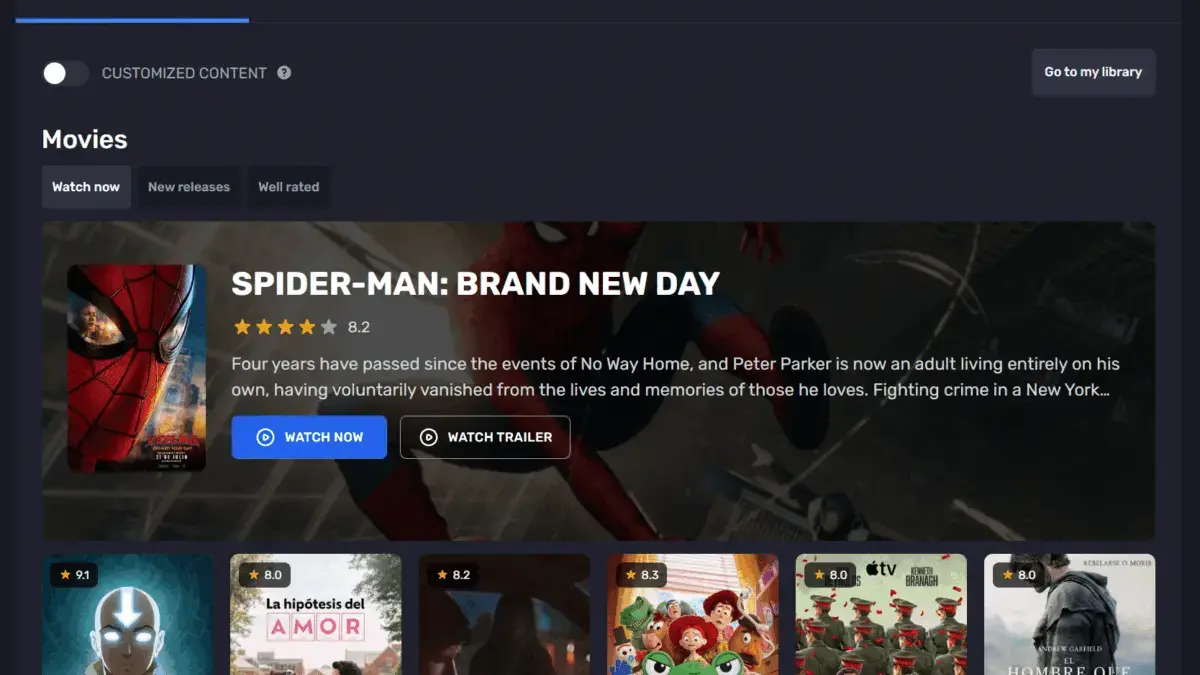
Series.ly, once one of the most prominent pirate link aggregation platforms in Spain, has found itself back in the crosshairs of rightsholders and regulatory authorities. Despite operating under entirely new management following a domain auction, the site has faced aggressive legal maneuvers culminating in a temporary domain seizure, forcing its operators to pivot and ultimately rebrand while sparking a broader debate over international jurisdiction and digital enforcement.
The Rise of the New Series.ly and Rightsholder Pressure
The original Series.ly operation famously dropped its piracy links in late 2014, long before its administrators faced high-profile arrests in 2015. Years later, in 2021, the domain was purchased at a public auction by a completely new team. The current operators have consistently maintained that they possess no institutional or structural connection to the original founders of the site.
Under this new management, Series.ly evolved into a community-driven platform requiring a user login to access personalized features. The site managed to carve out a substantial audience on its own merits, pulling in nearly two million monthly visits, with roughly 90 percent of its incoming traffic originating from Spain.

However, this renewed digital footprint did not go unnoticed by major rightsholders who remain vigilant against online infringement. In May, the Spanish film and television producers’ group EGEDA filed a formal complaint with the Second Section of Spain’s Intellectual Property Commission, which operates under the authority of the Ministry of Culture. The core objective of the complaint was to secure the complete shutdown of the domain.
To substantiate the claim, an investigator appointed by the Commission reviewed a random sample of 42 titles out of the 110 specific works listed in EGEDA’s initial grievance. The investigation revealed that 35 of those sampled titles could be readily streamed or downloaded directly through links hosted or aggregated on Series.ly at the time. In July, the Commission formally ordered the site administrators to remove the infringing content. According to regulatory filings, Series.ly never formally responded to the directive.
From Google to a Libyan Registrar
With the deadline for compliance passing without a response, the Commission moved forward at the end of July by sanctioning a comprehensive suite of anti-piracy measures directed squarely at third-party internet intermediaries.

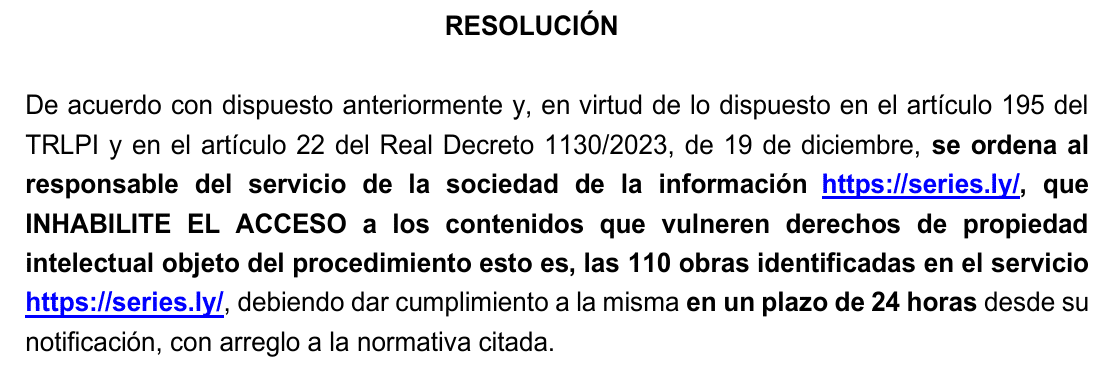
The resulting regulatory resolution mandated that major search engines, including Google and Bing, excise the Series.ly domain entirely from their search indices. Furthermore, domestic internet service providers (ISPs) boasting a market share exceeding one percent were ordered to block the domain name outright. These ISPs were also instructed to actively redirect visitors attempting to reach Series.ly to an official government landing page. This page was designed to inform users that the domain had been blocked by the Commission specifically for "having illegally facilitated access to content protected by intellectual property rights."
The sweeping order did not stop at search engines and local ISPs. It explicitly listed prominent infrastructure providers, including content delivery network Cloudflare and Ukrainian hosting firm Virtual Systems—whose Kyiv data centers had recently been impacted by Russian missile strikes. Additionally, the order targeted Series.ly’s domain registrar, the Libyan Spider Network. The terms of the administrative decision were structured to apply not only to the active domain at the time but also to any future domain names that the operators might attempt to employ for the same underlying purpose.
For the administrative resolution to carry legal weight and enforceability, it required formal judicial approval. That authorization arrived on September 28, when a judge presiding over the Central Court of First Instance in Madrid reviewed the case and concluded that the proposed measures were entirely proportionate, approving them precisely as requested by the authorities.
The Libyan Registrar Acts and a Pivot to Cinubo
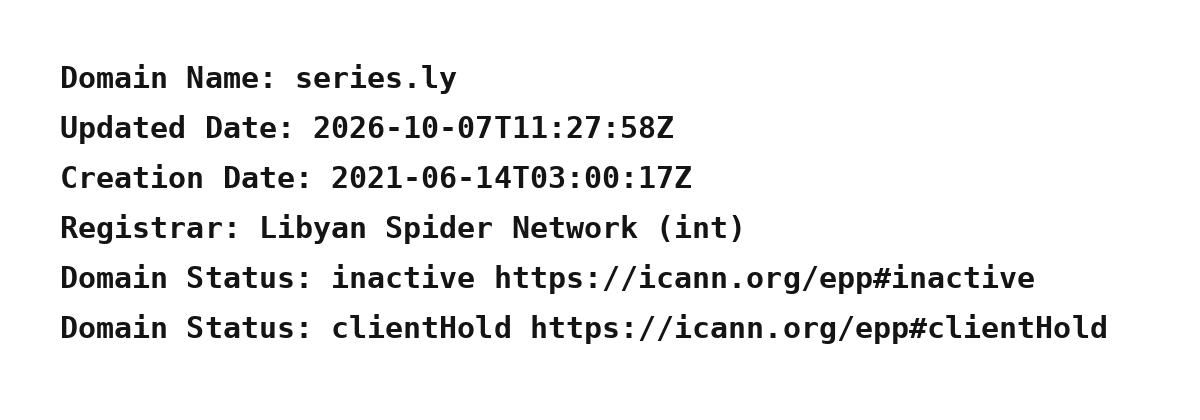
Little more than a week following the court’s endorsement, the administrative pressure translated into direct technical action. Early in the month, Series.ly abruptly lost its domain name when its registrar, Libyan Spider, intervened.
Publicly accessible WHOIS records confirmed that the series.ly domain had been placed on a "clientHold" status—a specialized administrative designation set by a domain registrar to effectively take a domain offline. This action pulls the domain out of the .ly zone, rendering it completely unresolvable across the global Domain Name System.
While Libyan Spider did not issue a public statement regarding the suspension, the operators of Series.ly reported receiving notification through the auction house that originally sold them the domain, which functions as a reseller for the registrar. The operators told TorrentFreak that the stated reason for the suspension cited the Spanish copyright resolution alongside the corresponding court order authorizing the enforcement measures against the domain.
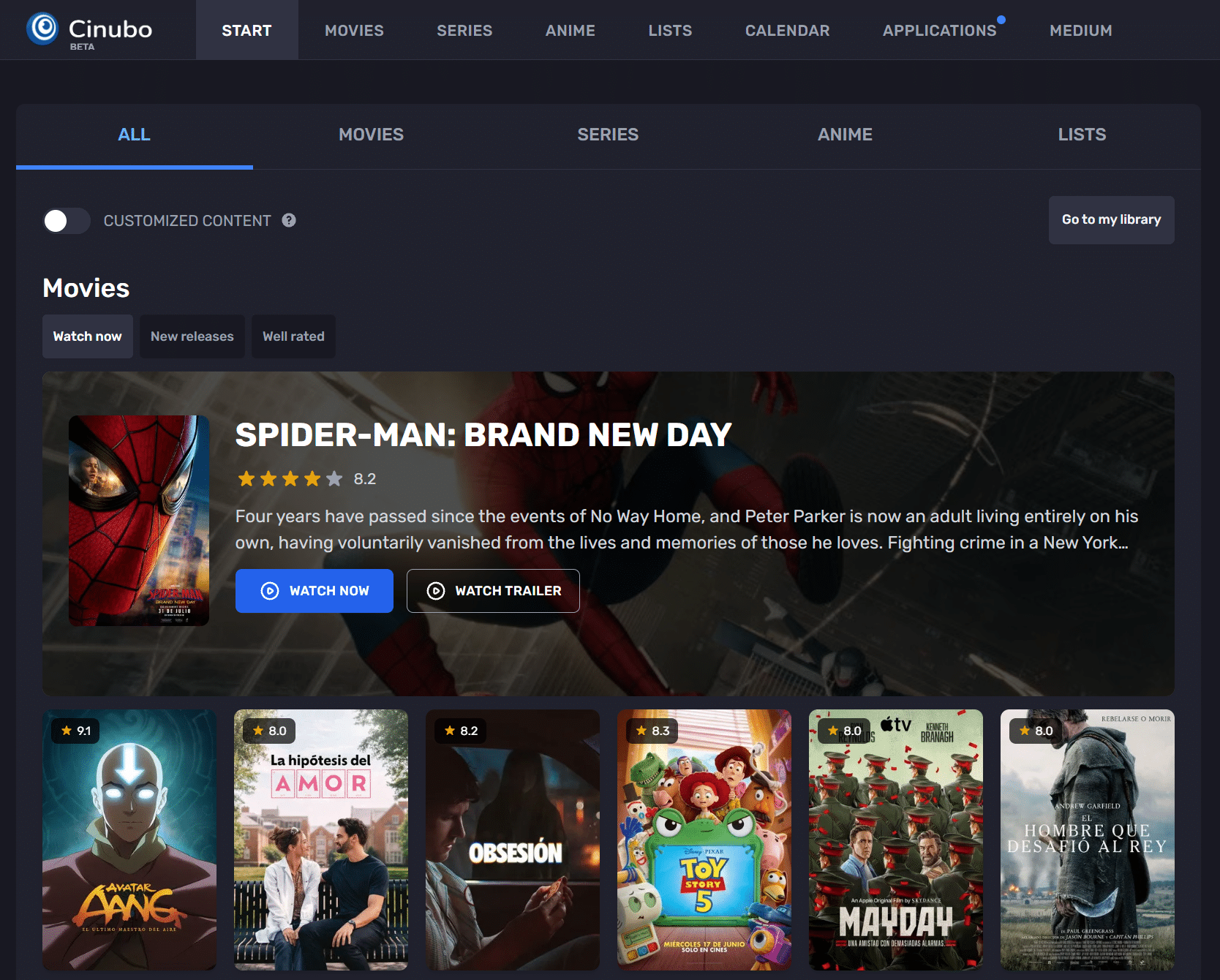
While it remained unclear whether other designated intermediaries had fully executed their respective blocking orders at the exact same moment, the underlying court directive remained legally valid. Interestingly, in the immediate wake of the Series.ly domain suspension, a strikingly similar platform operating under the brand name Cinubo emerged online. Concurrently, the official Series.ly Telegram and Discord communication channels were hastily renamed to align with the new Cinubo branding.
No Plans to Appeal and Subsequent Developments
Addressing the sudden disruption, the site’s operators noted that they had failed to notice the initial warnings before the domain was pulled offline. They explained that an administrative email from EGEDA had been sent to an obscure address, whereas the primary contact address listed publicly on the site differed.
From the perspective of the management team, Series.ly functioned as a non-profit endeavor that had generated zero revenue since its relaunch. They emphasized that the platform never hosted any video files directly on its servers, arguing that links to external services were supplied entirely by the community of registered users. Consequently, the operators contended that copyright complaints ought to be directed exclusively at the third-party services that actually hosted or distributed the media files. They characterized the decision to suspend an entire domain—including email services and personal library features—over third-party links as disproportionate.
Despite these objections, the operators indicated they had no immediate plans to mount a formal legal appeal against the Spanish order. They pointed out that the corporate entity backing the project is legally based in Nevis, raising legitimate questions concerning the extraterritorial reach of Spanish administrative actions. They questioned whether a local procedure handled within Spain could rightfully justify suspending a domain on a global scale, particularly when it disrupted unrelated email and personal productivity services.
Nevertheless, the legal battle carried potential long-term implications, as the original Spanish order explicitly encompassed any newly created domain names deployed for similar activities, potentially bringing platforms like Cinubo into the regulatory crosshairs as well.
In a surprising twist a few days after the initial enforcement, the series.ly domain returned to the control of its owner. The registrar lifted the suspension, though the operators stressed that the domain could no longer be utilized to link to copyright-infringing material. Instead, the resurrected Series.ly web presence transitioned into an informational portal documenting the historical background of the domain, permanently abandoning its former role as a media-linking portal.
Leave a Reply