
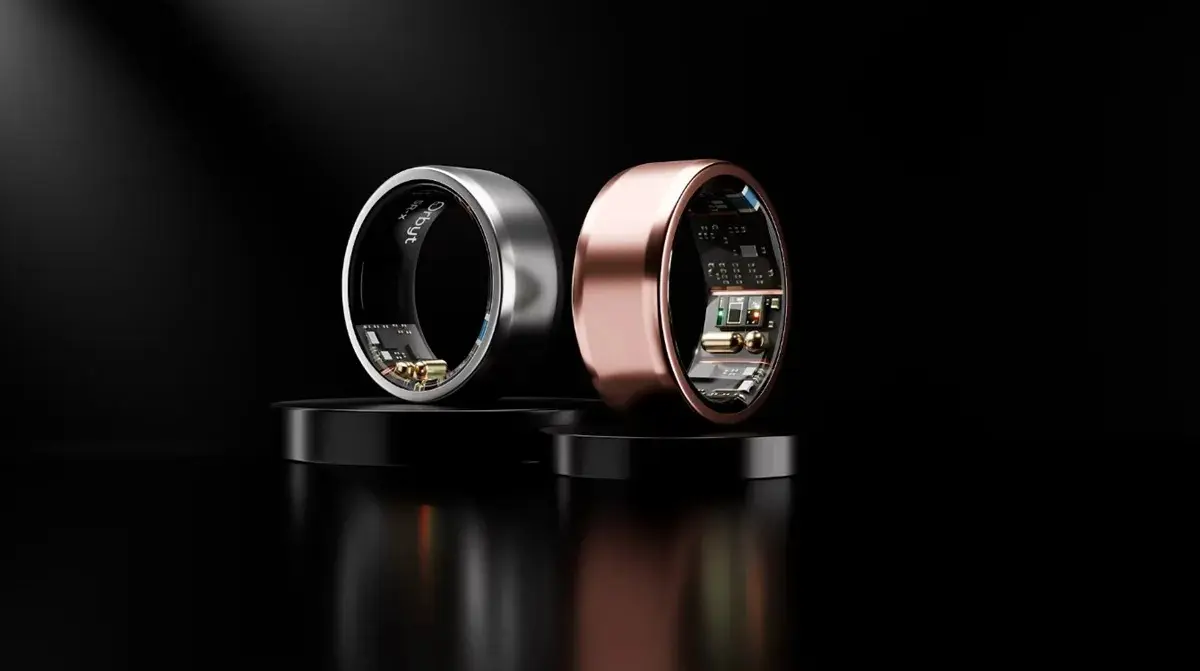
The modern electronics landscape is defined by a paradoxical consumer expectation: as wearable gadgets shrink in physical dimensions, their operational mandates expand exponentially. A device that was once relegated to the basic tracking of step counts and resting heart rates is now tasked with continuously capturing a rich suite of physiological signals. This transition requires packing an increasing number of sensors, delicate optics, sophisticated processing units, and intricate power management systems into spaces the size of a fingertip. Consequently, wearable designers are rapidly shifting away from siloed methodologies, learning that optical, mechanical, sensing, and power domains must be treated as a unified, highly connected ecosystem rather than isolated functions.
This evolution in hardware design was a central theme during a recent press briefing hosted by Analog Devices India (ADI). During the event, industry leaders and innovative startups gathered to discuss how the relentless push toward miniaturization is fundamentally rewriting the rules of semiconductor and product engineering.
“We are seeing a lot of integration happening in devices,” said Praveen Jose, senior technical leader for field applications at Analog Devices India. As Jose pointed out to attendees, devices are becoming progressively smaller, yet the quality of the data and the overall performance expectations are climbing. The core engineering hurdle, according to Jose, revolves around accommodating an expanding catalog of health-monitoring functions within a diminutive physical envelope, ultimately achieving a seamless, single-body solution.
A prime example of this trend can be found in the work of Sensio, an Indian startup specializing in wellness and health-focused wearables such as smart rings, smart bands, and patches. The company boasts that its hardware can capture a comprehensive suite of health metrics simultaneously, including heart rate, respiratory rate, blood oxygen levels, skin temperature, sleep metrics, and general activity data.
During the briefing, Venkatesh Vadde, co-founder and CEO of Sensio, shed light on how advanced physiological estimations are achieved on such compact platforms. For instance, by combining electrocardiogram (ECG) and photoplethysmography (PPG) data, developers can estimate blood pressure continuously without the need for a traditional inflatable arm cuff, although Vadde noted that this approach yields continuous trends rather than absolute clinical blood pressure values.
Achieving this level of sophisticated tracking requires embedding sensors with extreme precision, optimizing signal pathways, and deploying advanced algorithms capable of accurately interpreting raw physiological signals. For startups like Sensio, this means the optical path, sensor positioning, and physical construction of the wearable are deeply intertwined with traditional semiconductor design problems. Vadde explained that Sensio collaborates closely with component providers like ADI, meticulously optimizing sensor placement, physical housing, and optical assemblies as integral parts of the overall wearable architecture.

Identifying the Problems
Engineering a reliable optical sensing system for a continuous health monitor is fraught with physical complications, primarily because the desired physiological signal is inherently buried deep beneath layers of ambient and biological noise. Before any advanced data processing or artificial intelligence can take place, the sensing hardware must successfully isolate the true signal from the surrounding interference.
“In that particular scenario, you need to have a very good device which can actually sense the data in the presence of noise,” Jose emphasized. “How accurately you can sense it is what will give you better data.”
For a wearable designer, this reality means that the optical assembly, sensor placement, and mechanical construction directly dictate the quality of the electrical signal produced by the sensor. Vadde highlighted the delicate nature of PPG performance, pointing out that mechanical and optical aspects are inseparable. Even a microscopic shift—such as a fraction of a millimeter lift-off of the optical assembly away from the skin—can severely distort PPG readings.
Consequently, the physical enclosure, housing design, skin contact integrity, optical layout, and sensor placement all exert a direct influence on the final signal processed by the device. This challenge is magnified exponentially in form factors like smart rings. A ring must maintain consistent, uninterrupted contact with the user’s skin while remaining exceptionally lightweight and compact enough to be worn comfortably around the clock, including during sleep.
The complexity multiplies further when the wearer moves. Vadde pointed out that motion artefacts, stringent power consumption caps, and raw signal quality represent major design bottlenecks in modern wearables. Because optics, mechanics, and housing are inextricably linked, motion introduces noise that can easily corrupt health data if not handled at the hardware and algorithmic levels.
This dynamic pulls auxiliary components, such as accelerometers and inertial measurement units (IMUs), directly into the physiological sensing chain. While a consumer-grade wearable typically uses an accelerometer merely to track general physical activity, a health-monitoring device leverages motion data to identify precise windows of time when vital-sign measurements are vulnerable to motion artefacts. By feeding IMU data into the processing loop, the system can dynamically screen out corrupted segments, ensuring that downstream algorithms rely only on high-quality physiological data.
Jose echoed this perspective, identifying motion and activity detection as a cornerstone of modern wearable platform integration. When monitoring specific health parameters, developers must simultaneously sense and account for motion.

Furthermore, signal quality has a direct causal relationship with power consumption. Vadde illustrated this connection using automatic gain control (AGC) as a prime example. When optical coupling degrades due to physical movement or loose skin contact, the system may automatically increase the gain to recover the necessary signal strength. Depending on how this is implemented in hardware, boosting the gain can drive up power consumption, draining the battery faster.
This sets off a cascading chain of interdependent design choices: optical and mechanical choices affect signal quality; signal quality dictates analog processing and gain requirements; processing intensity influences power consumption; and power consumption ultimately dictates battery life and device longevity.
To combat this, the power architecture must intelligently adapt to different operational states, factoring in sensing frequency, data processing intensity, connectivity schedules, and periods of relative user inactivity.
“Sometimes what happens is, when a person is resting, and we know that during different conditions more power is needed by the product, we will go into sleep mode or deep sleep mode, and the effect is to retain the battery power,” Jose explained.
Connectivity represents yet another vital consideration. Continuous health monitoring applications demand low-to-medium power connectivity protocols capable of maintaining stable links without placing an excessive burden on the battery. Similarly, the frequency at which vital signs are measured plays a massive role in energy preservation. Vadde noted that the ideal measurement frequency varies based on the individual patient and the clinical context. Taking measurements less frequently can significantly extend battery life, while strategies such as locally storing and synchronizing data rather than transmitting it in real-time can further optimize power budgets.
Combining Sensing and Power Functions
This comprehensive, system-level problem is actively reshaping how major semiconductor suppliers like Analog Devices engage with their customers. According to Vivek Tyagi, managing director and country leader for Analog Devices India, the company broadly categorizes its wearable customers into two distinct groups: those with advanced in-house capabilities to handle complex optical integration, and those that require a much more streamlined, turnkey approach.
To cater to these varying market needs, ADI has developed a dual-track solution strategy. The company offers highly integrated sensor-hub devices that simplify implementation for less specialized customers, alongside standalone solutions capable of delivering superior raw accuracy—provided the customer possesses the precision engineering expertise required to expertly integrate optics, LEDs, and mechanical housings.

Beyond basic sensing, ADI is heavily focused on converging sensing, power management, battery charging, and battery management functions into tighter spaces. The company is developing ultra-low-power solutions tailored for demanding applications such as continuous glucose monitoring. Additionally, ADI’s ongoing research into energy harvesting explores ways to convert ambient mechanical movement or subtle temperature gradients into micro-watt levels of electrical power, offering a pathway to supplement onboard batteries and extend device operating lifespans.
Jose highlighted that ADI’s current portfolio covers a comprehensive spectrum of vital signs, including PPG, temperature sensing, ECG, and accelerometer integration, seamlessly paired with dedicated power and connectivity blocks.
For compact form factors like smart rings, Jose specifically pointed to the Analog Devices MAX86178 integrated vital-sign analog front end, which combines PPG, ECG, and BioZ functions while supporting up to six LEDs and four photodiode inputs. Meanwhile, Vikash Singh, a product application staff engineer in Healthcare Marketing and Applications at Analog Devices India, highlighted the MAX86184, a specialized, small-form-factor PPG analog front end explicitly built for ring applications, boasting support for up to 14 LEDs and four photodiodes alongside dual-channel capability.
Through these silicon offerings, ADI aims to consolidate a greater share of the total required wearable functionality into fewer physical components, while offering scalable integration paths tailored to the specific engineering competencies of its diverse customer base.
Tyagi emphasized that ADI prefers to engage with device manufacturers early in their product lifecycles, often collaborating two to three years ahead of commercial launch to help map out future architectures and co-create bespoke solutions.
“Then engage with a strategic partnership early on in their design journey, so that we can co-create a solution,” Tyagi said.
The Sensing Chain Becomes the Design Problem
The broader industry migration toward continuous, long-term health monitoring is fundamentally transforming the engineering checklist for modern wearables. Temperature sensors must now be shoehorned into ultra-small form factors without sacrificing clinical-grade accuracy. Optical sensors are tasked with extracting subtle physiological signals out of intensely noisy biological environments. Mechanical construction and precise sensor placement directly dictate the fidelity of optical coupling. Motion data must be actively harvested to identify and discard motion artefacts. Analog processing must carefully balance signal recovery against power depletion. Connectivity protocols must efficiently shuttle data without exhausting the battery.

Reflecting on these overarching industry dynamics, Jose reiterated that the fundamental currency of continuous monitoring is the raw quality of the sensed data. How accurately a device can sense its environment is what ultimately yields clinically and commercially valuable insights.
For the modern wearable designer, the takeaway is clear: the engineering challenge of sensing no longer begins and ends at the boundary of an individual sensor component. Optical design, mechanical engineering, inertial motion tracking, analog signal processing, software algorithms, wireless connectivity, and power management all form an inseparable chain that dictates how a wearable collects, interprets, and manages physiological data over time.
As consumer expectations push wearables further away from casual activity tracking and deeper into continuous, medical-grade health monitoring, the ultimate engineering test will be how harmoniously these diverse functions can operate inside devices that leave virtually zero margin for error or wasted physical space.

Leave a Reply