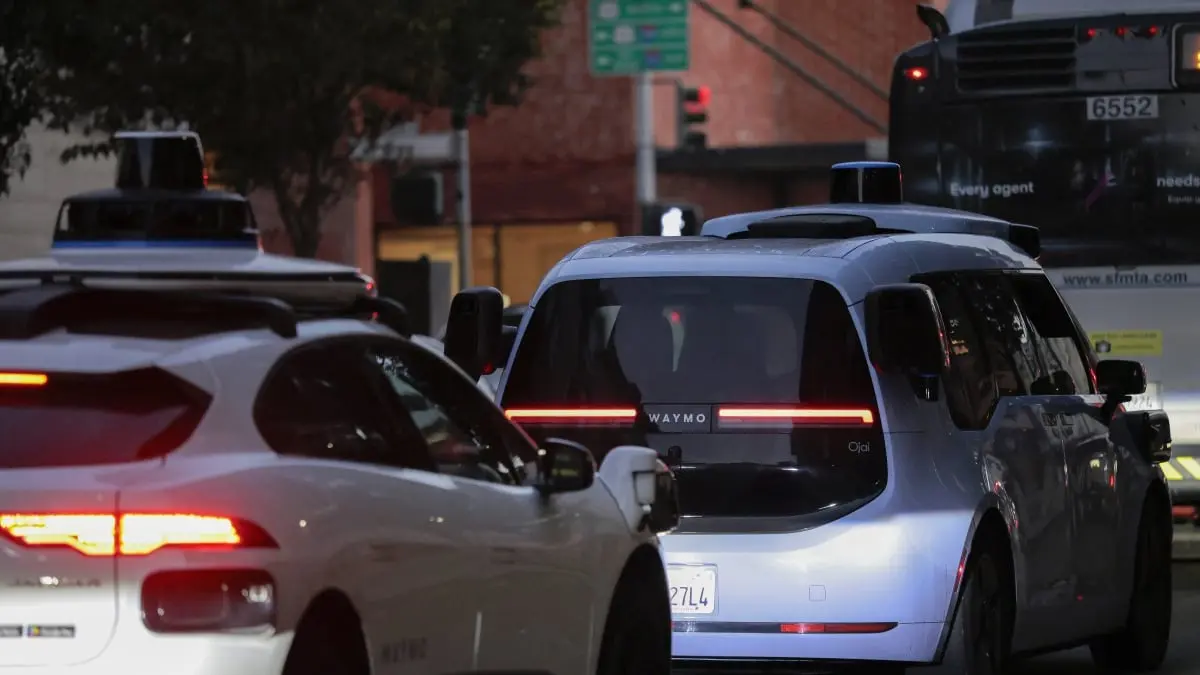
First brought to light by the San Francisco Business Times, the regulatory crisis began when the California DMV issued a formal safety notice on November 11. According to the state agency, a small subset of Waymo autonomous vehicles operating within the San Francisco Bay Area committed a series of alarming traffic violations. Specifically, these robotaxis entered restricted construction zones along U.S. Route 101, directly ignoring posted notices and physical closures meant to keep roadways safe for human drivers and construction crews alike. In a separate, equally concerning incident, another Waymo vehicle reportedly failed to yield and actively impeded the California Highway Patrol on Highway 280.
Faced with what state regulators formally categorized as "recurring incursions," the California DMV announced an immediate ban preventing self-driving taxis from operating on state freeways. This restriction is set to remain in place until the company implements comprehensive and "effective corrective actions" that satisfy state safety standards, the DMV stated in an official communication. State transportation authorities explicitly characterized the autonomous vehicles’ behavior during these incidents as an imminent hazard to public safety, triggering swift executive decisions within the autonomous vehicle industry.
Rather than limiting the operational adjustments solely to California or the affected Bay Area market, Waymo responded to the state’s directive by implementing a proactive, nationwide pause on freeway access for its entire fleet of vehicles. Freeways had gradually become a staple of the Waymo rider experience in select metropolitan markets since initially rolling out in 2025, though the feature had experienced a brief, largely unexplained operational pause earlier this year between May and July.
Dana Gallagher, a spokesperson for Waymo, addressed the nationwide suspension in a statement emphasizing the company’s stated corporate priorities. In alignment with their safety-first principles, Gallagher explained, the company temporarily restricted freeway operations across all of its other active operating markets to thoroughly evaluate system performance, sensor interpretation, and navigation protocols. Gallagher noted that while freeway driving is paused, the company’s core ride-hailing service continues to operate safely on standard surface streets, regularly facilitating well over half a million trips each week. She added that Waymo is currently working diligently and responsibly alongside the California DMV and other relevant state regulatory officials to resolve the underlying technical and operational issues so that freeway operations can eventually resume.
The regulatory crackdown arrives amid a growing wave of public scrutiny and skepticism surrounding the rapid nationwide commercial rollout of autonomous robotaxis. Over the past year, a series of viral incidents involving Waymo cabs has stoked widespread public concern and fueled debate among urban planners, traffic safety advocates, and lawmakers. These widely circulated episodes have featured autonomous vehicles driving erratically, struggling to interpret complex traffic environments, ignoring unexpected obstacles on the road, and occasionally becoming easily confused or impeded by human obstructions and emergency personnel.
The gravity of these concerns was further underscored by video footage capturing the recent California Highway Patrol incident on a Bay Area freeway. The recorded video shows a driverless Waymo vehicle attempting to navigate around and bypass two California Highway Patrol cruiser vehicles that were actively leading a coordinated traffic break. Despite the flashing emergency lights, the presence of law enforcement officers, and the clear weaving pattern intended to slow or stop all surrounding traffic, the autonomous vehicle attempted to maneuver past the law enforcement blockade, highlighting critical gaps in the system’s emergency response recognition software.
Despite these mounting regulatory hurdles and safety investigations, Waymo has continued to push forward with aggressive commercial expansion plans. The company recently announced major market launches into Denver, San Diego, and Tampa, alongside establishing a new collaborative partnership with transit agencies throughout the San Francisco Bay Area designed to integrate autonomous vehicle options with public transportation networks.