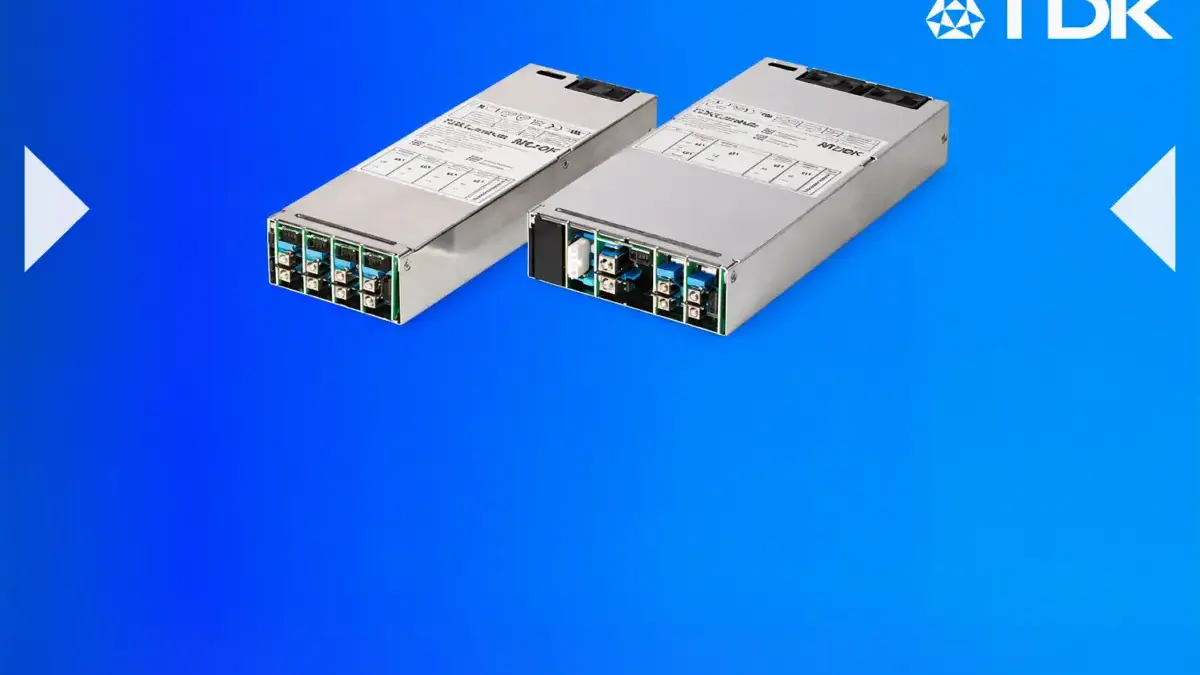
Design engineers and technical decision-makers working within the medical and life science equipment sectors often find themselves navigating a complex web of competing engineering demands. Balancing high power density, superior thermal performance, compact physical dimensions, and low acoustic noise remains one of the most persistent hurdles in modern power supply development. Addressing this critical industry challenge, Giulio Bocciolini, Senior Product Marketing Manager EMEA at TDK-Lambda EMEA, has announced the release of a comprehensive new whitepaper designed to provide practical insight into the root causes of noise in space-constrained power supply applications, alongside proven strategies for mitigation.
The newly published resource examines the intricate relationship between power density and thermal management, offering technical professionals actionable approaches to reducing acoustic output while maintaining required system performance. In clinical settings, research laboratories, and diagnostic environments, excessive noise from medical devices can contribute to patient anxiety, disrupt clinician concentration, and degrade the overall user experience. At the same time, the relentless industry push toward miniaturization means that power supplies must deliver greater electrical output from increasingly smaller footprints, inherently intensifying thermal loads and forcing cooling systems to work harder.
To tackle these multidisciplinary challenges, the whitepaper explores a variety of advanced mitigation techniques, focusing heavily on intelligent fan control systems, sophisticated thermal management methodologies, and innovative mechanical design practices. By optimizing the physical layout of components and leveraging emerging technologies that support quieter and more efficient operation, engineering teams can achieve a delicate equilibrium between heat dissipation and acoustic control. The publication delves into how intelligent monitoring can dynamically adjust cooling responses based on real-time thermal conditions, preventing fans from running at maximum speed—and generating maximum noise—when full capacity is unnecessary.
Beyond technical mitigation strategies, the resource is tailored to help engineering professionals make more informed architecture and component decisions much earlier in the product development lifecycle. Catching potential thermal and acoustic issues during the initial design phase helps organizations avoid costly redesigns, delayed product launches, and compliance complications down the line. Whether
evaluating power supply options for patient-monitoring equipment, laboratory analyzers, or surgical support systems, technical decision-makers must account for environmental noise criteria alongside electrical and safety standards.
Intended specifically for design engineers, project managers, and hardware developers, the whitepaper serves as an evaluation tool for exploring noise-reduction options and creating more reliable, application-specific solutions. By addressing the fundamental trade-offs between airflow, component lifespan, and acoustic output, the material equips technical teams with the knowledge needed to enhance user comfort in sensitive clinical environments without sacrificing the rigorous reliability and safety demanded by modern life science applications.