

As every new Premier League season kicks off, it is invariably accompanied by high-profile warnings from rights holders concerning the immense financial damage inflicted by digital piracy. This year follows the exact same playbook, though backed by a fresh set of macroeconomic figures designed to illustrate the scale of the ongoing challenge facing the entertainment and broadcasting industries.
BeStreamWise, the high-profile anti-piracy campaign backed by major industry heavyweights including Sky, the Premier League, FACT, the BBC, and the UK Intellectual Property Office, released a comprehensive new report this week. The document aims to shed light on the deep economic repercussions of unauthorized streaming and digital copyright infringement across the United Kingdom.
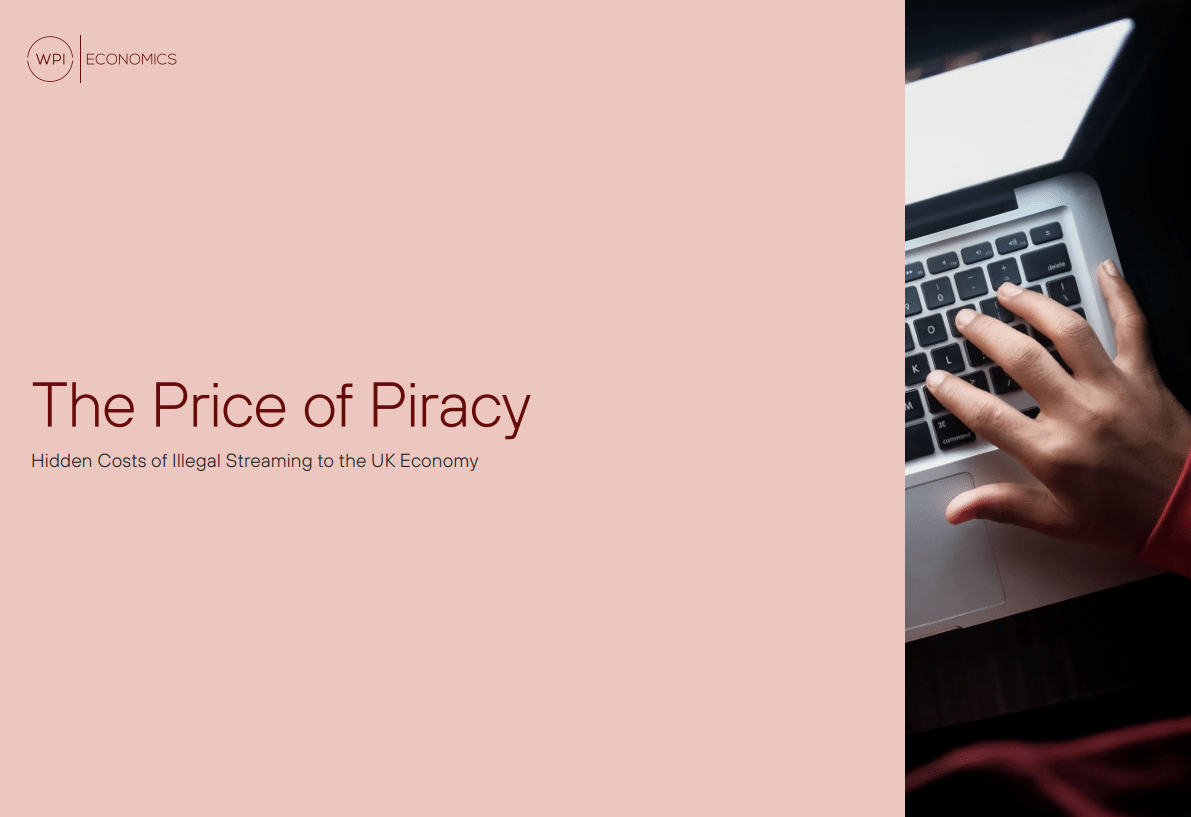
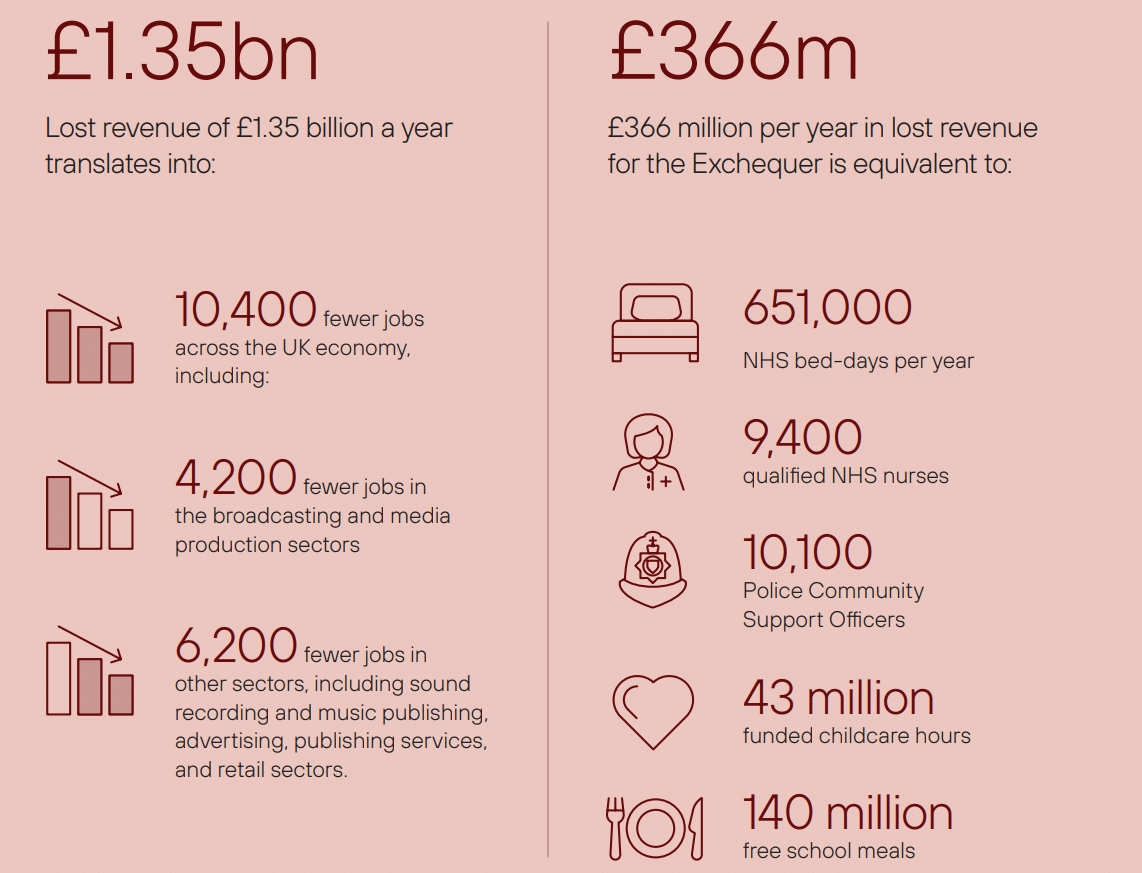
To put a concrete financial figure on the phenomenon, the campaign commissioned specialist economic consultancy WPI Economics to conduct a detailed study. The resulting publication, titled “The Price of Piracy,” estimates that illegal streaming results in a staggering £1.35 billion in missed revenue for UK broadcasters every single year. Furthermore, the report translates this missing revenue into wider economic fallout, claiming it accounts for 10,400 lost jobs and £366 million in missing tax income for public coffers.
To emphasize the tangible impact of these figures on everyday life in Britain, the report draws direct comparisons to public spending. It notes that the £366 million in uncollected taxes could theoretically fund a variety of vital public services, such as paying the salaries of 9,400 qualified National Health Service (NHS) nurses, or providing 140 million free school meals to children across the country.
A £1.35 Billion Poll Based on Hypothetical Scenarios
The headline-grabbing billion-pound estimate is derived primarily from a public opinion poll of 2,501 UK adults conducted earlier this year in February. Within this surveyed sample, nearly a third of respondents—specifically 31%—admitted to having used illegal streaming services or unauthorized viewing methods within the preceding three months. When statisticians extrapolate this percentage to the broader adult population of the entire country, it suggests that an estimated 16.8 million people in the UK could be classified as video pirates.

To understand how researchers bridged the gap between this widespread usage and £1.35 billion in missed revenue, inquiries were made directly to the campaign organizers. BeStreamWise clarified that the figure is built upon a theoretical scenario in which commercial piracy is completely eradicated and no longer available as an option.
According to the methodology, survey respondents who confessed to engaging in piracy were asked which legal subscription services they would be willing to pay for if they could no longer access pirate platforms. WPI Economics then multiplied these stated intentions by the average subscription cost of those legal services, before extrapolating the final figures to the entire UK population.
The campaign explicitly stresses that the report only counted individuals who explicitly stated a willingness to pay in this hypothetical scenario. Put differently, the £1.35 billion figure does not measure actual lost sales or historical revenue that vanished from corporate balance sheets. Instead, it represents an extrapolated total of subscription fees that self-proclaimed pirates claimed they would be willing to pay at full price if illegal alternatives ceased to exist overnight. That theoretical revenue is subsequently converted into projected tax receipts, yielding the aforementioned funding equivalent for thousands of healthcare workers.
The Challenge of Hypothetical Bias and Consumer Motivation
While the mathematical calculations outlined in the report appear straightforward on paper, industry analysts note they are not without significant methodological caveats. While individuals who admit to digital piracy may be just as honest as the general population in standard polling, extensive behavioral economic research has consistently demonstrated that people generally state they would pay significantly more for goods in hypothetical surveys than they actually do when faced with real-world financial decisions.
Economists refer to this discrepancy as a "hypothetical bias." When asked by TorrentFreak about whether any statistical adjustments were made to account for this well-documented psychological phenomenon, a BeStreamWise spokesperson confirmed that the WPI study did not apply any correction factor. Instead, the survey responses were taken precisely at face value.

The absence of a discount factor to correct for hypothetical bias is not entirely unprecedented in academic and commercial piracy research. In fact, past studies have occasionally generated counterintuitive findings that put pirates in a surprisingly positive economic spotlight because researchers took stated willingness-to-pay metrics without skepticism. However, this lack of adjustment definitively signals that the projected £1.35 billion figure is far from guaranteed revenue for broadcasters.
In reality, data from the exact same poll underscores that many active pirates are primarily motivated by the desire to save money. When asked for their core motivations, the most common justification provided by respondents was that unauthorized viewing is simply cheaper than paying for legal alternatives, cited by 38% of participants. This was followed closely by convenience at 31% and a general desire to avoid managing multiple digital subscriptions at 24%. Crucially, over half of the surveyed pirates—52%—stated that they are likely to continue pirating regardless of industry crackdowns or awareness initiatives.
Social Media as the Primary Gateway for Modern Piracy
Perhaps one of the most surprising and revealing findings of the survey is the shifting landscape of how consumers encounter and consume unauthorized material. Contrary to the traditional image of specialized torrent portals or dedicated hardware black boxes, the research indicates that mainstream social media platforms have quietly become the single top source for accessing pirated content of all kinds.
The report highlights that a clear majority of active illegal streamers—amounting to 54%—access unauthorized content directly via mainstream social media platforms. By comparison, only 26% reported using dedicated purchased hardware devices and illegal subscription services, while 28% accessed content by streaming or downloading through unofficial websites. Less popular methods identified in the survey included downloading content via peer-to-peer torrent networks or cloud-sharing services at 15%, and illegally purchasing logins or shared passwords for legitimate legal streaming accounts at just 7%.
The scope of what the survey classifies as piracy is notably broad. It categorizes watching via social media platforms as a distinct metric alongside utilizing virtual private networks (VPNs) to circumvent geoblocks and access content that is officially restricted to other international territories.
This broad definition means that an everyday internet user who watches a single unauthorized, user-uploaded clip of a football match goal or a television show segment on platforms like X or Instagram is technically captured under the umbrella of an illegal streamer. The exact phrasing of the survey questions remains undisclosed, as BeStreamWise has not made the raw polling dataset publicly available for independent academic verification.
Proposed Solutions Focus on Awareness Over New Legislation
Quantifying the monetary impact of the piracy problem is only the initial phase of the WPI Economics report; the document also outlines concrete recommendations for addressing the issue. The primary recommendation calls upon the UK Government to actively amplify existing consumer awareness campaigns by integrating them into official public communications channels.
According to the report, the natural candidate for this state-backed amplification is the BeStreamWise campaign itself. Proponents argue that official government endorsement and awareness campaigns could also focus heavily on the estimated £270 million in direct financial and personal harms that consumers regularly face when engaging with pirate sites, such as exposure to malicious software, online fraud, and identity theft.
The report asserts that amplifying BeStreamWise’s data and insights would serve as an efficient, ready-to-implement move capable of transforming public awareness regarding the hidden dangers of piracy. Proponents maintain this strategy would successfully combat the £270 million in financial damages that illegal streamers encounter annually through cybersecurity threats.
The secondary recommendation put forward by the study advocates for a voluntary, cross-sector framework where online platform operators, internet connectivity providers, and commercial content services cooperate closely to curb online copyright infringement. These collaborative efforts could potentially operate under the watchful oversight of the UK government.
Significantly, the report steers clear of proposing aggressive new legislation or mandatory website-blocking powers for internet service providers. Instead, it argues that traditional enforcement mechanisms have fallen short because everyday consumers remain largely unaware of the true risks involved in consuming unauthorized media.
While sustained public awareness campaigns and voluntary industry agreements may successfully nudge some casual consumers toward legal alternatives, entertainment rightsholders would be wise not to pencil in a significant share of the £1.35 billion in promised pirate revenue anytime soon. A full copy of The Price of Piracy report, produced by WPI Economics for BeStreamWise, remains publicly accessible via the campaign’s documentation channels.

Leave a Reply