Doctor Who has never shied away from exploring the darker dimensions of its titular protagonist, frequently reminding viewers that the ancient Time Lord is capable of staggering arrogance, cruelty, and moral blindness. Throughout the modern era of the long-running science fiction institution, various incarnations of the Doctor have been forced to confront the monstrous consequences of their own god-like choices. In the emotionally charged Season 6 episode "A Good Man Goes to War," the Eleventh Doctor, played by Matt Smith, experiences a shattering reckoning when he realizes that his grand ambitions and towering reputation have made him nearly as terrifying to his adversaries as the monsters they fight. Similarly, in the late-era Tenth Doctor special "The Waters of Mars," David Tennant portrays a deeply fractured Time Lord who, reeling from the departure of his beloved companion Donna Noble, attempts to defy the laws of time itself. Determined to emerge victorious for once, he uses his absolute authority over history to save individuals whose deaths are fixed points, completely disregarding the catastrophic consequences. It remains a genuinely shocking, borderline villainous character study for a hero who usually prides himself on being a protector of the cosmos.
However, despite these widely discussed moments of hubris and moral failure, one particular television story rarely receives the broader critical recognition it deserves for portraying the Doctor at his most unhinged, petty, and hypocritical.
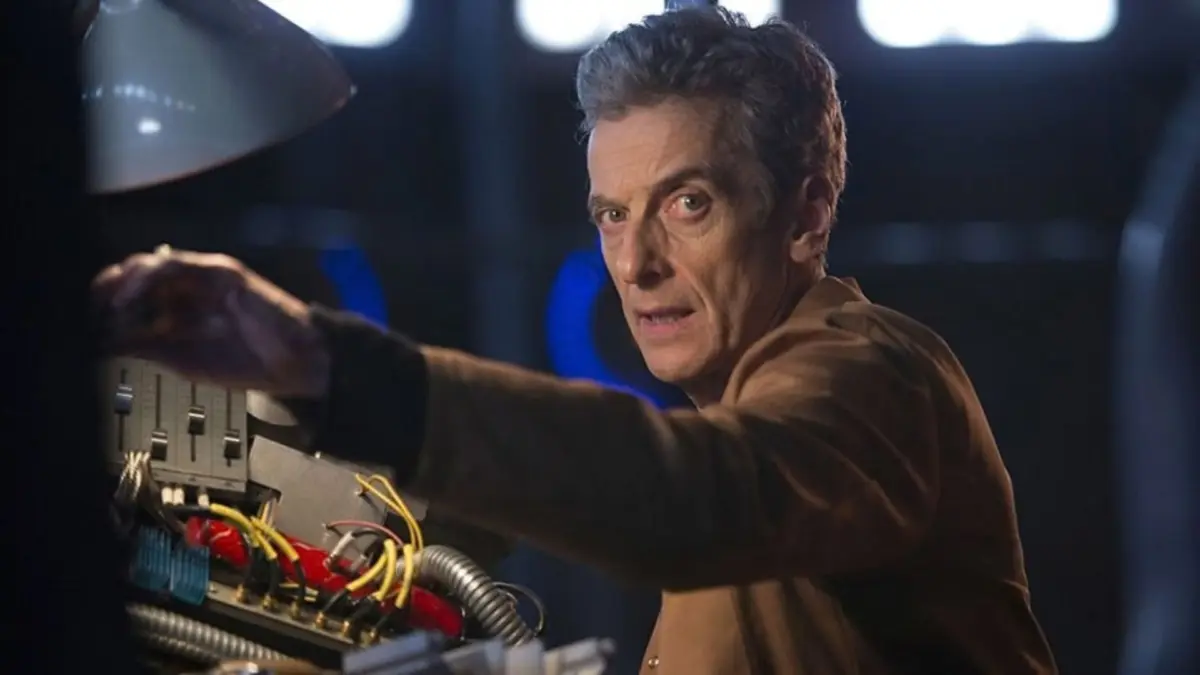
Airing over a decade ago in 2014 during Peter Capaldi’s inaugural season in the TARDIS, "The Caretaker" initially presents itself as a fairly standard, lighthearted monster-of-the-week sci-fi caper. In the episode, the newly minted Twelfth Doctor goes undercover as a civilian janitor at Coal Hill School—the historic London secondary school where his companion, Clara Oswald, played by Jenna Coleman, works as an English teacher. The ostensible plot revolves around an imminent terrestrial threat posed by the Skovox Blitzer, a heavily armed, autonomous alien robot capable of triggering global devastation. While the machine looks formidable and carries high stakes for Earth’s survival, it functions primarily as a narrative catalyst rather than the true emotional center of the story.

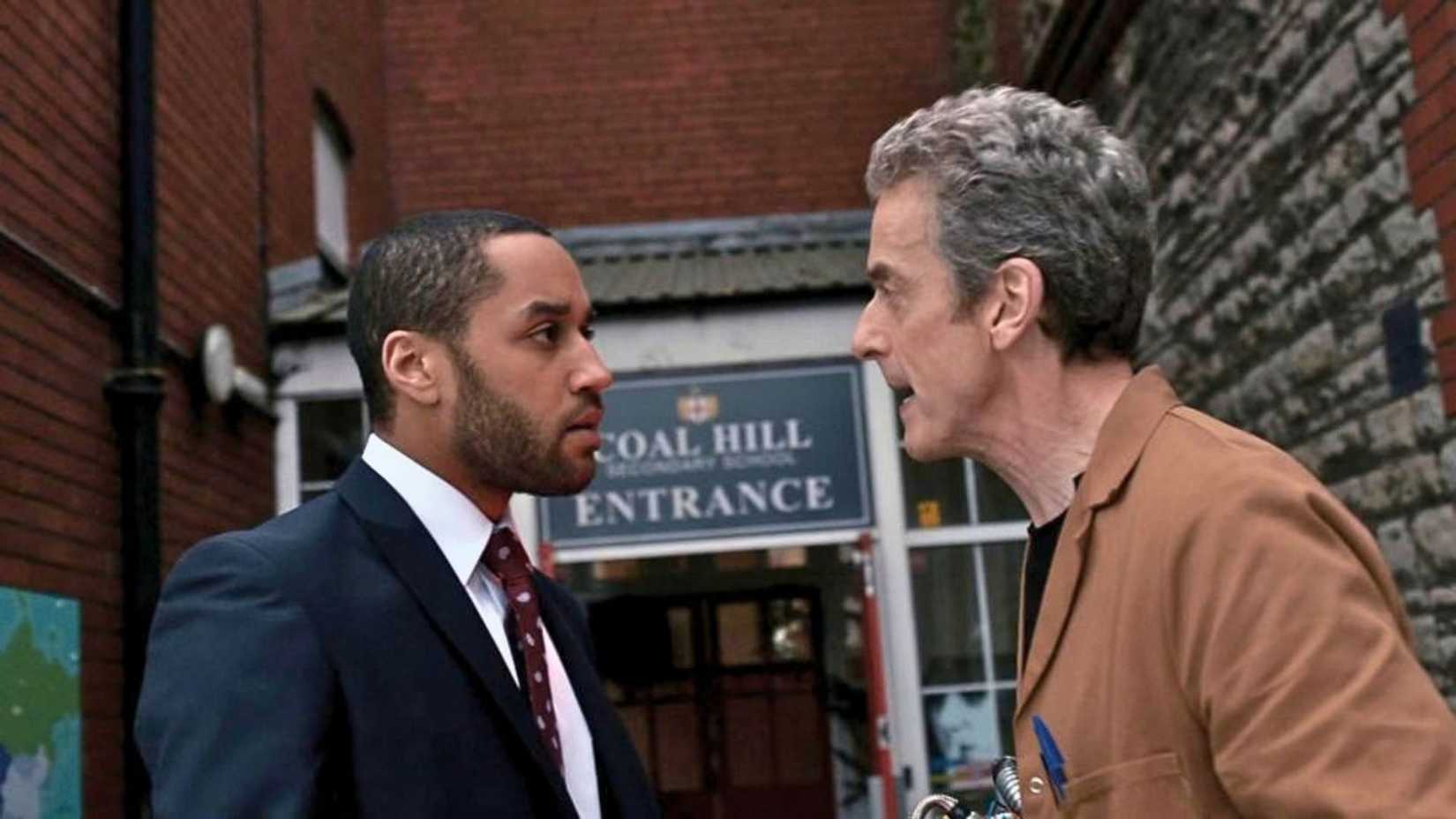
Instead, writer Gareth Roberts pivots the narrative focus into an intimate, high-stakes character drama examining the awkward and volatile collision between the fiercely intellectual Time Lord and Clara’s civilian boyfriend, Danny Pink, portrayed by Samuel Anderson.
We See the Doctor at His Ugliest in "The Caretaker"
For the majority of the eighth season, Clara Oswald has found herself desperately balancing two entirely separate, almost incompatible existences. On one hand, there is her grounded, domestic life as a conventional English teacher, where she is building a romantic relationship with her colleague, Danny Pink. On the other hand, there is her thrilling, reality-bending life of extraordinary danger and cosmic exploration alongside the Doctor. When "The Caretaker" forces these two disparate worlds to violently collide within the familiar corridors of Coal Hill School, it creates an intensely uncomfortable social encounter that exposes deep-seated flaws in the Doctor’s psychology.
The most agonizing and compelling aspect of the episode is the behavior of the Doctor himself. Ever since his tumultuous regeneration at the start of Season 8, this incarnation of the Time Lord has proven to be fiercely blunt, hyper-critical, and devoid of the performative warmth and whimsical silliness that characterized his immediate predecessor. That abrasive attitude reaches a boiling point the moment Twelve crosses paths with Danny Pink. Because Danny is a former soldier turned educator, the Doctor instantly pigeonholes him, refusing to see past his military background. He completely dismisses Danny’s intellect, weaponizes his profession, and cruelly reduces him to the dismissive label of "a PE teacher."

The Doctor’s deep-seated prejudice against Danny intensifies dramatically when he finally uncovers the truth about Clara’s romantic life. Earlier in the narrative, the Doctor operated under the arrogant assumption that Clara was dating Adrian, another teacher at Coal Hill. To the Time Lord’s skewed perspective, Adrian made absolute sense as a partner: he bore a striking physical resemblance to the Eleventh Doctor, right down to his characteristic bow tie and elaborate hair, and he projected an aura of emotional stability simply because he worked in education. Although Danny is also a teacher, his working-class background and military history shatter the narrative the Doctor has constructed in his own mind.
Roberts utilizes this comedic mix-up between Adrian and Danny to offer a profound, unvarnished window into the Doctor’s psyche, specifically regarding how he perceives Clara’s emotional attachment to him. In the opening episodes of Season 8, the Doctor explicitly accused Clara of failing to truly "see" him and of harboring a secret desire for his previous face and persona. Consequently, Clara’s apparent attraction to a man who visually mirrors his former self serves as a massive ego boost, seemingly confirming his lingering suspicion that she remains emotionally tethered to his past incarnation.
When the reality of Clara’s relationship with Danny finally shatters this illusion, it deeply destabilizes the Doctor’s view of both his companion and their dynamic. In the Doctor’s worldview, the kind of person Clara chooses to love acts as a reflection upon him. Danny ultimately functions as a dark mirror for the Time Lord. Even though the Doctor vocalizes a fierce abhorrence of violence throughout the series, military conflict has shaped his existence so profoundly that one of his most infamous incarnations is explicitly designated as the "War Doctor." This uncomfortable truth is echoed by Davros, the creator of the Daleks and one of the Doctor’s oldest enemies, who once confronted him with the devastating observation that while the Doctor refuses to carry a weapon, he routinely takes ordinary people and molds them into instruments of destruction.
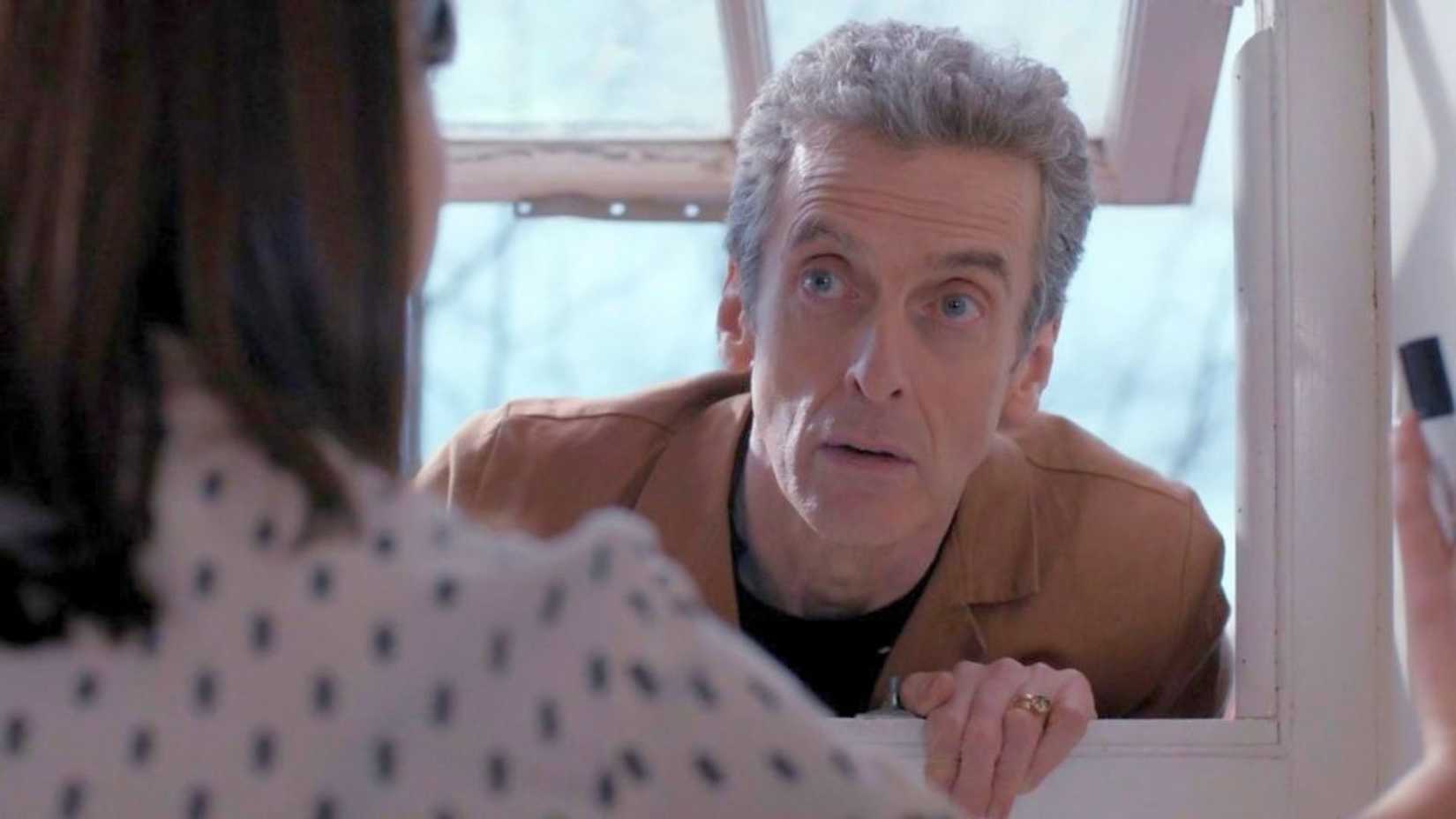
Because Clara knows about Danny’s military past and loves him regardless, she serves as the audience’s clearest lens for examining the startling similarities between the two stubborn men in her life. Unintentionally, she finds herself trapped in the middle of a tense dynamic between the two most influential men in her world, both of whom possess stubborn pride and hidden trauma that they are desperately reluctant to acknowledge. At one point, Danny directly asks Clara if she is in love with the Doctor. While she confirms that she cares for him deeply, she clarifies that it is "not in that way," leaving her struggling for words when Danny presses her to articulate the complex boundary between her mortal romance and her cosmic adventures.
Watching the Doctor actively mistreat and condescend to Danny throughout the episode is intentionally jarring for the audience, particularly when viewed against the backdrop of the Doctor’s long history of forming deep bonds with active military personnel, including members of organizations like UNIT. Yet, the story succeeds precisely because it refuses to sanitize its protagonist. It offers a poignant, uncompromising reminder that for all the immense good he brings to the universe, the Doctor harbors an unmistakably ugly, petty, and at times monstrous side of his personality.
By the time the credits roll on "The Caretaker," the Doctor and Danny have not completely resolved their fundamental differences or cleared away all their mutual grievances. Instead, they arrive at a grudging, fragile understanding, forged primarily through their shared devotion to Clara and the heavy burdens of the terrible things they have both done and deeply regret.
Gareth Roberts’ script demonstrates that despite his vast cosmic responsibilities and heroic achievements, the Doctor is entirely capable of being fiercely jealous, emotionally immature, and profoundly resistant to self-reflection until external pressures force him to confront his flaws. It is precisely this uncompromising exploration of his moral contradictions that renders the Time Lord such a compelling and enduring dramatic protagonist, proving that audiences have little desire for a flawless, unblemished hero.
For fans wishing to revisit this era of the program, Doctor Who television seasons spanning from 2005 through 2025 are widely available for purchase digitally via major platforms like Amazon and Apple, and can be streamed on services including AMC+, with more recent seasons and contemporary specials accessible on Disney Plus.