In early 2006, producer and creator J.J. Abrams was in the midst of one of the most prolific and successful generational runs in modern television and film history. The espionage thriller Alias was nearing its dramatic conclusion, Lost had firmly cemented itself as a worldwide cultural phenomenon, and Abrams was traveling the globe promoting his feature-length directorial debut, Mission: Impossible 3. Yet, looking back, it becomes clear that Abrams was somehow just getting started with expanding his footprint in Hollywood.
During Paramount Pictures’ memorable San Diego Comic-Con panel in 2007, Abrams shared the origin story of his next major cinematic gamble. While promoting Mission: Impossible 3 in Japan, he had visited a local toy store with his son, hoping to purchase Godzilla merchandise. Abrams realized that America needed "our own monster," something genuinely insane and intense, rather than leaning on traditional cinematic beasts like King Kong, whom he affectionately described as "adorable." That retail trip sparked the creative impulse to craft an entirely original creature feature for Western audiences.
That creative spark gave birth to Cloverfield. Abrams tapped Lost writer Drew Goddard to pen the screenplay and enlisted his longtime collaborator Matt Reeves to direct the feature. The marketing campaign for the film remains a masterclass in modern mystery-building. The very first teaser trailer materialized before Michael Bay’s Transformers in July 2007, giving audiences zero context, no official title, and no recognizable actors—just a cryptic release date of January 18, 2008. At the 2007 Comic-Con panel, Abrams unveiled an ominous poster featuring the decapitated head of the Statue of Liberty looming over a smoke-choked New York City skyline. This promotional blitz occurred during the exact same panel that debuted early footage for massive blockbusters like Iron Man, Indiana Jones and the Kingdom of the Crystal Skull, and Abrams’ own live-action Star Trek reboot.
Regardless of how viewers feel about certain entries in his later filmography, Abrams has always understood how to manufacture anticipation, hype, and intense mystery. Cloverfield, which has returned to the streaming landscape on platforms like Peacock, Paramount Plus, and for free on Pluto TV, stands as a thrilling reminder of why that hype campaign worked so effectively.
What is Cloverfield about?
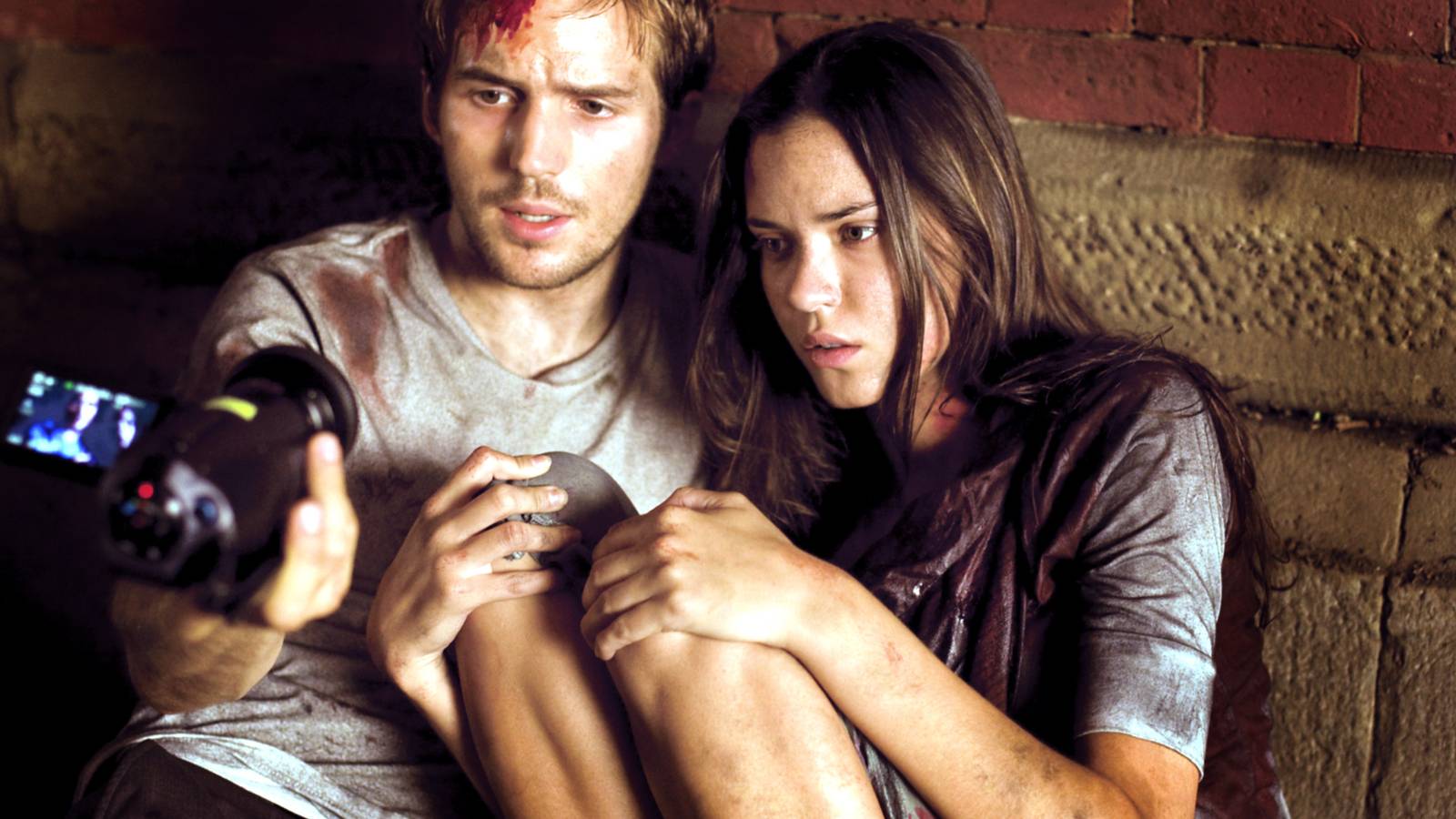
The easiest way to categorize Cloverfield is as a seamless, high-concept marriage between found-footage horror classics like The Blair Witch Project and traditional Japanese kaiju creature features. A colossal, destructive monster launches a sudden and devastating attack on New York City, but the narrative unfolds entirely through personal video recordings captured on a hand-held camcorder.
This structural choice allows the film to employ clever framing devices right from the start. The movie technically opens with mysterious, fragmented archival footage presented as official evidence retrieved by the U.S. Department of Defense. Text overlays note "multiple sightings" of an event officially designated as "Cloverfield" and confirm that the digital recording device was recovered at the primary incident site, which was formerly known as Central Park.
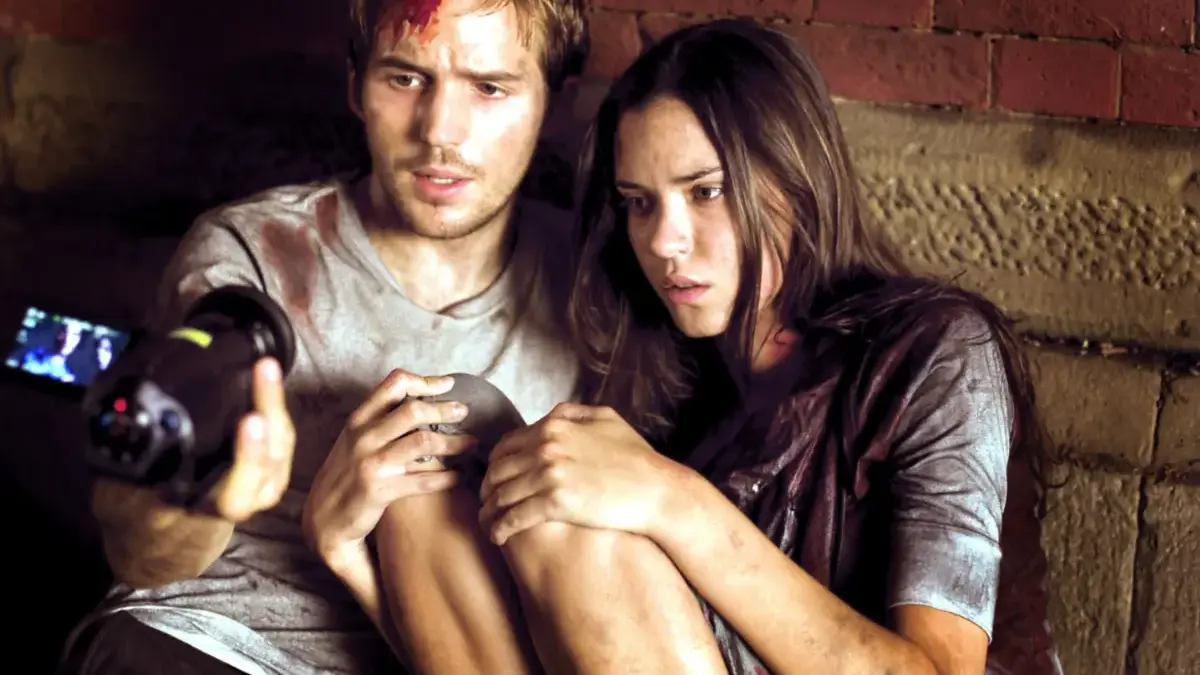
While this opening immediately signals a catastrophic military-grade disaster, the narrative quickly shifts backward to a charming, intimate date between Rob, played by Michael Stahl-David, and Beth, played by Odette Annable, as they travel to Coney Island. The vast majority of the runtime takes place roughly a month later as Rob prepares to leave New York City behind for a prestigious new career opportunity in Japan.
During a farewell party thrown by his friends, various attendees step up to record personal video messages for Rob on the camcorder. An undercurrent of dramatic tension hangs over the evening, specifically driven by Rob’s strained, unresolved relationship with Beth. Frustrated by the social dynamics of the gathering, Beth decides to leave the apartment early. Neither she nor any of the other partygoers realize that the night is about to take a terrifying, irreversible turn for the worse.

Moments later, a massive explosion lights up the Manhattan skyline, plunging the dense urban environment into sudden chaos. As the city begins to crumble around them, the remaining partygoers make a desperate pact to venture out into the smoking streets to locate Beth.
This grounded setup provides Cloverfield with a remarkably effective human scale. Instead of focusing primarily on military command centers or government officials analyzing satellite data, the film filters a massive Godzilla-scale catastrophe through a small cluster of panicked young adults trying to navigate a familiar metropolis using equipment they already had in their hands. When Rob and his friends first spot the distant explosion, they are standing casually on a rooftop. For anyone who has actually lived in New York, the atmosphere feels instantly authentic—a typical, laid-back evening spent above the street level, watching the city rush by. That sense of normalcy makes the subsequent shockwave, which hurls flaming chunks of debris directly toward the building, land with maximum emotional and visceral impact.
A shaky camera with a clear view of the story
The cinematography throughout Cloverfield is defined by its relentless, shaky-cam aesthetic. While that stylistic choice occasionally drew criticism or felt somewhat pervasive even by 2008 standards, it serves a definitive narrative purpose. Despite the shaky movement, the film maintains enough spatial coherence to keep the geography of Manhattan and the immediate survival stakes crystal clear.
Bolstered by a breakneck pace, the 85-minute runtime leaves very little room to get bogged down by the typical limitations of the found-footage format or weighed down by exhaustive lore and mythology. The audience never receives a clean, comprehensive look at the towering monster as it rampages through the metropolis. Instead, the narrative laser-focuses on ordinary humans fighting desperately for their lives while towering explosions rock the surrounding neighborhoods.
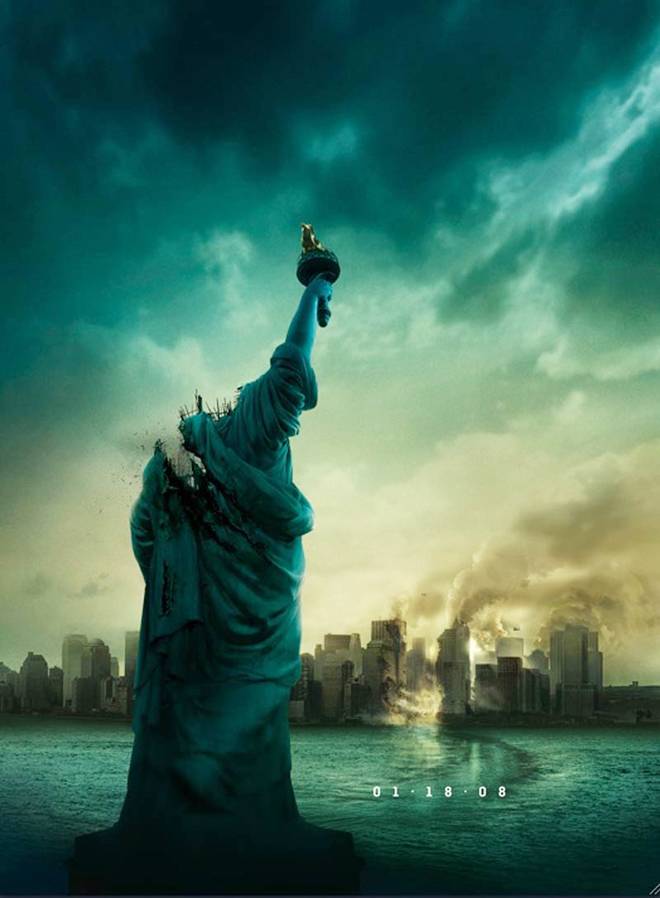
Early in the film, a surreal moment occurs when the severed head of the Statue of Liberty crashes down into a crowded Manhattan street. True to human nature, onlookers immediately whip out their mobile phones and personal cameras to record the surreal spectacle rather than immediately fleeing in absolute terror. While such behavior might have seemed slightly comical or exaggerated to audiences back in 2008, it feels remarkably prescient and accurate to modern human behavior today.
Similarly, Cloverfield addresses the logical hurdle inherent to the genre: why would anyone continue filming when a monstrous entity is actively tearing Manhattan apart and threatening their survival? Hud, played by T.J. Miller, serves as the group’s designated cameraman. Convinced early on that he managed to catch the monster on tape, he chooses to keep recording. While this serves as a convenient narrative engine, it grants the video footage a tangible purpose beyond simply fulfilling the movie’s stylistic format. As the crisis escalates exponentially, that compulsive urge to document the impossible transforms into a believable psychological reaction.
What lingers longest after the credits roll is the quiet emotional anchor provided by Rob and Beth’s relationship. Rob’s impending relocation to Japan drove a wedge between them, likely explaining why they never pursued a formal relationship following a previous one-night stand. The catastrophic monster attack forces them back into each other’s orbits, allowing the romance to pull gently at the heartstrings without ever slowing down the relentless momentum of the disaster. As they face the bleak end together, their personal narrative adds a genuine ache to the surrounding spectacle.
The legacy of Cloverfield extends into subsequent cinematic entries bearing its name, even if those later films lack a traditional, linear continuity. Yet, the question remains of where a filmmaker can possibly go after crafting a found-footage monster movie that makes a citywide rampage feel this immediate, claustrophobic, and deeply personal. The greatest trick Cloverfield pulls off is its refusal to show the audience the entire picture, opting instead to provide just enough terrifying fragments to let viewers feel what it truly would be like to live through the unthinkable.