
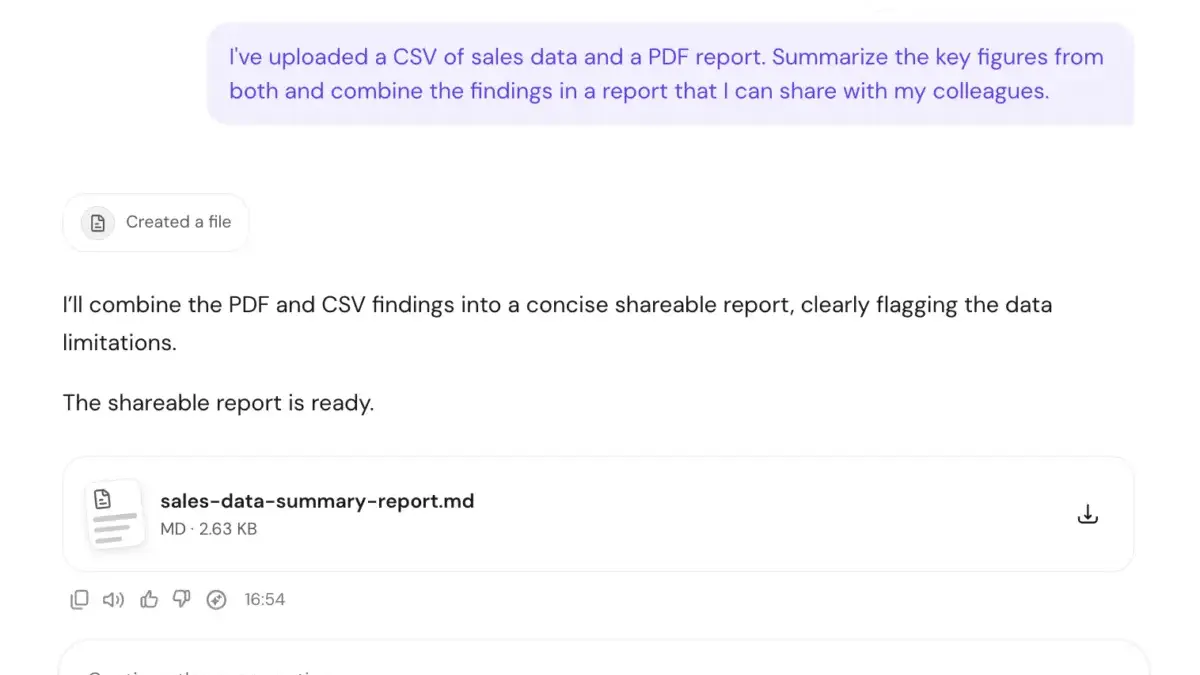
As artificial intelligence continues its rapid evolution from single-format chat interfaces to complex, goal-driven systems, a new frontier has emerged: multimodal AI agents. Published on September 18, 2026, industry insights from content strategist Bruno S. highlight a fundamental shift in how software processes information. Unlike traditional systems that rely predominantly on text, multimodal AI agents are designed to process, reason across, and act upon multiple types of information simultaneously—including text, images, audio, video, documents, and structured data.
For years, the standard interaction with artificial intelligence involved typing a prompt into a text box and receiving a text-based response. Even as advanced large language models began incorporating image recognition capabilities, their utility remained largely reactive. They waited for human prompts, analyzed the provided data, and outputted a response before going idle.
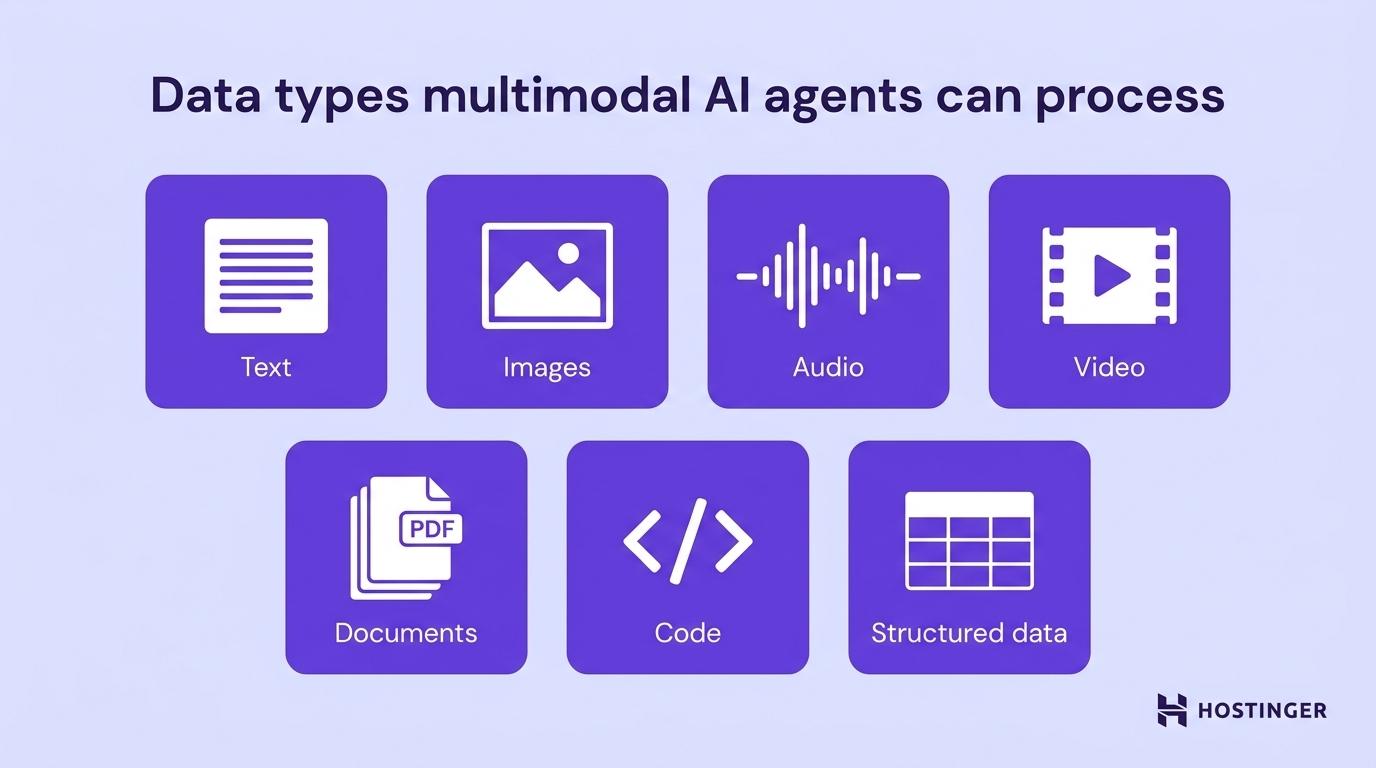
Multimodal AI agents dismantle this linear constraint. By treating diverse formats such as written reports, visual diagrams, and audio messages as a single, integrated input rather than routing each to a separate tool, these systems mirror a much more natural, human-like approach to comprehension. A customer service agent powered by this technology, for instance, does not need a user to meticulously describe an error message. Instead, it can simultaneously read a descriptive text ticket and ingest an attached screenshot, cross-referencing the two inputs to resolve ambiguities before planning its next move.
The architecture powering these sophisticated systems operates across five distinct stages. First, the agent receives inputs in any available format, whether it is a written prompt, an uploaded spreadsheet, or a voice recording. Second, it interprets and combines these inputs into a unified understanding, linking different media types to shared contexts.
In the third stage, the agent leverages a large language model as its reasoning engine to plan a sequence of steps toward a specific goal. This multi-step planning capability is precisely what separates true agentic workflows from basic model interactions, ensuring that each subsequent action builds directly upon previous results. Fourth, the agent utilizes external tools—such as searching the web, executing API calls, or triggering third-party software systems—to actively carry out tasks rather than merely talking about them. Finally, the agent produces a comprehensive output or continues its internal processing loop until the overarching goal is fully achieved.
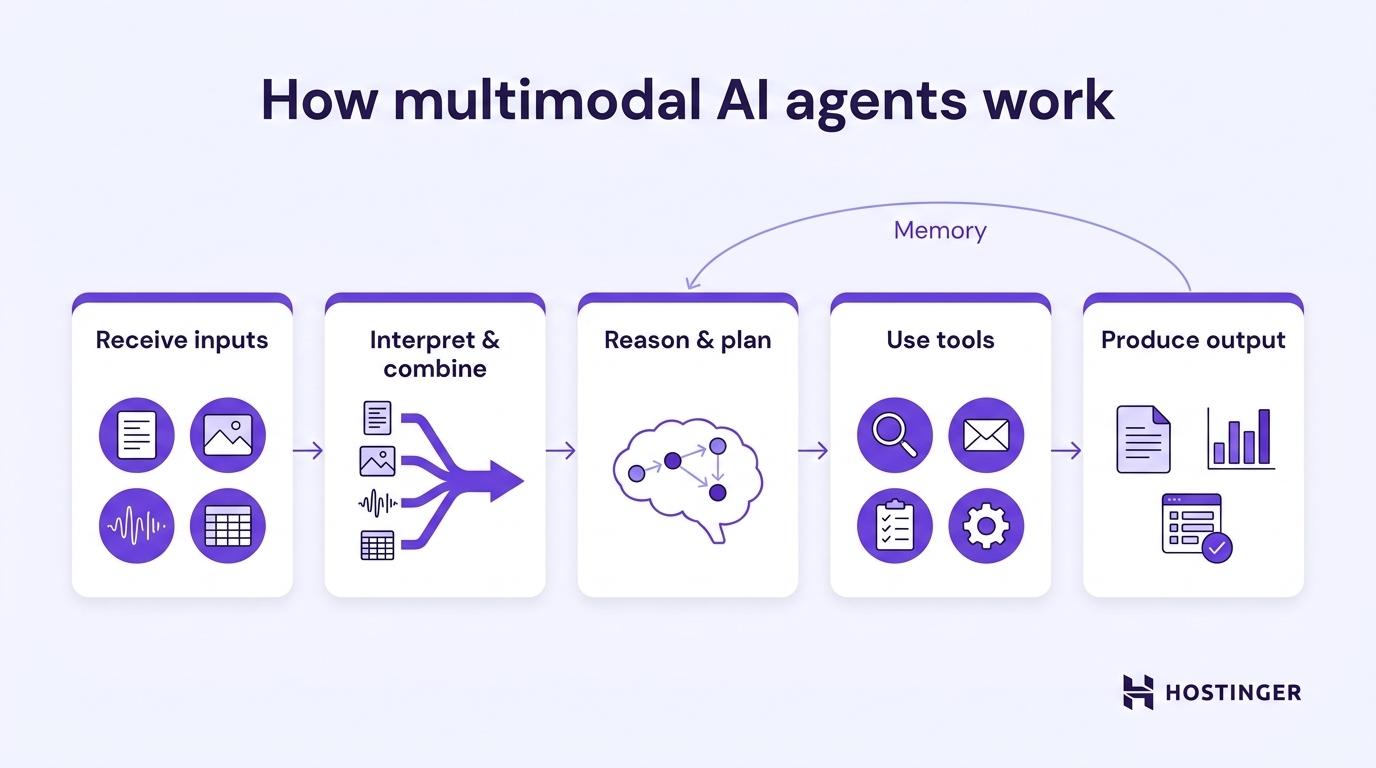
Crucial to this entire operational lifecycle is memory. Short-term memory allows an agent to maintain context within a single task or conversation, while persistent memory retains foundational context across completely separate sessions, remembering specific corporate tones of voice or historical project decisions. Industry observers note that these systems do not necessarily rely on a single, monolithic model handling every data format. Many production environments successfully chain together smaller, highly specialized task-specific models—such as feeding a speech-to-text model into a language model, which subsequently interfaces with an image generator.
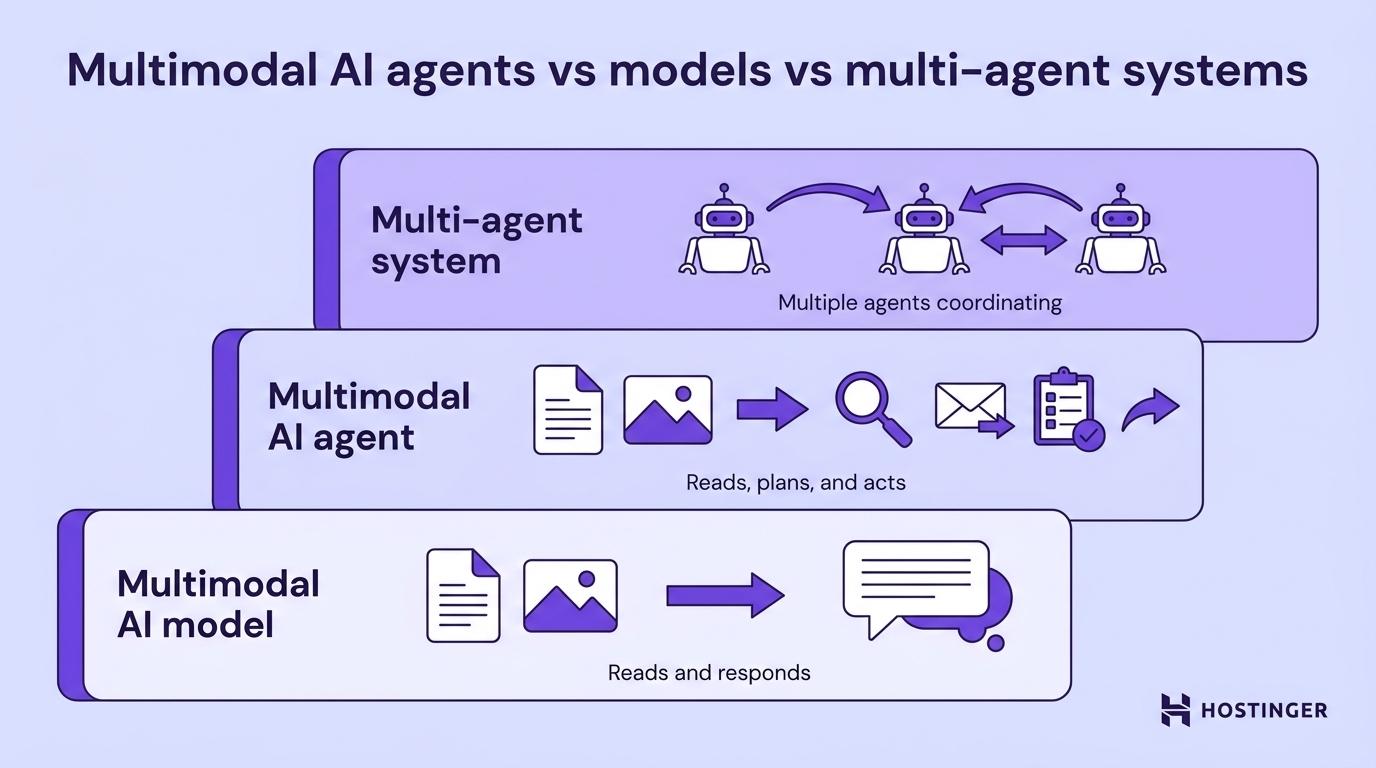
A vital distinction highlighted in the developing technology landscape is the difference between a multimodal AI model and a multimodal AI agent. While a multimodal AI model reads multiple data types and generates a matching response, a multimodal AI agent leverages those exact capabilities to autonomously pursue goals and execute real-world actions. ChatGPT and similar conversational interfaces are primarily classified as multimodal model interfaces rather than fully autonomous agents because they lack continuous goal-directed planning and action execution unless augmented by specific modular features. Multi-agent systems expand this concept even further, deploying collaborative networks of individual agents to divide extraordinarily complex workflows among specialized units.
The practical applications for multimodal AI agents span numerous high-value sectors, most notably document analysis, customer support, business automation, voice assistance, and physical-world domains like healthcare and robotics. In business environments, these agents automate workflows that traditionally required juggling multiple isolated applications. By ingesting mixed file inputs—such as a monthly sales spreadsheet, a supplier PDF, and a series of email chains—an agent can identify complex market gaps, draft communications, and schedule follow-up reminders within a single, unified conversation.
In software environments, emerging computer-use agents interact directly with user interfaces much like a human operator would, navigating menus, filling out forms, and clicking buttons across legacy CRM tools or internal dashboards without requiring custom API integrations. Meanwhile, voice-based assistants are pushing the boundaries of real-time audio processing, handling spoken inputs and responding with conversational speed.
In higher-stakes fields like healthcare and robotics, multimodal agents process complex combinations of medical imaging, electronic health records, and clinical notes, or fuse environmental sensor readings, camera feeds, and audio inputs to navigate the physical world. Industry experts emphasize, however, that in high-stakes domains such as clinical medicine and industrial robotics, human oversight remains a fundamental design requirement rather than an optional preference. These advanced systems are engineered to assist and augment human judgment rather than replace it entirely.
While the advantages of multimodal AI agents include richer contextual understanding and a dramatic reduction in manual, multi-tool steps, developers and enterprise adopters must still navigate distinct trade-offs. The primary constraints involve higher computational costs and occasional errors when attempting to reconcile conflicting inputs across diverse data modalities.
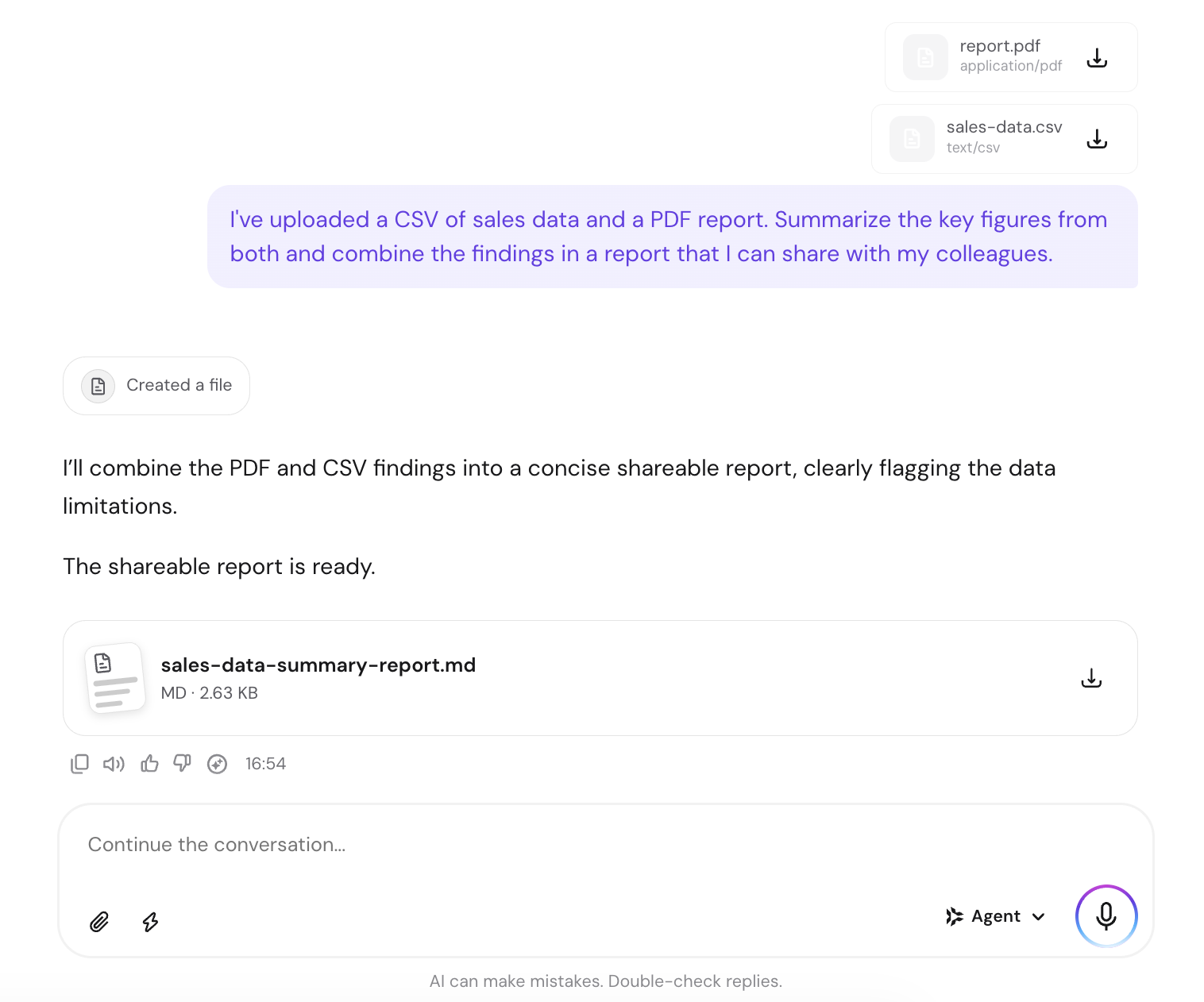
As organizations look toward practical adoption, industry deployment patterns suggest matching agent capabilities directly to the native formats of existing workflows. Whether utilizing ready-made business automation tools or custom-building proprietary multi-agent pipelines, the technology’s rapid advancements in reasoning quality, persistent memory, and computer-use integration are cementing multimodal AI agents as practical, everyday fixtures of modern enterprise operations.
Leave a Reply