
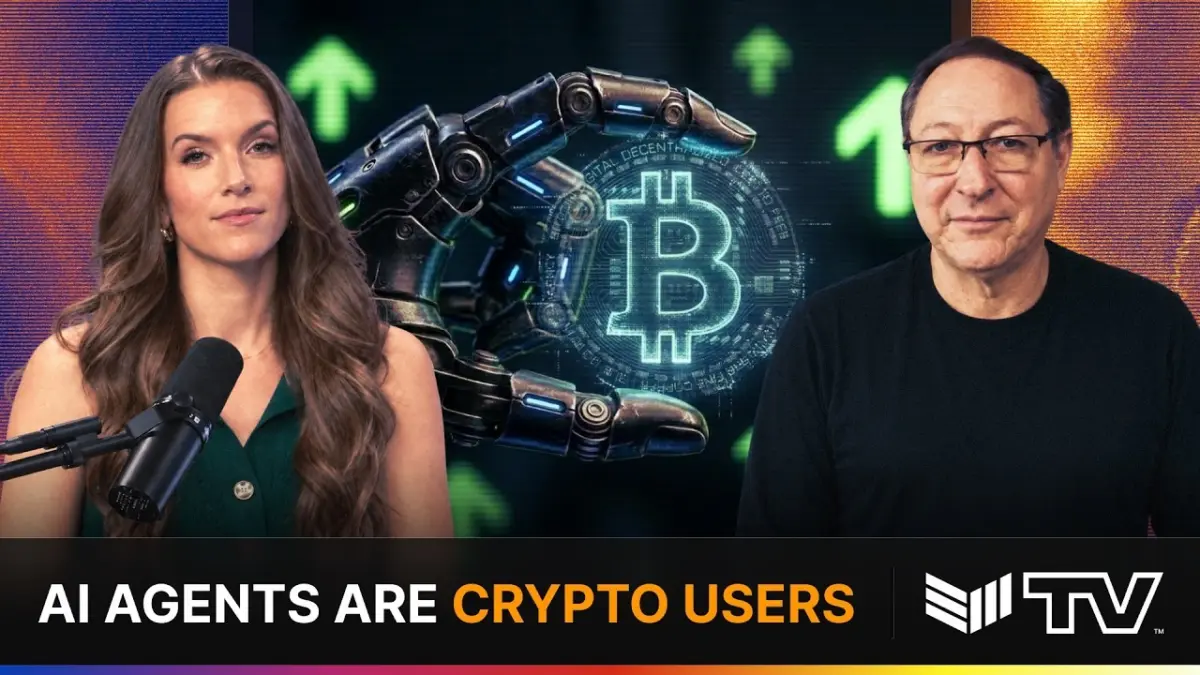
After spending 15 years developing and observing the foundational architecture of the cryptocurrency industry, veteran market analyst Jordi Visser has put forward a provocative thesis: the complex financial rails built over the past decade and a half—including stablecoins, decentralized lending protocols, and asset tokenization mechanisms—were never actually designed for human users. Instead, Visser argues that this digital financial plumbing was unconsciously constructed to serve autonomous artificial intelligence agents.
In a recent comprehensive discussion on Bitcoin Magazine’s multimedia network hosted by Grace Remington and Sean Hagan, Visser detailed his "Ghost Rails" thesis. He compared the current maturation phase of the digital asset industry to the critical fourteen-year gap that occurred between Netscape’s landmark public offering in 1995 and the eventual launch of the App Store, an innovation that finally placed the full power of the internet directly into the hands of everyday consumers. According to Visser, the retail-facing wallets and user interfaces that have dominated public attention represent merely a transitional phase. The true inflection point for what he describes as the "agentic economy" arrives when autonomous AI entities begin utilizing these financial networks at scale, a development he views as exceptionally positive for Bitcoin in particular.
The conversation ventured across a wide spectrum of macroeconomic and technological intersections, shedding light on what might ultimately fracture the prevailing liquidity-driven narratives that have defined the cryptocurrency asset class for years.
Betting on Nominal Growth: Outrunning the National Debt
Opening the discussion, Visser addressed the pressing macroeconomic realities facing the global financial system, specifically questioning whether nominal economic growth driven by artificial intelligence can successfully outrun the mounting U.S. national debt load. As governments worldwide grapple with unprecedented fiscal deficits, the intersection of technological innovation and monetary policy has become a central focus for macro investors. Visser explored how sustained technological advancement could alter nominal GDP trajectories, setting a foundational backdrop for why alternative stores of value are gaining institutional traction.
Within this high-stakes macroeconomic environment, Visser evaluated the remarkable longevity of Bitcoin, framing it as the only digital asset capable of surviving and thriving across multi-decade horizons. While thousands of alternative cryptocurrencies have emerged, peaked, and faded into obscurity over the past fifteen years, Bitcoin’s decentralized design, fixed supply cap, and growing institutional adoption have reinforced its position as a resilient monetary network built to withstand generational shifts in global finance.
The Convergence of Crypto Infrastructure and AI Agents
At the heart of Visser’s thesis is the profound realization that the technology sector spent fifteen years building sophisticated financial plumbing without fully understanding its ultimate destination. While developers initially focused on building consumer-facing decentralized applications, the actual utility of these systems—such as instant, borderless stablecoin settlements and programmatic lending—aligns perfectly with the operational needs of autonomous software.
AI agents operating 24/7 in a decentralized digital environment require fast, frictionless, and secure rails to execute transactions, allocate capital, and manage resources without relying on traditional banking hours or human intervention. Visser noted that these autonomous swarms represent an exponential shift that traditional investors often overlook, transforming how economic value is generated and transferred across digital networks.
This technological convergence naturally extends into the realm of traditional finance through tokenization. Visser highlighted how the process of bringing real-world assets onto distributed ledgers has the potential to unlock trillions of dollars in traditionally illiquid value. By turning an estimated $900 trillion of illiquid assets into programmable, divisible digital money, tokenization creates a seamless bridge between legacy financial systems and the automated requirements of the agentic economy.
Macro Pressures, Institutional Adoption, and Market Psychology
Shifting focus toward investor psychology and institutional market dynamics, Visser examined the catalysts required to prompt broader adoption among affluent cohorts, particularly questioning what market conditions or structural breaks must occur before the top ten percent of wealth holders fully allocate capital into Bitcoin. He also touched upon recurring seasonal phenomena, such as the "Santa Claus effect," analyzing how deeply ingrained market beliefs often outpace raw technological innovation in driving short-term price action and market sentiment.
The conversation did not shy away from the broader infrastructure challenges powering the current artificial intelligence boom. Visser discussed the massive capital expenditures pouring into debt-financed data centers, the potential for groundbreaking medical advancements like cancer breakthroughs, and the lingering anxieties within the traditional bond market as sovereign debt yields react to surging corporate borrowing.
Addressing the cultural anxieties surrounding rapid technological progress, Visser offered a pragmatic perspective on what he termed the "AI doomsday soap opera." Rather than yielding to dystopian narratives, he emphasized the constructive economic utility of automation and digital assets, projecting a thirty-year horizon of sustained demand for Bitcoin and making a compelling case for the concept of good deflation driven by radical technological productivity.
As the financial landscape continues to evolve under the dual pressures of macroeconomic uncertainty and technological disruption, Visser’s insights offer a compelling framework for understanding where the infrastructure of digital finance and the future of artificial intelligence finally intersect.
Disclaimer: The views and opinions expressed in this show are those of the participants and do not necessarily reflect the official policy or position of BTC Inc., Bitcoin Magazine, or any affiliated entities. This content is provided for informational and educational purposes only and should not be construed as investment, legal, tax, or accounting advice. Nothing contained in this show constitutes a solicitation, recommendation, endorsement, or offer to buy or sell any securities or financial instruments. Viewers should consult their own advisors before making financial or business decisions.



Leave a Reply