Tech conglomerates, cloud storage providers, and internet infrastructure firms are pushing back hard against accusations of facilitating intellectual property theft, submitting formal rebuttals to the United States Trade Representative (USTR) as part of the annual review cycle for notorious piracy markets.
Earlier this month, major rightsholder organizations submitted their annual overviews detailing platforms they argue are hotbeds for global copyright infringement. Groups such as the Motion Picture Association (MPA), the Recording Industry Association of America (RIAA), and various other creative trade associations listed dozens of specific pirate websites, streaming portals, and digital distribution channels. However, the scope of these complaints routinely extends far beyond dedicated pirate operations, frequently ensnaring major online platforms, consumer-facing cloud services, and foundational internet infrastructure providers.
In response to these designations, several targeted companies have now submitted comprehensive rebuttals to the U.S. government, detailing their ongoing anti-piracy operations, technical hurdles, and philosophical disagreements with how trade pressure is applied. Among the most notable responses this year came from social media titan Meta, cloud storage provider Mega, and web infrastructure giant Cloudflare, each offering a distinct window into the ongoing global battle over online copyright enforcement.

AI-Predicted Pirate Streams and Facebook Live Restrictions
Meta’s official rebuttal to this year’s notorious markets submissions primarily addresses ongoing concerns regarding counterfeit goods on its platforms. However, unlike previous filing cycles, the company notably dedicated a substantial section of its response to copyright piracy, focusing heavily on the persistent challenge of unauthorized live streams targeting professional sports and entertainment broadcasts.
Outlining its philosophy, Meta describes a comprehensive three-pronged strategy aimed at combating online piracy: preventing infringing content from being uploaded in the first place, swiftly removing unauthorized material that manages to bypass initial defenses, and actively suppressing the discoverability of whatever remains. According to the technology corporation, its recent deployment of automated enforcement mechanisms demonstrates the efficacy of this multi-layered approach.
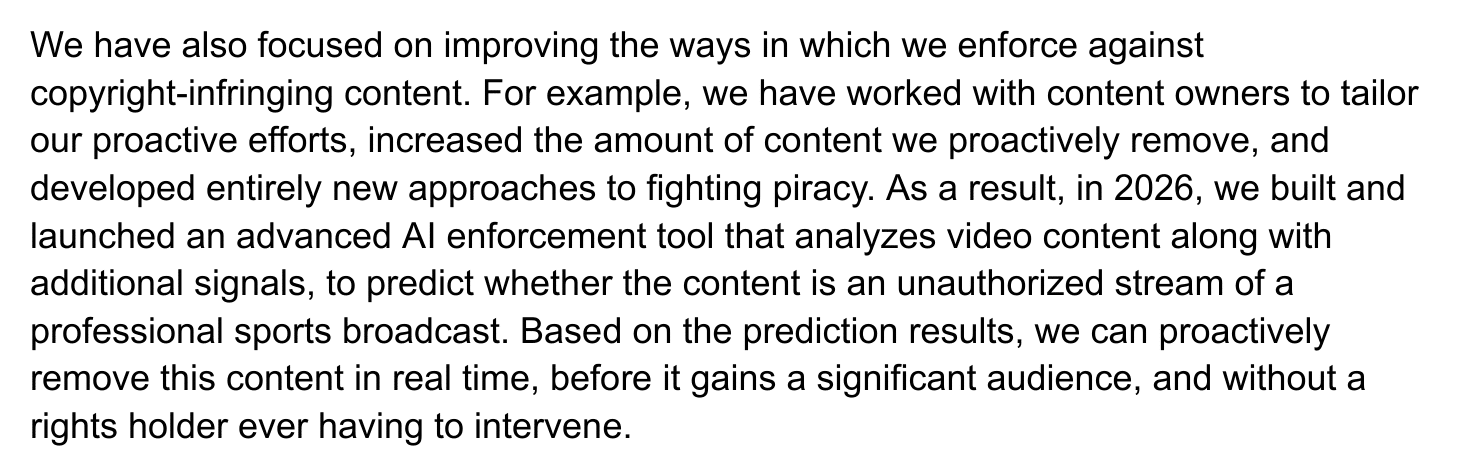
The cornerstone of this updated strategy is a newly developed artificial intelligence tool engineered to spot and intercept pirated sports broadcasts in real time while the stream is actively broadcasting to users. In its filing to the U.S. government, Meta notes that it built and launched an advanced AI enforcement tool capable of analyzing video content alongside a wide array of auxiliary signals. This system is designed to autonomously predict whether a live broadcast constitutes an unauthorized transmission of a professional sports event.

By leveraging these predictive analytics, Meta states that it can proactively excise infringing video streams in real time before the broadcasts can accumulate a significant audience. Crucially, this automated intervention operates entirely without requiring rightsholders to manually flag or intervene in the process. While Meta’s submission highlights the deployment of this technology, the company did not disclose granular quantitative metrics regarding the tool, withholding figures such as the total volume of terminated streams or the specific athletic leagues covered by the automated filters.
This AI-driven enforcement operates in tandem with sweeping functional modifications implemented across Facebook Live. Under current platform policies, newly created user accounts are barred entirely from utilizing the Facebook Live feature, while established users face strict volumetric limitations regarding the number of concurrent streams they can host. Furthermore, accounts that have previously had a live stream blocked or flagged for copyright violations face targeted restrictions on their access to various platform features.
Meta also actively throttles the distribution and algorithmic visibility of suspected infringing live content, intentionally introducing transmission delays. This deliberate buffering allows automated and manual anti-piracy measures adequate time to take full effect before a live stream ever becomes publicly accessible to broader audiences.
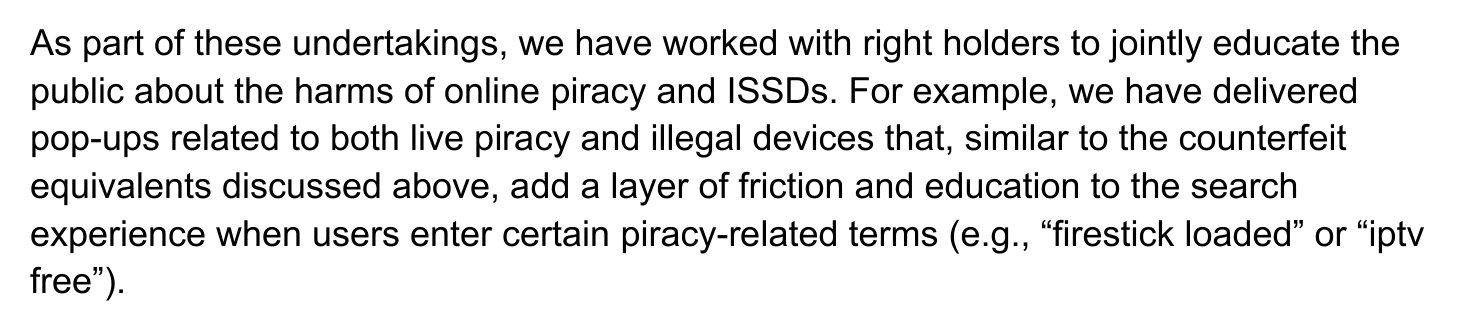
Beyond the realm of live video broadcasting, Meta’s filing indicates that the overwhelming majority of its enforcement actions against content promoting illegal streaming devices and services now occur proactively. When everyday users attempt to search for common terms associated with unauthorized hardware or software—such as "firestick loaded" or "iptv free"—the platform automatically deploys prominent warning pop-ups designed to caution users about the legal and security risks of commercial piracy.
Mega’s Suspension System Outage and Cloud Storage Defenses
While Meta focused heavily on live streaming and artificial intelligence, other digital platforms found themselves defending their core operational models against aggressive government lobbying by rightsholder groups. Earlier this month, the RIAA officially flagged Mega as a cyberlocker, alleging in its submission that the popular cloud storage and file-hosting platform fails to adequately prevent the re-uploading of infringing material or effectively deter repeat infringers from continuing to use the service.
Mega responded to these allegations with a formal rebuttal filed late last month, strongly pushing back against the characterization of its business model. The company argued strenuously that it functions as a legitimate cloud storage and collaboration platform rather than a malicious cyberlocker. To support its commitment to intellectual property enforcement, Mega pointed to its established repeat infringer policy, under which user accounts that accumulate three official copyright strikes within a rolling six-month period face formal account suspension.
However, the company’s regulatory filing candidly acknowledged that this crucial disciplinary mechanism did not function as intended for an extended period due to internal technical failures. In its official submission, Mega disclosed that because of an underlying technical error, the automated suspension system did not operate fully during the fourth quarter of 2024, and failed to operate at all throughout the first quarter of 2025.
While this admission raised eyebrows among trade observers, it mirrored disclosures previously made public in Mega’s corporate transparency reports, where the system outage had been footnoted for accountability. According to the company’s public documentation, the software bug was fully diagnosed and resolved in early April 2025, restoring normal functionality to the repeat infringer tracking system.
In its defense, Mega emphasized that rightsholders who successfully report an infringing file are provided with the capability to request that every identical copy of that file be simultaneously purged from all user accounts across the entire platform. The company used its rebuttal to encourage the RIAA and its member record labels to actively utilize these advanced systemic tools rather than relying solely on broad characterizations of the platform’s infrastructure.
Groundhog Day for Cloudflare and Internet Infrastructure
While companies like Mega are relatively new additions to the crosshairs of the RIAA’s annual submissions, other corporate entities have been fighting the exact same battles in Washington for over a decade. Cloudflare, a foundational web infrastructure and content delivery network provider, has been responding to virtually identical piracy claims and trade submissions for nearly ten years.

The cyclical nature of these administrative disputes has led observers to describe the proceedings as an annual anti-piracy exercise characterized by the recirculation of familiar arguments from both rightsholders and infrastructure providers. Demonstrating the repetitive nature of the multi-year conflict, Cloudflare chose to summarize its core philosophical stance in its latest rebuttal using the exact same phrasing deployed in its filing from the previous year.
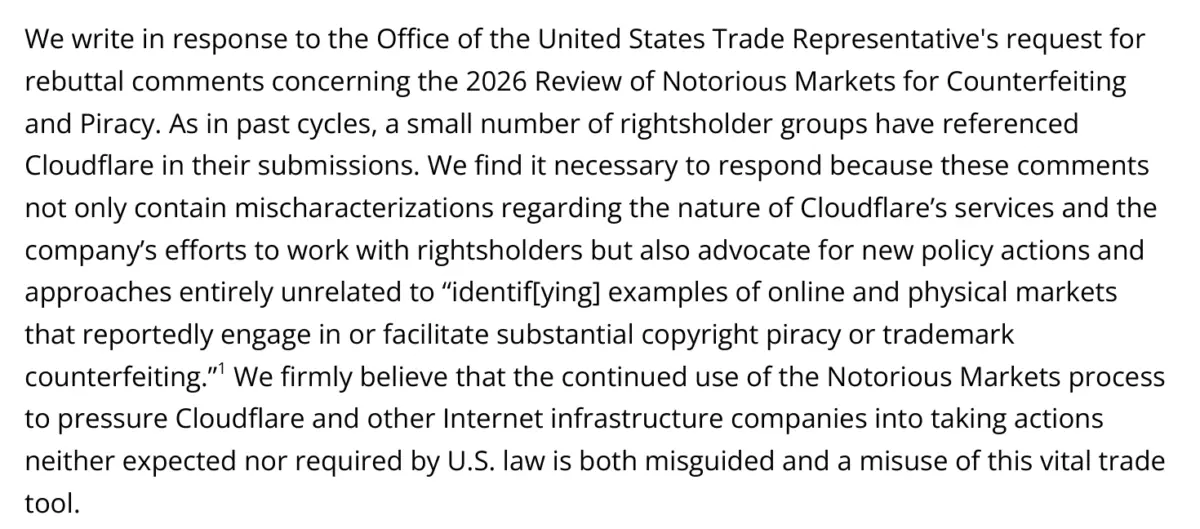
In its submission, Cloudflare forcefully argues that the USTR’s review process is being improperly leveraged to exert commercial and legal pressure on neutral infrastructure companies. The company states that it firmly believes the continued utilization of the Notorious Markets review process to pressure Cloudflare and other internet infrastructure providers into taking enforcement actions that are neither expected nor legally required under United States law is both fundamentally misguided and a clear misuse of a vital trade policy tool.
Numerous other submissions and rebuttals filed during the current review window similarly feature repetitive or nearly identical argumentation, illustrating that foundational disputes regarding the legal liabilities and responsibilities of internet intermediaries remain deeply entrenched and structurally unresolved.
With the formal submission windows now closed, the U.S. Trade Representative will evaluate the original complaints submitted by rightsholders alongside the counter-arguments, technical clarifications, and legal rebuttals provided by Meta, Mega, Cloudflare, and other affected platforms. The agency is scheduled to review the comprehensive record to determine which entities warrant official designation, with the final notorious markets report expected to be published early next year.