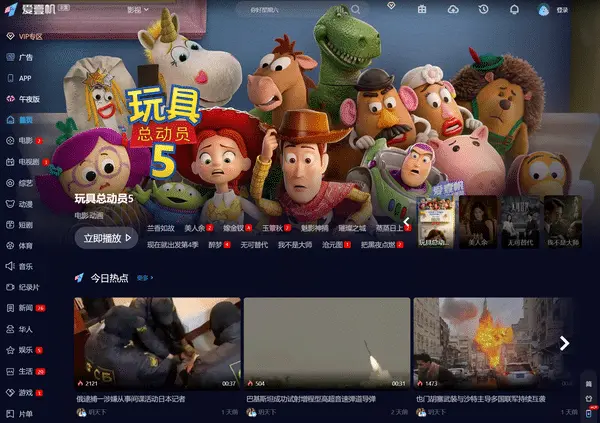
Chinese streaming giant iQIYI has secured a significant legal victory in a U.S. federal court against Aiyifan, a prominent pirate streaming network catering to Chinese-speaking audiences residing outside of China. While the ruling marks a major milestone in the platform’s ongoing global anti-piracy efforts, the final judgment fell drastically short of the staggering financial compensation the company initially demanded, and a U.S. federal judge firmly rejected a full domain transfer.
The legal battle in the United States mirrors a broader, multi-jurisdictional crackdown on online piracy by major entertainment companies originating from China. Just last month, rival Chinese streaming titan Tencent successfully cleared the first procedural hurdle in its own separate U.S. court battle against another major pirate platform, Olevod, establishing that foreign copyright holders can effectively pursue overseas streaming operations through American courts. iQIYI utilized the exact same Florida federal court and legal representation to target Aiyifan, which operates across a constellation of alternative domains including yfsp.tv, iyf.tv, and aiyifan.tv.
Despite operating entirely outside formal licensing frameworks, the network commands substantial traffic. According to web analytics data from Similarweb, the domain yfsp.tv alone attracted approximately 14 million visits in a single recent month, highlighting the massive scale of the unauthorized distribution network. However, unlike its rival Olevod, the operators behind Aiyifan chose not to mount a defense in the U.S. proceedings, leaving the litigation entirely unopposed. None of the primary individuals operating the network were formally named as individual defendants in the American civil action, setting the stage for a default judgment.
Operator Jailed in China
While the U.S. federal court addressed the civil liability and financial repercussions of the operation, the most severe consequences for those behind Aiyifan materialized thousands of miles away in the People’s Republic of China. Throughout the course of the U.S. proceedings, iQIYI formally updated the Florida court regarding parallel criminal convictions secured against key personnel in Shanghai.

In August, iQIYI notified the court that the Shanghai Third Intermediate People’s Court had officially upheld the criminal conviction of Wang Jianyang, whom investigators and prosecutors identified as a principal operator of the Aiyifan network. According to the translated Shanghai court ruling submitted in the U.S. case, Wang managed a commercial enterprise based in Chongqing that provided critical technical support infrastructure for Aiyifan’s core website and mobile applications. Beyond technical maintenance, Wang actively oversaw advertising operations and promotional campaigns for the pirate platform, sustaining his involvement in the illicit enterprise since 2022.
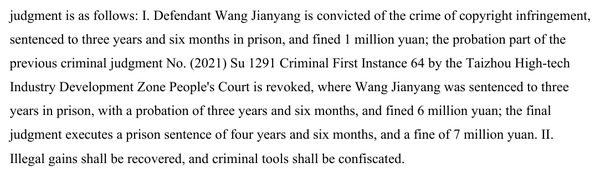
Chinese law enforcement authorities detained Wang in March 2024, a development that predated iQIYI’s eventual civil lawsuit filed in Florida by more than a year. Wang was no stranger to law enforcement scrutiny, having previously faced criminal prosecution for similar copyright violations. In 2021, a judicial authority in Jiangsu province handed down a three-year suspended prison sentence alongside a substantial fine of 6 million yuan for his role in establishing and operating an entirely separate pirate streaming portal.
Aiyifan was launched while Wang remained legally classified as serving his probationary period. Consequently, in March of this year, a district court in Shanghai formally revoked the suspension of his earlier sentence. The court imposed an additional prison term of three and a half years, accompanied by an additional fine of 1 million yuan. Combined with the revoked sentence, Wang faces a cumulative total of four and a half years behind bars and financial penalties totaling 7 million yuan.
Wang subsequently appealed the verdict, arguing before the appellate court that the evidence presented by prosecutors was legally insufficient and asserting that his involvement was strictly limited to providing neutral technical support services. The appellate court roundly rejected these arguments, concluding that Wang exercised a substantial leadership role in the continuous operation of the platform. That judicial ruling is now entirely final and binding under Chinese law.

Florida Court Awards $1.96 Million Instead of $196 Million
In the U.S. District Court for the Southern District of Florida, iQIYI initially filed its civil lawsuit with the explicit objective of dismantling the infrastructure of the pirate network and recovering massive damages. Because Aiyifan’s operators completely failed to respond to the formal complaint, the court entered a default against the platform in July 2025.
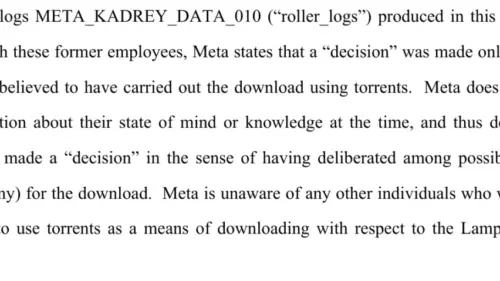
Capitalizing on the default status, iQIYI petitioned the court for an astronomical damages award totaling $196.55 million. The vast majority of this unprecedented financial demand was calculated by applying the statutory maximum of $150,000 per violation across 776 formally registered copyrighted works. Furthermore, the streaming company attempted to claim an additional $78.55 million in proposed damages stemming from thousands of other unregistered works allegedly hosted on the platform.
In January, U.S. District Judge Melissa Damian formally ruled that Aiyifan was indeed liable for copyright infringement. However, the judge categorically rejected the exorbitant damages calculation due to a lack of evidentiary support. In response to the setback, iQIYI submitted a heavily revised request asking for $54.4 million, but the court determined that figure remained fundamentally excessive.
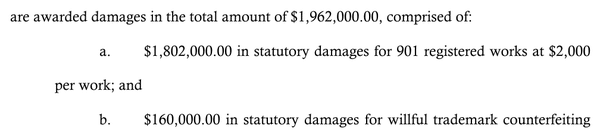
In a final order issued by the court, Judge Damian awarded statutory damages calculated at $1,000 per registered work, which the court doubled to reflect the willful nature of the infringement, bringing the foundational total to $1.8 million. This revised figure accounted for a total of 901 works, as iQIYI had successfully processed additional copyright registrations while the litigation slowly progressed through the court system.
Supplementary trademark infringement claims added another $160,000 to the judgment. Crucially, however, the court declined to award any statutory damages whatsoever for the approximately 5,000 unregistered works cited in the complaint. This brought the final financial judgment to roughly $1.96 million, representing approximately one percent of iQIYI’s original nine-figure financial request.
Judge Refuses to Transfer Domain Names
The dramatic reduction in financial damages was not the only judicial setback encountered by the Chinese streaming enterprise. iQIYI also petitioned the court for sweeping injunctive relief, specifically requesting that the presiding judge order the complete transfer of all underlying domain names associated with the pirate network directly to iQIYI, allowing the company to redirect incoming traffic to its own official web portals.
Additionally, the streaming platform’s initial legal filings sought sweeping orders compelling internet service providers, web hosting companies, content delivery networks, digital payment processors, and messaging platform WeChat to completely sever all business ties with Aiyifan and cease providing operational support.
Although iQIYI voluntarily trimmed back most of its third-party demands in its amended motion for a default judgment, it aggressively maintained its request for mandatory domain name takeovers to effectively neutralize the network’s web presence. Judge Damian ultimately concluded that such a sweeping remedy was legally unwarranted under the circumstances of the case.
During the proceedings, iQIYI candidly admitted to the court that it could not definitively quantify what exact proportion of the total content hosted across the sprawling network was actually infringing, nor could it guarantee whether any portion of the remaining media was legitimately licensed or authorized. Because Aiyifan openly hosted and streamed substantial volumes of third-party content completely unrelated to iQIYI’s proprietary catalog, the judge ruled that seizing the domains in their entirety would extend far beyond permissible legal bounds.
The judicial order explicitly acknowledged that certain other judges within the same judicial district had occasionally adopted a more expansive or liberal approach when issuing broad injunctive relief in intellectual property disputes. Nevertheless, Judge Damian elected to strictly follow the established legal requirements of the Eleventh Circuit, which mandate that all permanent injunctions must be narrowly and precisely tailored to address only the proven harms.
Partial Domain Registrar Suspensions Ordered Instead
Rather than granting a wholesale transfer of the domain names, the final default judgment devised a more limited mechanism. The court ordered domain registrars to cancel specific web pages and subdomains that prominently feature iQIYI’s copyrighted television shows, movies, or registered trademarks, provided that iQIYI submits a precise list identifying the offending URLs.
The judgment further stipulates that if a designated registrar refuses or fails to comply with the takedown directive, the underlying domain registry must officially transfer administrative control of the domain to a registrar specifically designated by iQIYI. This mechanism changes the administrative registrar handling the account, but it explicitly avoids transferring actual legal ownership of the domain assets to the corporate plaintiff.
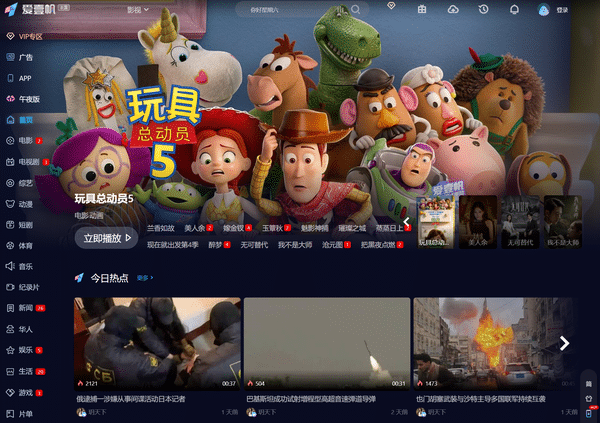
Legal analysts note that whether domain registrars possess the technical capability to comply with such a nuanced order remains highly questionable. Standard domain registrars maintain administrative control over the registration status of a domain name rather than managing the dynamic content hosted on specific internal pages of a website. Consequently, the primary operational tools available to a registrar generally involve suspending or redirecting an entire domain as a single unit—precisely the broad, indiscriminate outcome that the court explicitly sought to avoid.
Even the targeted restriction of subdomains presents significant technical hurdles. For example, popular network entry points such as m.yfsp.tv and www.yfsp.tv operate under a shared top-level domain. A standard registrar possesses the technical authority to disable an individual subdomain only if it simultaneously manages the domain’s underlying Domain Name System configurations.
For the time being, the various web portals operated under the Aiyifan banner remain fully operational and accessible online. Given that the anonymous operators behind the network have continuously refused to appear or participate in the U.S. litigation, it remains entirely uncertain whether iQIYI will ever successfully recover any portion of the nearly $2 million in damages awarded by the Florida court.