The long-running web development publication CSS-Tricks has announced a major transition for one of its most popular recurring features, even as the broader site experiences a recent revitalization. The publication has confirmed that the current iteration of its "What’s !important" column on CSS-Tricks.com will officially be its last, marking the end of an era for the site’s traditional format. However, the publication has paired this bittersweet news with an encouraging update for its readership: the feature is set to return in a significantly expanded and revamped format as the newly minted CSS-Tricks newsletter.
The official launch date for the revamped newsletter is scheduled for November 10th. This upcoming release will break a surprisingly long four-year hiatus for the publication’s direct-to-inbox offerings. Industry observers and loyal readers alike have expressed a mixture of surprise and enthusiasm at the return of the direct communication channel, which aims to deliver hand-written and hand-curated news, technical links, and in-depth editorials directly to subscribers.

To mark the final installment on the website, the creators curated a massive, feature-packed edition designed to go out with a substantial impact. This final web-based issue incorporates a backlog of content that editors had accumulated prior to the site’s recent reactivation earlier in the week, alongside a collection of fresh web development insights and technical demonstrations.
Among the standout topics featured in this final web issue is the intersection of high-end web design and popular culture, highlighted by Rockstar Games’ newly deployed website for the highly anticipated release of Grand Theft Auto 6. The site showcases elaborate scrolling effects that have drawn considerable attention from the front-end community—noting wryly that the studio certainly had enough time, given a 13-year development gap, to polish the visual interactions. Developer Kevin Powell subsequently published a comprehensive walkthrough analyzing and recreating the GTA 6 scroll effects, providing developers with an entertaining diversion while the gaming community awaits the title’s eventual release.
The technical deep-dives continue with modern navigational design, where developer Mojtaba Seyedi demonstrated the construction of a modern scrollspy using contemporary CSS capabilities. A scrollspy addresses a common interface pattern by automatically highlighting a user’s current location within a page’s navigation menu as they scroll through distinct document sections.
Building on the theme of cutting-edge styling features, Brecht De Ruyte showcased a series of visual demonstrations centered around the emerging CSS random() function. These examples highlight the growing trend toward playful imperfection in web design, allowing developers to introduce organic variations into their layouts without relying on heavy external scripts.
Implementation strategies for web icons also received rigorous scrutiny from Lea Verou, who published a detailed analysis of various modern and future methods for handling icons on the web. Verou’s examination looks ahead to upcoming CSS and platform features, including Linked Parameters, the ident() function, @mixin and @apply rules, and the @property shorthand, offering a glimpse into the future trajectory of stylesheet architecture.
Addressing everyday developer pain points, Kilian Valkhof proposed the introduction of a universal pseudo-selector in CSS. While the traditional universal selector (*) targets all elements, it bypasses pseudo-elements, prompting developers to write verbose selectors to apply global box-sizing rules to elements like ::before and ::after. With the modern web platform introducing an expanding array of pseudo-elements such as ::backdrop and ::details-content, Valkhof suggested the adoption of a ::* syntax to streamline global styling declarations.
Design systems and component architecture also featured prominently in recent discussions, with Declan Chidlow outlining several new HTML and CSS capabilities that are proving indispensable for modern design workflows. Among the highlighted features are text-box, sibling-index(), sibling-count(), @scope, and @custom-media, which offer powerful scoping and layout controls both within and outside formal design systems.
Adam Argyle contributed a practical layout technique utilizing CSS anchor positioning to make <textarea> elements automatically adapt their height to their content, mirroring the natural behavior of contenteditable regions. Meanwhile, Temani Afif explored the creation of dynamic, wavy visual dividers using a combination of the random() and shape() functions, further expanding the creative toolkit available to layout engineers.
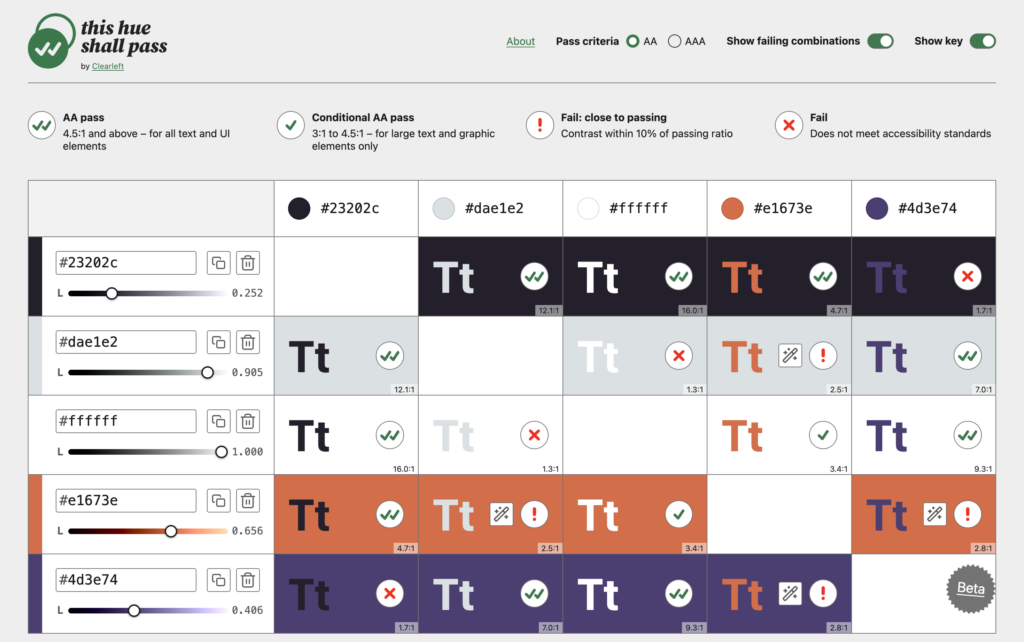
In the realm of tooling and accessibility, Clearleft introduced "This hue shall pass," a novel color contrast checker designed to evaluate every possible color combination within a palette. Unlike traditional checkers that deliver a binary pass-or-fail result, this tool distinguishes between absolute failures and combinations that narrowly miss the mark, allowing designers to dynamically adjust lightness values to meet established accessibility standards.

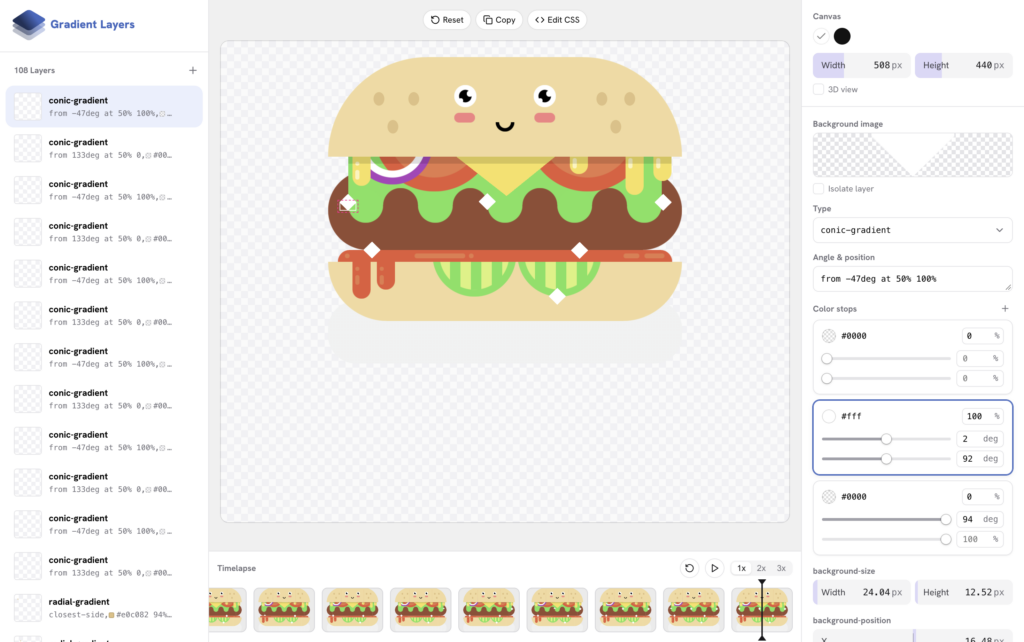
Concurrently, Ahmad Shadeed expanded developer utilities with the release of Gradient Layers, a visual editor designed to simplify the creation and modification of complex multi-layered gradients directly in the browser, bypassing the tedious process of manual code adjustments. Building on the topic of color transitions, Josh Tumath outlined the specifications for two upcoming gradient types currently making their way through the W3C CSS Working Group drafts: mesh gradients and freeform gradients. These advanced imaging techniques promise to bring sophisticated, multi-directional color blending natively to the web platform without requiring heavy raster images.
As CSS-Tricks closes the chapter on this website-based format, the publication encourages readers to secure their place on the subscriber list ahead of the November 10th newsletter debut. The upcoming publication promises to maintain the high editorial standards and front-end expertise established by the community, delivering future updates directly to subscriber inboxes.