The Linux ecosystem has always been defined by a constant cycle of creation and dissolution. Over the years, observers of the open-source community have watched countless Linux distributions come and go, with projects typically meeting their end when maintainers run short on time, project leaders retire, or user traction simply fades away. In the modern, AI-fueled era of technology, the landscape has accelerated further, spawning numerous new distributions. While some of these fresh projects attempt to carve out a genuinely unique path, others seem focused primarily on replicating the aesthetic and user experience of proprietary operating systems like macOS.
Amidst this crowded and shifting backdrop, long-time open-source enthusiasts have received an unexpected piece of good news. Slax, the historically renowned portable Linux distribution designed to run directly from a USB stick, has officially returned with a brand-new release after spending years in relative dormancy. Slax 2026.11 has arrived to take on the expectations of what a modern, versatile Linux distribution should look like, offering a blend of traditional portability and contemporary enhancements.
A Comeback We Didn’t See Coming
The sudden reappearance of Slax caught much of the Linux community off guard. The newly minted Slax 2026.11 release is built upon Debian "Trixie" and is powered by the Linux 6.12 kernel. While Linux 6.12 is an older kernel release by the standard of rapidly moving bleeding-edge distributions, it serves as a reliable, long-term support offering slated for maintenance until December 2028, ensuring solid hardware compatibility and stability for users on the go.
The previous stable iteration of Slax arrived back in October 2023. That release notably shipped with a dual-base approach, accommodating both Debian 12.1 and Slackware 15.0.2-current. With more than three years having passed since that deployment, the silence from the project had left many wondering about its future. The official release announcement for the 2026.11 version offered little explanation for the substantial gap between updates, but the mere fact of its return has revitalized interest in the unique operating system.

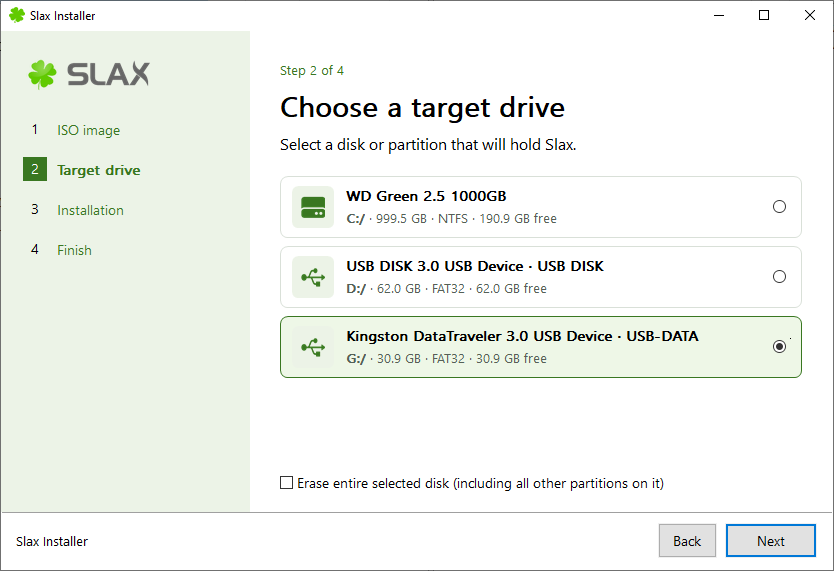
One of the most practical improvements in the new version is the introduction of a graphical installer. Designed to work seamlessly on both Windows and Linux hosts, the installer simplifies the setup process. Users can simply open the downloaded ISO file as a folder, launch the installer directly from within it, and select their target drive. The tool handles the rest, creating a bootable USB stick or configuring Slax to run alongside an existing operating system installation. Furthermore, the distribution’s flexible architecture allows a single USB stick to hold multiple named sessions. A user can establish one persistent session dedicated to professional work and another for experimental tasks, simply choosing the desired environment from a boot menu according to their immediate use case.
Modern Refinements and New Capabilities
Slax 2026.11 brings several noteworthy enhancements to its lightweight desktop environment. The Fluxbox window manager has been updated to display live window previews when users press the Alt+Tab shortcut, as well as hovering over taskbar icons. Additionally, pressing Alt+F3 now instantly reveals all four available workspaces at once, streamlining multitasking for power users.
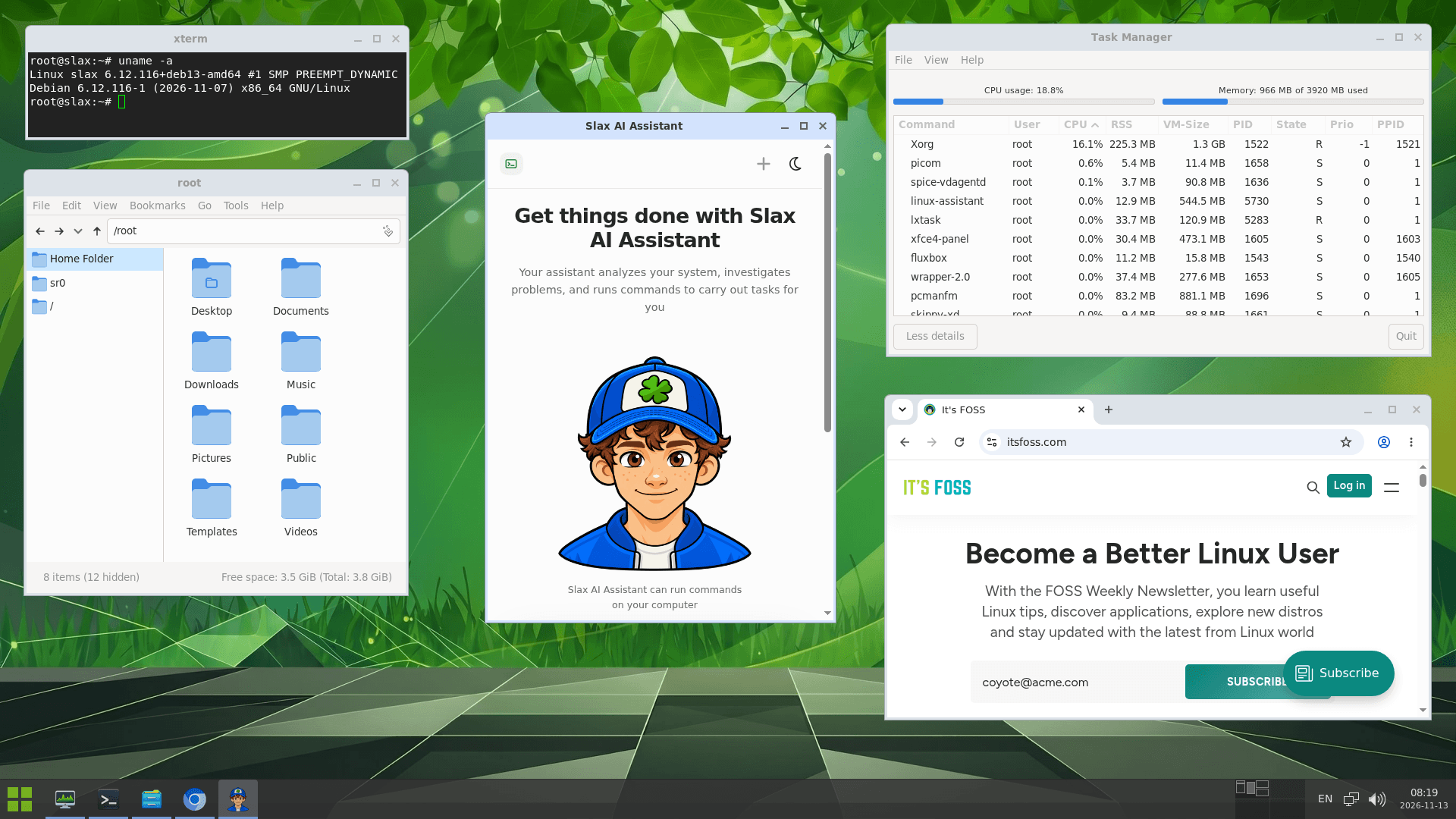
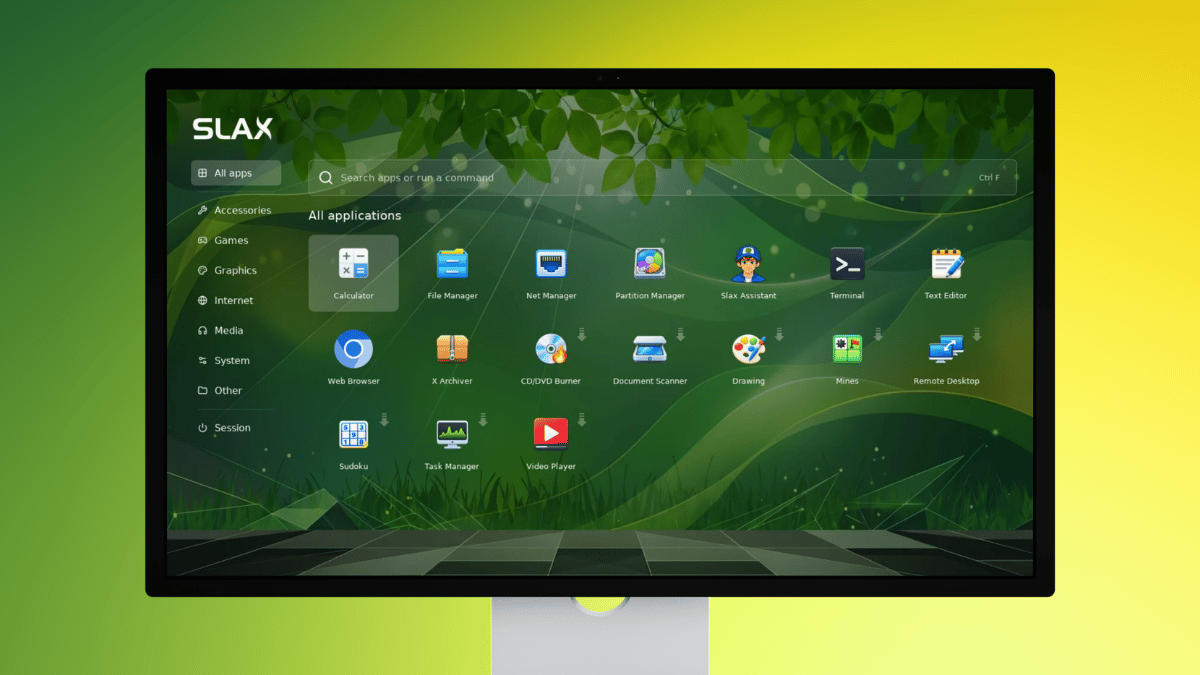
Application management has also seen a practical touch. The application launcher now features intelligent handling for missing software; if a user clicks on an application icon marked with a downward-pointing arrow, Slax can promptly download and configure the necessary components on the fly. Security has not been neglected either, as a newly integrated signed bootloader and kernel allow Slax to boot successfully with UEFI Secure Boot enabled on compatible personal computers.
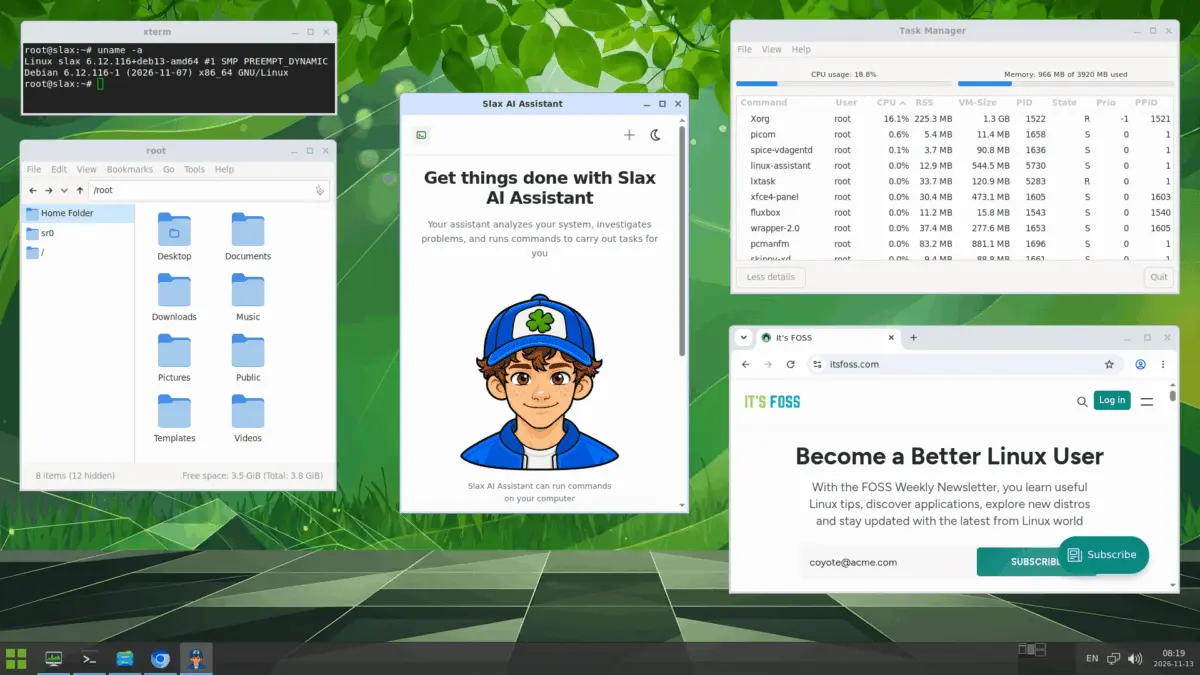
Perhaps the most striking addition to the release is the Slax Assistant, an experimental AI-powered helper accessible directly from the application launcher. Designed to operate through natural language prompts, the assistant can inspect the underlying system, diagnose issues such as dwindling disk space, and execute terminal commands to resolve problems automatically. Utilizing this feature requires an active internet connection and authentication, with email, Google, and GitHub provided as sign-in options. The functionality relies on an online Slax service backend, though specific details regarding the infrastructure remain sparse. New users are greeted with an initial allocation of 100 free credits to test the service, although the project has not yet disclosed the identity of the underlying AI provider or detailed its specific data handling policies.
Looking Forward and Practical Details
This is not the first time Slax has staged an unexpected revival after a prolonged period of inactivity. In 2022, the distribution reappeared with a release candidate based on Debian 11 following years of silence, save for a minor Debian 10.2 test version in 2019. That release was followed by a Slackware edition in the summer and the subsequent October 2023 update, neither of which provided clear roadmaps for the future. Members of the open-source community are naturally hoping that this latest comeback signals a more permanent return for the beloved project.
For those eager to evaluate the software, the ISO image for Slax 2026.11 is remarkably compact, weighing in at just 536.9 megabytes. The distribution is lightweight enough to run smoothly inside a virtual machine for users who prefer testing it safely before committing hardware to a full installation. For individuals who do decide to deploy it to physical media, the comprehensive Slax user guide remains an essential resource for navigating its unique portable ecosystem.