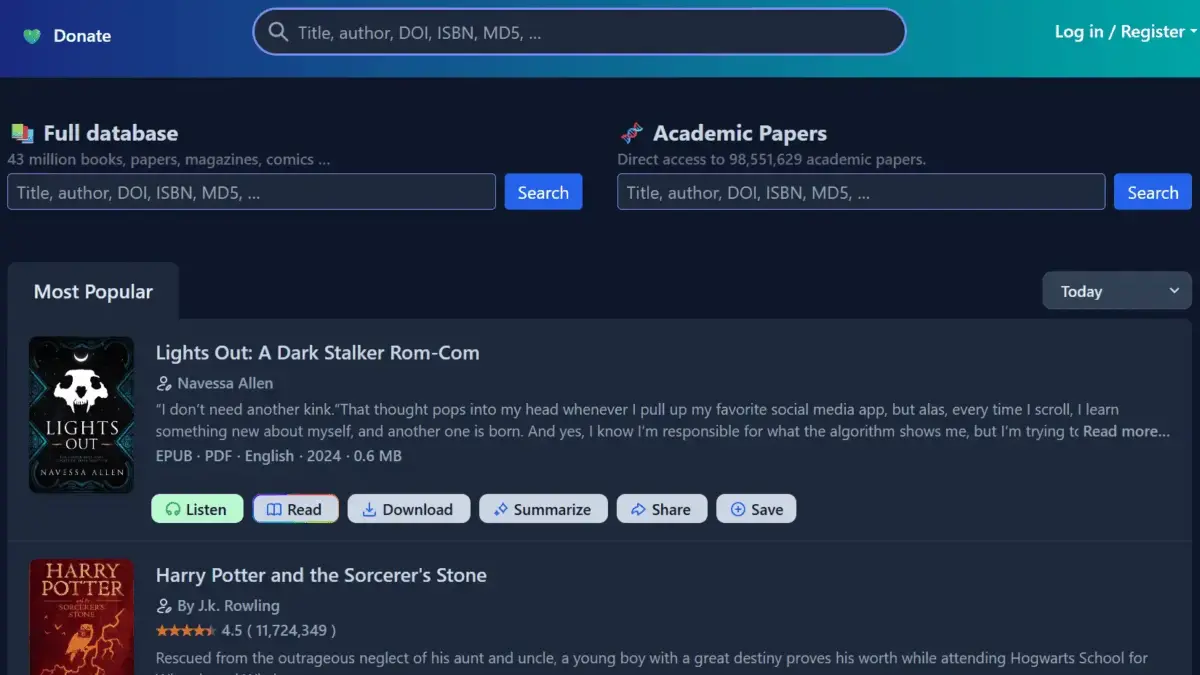
A federal judge in New York has ordered the anonymous operators of the shadow library WeLib to pay $19.5 million in damages to a coalition of thirteen major book publishers. The sweeping default judgment, handed down following a lawsuit initiated earlier this year, also commands internet infrastructure providers and domain registries to strip WeLib of its web domains and sever its operational backbone.
Despite the substantial financial penalty and the broad reach of the judicial order, whether the publishing companies will ever recover any of the awarded funds remains highly uncertain. The individuals behind WeLib have successfully maintained their anonymity throughout the legal proceedings, failing to respond to the initial complaint or participate in the court case.
The lawsuit represents a concerted legal effort by the publishing industry to curb the proliferation of unauthorized digital repositories. In June, WeLib became the second shadow library to face legal action from this specific group of book companies, following a parallel high-profile legal battle against the better-known platform Anna’s Archive. According to the original complaint filed in federal court, the relatively young platform was constructed using code and literary assets directly copied from Anna’s Archive, establishing a clear link between the two underground services.
Because WeLib’s operators chose not to answer the legal claims, the publishing companies petitioned the court for a default judgment last month. The legal brief submitted by the publishers relied heavily on arguments and paperwork previously deployed against Anna’s Archive earlier in the year. In a curious legal overlap, the motion even included specific claims regarding the use of BitTorrent technology—a distribution method typically associated with peer-to-peer file sharing that did not appear to match the actual operational mechanics of the WeLib case.
After reviewing the case materials and the proposed orders, U.S. District Judge Victor Marrero granted the publishers’ request in full. In an official order issued from the bench, Judge Marrero awarded the plaintiffs every remedy they sought, adopting the proposed judgment word for word.
Maximum Damages
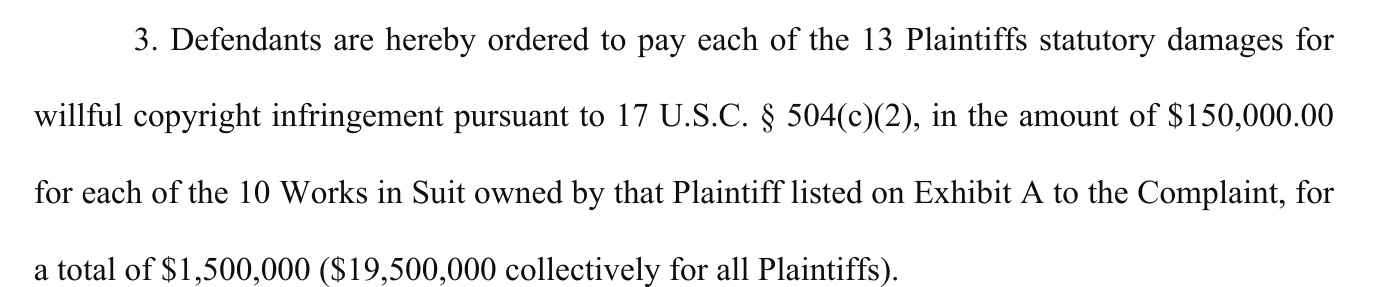
The financial component of the judgment levies the maximum allowable statutory penalties for willful copyright infringement. Each of the thirteen publishing companies involved in the lawsuit—a prestigious roster that includes industry giants Penguin Random House, Elsevier, and HarperCollins—was awarded $150,000 per book for ten specific literary works cited in the complaint. This calculation results in an award of $1.5 million for each individual publisher, culminating in the aggregate total of $19.5 million.
The total damages figure exactly mirrors the financial penalty imposed by U.S. District Judge Jed Rakoff when he ruled against Anna’s Archive in a similar default judgment earlier in May. While securing a multi-million-dollar judgment represents a significant symbolic victory for the publishing houses, collecting the monetary award is an entirely separate challenge. Without identified human operators to hold accountable, enforcing the financial penalties against bank accounts or personal assets is virtually impossible under current circumstances.

The federal order does, however, explicitly command the anonymous operators of WeLib to step forward. In addition to demanding the immediate destruction of all unauthorized digital copies of the publishers’ copyrighted works, the injunction requires the operators to file a formal, sworn report within ten business days of being served. This report must disclose valid contact information for WeLib and every managing agent associated with the platform.
Domain Takedowns
Beyond the monetary damages, the judgment incorporates a permanent injunction designed to dismantle WeLib’s web presence entirely. The order legally bars the site’s operators from making the publishers’ copyrighted materials accessible anywhere in the world. Simultaneously, it targets the critical infrastructure providers that enable the shadow library to remain reachable via the internet.
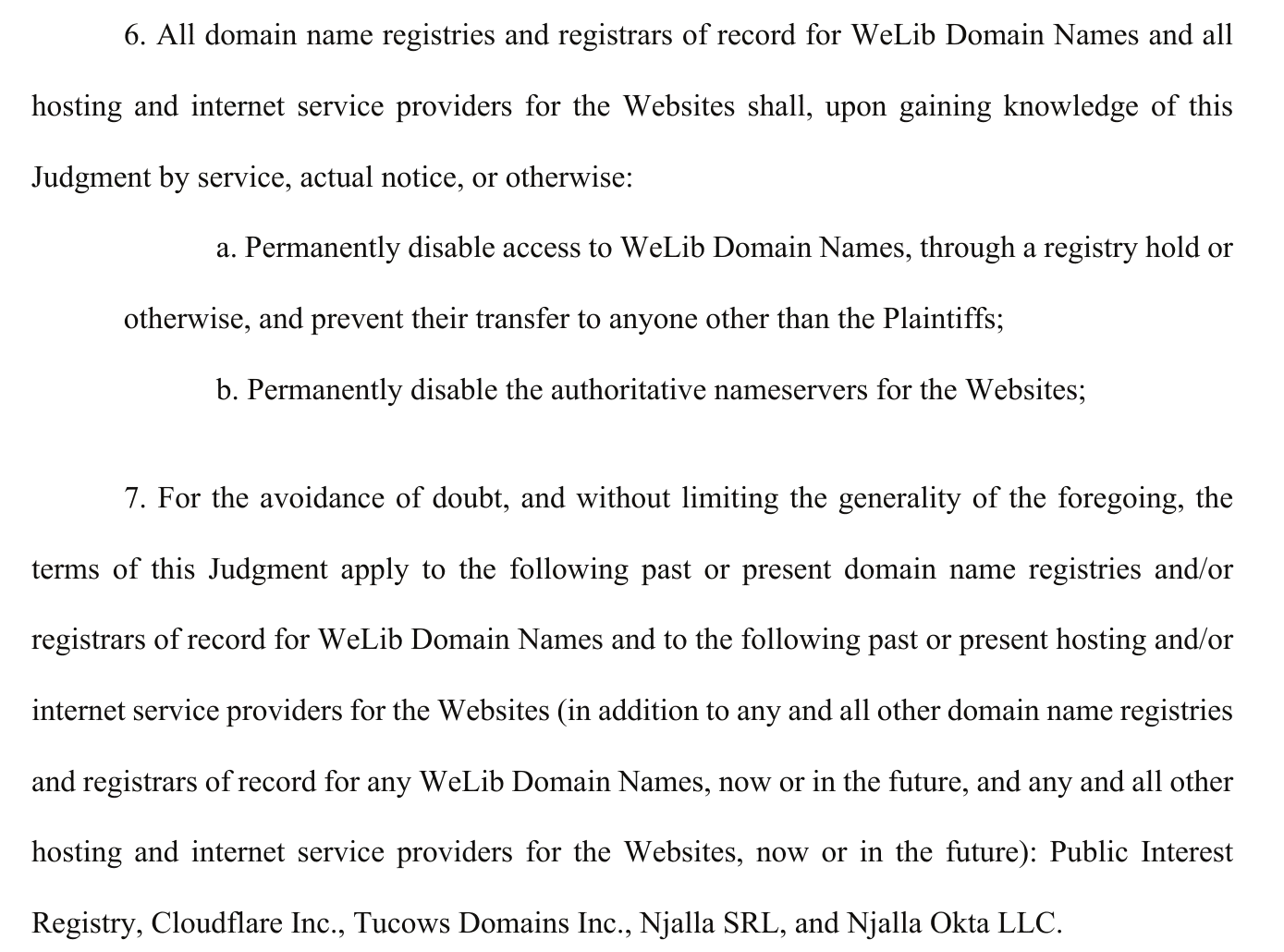
All domain name registries, domain registrars, and web hosting providers associated with the platform are instructed to permanently disable the domains welib.org, welib.st, and welib-public.org. Furthermore, the intermediaries are directed to deactivate the site’s authoritative nameservers, halt all hosting services, and preserve any digital evidence that might assist law enforcement or investigators in identifying the individuals behind the operation.
The judicial order explicitly identifies several past and present infrastructure providers by name, including the Public Interest Registry, Cloudflare, Tucows, and two corporate entities operating under the Njalla brand. Nevertheless, the legal mandate is broadly written to apply to any other registry, registrar, or hosting provider currently or previously facilitating WeLib’s domain infrastructure.
Signed Word for Word
Because Judge Marrero signed the proposed order submitted by the publishers in October without making any modifications, certain artifacts from the earlier Anna’s Archive litigation were preserved in the final text. This includes a specific prohibitory clause preventing WeLib from enabling users or third parties to make the contested literary works available to the public, explicitly listing distribution "including via BitTorrent."
Legal observers noted that there is no public evidence or documentation suggesting that WeLib relies on BitTorrent protocols for its distribution network, nor did the original complaint against WeLib reference the technology. The identical phrasing appeared in the Anna’s Archive default judgment, where the underlying complaint detailed that platform’s dedicated torrent pages. The incorporation of this clause highlights the copy-and-paste nature of the legal briefs used across the publishers’ coordinated litigation campaign against modern shadow libraries.
Still Online
Armed with the newly signed judicial injunction, the publishing companies are expected to formally request that domestic intermediaries execute the mandated takedowns. The Public Interest Registry, which oversees the administration of the top-level .org domain, is based in the United States and falls squarely within the jurisdiction of American courts. However, the degree of compliance from foreign registries, registrars, and offshore hosting providers remains unpredictable, as international intermediaries are not universally bound by U.S. court directives.
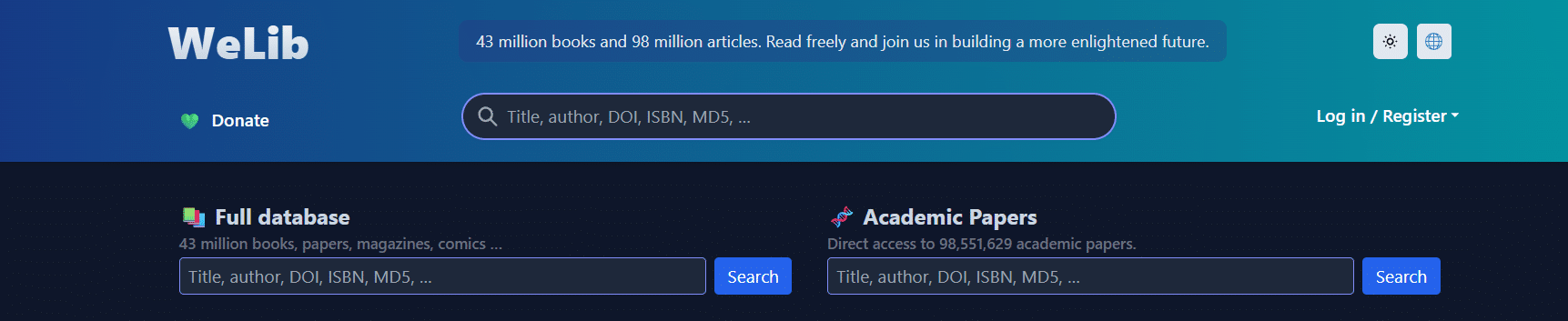
At the time of publication, the domains welib.org and welib.st remained operational, continuing to load the familiar search portal that boasts an index of 43 million books and 98 million articles.
A similar dynamic played out following previous legal actions against Anna’s Archive, which lost several web domains following injunctions obtained by major music and book publishers. Despite those legal setbacks, Anna’s Archive successfully maintained its web presence by shifting to alternative top-level domains such as .gl, .pk, and .gd, which are managed by registries operating outside United States jurisdiction.
Whether the anonymous administrators of WeLib will adopt a similar strategy of migrating to offshore domains to evade the American court order remains to be seen, though industry analysts suggest such a move would align with the established playbook of contemporary shadow libraries.
A copy of the default judgment, signed by U.S. District Judge Victor Marrero, and the publishers’ original proposed order are maintained as part of the public court record in New York federal court.