Swiss-based non-profit DNS resolver Quad9 has announced that it is withdrawing its services from France after a Paris court levied a daily financial penalty against the organization. The legal clash centers on Quad9’s refusal to comply with court-ordered internet blocking measures targeting unauthorized streams of tennis events. The decision makes Quad9 the second major public DNS resolver to pull out of the French market within recent years, highlighting a growing tension between national copyright enforcement and the foundational architecture of the global internet.
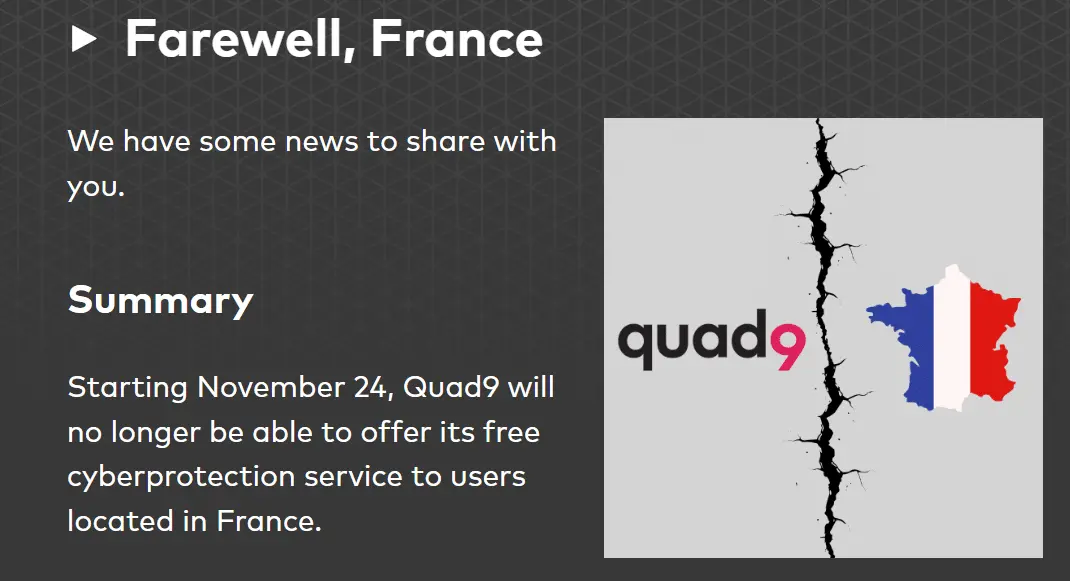
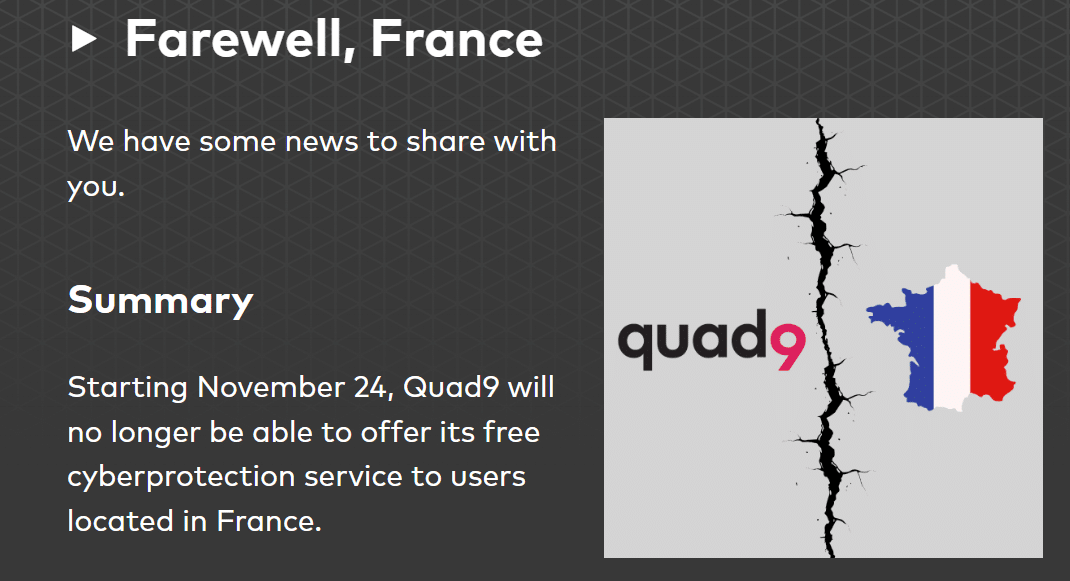
Beginning on November 24, Quad9 will officially cease serving users in France. The drastic step comes in the wake of a ruling handed down by the Paris Judicial Court, which ordered the foundation to pay a penalty of €1,000 per day for failing to implement a blocking order originally issued in May. That initial mandate had steadily expanded to encompass 58 domain names associated with unauthorized sports streaming. Faced with this ongoing liability and roughly 20 additional pending cases in the French legal system, Quad9 leadership concluded that continuing operations in the country is no longer viable.
The Escalating Conflict Over €1,000 a Day
The recent legal showdown began when sports broadcaster beIN Sports initiated proceedings demanding massive financial penalties. Initially, the network sought fines of up to €580,000 a day, specifically asking the court to impose a €10,000 daily penalty for every single domain name that remained accessible through Quad9’s recursive DNS resolution service.

While the Paris court ultimately rejected beIN’s more exorbitant demands, it ruled firmly against the Swiss foundation. The court set the daily penalty at a flat €1,000 per day in total, calculating the accumulation through November 14 when the current blocking measures are scheduled to end. According to Quad9’s internal accounting, this totals roughly €24,000 in direct penalties, a figure that excludes the foundation’s own mounting legal expenditures.
In its legal reasoning, the court emphasized Quad9’s explicit admissions. The bench pointed out that while the law requires service providers to make reasonable efforts to block infringing domain names, Quad9 openly chose to take no technical action whatsoever. This stance created a stark legal contrast with other infrastructure providers operating in France. Earlier in the month, the same Paris court rejected penalty requests brought by beIN Sports against Cloudflare and several virtual private network (VPN) providers. Those entities had implemented blocking protocols for at least a portion of the contested domains, which the court deemed a sufficient manifestation of reasonable effort. Similarly, media giant Canal+ lost a comparable penalty bid against Cloudflare in September. Quad9, however, stood apart by confirming in court submissions that it had not blocked a single domain on the disputed list.
A Matter of Principle and Technical Limitations
For the leadership behind Quad9, the conflict extends far beyond financial calculations or short-term compliance costs. The non-profit foundation views recursive DNS resolution as a neutral utility that should remain untainted by external censorship mandates or localized filtering regimes.

In an official public statement regarding the situation, the foundation articulated its core philosophy, explaining that it categorically refuses to alter or misrepresent the DNS responses delivered to end users in a manner that contradicts their expectations of neutral resolution. Furthermore, Quad9 highlighted the technical impossibility of tailoring its service specifically to French borders. Because its public-facing DNS service operates globally without requiring user registration or authentication, the foundation maintains that it has no reliable, privacy-respecting mechanism to isolate and identify users based strictly within French territory.
While satisfying the court’s demands would technically require blocking the targeted domains for all users worldwide, the Swiss organization flatly rejected the idea of applying a localized French court order to internet users across the globe. Quad9 also questioned the ultimate efficacy of such blocking orders, noting that determined users can effortlessly bypass DNS-level restrictions by switching to any of the thousands of alternative open resolvers available on the internet. Comparing the measure to an ineffective obstruction, the foundation remarked that attempting to stop piracy through such means is akin to holding a single piece of newspaper in front of a massive stadium crowd to block their view of a concert.
Weighing the Burden of Multiple Lawsuits
The decision to completely withdraw from the French market was ultimately driven by the sheer unsustainability of cumulative legal pressures. Quad9 pointed out that the current dispute with beIN Sports is merely the tip of the iceberg, with approximately 20 similar blocking cases currently pending in French courts. The foundation anticipates that these outstanding matters would inevitably result in compounding financial penalties and relentless legal pressure.
Given its non-profit status and limited operating budget, Quad9 stated that it simply cannot survive the financial accumulation of fines stemming from dozens of active and prospective lawsuits mirroring the action brought by beIN Sports.
This retreat marks a notable precedent in Europe, though it is not unprecedented. In 2024, OpenDNS similarly suspended its public resolution services in France after facing a comparable piracy blocking order initiated by Canal+. Quad9 executives expressed deep concern that accepting these mandates sets a dangerous long-term precedent. The foundation warns that once the administrative and technical tools of systemic internet censorship are established, they are rarely deployed sparingly or justly.
An appeal challenging the underlying legal framework remains pending, and Quad9 has indicated that it will continue its broader fight against court-ordered DNS blocking in appropriate forums. In the meantime, however, French internet users utilizing the service have until November 24 to transition to an alternative DNS resolver before the geographical block takes effect. A copy of the Paris Judicial Court’s complete ruling, filed under docket reference RG 26/11882, has been made publicly available by legal monitors.