
The modern artificial intelligence ecosystem relies less on individual supercomputers running in isolation and more on massive clusters of hardware pieced together to function as a unified machine. This architectural shift has brought systems known as SuperPoDs—or supernodes—into the spotlight. These tightly coupled scale-up systems connect numerous compute nodes together, allowing software to utilize resources across all connected hardware as if it were a single, colossal computer.
Historically, the operating systems capable of tying these extensive hardware clusters together into a single cohesive unit have remained largely proprietary. However, the open-source community is actively pushing to change that landscape. The openEuler Linux distribution ecosystem has released versions designed specifically to tackle this challenge, introducing open-source software capable of running an entire cluster of AI-focused machines as a unified system. As artificial intelligence models grow exponentially in scale and complexity, openEuler’s push into cluster-level operating systems marks a significant development in enterprise infrastructure and open-source software.
The Growing Need for a Cluster Operating System
Traditional Linux distributions provide the foundation for exceptional operating systems, but their architecture is traditionally confined to a single machine. A standard operating system schedules memory, central processing units, and attached devices inside one physical box. When a workload requires more capacity, administrators typically add another box and wire the systems together over a standard network infrastructure.
While this traditional model has served the computing industry well for decades, the modern artificial intelligence ecosystem demands an entirely different approach. Cutting-edge AI models now run across sprawling racks of machines that must behave seamlessly as a single giant computer. In these configurations, the traditional network connections between individual servers quickly become performance bottlenecks.
openEuler operates as an open-source Linux distribution ecosystem, and its recent release cycle focuses heavily on overcoming these hardware boundaries. By treating a whole cluster of AI machines as a single system, the platform aims to eliminate traditional networking and scheduling bottlenecks. The open-source nature of the project has generated considerable interest and adoption within enterprise technology communities, offering an alternative to closed, proprietary cluster management software.
A Linux Distribution Built for SuperPoD Architecture
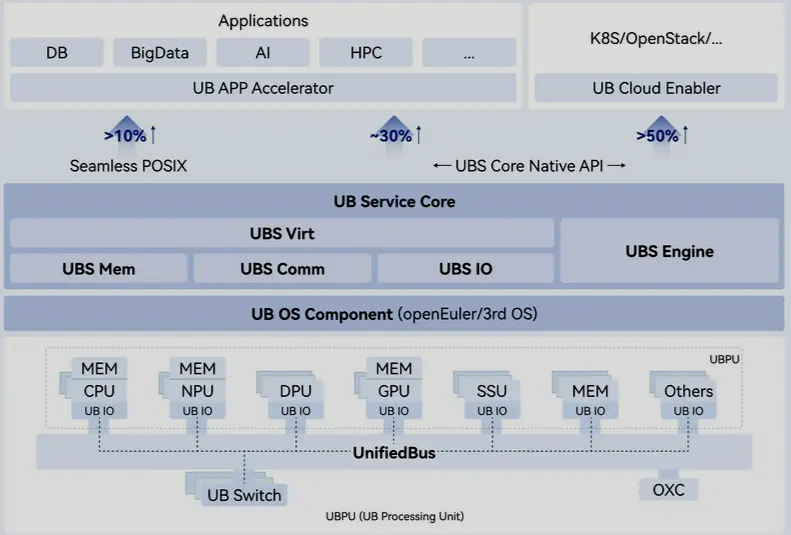
The openEuler project released versions engineered specifically to support SuperPoD architecture, positioning the platform as a pioneer in open-source cluster operating systems. The operating system achieves this capability through UnifiedBus and its associated software stack. UnifiedBus provides the high-speed interconnect infrastructure, while specialized components and service cores deliver operating system and cluster-level services on top of the physical hardware.

In a conventional Linux system, resource scheduling is strictly bounded by the physical limits of a single node. The architecture utilized by openEuler allows applications to reach across the network to access memory and accelerators sitting on entirely different nodes almost as if those resources were installed locally. By breaking down the traditional single-machine boundary, the distribution can schedule distributed resources as one unified set.
This capability is particularly vital for heavy AI hardware workloads. Internal testing performed by the openEuler project indicates that this peer-to-peer UnifiedBus design can boost application performance in large-scale AI compute environments by thirty to fifty percent. By streamlining communication between processors and accelerators across different nodes, the operating system significantly reduces the latency that usually plagues distributed AI training and inference tasks.
The Origins and Evolution of the SuperPoD OS
To understand the significance of openEuler’s architectural leap, it is helpful to examine the project’s origins. The openEuler distribution grew out of Huawei’s proprietary EulerOS and has evolved into an independent open-source distribution stewarded by the OpenAtom Foundation. Today, the platform supports a wide range of architectures, including Arm—notably Huawei’s Kunpeng processors—as well as traditional x86 and RISC-V hardware. The project achieved a significant milestone by surpassing sixteen million installations.
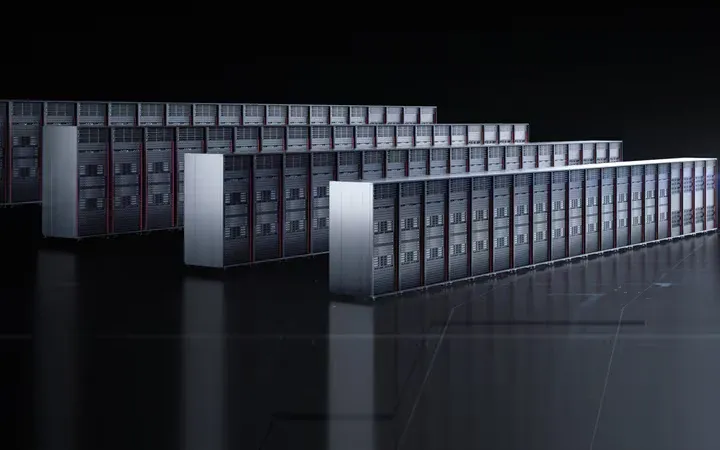
The SuperPoD and UnifiedBus technologies originate from Huawei’s hardware engineering ecosystem, where they are utilized across multiple computing systems, including Atlas AI systems and TaiShan SuperPoD configurations designed for general-purpose enterprise computing. Key components of this software stack, such as the specialized operating system components, have been contributed directly to the open-source openEuler community, merging enterprise hardware engineering with open-source collaboration.
Intelligence BooM and the Full-Stack AI Layer
Beyond low-level cluster management, openEuler is expanding its ecosystem through an open-source, full-stack AI solution known as Intelligence BooM. In this context, a full-stack solution means that rather than functioning merely as an isolated tool or library, the platform covers the entire software layer required by modern AI workloads, extending upward directly from the operating system level.
This approach provides users with an out-of-the-box infrastructure setup for training and running large artificial intelligence models. By abstracting much of the complex configuration work often required to connect disparate software layers, the platform aims to reduce the engineering overhead traditionally associated with deploying large-scale AI pipelines.
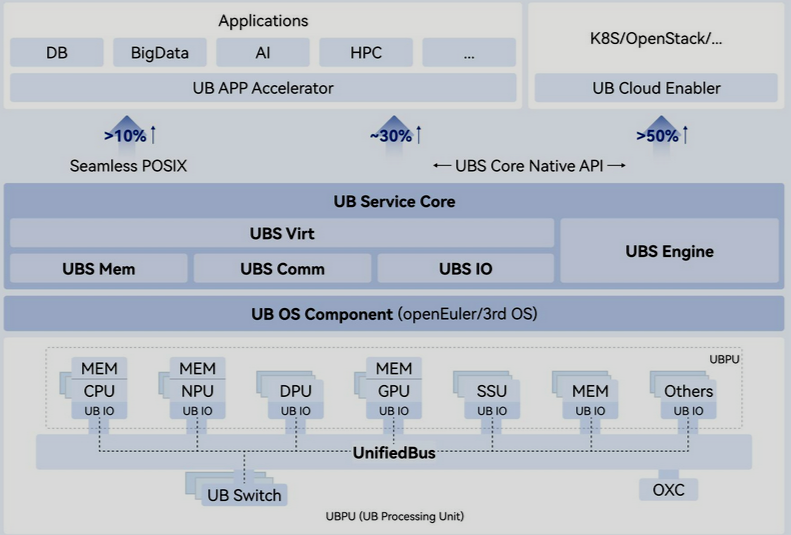
Underneath these user-facing layers, openEuler continues to refine the low-level mechanisms that drive cluster efficiency. These engineering efforts include heterogeneous compute fusion, which combines different chip types into a single usable resource pool, and co-computing capabilities that allow central processing units and neural processing units to collaborate on the exact same computational task. Additionally, the platform supports cross-chip and cross-machine memory pooling, hardware accelerator slicing to allow multiple jobs to share a single device, and workload packing to maximize utilization rates for expensive hardware accelerators.
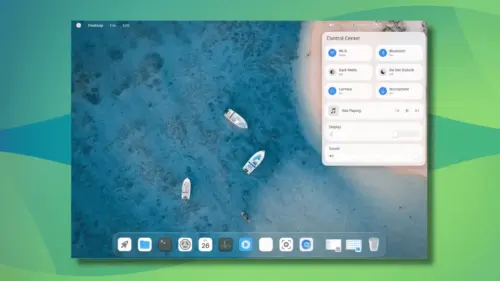
For individual developers and general users, the ecosystem also includes desktop builds equipped with integrated AI assistants designed to handle tasks such as software installation and environment configuration using natural language commands. As open-source and open-weight artificial intelligence models continue to gain prominence globally, initiatives like openEuler demonstrate a sustained commitment to keeping foundational infrastructure open, collaborative, and accessible to the broader technical community.
Leave a Reply