
While mainstream tech coverage of artificial intelligence and open-source infrastructure frequently fixates on developments originating in Western markets, significant technological strides are concurrently taking shape across the East. Recent showcases at major industry forums continue to underscore a vibrant ecosystem of enterprise and startup innovation aimed at solving the immense computational demands of modern AI workloads.
At the recently concluded LEAP East 2026 conference, several prominent enterprises and emerging startups gathered to exhibit their latest architectural breakthroughs. Among the participants, the openEuler community drew significant attention from industry observers for its deep focus on open-source artificial intelligence infrastructure, distributed computing scalability, and the integration of native agentic capabilities directly into the operating system environment.
The SuperPoD Architecture
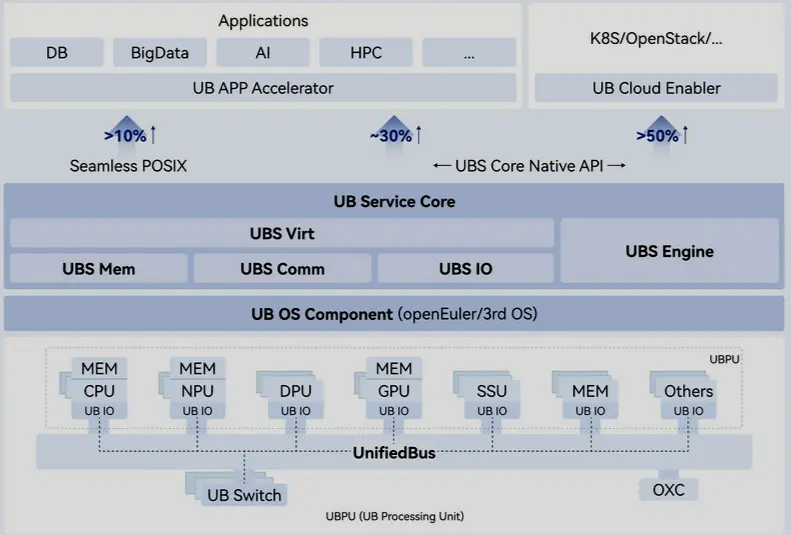
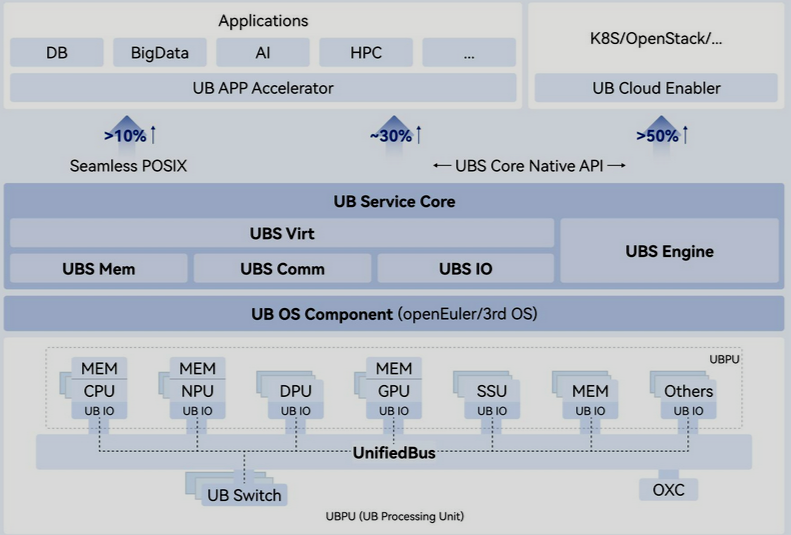
A primary highlight of the openEuler presence at LEAP East 2026 was the public demonstration of its SuperPoD operating system architecture, engineered specifically to extend native operating-system support for UnifiedBus-based SuperPoD computing systems.
To understand the significance of this development, it helps to examine the structural challenges of modern AI workloads. Running massive artificial intelligence models requires extraordinary computational power. When training or executing these workloads, organizations must tie together hundreds of high-performance computers so that they operate seamlessly as a single, giant virtual machine. However, coordinating a cluster of this magnitude is notoriously complex. The individual nodes must constantly share memory, pass massive streams of data back and forth with minimal latency, and execute tasks without conflicting with one another or causing bottlenecks.
To address these fundamental hurdles, the openEuler ecosystem incorporates the UB Service Core, an open-source software layer designed to make cross-machine coordination reliable and efficient. The UB Service Core provides five distinct cluster-level system services tailored specifically for UnifiedBus-based SuperPoDs: the Engine, Memory, Communication, I/O, and Virtualization components.

The Engine component is responsible for dynamically pooling memory and data processing unit (DPU) resources across the entire cluster while managing scheduling tasks. Additionally, it handles automated failover mechanisms, ensuring that if an individual node experiences a hardware failure or disruption, the broader system continues to operate without catastrophic interruption.
The Memory service allows individual machines within a UnifiedBus-based SuperPoD to pool and share memory resources utilizing unified-memory programming. Through this approach, software applications can treat distributed physical memory across disparate nodes as a single, cohesive, and addressable memory space.
Meanwhile, the Communication module delivers high-performance networking capabilities over the UnifiedBus interconnect. Crucially, it maintains full compatibility with standard Socket and Verbs interfaces, meaning that existing enterprise applications do not need to be rewritten from scratch to leverage the performance advantages of the underlying hardware.
The I/O service manages global data read and write caching at an elevated level. This capability is particularly critical for workloads such as AI inference, which frequently and repeatedly access massive shared datasets that would otherwise overwhelm conventional storage pipelines.
Finally, the Virtualization component oversees virtualization resource pooling, governs live-migration policies dictating when and how running virtual machines are transitioned between physical servers, supports disaster recovery operations, and enhances communication efficiency between virtual machines and containers.

Operating in tandem, these five core services provide a SuperPoD cluster with the high-level coordination required to perform as a single, well-regulated system. According to performance data presented by openEuler, the UB Service Core can achieve a remarkable 30 to 50 percent performance improvement over conventional architectures by fully exploiting the peer-to-peer UnifiedBus interconnect design. Significantly, this entire SuperPoD and UB Service Core framework is distributed under fully open-source licensing terms within the openEuler umbrella.
Agentic AI in the Operating System
Beyond high-performance computing clusters for enterprise data centers, openEuler is also advancing its vision for edge and desktop environments by evolving toward an AgentOS model. In the release of openEuler 24.03 LTS SP4, the project’s desktop variant, known as DevStation, introduces openEuler Intelligence. This native desktop artificial intelligence assistant utilizes a specialized agent runtime along with Model Context Protocol (MCP) based tools to assist developers and system administrators with daily tasks and operations.
The integration of pre-built agentic frameworks directly into the operating system has become an increasingly prominent trend across the broader software industry. In openEuler 24.03, the built-in AI agent is designed to interact directly with and control the underlying Linux system.
Rather than requiring users to navigate traditional graphical user interfaces with manual mouse clicks and menu traversal, individuals can interact with the system through natural language instructions. For instance, a user can simply ask the AI agent to dim the screen brightness, adjust the audio volume, or modify the desktop wallpaper. The built-in agent features custom-tailored skills designed to control system settings natively within openEuler’s UKUI desktop environment.
While developers acknowledge that this capability remains an active work in progress, the overarching trajectory of the platform is clear. Future iterations of the operating system aim to empower users to manage and control complex system parameters conversationally rather than relying exclusively on manual configuration.
Expanding into a Community-Based Ecosystem
Alongside these technical milestones, openEuler continues to broaden its organizational footprint through community-driven initiatives. The project recently announced the launch of the openEuler Hong Kong User Group, designed to bring together local developers, academic researchers, and enterprise organizations in Hong Kong to connect, share technical experiences, and explore collaborative open-source innovations.
As an open-source project originally incubated and operated under the governance of the OpenAtom Foundation, openEuler has steadily expanded its international collaboration channels. This expansion strategy relies heavily on the establishment of regional user groups, strategic industry partnerships, and active participation in global open-source technology events. The newly formed Hong Kong User Group represents the latest step in openEuler’s ongoing mission to encourage grassroots technical participation and foster robust international cooperation within the open-source community.


Leave a Reply