

As the new Premier League football season gets underway, it has brought with it the traditional wave of warnings regarding the massive financial impact of digital piracy. Once again, rightsholders, broadcasters, and anti-piracy organizations are ramping up their public awareness campaigns to remind consumers of the hidden costs associated with unauthorized streaming and downloading.
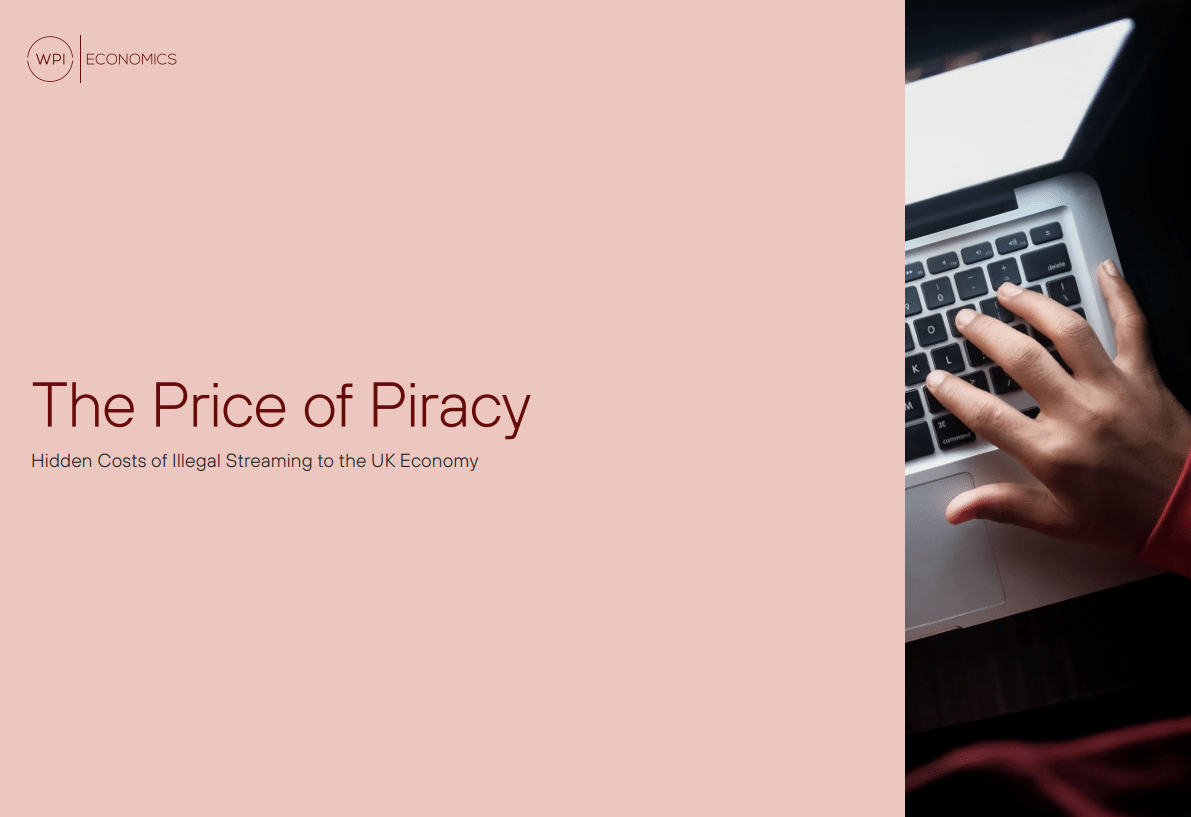
This week, BeStreamWise—a prominent anti-piracy coalition backed by major industry heavyweights including Sky, the Premier League, FACT, the BBC, and the UK Intellectual Property Office—released a brand-new study designed to underscore the scale of the ongoing challenge facing the creative industries. To put concrete figures behind the phenomenon of illegal streaming, the campaign commissioned consultancy WPI Economics to conduct a comprehensive macroeconomic assessment.
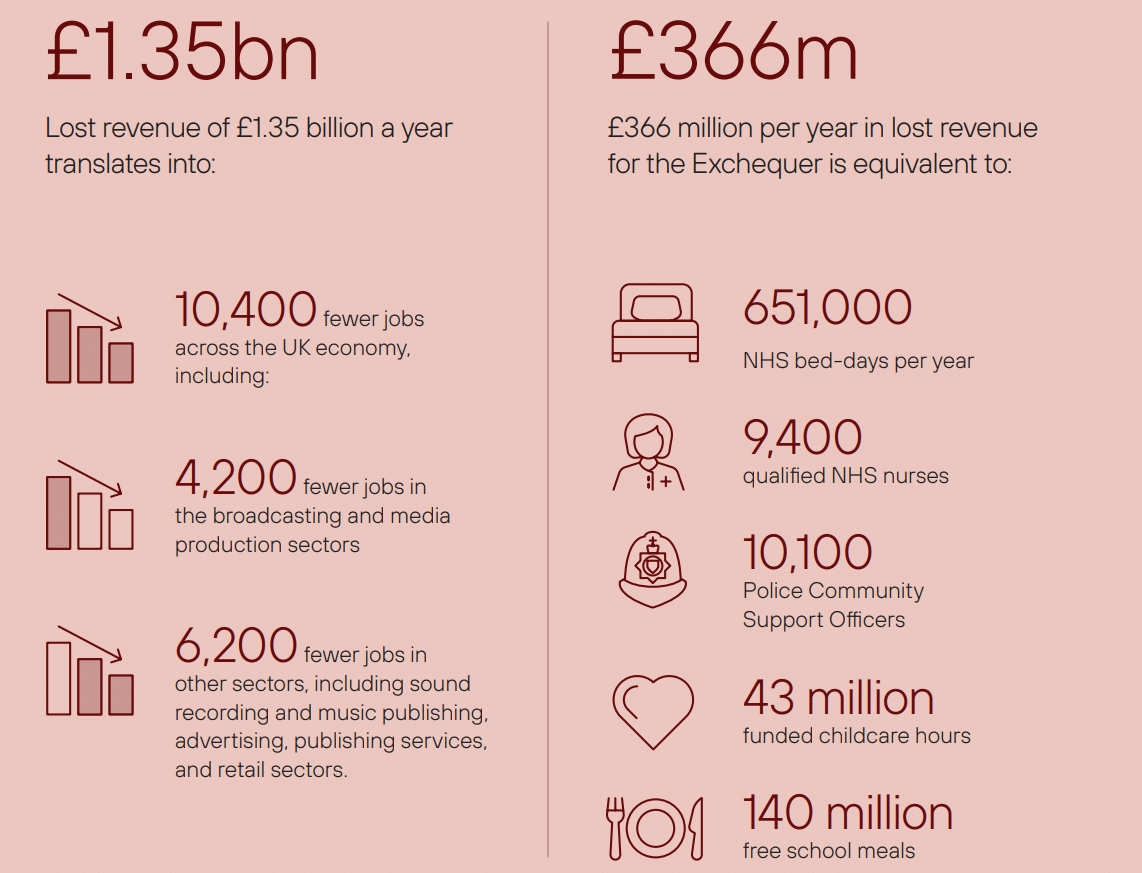
The resulting publication, titled “The Price of Piracy,” estimates that unauthorized streaming operations and digital theft result in a staggering £1.35 billion in missed revenue for UK broadcasters every single year. According to the report’s econometric models, this massive hole in industry revenues directly translates into 10,400 lost jobs across the creative and broadcasting sectors, alongside an estimated £366 million in missing tax income for the public purse.
To emphasize the tangible societal impact of these figures, the report contextualizes the missing tax revenue by demonstrating how those funds could otherwise be utilized within the public sector. Specifically, the study notes that £366 million could fully fund the salaries of 9,400 qualified National Health Service (NHS) nurses, or alternatively, provide up to 140 million free school meals to children across the country.

A £1.35 Billion Poll
The headline-grabbing billion-pound estimate is not derived from direct corporate accounting of lost sales, but rather from a public opinion poll consisting of 2,501 UK adults, which was conducted earlier this year in February. Within this surveyed cohort, nearly a third of respondents—specifically 31%—admitted to having used some form of illegal streaming or unauthorized viewing method within the preceding three months. When statisticians extrapolate this sample percentage to the broader adult population of the United Kingdom, it suggests that an astonishing 16.8 million people could potentially be engaging in video piracy.
To understand how this survey data ultimately translated into £1.35 billion in missed broadcaster revenue, inquiries were directed to BeStreamWise. Representatives explained that the calculation is based on a theoretical scenario where unauthorized streaming and piracy are removed entirely as viable options for consumers.
According to the methodology, survey respondents who confessed to engaging in piracy were asked which legal subscription services they would hypothetically be willing to pay for if they could no longer access pirate platforms. WPI Economics then multiplied these stated intentions by the average retail cost of those legitimate services before scaling the total up to represent the wider population.
The campaign explicitly emphasizes that the £1.35 billion figure only accounts for individuals who affirmatively stated they would be willing to pay for legal alternatives in that hypothetical zero-piracy scenario. Put differently, the total does not measure actual lost sales or historical revenue shortfalls. Instead, it represents the extrapolated subscription fees that self-identified pirates claim they would pay at full retail price if unauthorized streaming vanished overnight, which is subsequently converted into projected tax receipts capable of funding thousands of public sector workers.
Pirate’s Pinky Promise
While the mathematical formula appears straightforward on paper, the underlying assumptions are not without notable caveats. Although self-proclaimed digital pirates may be just as truthful as any other cross-section of the general population, extensive behavioral research has consistently demonstrated a well-documented phenomenon known to economists as "hypothetical bias." In various studies across consumer markets, individuals routinely state in surveys that they are willing to pay significantly more for goods and services than they actually do when faced with real-world financial transactions.

There are established methodological frameworks and statistical adjustments designed to correct for this behavioral gap. However, a spokesperson for BeStreamWise confirmed that the WPI Economics study did not apply any discount factor or corrective adjustment to the survey data; the responses provided by participants were taken entirely at face value.
The absence of a correction factor is not entirely unprecedented in economic research surrounding intellectual property theft, and past studies have occasionally generated wildly varying projections based on similar survey methodologies. Nevertheless, it clearly indicates that the headline £1.35 billion figure is far from a guaranteed financial recovery for broadcasters.
In fact, data from the exact same opinion poll reveals that the vast majority of digital pirates remain primarily motivated by financial savings and convenience. When asked for their primary justifications for engaging in unauthorized viewing, 38% of respondents cited cost savings as the main driver, followed closely by convenience at 31%, and a general desire to avoid recurring subscription fees at 24%. Furthermore, more than half of those surveyed—52%—indicated that they are likely to continue pirating copyrighted material regardless of industry crackdowns or legal warnings.
Social Media as Primary Piracy Source
One of the most unexpected and revealing findings of the survey is the shifting landscape of how consumers discover and consume unauthorized content. Traditionally, digital piracy was heavily associated with dedicated torrent indexing sites, specialized peer-to-peer networks, or closed web forums. However, the new report highlights social media platforms as the single largest primary source for accessing pirated material, encompassing all forms of video piracy rather than just live sports streaming.
The research indicates that a clear majority—54%—of active illegal streamers access unauthorized content directly via mainstream social media networks. This compares significantly to just 26% who utilize purpose-built purchased hardware devices and illegal Internet Protocol Television (IPTV) subscription services, and 28% who stream or download files through unofficial standalone websites.
Meanwhile, traditional methods that once dominated the piracy ecosystem have slipped down the rankings. Downloading content via torrent networks or cloud-sharing services accounted for just 15% of methods, while illicitly purchasing login credentials or account passwords for legal streaming services represented a mere 7% of activity.
It is worth noting that the survey’s operational definition of piracy is remarkably broad. The research categorizes “watching via social media platforms” as a distinct category alongside utilizing Virtual Private Networks (VPNs) to bypass geographic restrictions and access content legally broadcast only in other countries. This means that an everyday internet user who happens to watch a single unauthorized clip of a sports goal or a television scene on platforms like X or Instagram is technically classified within the study as an illegal streamer. The exact wording of the survey questions has not been publicly disclosed, as BeStreamWise did not make the complete underlying polling dataset available for independent external review.
An ‘Oven-Ready’ Solution
Quantifying the financial scale of the digital piracy problem is only one component of the WPI Economics report. The publication also outlines a series of strategic policy recommendations aimed at mitigating the issue moving forward. The primary recommendation calls upon the UK Government to actively amplify existing consumer awareness campaigns through its official communication channels, identifying the BeStreamWise initiative as the ideal vehicle for this government-backed push.
According to the report, these expanded educational campaigns should not only focus on intellectual property rights and broadcaster revenue, but also highlight the severe consumer risks associated with piracy networks. The study estimates that UK consumers face roughly £270 million in annual financial harms—including malware infections, financial fraud, and identity theft—arising directly from their engagement with illicit streaming sites and fraudulent apps.
The report argues that integrating BeStreamWise insights into official government messaging would provide an immediate, "oven-ready" mechanism to educate the public on data security risks while simultaneously beginning to chip away at the hundreds of millions of pounds in cybercrime losses suffered by viewers.
A second major recommendation proposes the establishment of a voluntary, cross-sector framework. Under this model, major online technology platforms, internet service providers, and content creators would cooperate more closely under loose government oversight to combat online intellectual property infringement. Notably, the report refrains from calling for sweeping new legislative measures, expanded website-blocking powers, or harsher criminal penalties. Instead, it posits that current enforcement strategies have fallen short primarily because ordinary consumers remain dangerously unaware of the digital and financial risks involved.
While targeted public awareness campaigns and voluntary industry agreements may succeed in nudging a portion of casual viewers toward legitimate channels, rightsholders and broadcasters should temper their expectations. Based on the study’s own behavioral insights, recovering a significant share of the £1.35 billion that self-described pirates theoretically promised to pay remains an uphill battle.

Leave a Reply