
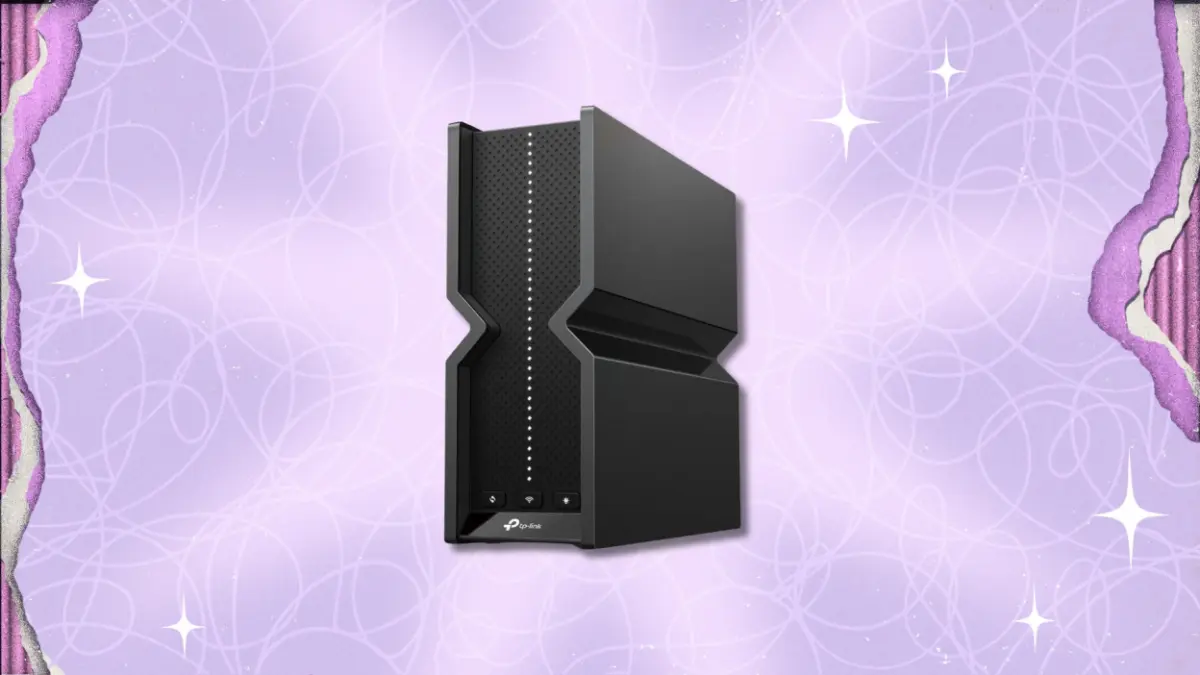
As Amazon’s October Prime Big Deal Days shopping event gets underway, major promotional discounts on next-generation networking equipment are making high-speed internet upgrades significantly more accessible. Among the standouts in this year’s electronics deals, the TP-Link Archer BE550 Wi-Fi 7 router has seen its price reduced to $149.99, down from its standard retail price of $249.99 on Amazon.
The $100 price drop represents a notable milestone for the adoption of Wi-Fi 7, a standard that has historically carried a substantial early-adopter price premium. As demand for multi-gigabit local connectivity and lower latency continues to grow across modern smart homes, temporary price cuts during sales events like October Prime Day are bringing advanced networking hardware within reach of mainstream consumers.
Tri-Band Architecture and Advanced Wi-Fi 7 Features
The TP-Link Archer BE550 is built around a tri-band architectural design that distributes network traffic across three distinct frequency spectrums: 2.4GHz, 5GHz, and the newer 6GHz band. By spreading connected devices across these separate bands, the router effectively reduces network congestion and prevents legacy low-bandwidth devices from slowing down higher-demanding hardware.
At the core of the BE550’s performance feature set is its support for key native Wi-Fi 7 capabilities, most notably Multi-Link Operation and ultra-wide 320MHz channels. Multi-Link Operation enables compatible client devices to transmit and receive data across multiple wireless bands and channels simultaneously. Rather than forcing a connected smartphone, laptop, or desktop to rely on a single frequency band, Multi-Link Operation aggregates capacity and reduces latency by allowing data packets to route through whichever band offers the clearest signal path at any given millisecond.
Complementing Multi-Link Operation is the inclusion of 320MHz channel bandwidth support within the 6GHz spectrum. By doubling the maximum channel width compared to the previous Wi-Fi 6E standard, the router enables significantly larger data pipes between the access point and supported devices. This expanded channel capacity allows for raw throughput speeds that easily accommodate heavy data transfers without introducing channel interference.
Multi-Gigabit Wired Connectivity and Management Interfaces
Beyond its wireless architecture, the TP-Link Archer BE550 features a versatile physical port layout designed for local networks with demanding wired bandwidth requirements. The unit is equipped with five Ethernet ports in total—one dedicated WAN port for incoming internet connections and four LAN ports for local networking. Notably, all five ports operate at full 2.5Gbps multi-gigabit speeds.
This configuration prevents the physical bottleneck that often occurs when multi-gigabit wireless routers are paired with traditional 1Gbps Ethernet ports. On the BE550, high-bandwidth hardware such as a gaming PC, a current-generation video game console, and a local Network Attached Storage device can each maintain concurrent 2.5Gbps wired connections to the router. This setup guarantees that local data transfers, high-bitrate media streaming, and fast network backups can execute simultaneously without exhausting individual port capacities.
In addition to its Ethernet infrastructure, the router incorporates a USB 3.0 port. This interface allows users to connect external storage drives directly to the unit, creating an accessible network-attached storage solution for direct file sharing across local devices.
From an administrative standpoint, setup and network customization on the Archer BE550 are handled through two primary pathways: TP-Link’s mobile Tether application or a standard desktop web-based administration interface. The software ecosystem allows network administrators to manage device access, configure wireless security protocols, oversee connected hardware, and monitor system diagnostics across both platforms.
Real-World Coverage, Range Performance, and Scalability
In practical deployment scenarios, the TP-Link Archer BE550 delivers strong top-tier wireless speeds, with range performance holding up well across multi-level residential layouts. Test results and operational evaluations indicate that the unit maintains sufficient bandwidth to sustain concurrent high-demand network activities—such as continuous 4K video streaming, massive game file downloads, and real-time multiplayer gaming—occurring simultaneously in different sections of a home.

However, because the Archer BE550 is designed primarily as a standalone router rather than a dedicated multi-node mesh system, physical environmental factors inevitably influence wireless transmission strength. Signal attenuation and throughput declines are natural as connected devices move further away from the main hardware unit or navigate structural barriers such as thick walls, ceilings, and multiple floor levels.
To mitigate these physical range constraints, TP-Link has integrated EasyMesh support into the BE550. EasyMesh is an industry-standard mesh networking protocol that allows the router to pair seamlessly with other certified routers or range extenders. If coverage gaps emerge in larger homes or complex architectural structures, users can expand their network footprint by adding a compatible EasyMesh node later, creating a unified network SSID without requiring a complete hardware replacement.
Throughput Limits and Comparison to Premium Hardware
While the TP-Link Archer BE550 provides strong value at its $149.99 promotional price point, its physical connectivity parameters create specific performance ceilings when compared against top-tier flagship routers on the market.
Specifically, the router’s WAN input port tops out at 2.5Gbps. While a 2.5Gbps connection exceeds the maximum speeds provided by the vast majority of consumer residential broadband plans, it sets a hard limit on potential throughput for homes with fiber internet connections exceeding 2.5Gbps. Premium networking solutions—such as the eero Max 7—feature higher-tier 10Gbps WAN ports capable of delivering faster peak throughput speeds.
For users subscribing to standard gigabit or multi-gigabit internet tiers up to 2.5Gbps, this hardware cap remains largely academic. However, for power users who maintain ultra-high-speed internet subscriptions above 2.5Gbps and require maximum external bandwidth, the BE550’s port limits will establish the outer boundary of their network’s direct internet performance.
Overview of October Prime Day 2026
The temporary price drop on the TP-Link Archer BE550 comes as part of Amazon’s broader October Prime Day event, formally known as Prime Big Deal Days. The sale event kicked off on October 6 and runs through October 7, serving as an annual autumn precursor to the traditional holiday shopping period.
When is Prime Day?
The fall iteration of Prime Day takes place annually during October. For 2026, the two-day promotional window is scheduled for October 6 and October 7, featuring time-sensitive price reductions across thousands of retail items.
Is Prime Day a Scam?
Major sales events frequently prompt consumer questions regarding genuine value and pricing legitimacy. October Prime Day is an authentic, established online promotional event managed directly by Amazon, one of the world’s largest and most reputable global electronic commerce retailers. While discount percentages vary by product category and individual seller pricing histories, major hardware discounts from established brands—such as TP-Link’s $100 price drop on the Archer BE550—represent clear, verified cost reductions from standard retail pricing.
What Goes On Sale on Prime Day?
Given its placement on the seasonal calendar in early autumn, October Prime Day frequently emphasizes categories geared toward indoor activities, home upgrades, and seasonal preparation. Amazon’s announced discount categories for the sale span more than 35 distinct retail sectors, with a heavy emphasis on personal electronics, kitchen appliances, home products, indoor gym equipment, video games, and fashion.
Major consumer brands featuring verified promotional pricing during the event include tech and household names such as Sony, Shark, Soundcore by Anker, Adidas, UGG, Nest New York, Tarte, Princess Polly, and Barefoot Dreams. Networking hardware, smart home hubs, and consumer PC peripherals remain consistent focal points throughout the two-day event, with items like the TP-Link Archer BE550 setting historical price lows as next-generation Wi-Fi 7 technology continues its transition into mainstream consumer environments.



Leave a Reply