The open-source software ecosystem is experiencing a profound shift as generative artificial intelligence reshapes how code is conceived, written, and contributed. According to a comprehensive new study published by LF Research, the research arm of the Linux Foundation, the rapid proliferation of AI-assisted coding tools has brought both unprecedented productivity gains and significant friction to collaborative software development.
The report, titled Navigating Open Source Software Development in the Generative AI Era, draws on survey data from 234 open-source contributors and maintainers. Sponsored by Red Hat with additional contributions from OpenSSF, LF AI & Data, and Futurewei, the study examines the multifaceted impact of generative AI on community workflows, project governance, code quality, and maintainer well-being.

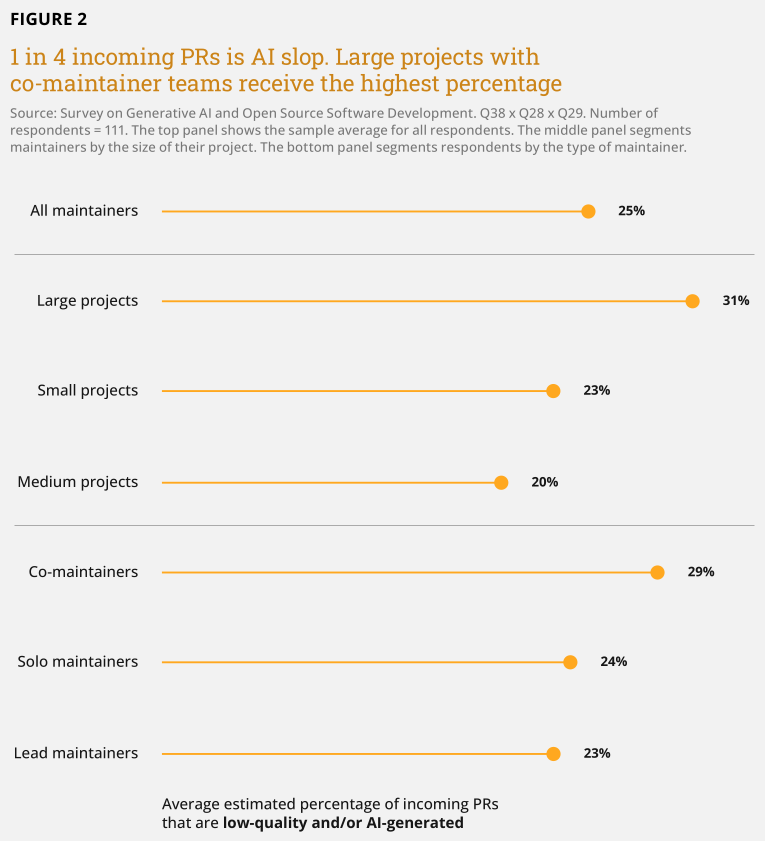
Among the report’s most striking findings is the sheer volume of low-quality contributions flooding projects. Based on estimates provided by survey respondents, approximately 25% of all incoming pull requests across the open-source landscape consist of low-quality AI-generated code, often colloquially referred to as "AI slop." For larger projects, this problem is even more pronounced, with the estimated volume of substandard AI contributions climbing to 31%.
The Findings
The challenges associated with the generative AI era are not distributed evenly across the software development ecosystem. According to the research, large open-source projects—specifically those boasting more than 50 active contributors—are bearing the heaviest burden.

Among maintainers of these larger projects, 69% report experiencing an increase in incoming contributions, compared to 59% across all surveyed maintainers. Furthermore, 64% of maintainers on larger projects note that the code review process now takes significantly longer than it did previously. This bottleneck is directly tied to the influx of unvetted or poorly structured AI-generated pull requests, which require human maintainers to spend valuable time reviewing, correcting, or ultimately rejecting code that lacks proper context or testing.
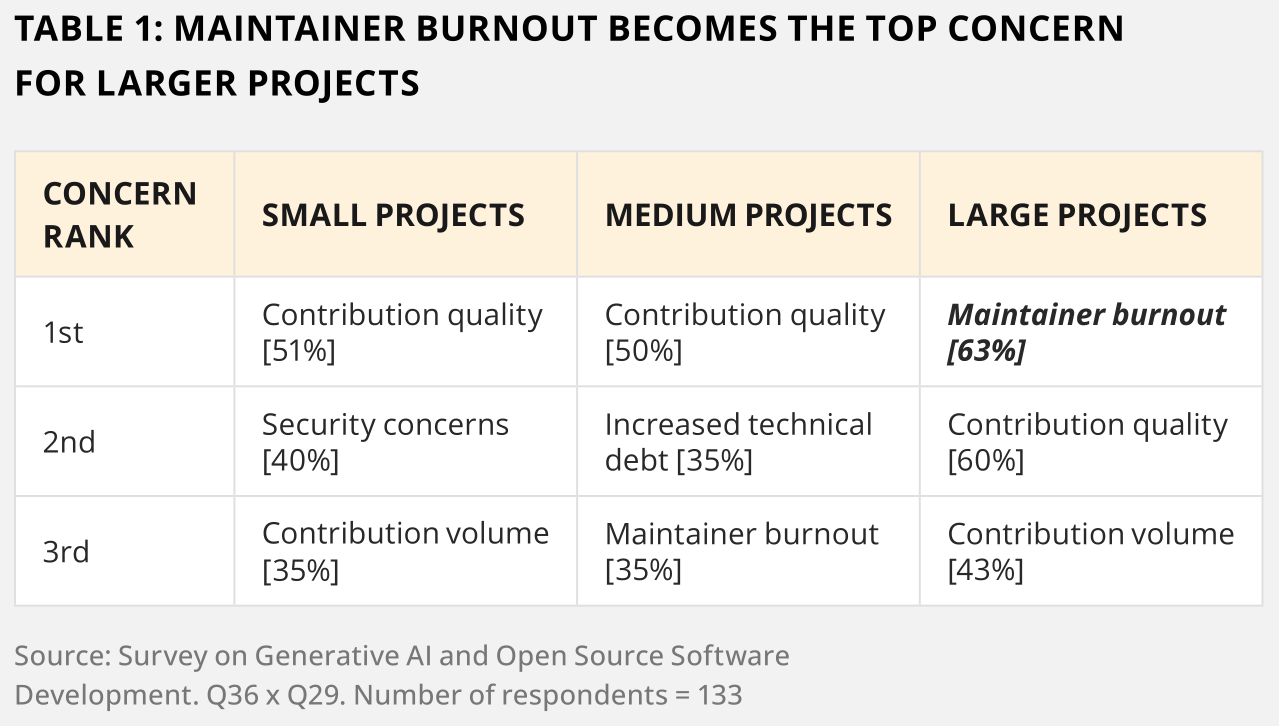
Consequently, burnout has emerged as the foremost concern among maintainers of large projects, cited by 63% of respondents. This narrowly edges out contribution quality itself, which was cited as a primary concern by 60% of maintainers. The dual pressure of managing an escalating volume of submissions while meticulously vetting code for subtle AI-induced errors is placing unprecedented stress on the volunteer and foundational workforces that sustain critical open-source infrastructure.
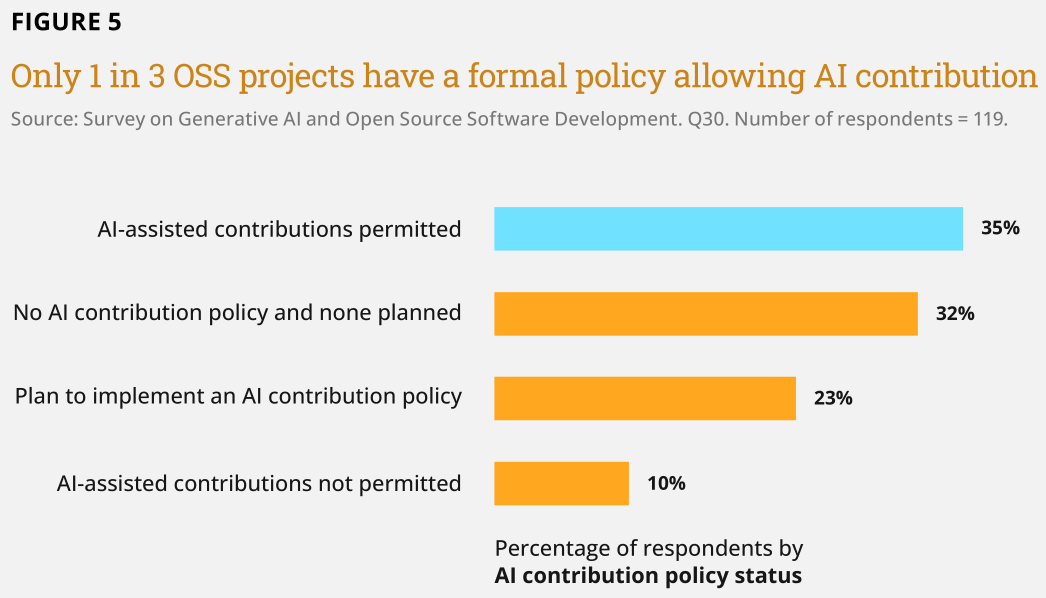
Compounding the problem is a widespread governance gap. The report reveals that many project policies have simply failed to keep pace with the rapid adoption of AI-assisted coding and automated vulnerability reporting. Out of 119 respondents who answered questions regarding project governance, only 35% stated that their project maintains a formal policy explicitly permitting the use of AI.
Meanwhile, 32% of respondents reported that their projects have no policy in place and no current plans to develop one. Another 23% indicated that they plan to write a policy in the future, while 10% have chosen to ban AI-generated contributions outright. These findings highlight a fractured regulatory landscape within the global open-source community, where rules and expectations vary wildly from one repository to another.
Prominent projects have begun charting their own courses in response to these pressures. For example, projects like LLVM have implemented nuanced frameworks that allow AI-generated code under specific conditions. However, the broader ecosystem remains vulnerable, with the report noting that 26% of projects have no mechanism whatsoever for verifying whether incoming contributions were assisted by artificial intelligence.
In light of these findings, the report calls on individual contributors to take greater responsibility by adhering to written project policies, transparently disclosing the use of AI tools, and investing adequate effort into thorough testing and documentation before submitting code.
Despite the administrative hurdles and quality concerns, the study confirms that generative AI does offer substantial productivity benefits for individual developers. Respondents estimated that code authoring takes 52% less time on average when utilizing AI assistance. However, even this metric comes with caveats; when dealing with more complex architectural or developmental tasks, 21% of respondents noted that the work actually took longer with AI, as developers spent additional time debugging or refactoring generated code that failed to align with project requirements.
When looking at community dynamics, 71% of maintainers agree that AI makes it easier for newcomers to take their first steps and start contributing to open-source projects. However, this lowering of the barrier to entry has not translated into deeper community trust. Just over half of respondents—53%—stated that generative AI has not improved community trust, while only 13% believe that it has fostered a more trusting environment.
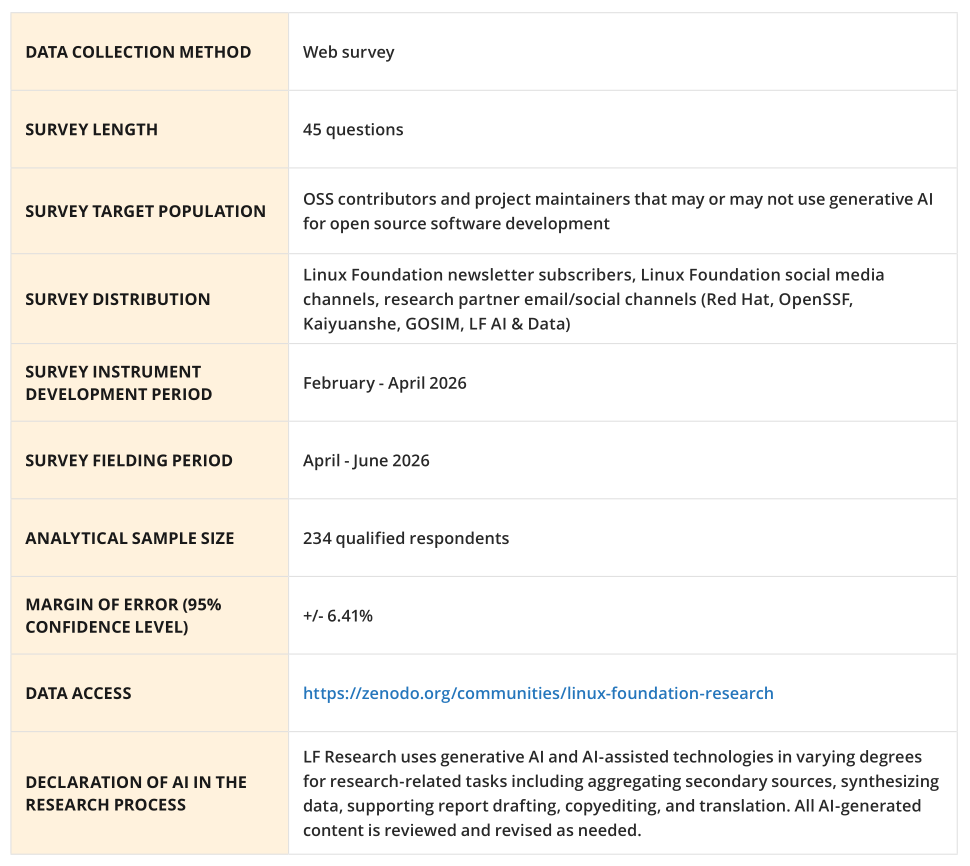
To ensure the integrity of its findings, LF Research outlined specific methodological parameters. Respondents were recruited through Linux Foundation newsletters, social media channels, and partner networks, including Red Hat. The researchers noted that the widely cited 25% "slop" figure is derived from estimates provided by 111 respondents rather than a directly measured count across every repository.
Nevertheless, the qualitative consensus among maintainers points to a systemic challenge. Because disclosure of AI usage is largely left to individual discretion—and with a quarter of projects lacking any verification tools—the current system relies heavily on the good faith of contributors. Experience across the broader developer ecosystem, such as recent security and submission management challenges faced by high-profile projects like cURL, suggests that bad actors or careless submitters rarely bother to self-report, leaving maintainers to shoulder the burden of filtration.