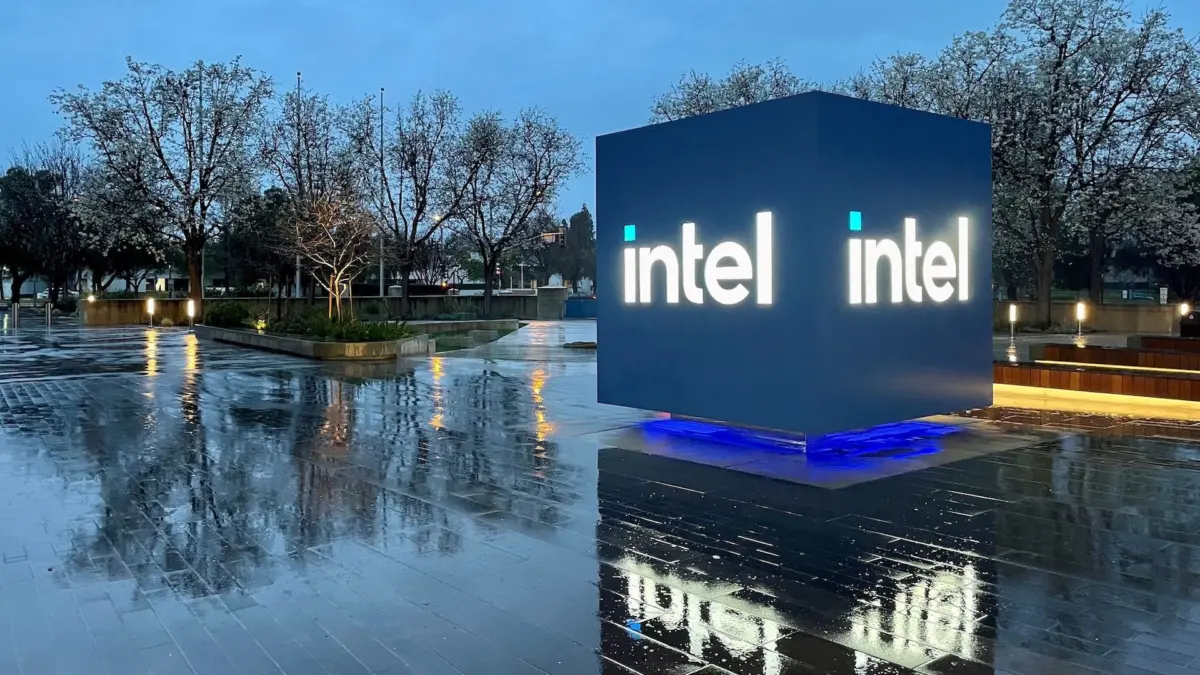
Intel shares plunged 30% on Friday, wiping out nearly $150 billion in market capitalization in a single day, marking the largest single-day loss in the company’s storied history. The dramatic market collapse followed a deeply disappointing financial outlook issued by the tech giant, which was largely driven by an anticipated drop of more than 20% in sales at Intel’s client computing group, traditionally the company’s main cash cow and the cornerstone of its consumer hardware business.
The severe decline quickly transcended Intel’s balance sheets, sending shockwaves across the broader semiconductor industry. While losses elsewhere across major chipmakers were nowhere near as catastrophic as Intel’s historic plummet, the negative sentiment triggered a massive sell-off. Approximately $1 trillion in total semiconductor market capitalization was wiped out on Friday, according to intraday estimates by Benzinga, underscoring just how deeply interconnected and jittery the global tech hardware sector has become in the face of slowing demand and shifting macroeconomic pressures.
The historic downturn marks a painful chapter for Intel, a pioneering force in the personal computer revolution that has spent recent years navigating fierce competition, manufacturing transitions, and evolving market dynamics. Friday’s market reaction indicates that Wall Street and investors harbor deep concerns regarding the immediate trajectory of the company’s core client computing division. As the primary engine generating revenue for Intel’s broader operations, a projected sales contraction exceeding 20% signals a pronounced cooling in consumer and enterprise demand for PC processors and related hardware components.
Financial analysts and market observers noted that the magnitude of Intel’s drop reflects not only the severity of its specific guidance downgrade but also a growing skepticism surrounding the pace of recovery for legacy hardware segments. For decades, Intel’s client computing group served as a reliable financial anchor, funding the capital-intensive research, development, and foundry investments necessary to keep pace with cutting-edge semiconductor fabrication. A sharp deceleration in this division directly impacts the company’s financial flexibility at a time when it is attempting a costly and complex turnaround strategy to modernize its manufacturing capabilities and compete more effectively with rival fabless designers and foundry leaders.
The contagion effect on the broader semiconductor ecosystem was swift and unforgiving. As trading progressed through Friday sessions, the pessimistic outlook from one of the industry’s oldest pillars cast a long shadow over major semiconductor players, including industry heavyweights involved in graphics processing, mobile architecture, contract manufacturing, and networking infrastructure. Companies such as Nvidia, AMD, TSMC, and Broadcom all experienced downward pressure as investors reassessed valuations across the entire chip supply chain.
While diversified chipmakers and specialized AI hardware providers possess different revenue drivers compared to Intel’s PC-centric business model, the sheer scale of the Friday sell-off demonstrates that market sentiment in the technology sector remains highly fragile. The evaporation of an estimated $1 trillion in combined market capitalization within a single trading day highlights the immense weight that semiconductor stocks hold in global equity portfolios, as well as the sensitivity of tech valuations to sudden shifts in demand forecasts for core hardware markets.
Industry commentators have pointed out that the downturn reflects a complex convergence of cyclical inventory adjustments, shifting consumer spending patterns toward enterprise and specialized cloud infrastructure, and heightened competitive pressures. For Intel, the immediate challenge lies in reassuring investors that the projected drop in client computing sales represents a transient hurdle rather than a structural erosion of its market position. However, with nearly $150 billion in market value erased in hours, the path to regaining market confidence will require sustained execution, clear operational milestones, and tangible proof that the company can stabilize its primary revenue streams while continuing to invest in its long-term technological future.
As markets closed on Friday, the historic single-day loss cemented a sobering reality for the semiconductor sector. The ripple effects of Intel’s guidance revision and the subsequent trillion-dollar industry correction are expected to influence trading dynamics and strategic boardrooms across the technology landscape in the coming weeks, as analysts parse the broader implications for global hardware demand and supply chain valuations.