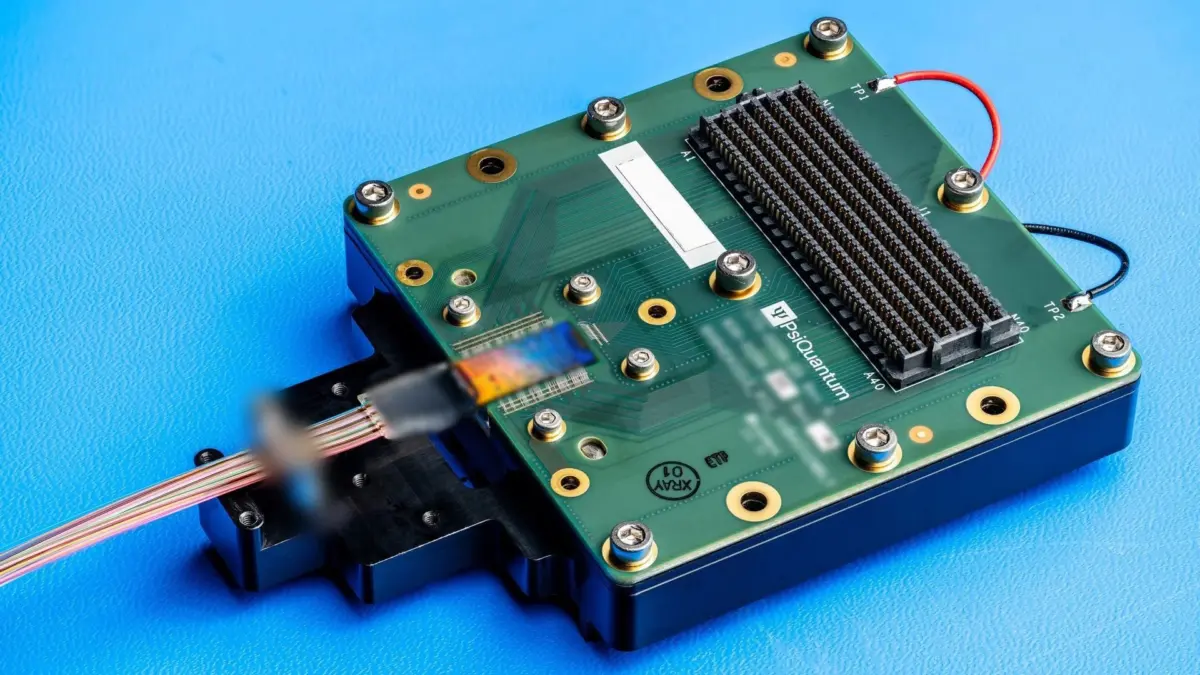
Quantum computing company PsiQuantum has announced a major technological leap with the introduction of a new optical circuit switch built on its advanced, low-loss silicon photonics platform. Originally developed to support the complex routing requirements of quantum computing, this proprietary photonics technology is now being adapted for conventional high-performance computing and artificial intelligence data centers, where escalating data traffic and power demands have created critical infrastructure bottlenecks.
In a formal release issued earlier this week, the company detailed how it has successfully transformed its high-efficiency silicon photonics into a working optical switch prototype. The breakthrough addresses one of the most stubborn challenges in optical networking: signal loss. In optical telecommunications and data center networking, every time a beam of light passes through a switch, a portion of that light is lost. This degradation is measured in decibels (dB), with the incoming light diminishing the further it travels through the switching fabric.
Typical data center optical infrastructure can generally tolerate a light loss of about 3 dB, which effectively translates to losing half of the optical signal strength. By contrast, PsiQuantum’s newly debuted switch demonstrated an exceptionally low signal loss of just 1.2 dB during lab tests. This remarkable efficiency means that roughly three-quarters of the light successfully reaches the other side of the switch, all without requiring external optical amplifiers to boost the signal.
Despite the impressive efficiency figures, the current iteration of the technology remains in a prototype stage. The initial device is relatively small, featuring an 8×8 configuration with eight input and eight output ports. This is notably smaller than many commercial optical switches currently deployed by competitors, which typically scale anywhere from 32 to 300 ports. However, PsiQuantum has indicated that development efforts are already underway to scale up the architecture, aiming to produce larger devices capable of meeting the heavy port-density requirements of modern hyper-scale data centers.
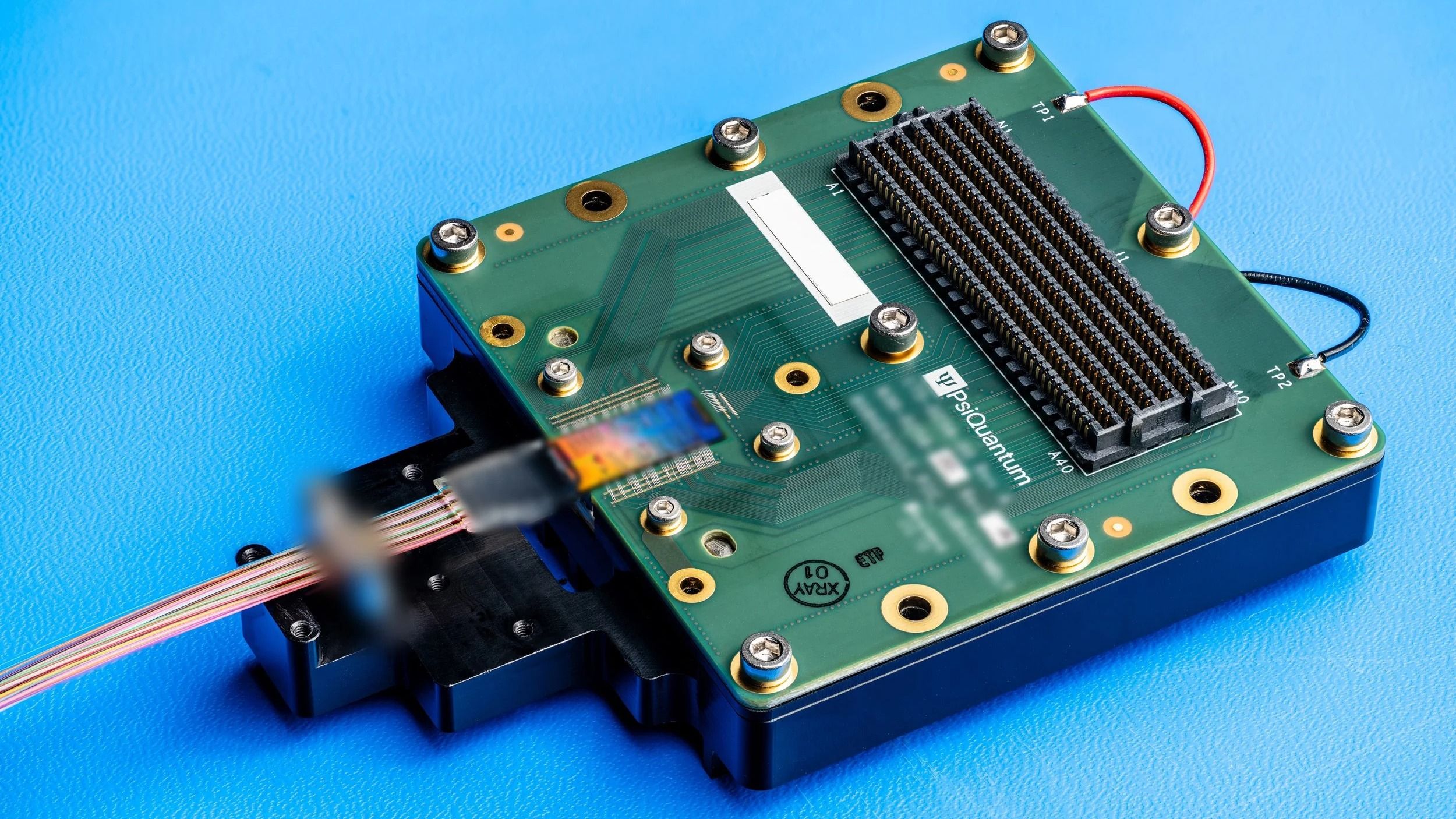
The fundamental advantage of an optical circuit switch, or OCS, lies in its ability to route data entirely through beams of light without the energy-intensive and time-consuming process of converting optical signals into electrical signals and back again. In traditional data center network architectures, standard packet switches must perform these electrical-optical-electrical conversions at every single hop along a data path. Each conversion cycle introduces latency—the delay it takes for data to travel from one point to another—while consuming substantial amounts of electrical power, generating heat, and driving up cooling costs.
An optical circuit switch bypasses this limitation entirely by passing light straight through from fiber to fiber. It establishes a fixed, dedicated path for light to travel along until a system command dictates a change in routing. Because the light remains in the optical domain from end to end, the primary technical penalty is governed almost entirely by insertion loss—the amount of signal strength sacrificed during the physical transition through the switching mechanism.
PsiQuantum’s approach stands out due to the underlying manufacturing and mechanical design of its circuits. The switch utilizes microscopic circuits etched directly onto a silicon semiconductor chip, featuring no moving parts whatsoever. This distinguishes it from alternative optical switching technologies, such as the microelectromechanical systems (MEMS) utilized by industry players like Google and Lumentum, which rely on arrays of tiny, physically articulating mirrors to steer beams of light. By eliminating moving mechanical components in favor of a static, silicon-etched architecture, PsiQuantum aims to enhance long-term reliability and manufacturing scalability.
In practical deployment scenarios within an AI data center, an optical circuit switch of this nature would not entirely replace traditional packet switches. Instead, it is designed to work alongside them in a hybrid network architecture. While packet switches handle dynamic, packet-by-packet traffic routing, optical circuit switches can take over massive, sustained data flows—such as the colossal workloads required to train large language models and other advanced artificial intelligence systems—offering a high-bandwidth, low-latency, and energy-efficient highway for data transfer.
As the artificial intelligence boom continues to strain global power grids and test the physical limits of electronic data processing, innovations in photonics and optical switching are increasingly viewed as essential pathways for scaling future computing infrastructure. With its transition from quantum architectures to practical data center applications, PsiQuantum’s latest technological milestone highlights the growing convergence between quantum engineering and classical high-performance computing.