“I think I’m going to switch back to my other iPhone.”

That sentence was uttered multiple times during a five-day vacation with Apple’s newly released iPhone Duo. Initial frustrations with broken applications, unfamiliar gestures like a return to Touch ID, and hardware limitations in the camera department initially had one tech reporter lugging around two separate phones just to feel secure on the road. Yet, by the time the trip concluded, handing back the loaner device felt genuinely unwelcome.

When the Duo first arrived unboxed from Apple, the anticipation was palpable. Peeling back the factory seal wrap and booting up the device for the first time offered a flutter of excitement that had faded after years of reviewing standard slab smartphones. In the days leading up to the Duo’s official release, the curiosity had escalated to the point of researching upgrade paths to shoulder the $2,000 price tag, browsing TikTok for case reviews, and weighing the massive transition away from a daily driver like the iPhone 17 Pro Max. Because the two form factors could not be more different, packing the 17 Pro Max along as a safety net seemed prudent for a vacation departure. Ultimately, however, the safety net went largely unused as comfort with the Duo grew over the course of the trip.

Transitioning from a refined, traditional rectangle to an experimental device carries a distinct psychological cost. Coming from an iPhone with years of ergonomic evolution behind it, the Duo’s short, squat architecture initially felt jarring. Questions naturally arose regarding the loss of screen real estate and whether the unusual device would even slide comfortably into a pocket.

As it turns out, pocketability is one of the device’s quiet triumphs. The phone fits easily into both front and rear pockets, even when protected by a case. Despite repeatedly forgetting to be careful and sitting on the device while walking about, the chassis remained completely intact. Accidental drops from table height and bedside bumps onto unforgiving concrete, tile, and wood surfaces failed to crack the screen or break the hardware. While these real-world fumbles hardly qualified as professional laboratory drop tests, they provided considerable peace of mind for a notoriously clumsy user.

Naturally, the vacation wasn’t entirely free of software and design friction. The Duo’s compact outer display meant excessive scrolling through message threads. Unoptimized third-party applications occasionally tucked critical controls away behind obscure three-button menus, turning simple tasks into scavenger hunts. Furthermore, recurring freezes within the Google Search app proved to be a persistent annoyance during travel, when quick queries regarding points of interest, restaurant reviews, weather updates, and inter-city distances are essential.

This issue appeared tied specifically to Search’s AI Mode, which frequently activates by default without user prompt. Because the interface would occasionally lock up with unresponsive back buttons, force-closing the application became a routine workaround. Observers noted the irony of such software instability on Apple’s newest hardware at a time when Google faces broader search market pressures.

Beyond software bugs, early reviews heavily criticized the presence of black pillar-box bars on applications that had not yet been updated for the Duo’s unique aspect ratio. While these aesthetic borders did shrink the usable workspace when the phone remained closed, they rarely stood in the way of practical utility. Programs like Google Maps functioned reliably for driving directions and route planning despite lacking dedicated Duo optimizations at the time. Major platforms are rolling out updates swiftly, and for older, unmaintained software that continues to display awkwardly, the hardware serves as a gentle reminder to abandon obsolete tools in an era where legacy code faces increasing security vulnerabilities.

Where compromise felt heavier, however, was the absence of Face ID. The inclusion of Touch ID stands as the Duo’s most prominent hardware drawback. While constant proximity to an Apple Watch successfully bypassed the need for fingerprint authentication during device unlocking, everyday interactions with applications and Apple Pay exposed the friction of physical biometric checks.

Tap-and-pay transactions at checkout counters highlight how seamlessly Face ID has integrated into daily routines. Reverting to Touch ID while juggling shopping bags, purses, and pet leashes proved cumbersome. Overcoming muscle memory required cradling the phone carefully and positioning a thumb accurately on the sensor, a process frequently interrupted by external distractions. While users can adapt to the workflow, the biometric regression remains a significant hurdle for early adopters, though industry reports suggest future iterations will incorporate under-display facial recognition.

Photography enthusiasts will likewise find the Duo’s camera system a step down from pro-tier hardware. Equipped with two rear lenses instead of three, the device lacks a dedicated telephoto option and maxes out at a 10x digital zoom compared to the Pro Max’s 40x capabilities. It also lacks advanced low-light architecture, ProRAW support, and ProRes recording. For serious content creators, the Duo is difficult to recommend as a primary camera.

For everyday snapshot needs—sharing images to social media, messaging friends, or populating home screen photo widgets—the results are adequate. Image processing can occasionally lean toward overprocessing fine details like foliage, while distant landscapes can appear smoothed over, though atmospheric haze in mountainous regions complicates evaluation. Ultimately, casual point-and-shoot memories do not require professional-grade optics.

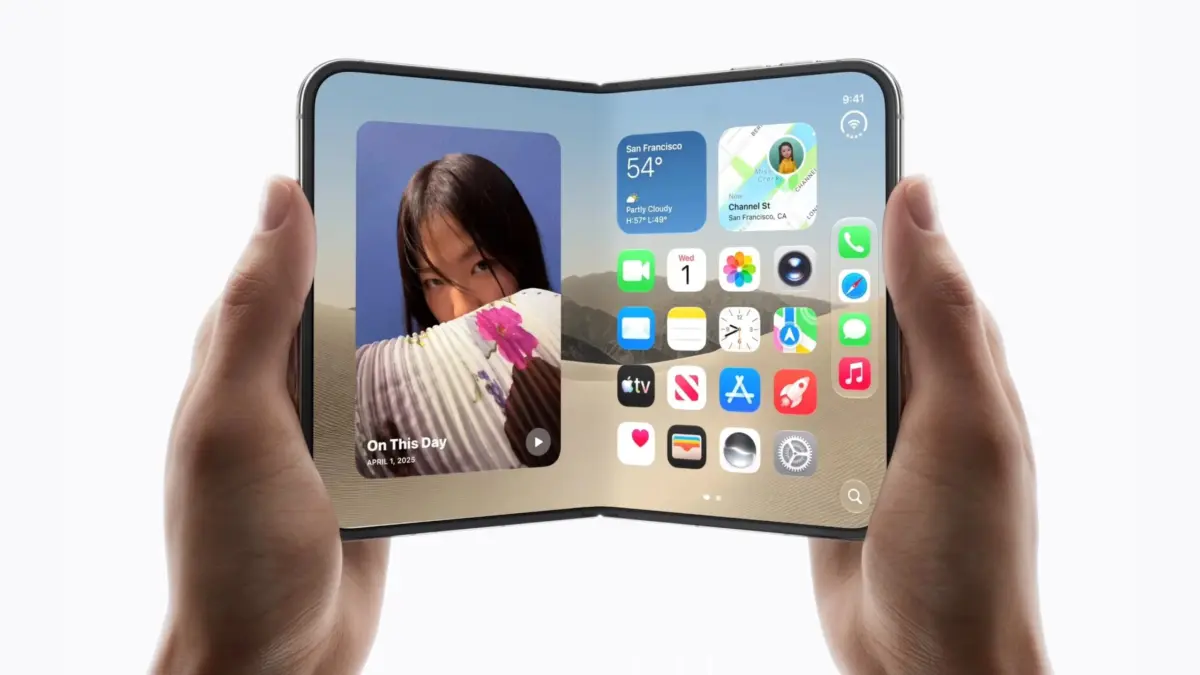
The core appeal of the Duo lies elsewhere: it is a functional foldable built by Apple. Foldables carry a sense of whimsy and novelty that standard slab phones lack, acting as sophisticated gadgets for tech enthusiasts. Developers are clearly enjoying the new canvas, resulting in inventive applications tailored to the format, while accessories like the Duo Folio case with an integrated kickstand elevate media consumption.

Apple’s entry into the space reflects careful deliberation, evident in details like the nearly invisible crease, proportional scaling across screens, and deep integration within the iOS ecosystem. Yet, a surprising behavioral pattern emerged during daily use: the device was unfolded far less frequently than anticipated.

Unfolding the phone in public spaces routinely sparked conversations with curious strangers, servers, and business owners who wanted to examine the hinge or test features like the external display’s playful animations designed to capture children’s attention for photographs. The general consensus among onlookers was one of genuine marvel at the invisible hinge and the matte nano-texture finish of the inner screen, which minimizes glare. With an IP68 dust-resistance rating, the hardware is also designed to withstand environmental debris far better than early generation foldables.

More importantly, unfolding the Duo transforms screen time into a deliberate, intentional act. Rather than serving as a reflexive distraction during idle moments, opening the device naturally coincides with focused multitasking, such as running split-screen workflows or streaming video content. The compact nature of the closed outer display curiously dampens the impulse to endlessly scroll through mindless feeds, fostering a more mindful relationship with technology.

By interrupting the effortless pull of traditional smartphones, the Duo encourages users to pick up the device with purpose and put it down with ease. Despite its early growing pains, Apple’s first foldable succeeds by offering a compelling, fun experience that redefines how mobile technology fits into daily life.