
September 25, 2026
By Bruno S.
Validating a business idea requires gathering concrete evidence that real people are willing to pay to solve a specific problem before committing significant time and money to building a product. According to recent industry analysis, this foundational evidence is typically derived from rigorous market and competitor research, direct conversations with potential customers, targeted landing page tests, and actual payments collected through pre-sales or crowdfunding initiatives.
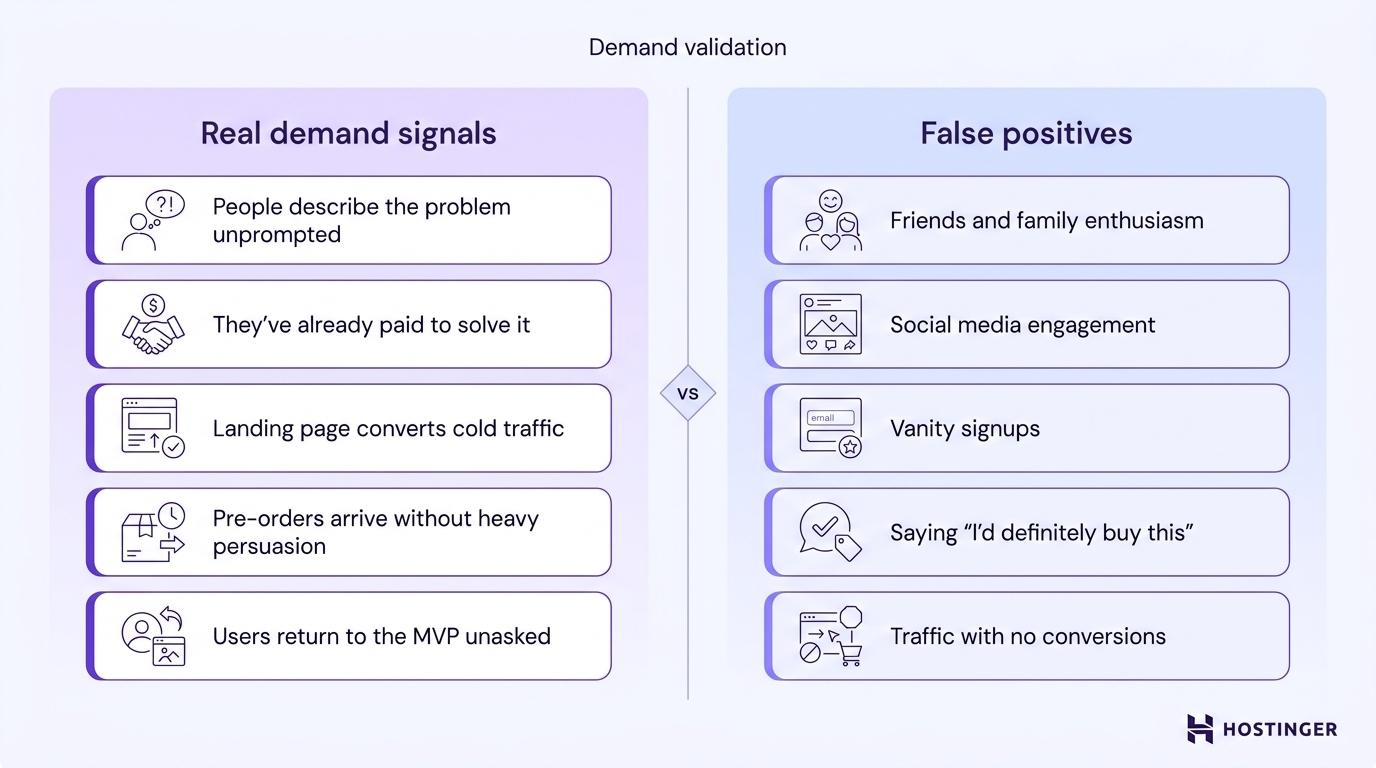
The validation process differs fundamentally from simply collecting positive feedback. Praise from friends, family, or social media followers does not constitute evidence of genuine market demand because agreeing carries zero cost for the individual. Stronger, more reliable signals involve independent behavior, such as strangers describing a specific problem unprompted, taking decisive action on a landing page, or paying for a product before it officially exists.
Entire validation frameworks can be completed at little to no cost by leveraging free online communities, direct messaging platforms, and free tiers of software tools to stand in for expensive alternatives. The process ultimately concludes by comparing accumulated demand evidence against operational costs, pricing strategies, and break-even requirements, allowing entrepreneurs to make an informed decision on whether to proceed, pivot, or abandon the concept entirely.
Writing the Idea as a Problem-and-Customer Statement
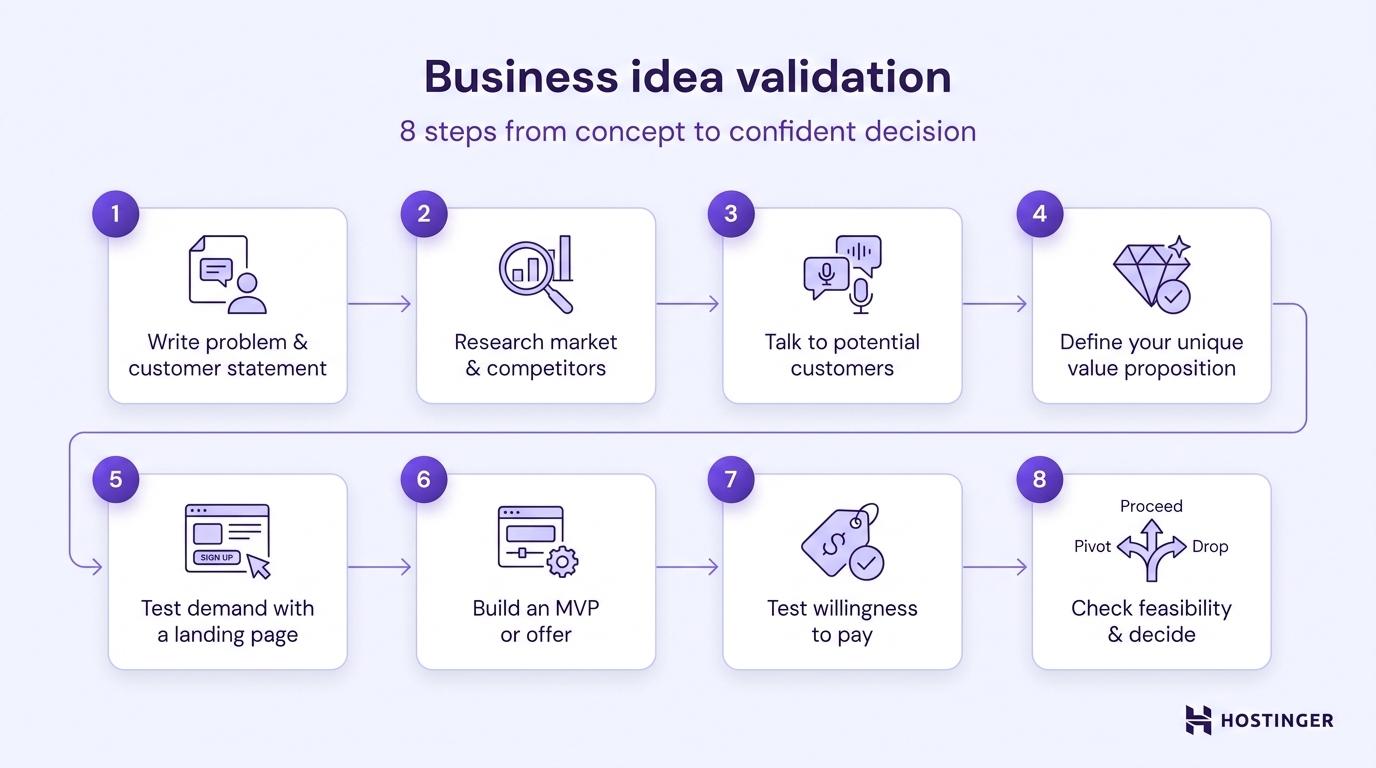
To properly evaluate a concept, founders must begin by describing in a single sentence who has the problem, what the specific problem is, and how those individuals manage it today. Drafting this initial version prior to conducting formal research ensures that entrepreneurs have clear assumptions to test.
This specific format forces analytical clarity. General phrases like an app for dog owners fail to constitute a viable business idea, whereas defining the target as dog owners who travel frequently and struggle to find trusted, last-minute pet sitters—forcing them to cancel trips or rely on unverified strangers—creates a testable premise.
Before proceeding further, entrepreneurs must apply a critical filter: is the problem important enough that the target customer already spends time, money, or effort trying to resolve it? People are significantly more likely to pay for solutions when problems are frequent, costly, or time-consuming. If an issue is merely a mild inconvenience and customers lack existing workarounds, founders should treat that apathy as an early warning sign rather than assuming aggressive marketing will manufacture urgency later.
Researching the Market and Competitors
Comprehensive market and competitor research involves five distinct checks: analyzing search volume trends, reviewing Google Trends data, exploring niche communities, evaluating marketplace listings, and studying competitor pricing pages. Together, these indicators reveal whether people actively discuss or search for a problem, what alternatives already exist, and where potential market gaps might be worth testing.
Search volume estimates how frequently people search for specific terms over a given timeframe. Utilizing tools like Google Keyword Planner helps compare core problems with related phrases, where higher volumes indicate broader search interest, though they do not guarantee purchase intent. Conversely, low search volume is not automatically a dealbreaker, as some problems are solved offline or described using unexpected terminology, meaning quiet keywords simply require proof of demand from alternative checks like community forums.
Running parallel searches in Google Trends helps determine whether relative search interest is growing, seasonal, or declining. A shrinking trend within an already crowded market serves as a red flag, even if current volume numbers appear acceptable. Examining Reddit and niche forums by searching for the problem rather than the solution yields authentic customer research, providing the exact language people use to describe their frustrations.
Studying marketplace listings on platforms like Amazon, Etsy, or Gumroad offers tangible evidence of consumer spending habits within a category. Reviewing lower-rated feedback on existing products highlights repeated complaints and missing features, pointing directly to shortcomings in current market offerings. Finally, analyzing competitor pricing pages reveals how alternatives are packaged and where budget or premium options sit, establishing baseline reference points for future testing.
Engaging Potential Customers Through Direct Interviews
Conducting practical interviews with 10 to 15 individuals who closely match the target customer profile provides invaluable qualitative data, which can be extended if new conversations continue to reveal unique behavioral patterns. While broad market research indicates a problem exists at scale, direct conversations confirm whether that issue matters to the specific demographic an entrepreneur plans to target.
The strongest indicator of real demand occurs when the same problem, workaround, or consequence surfaces independently across multiple interviews without being prompted by the interviewer. Founders are advised to avoid relying on personal networks and instead recruit suitable candidates through professional platforms, niche forums, or industry communication channels. Difficulties in recruiting interviewees often signal that the target customer definition is too narrow or the outreach strategy needs refinement.
Interviews should focus heavily on past behavior rather than hypothetical scenarios. Asking questions about what people have done in the past yields more accurate insights than asking what they might do in the future. Allowing participants to discuss their challenges fully before introducing a business concept ensures that founders can accurately gauge the frequency, cost, and emotional weight of the problem.
Defining the Unique Value Proposition
Establishing a unique value proposition requires crafting a plain-language sentence that clearly identifies the target audience, the specific problem solved, and the differentiation from existing alternatives. If a statement relies heavily on technical jargon or complex terminology to communicate its premise, it lacks the necessary clarity.
The core promise must be rooted directly in patterns uncovered during real customer conversations and supported by competitor research. This marks the critical test for problem-solution fit, ensuring that the proposed solution aligns directly with the frustrations articulated by interviewees. If a value proposition sounds appealing to the creator but fails to address real-world pain points, it must be rewritten before moving on to quantitative testing phases.
Testing Demand via Landing Pages and MVPs
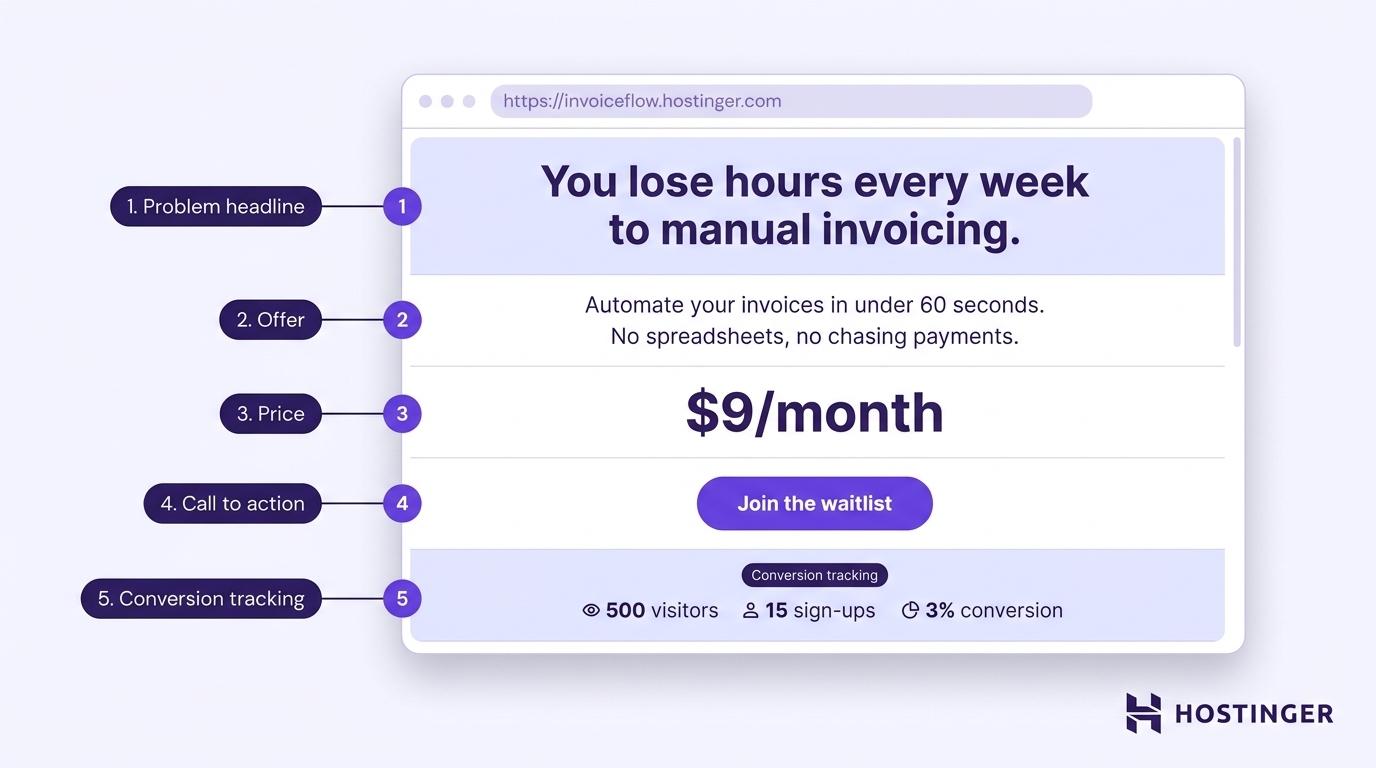
Publishing a standalone landing page built around a single offer and action allows entrepreneurs to test demand by directing cold traffic to the site and tracking conversion rates. The primary objective is determining whether a stranger with no personal connection to the founder will act upon the presented offer.
While landing pages do not need to be polished, they must be transparent regarding the offering and its intended audience. Conversion tracking provides immediate feedback; low traffic conversion signals a need to re-evaluate the audience, pricing, messaging, or overall demand. Simultaneously, building a minimum viable product or offer allows creators to test the smallest version of an idea that still delivers real value. Whether through a working software prototype, a manually delivered service, or a small batch of physical samples, the goal is simply to verify whether customers find enough value to engage repeatedly.
Evaluating Willingness to Pay and Financial Feasibility
Testing willingness to pay shifts the validation metric from passive interest to active financial commitment. Utilizing pre-sales, paid ad tests, or crowdfunding campaigns transforms theoretical interest into measurable transactions, providing definitive data that verbal commitments simply cannot replicate.
The final stage of feasibility analysis requires founders to evaluate unit costs, realistic pricing expectations against willingness-to-pay data, fixed monthly overhead, and the projected time required to reach break-even metrics based on observed demand. Armed with these figures, entrepreneurs can definitively decide whether to proceed with the venture, pivot their strategy to address uncovered market gaps, or drop the idea entirely before incurring unsustainable financial losses.
Leveraging AI Agents in the Validation Process
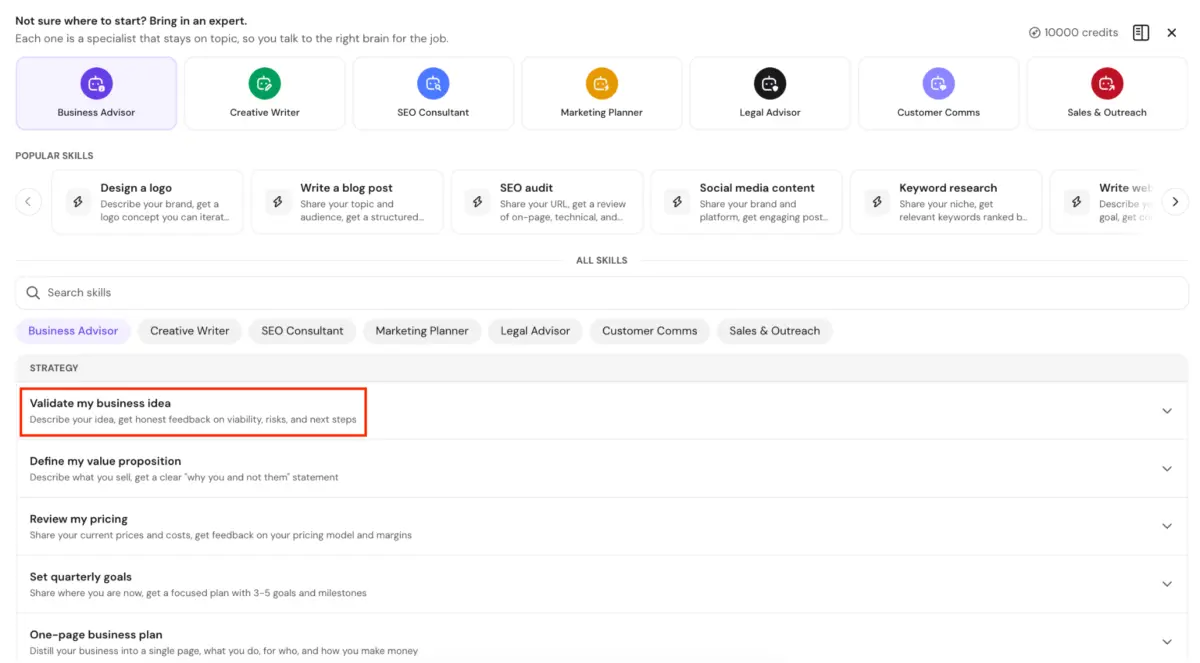
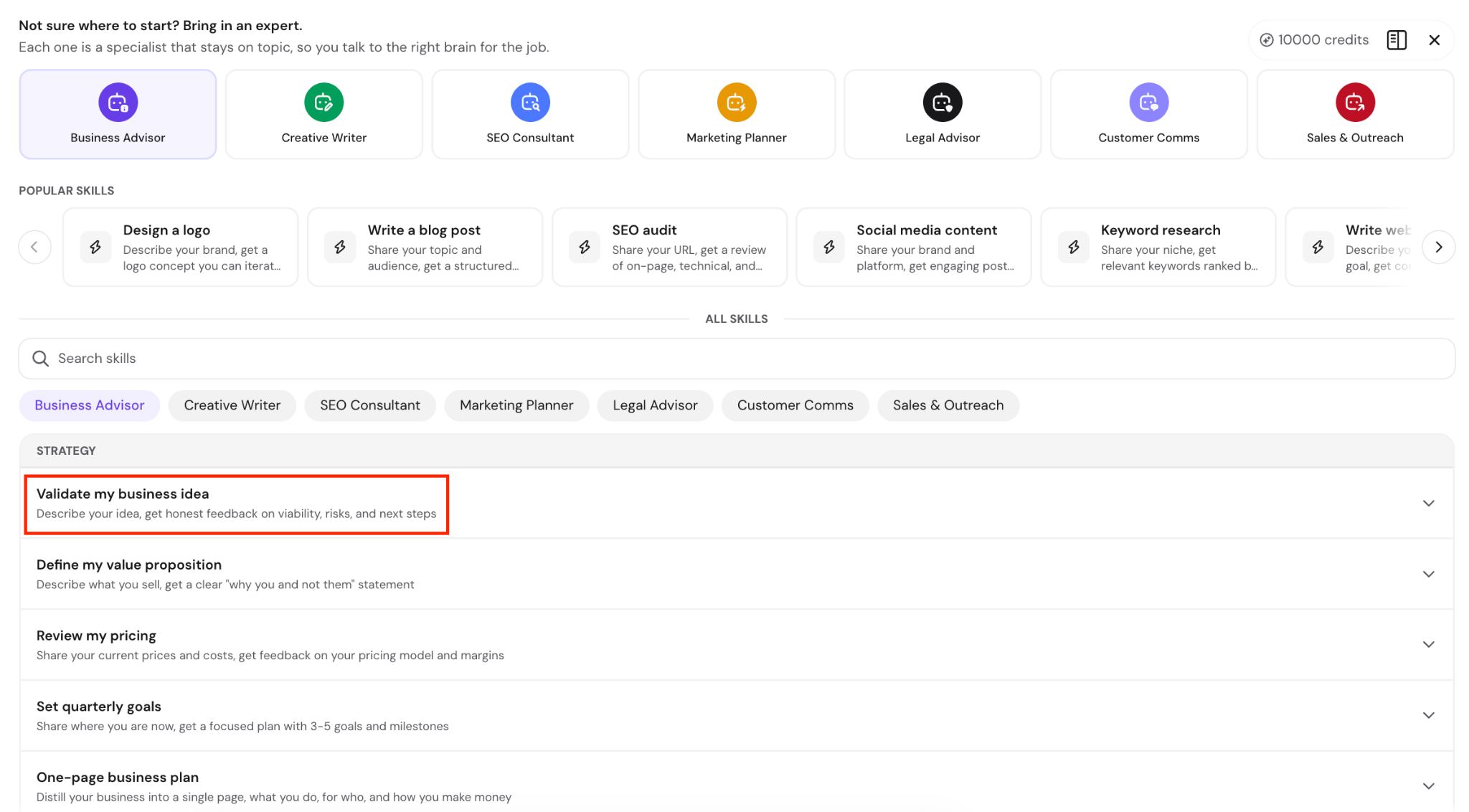
As modern entrepreneurs navigate the complexities of market research, copywriting, and financial modeling, many are turning to specialized AI tools to streamline their workflows. Industry surveys indicate that a majority of businesses already incorporate generative AI into their operations, prompting founders to utilize domain-specific AI agents tailored to distinct business disciplines.
Platforms featuring specialized agents—such as business advisors for stress-testing problem statements, search consultants for keyword analysis, creative writers for generating website copy, and marketing planners for ad testing—allow founders to access targeted expertise across every phase of the validation lifecycle. By utilizing structured AI tools to evaluate target audiences, market severity, and financial break-even points, modern entrepreneurs can systematically challenge their assumptions and build sustainable businesses backed by verifiable market data.

Leave a Reply