

By Bruno S.
October 06, 2026 — 10 min read
The landscape of online retail is undergoing a profound transformation as consumer habits shift toward agentic commerce. In this emerging paradigm, artificial intelligence assistants actively discover, compare, and choose products on behalf of shoppers, frequently bypassing traditional manual browsing altogether. Rather than evaluating page designs, flashy marketing copy, or high-resolution photography, these AI assistants parse form fields, structured product data, descriptions, and operational policies. What an assistant can successfully read directly determines what it ultimately recommends to the user.
Industry data highlights the urgency of this technological pivot. According to recent research from Adobe regarding AI traffic surges on retail sites, shoppers arriving from AI assistants convert at rates 42% higher than standard visitors, spend 48% more time on site, and browse roughly 13% more pages per visit. However, capturing this lucrative traffic requires a fundamental shift in how digital storefronts organize and present their merchandise. A gap in product data, inventory transparency, checkout friction, or machine-readable trust signals gives an assistant an immediate reason to bypass a store entirely and recommend a competitor instead.
To prepare effectively for agentic commerce, merchants must focus on several core pillars of their digital infrastructure: complete and precise product data, visible trust signals such as reviews and return policies, accurate real-time inventory, frictionless payment processing, and page structures that machine crawlers can easily parse.
Filling Every Product Identifier Field
One of the most critical steps for merchants involves populating every product identifier field offered by their e-commerce platform. AI assistants identify products primarily from dedicated form fields rather than paragraph text embedded within descriptions. Key identifiers such as brand names, Global Trade Item Numbers, and manufacturer part numbers form the bedrock of machine-readable catalogs. While handmade, custom, and own-brand goods generally do not require standard GTIN codes, the identifier gap remains a major hurdle for resellers dealing in existing branded inventory.
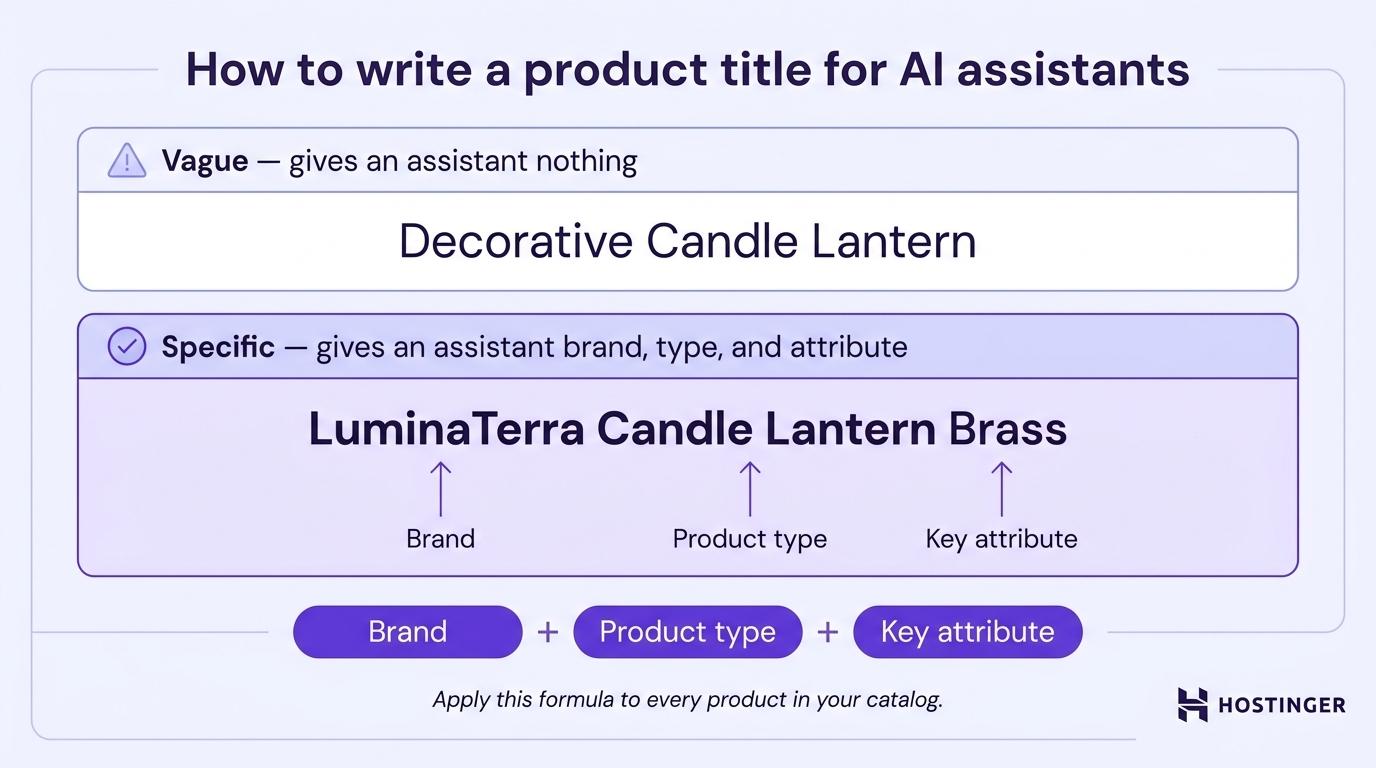
Leaving these platform fields blank starves the AI of context, giving competitors with fully populated entries a distinct advantage. Furthermore, relying solely on product titles to convey brand and attribute data falls short if the text is overly vague. A title lacking brand context provides an assistant with virtually nothing to match against natural-language queries, whereas a descriptive title combining the brand, product type, and key attributes enables the system to immediately categorize and recommend the item.
Writing Specific, Machine-Readable Product Descriptions
Generic, marketing-focused copy remains the default across much of the e-commerce sector, yet phrases designed purely to evoke an emotional response offer little value to an algorithm attempting to match a specific user query. AI assistants rely on concrete attributes that shoppers filter by, including physical materials, precise dimensions, technical compatibility, included accessories, and maintenance requirements.
While some modern e-commerce platforms can automatically draft descriptions using product photography, these generated texts should serve merely as a starting point. Merchants must manually inject the exact specifics that assistants require. Moreover, internal consistency is vital; descriptions must match product pages precisely. Discrepancies between stated color options, pricing, and actual availability lead to rejected listings on shopping platforms and erode trust with both AI agents and end-user consumers.
Leveraging and Auditing Structured Data
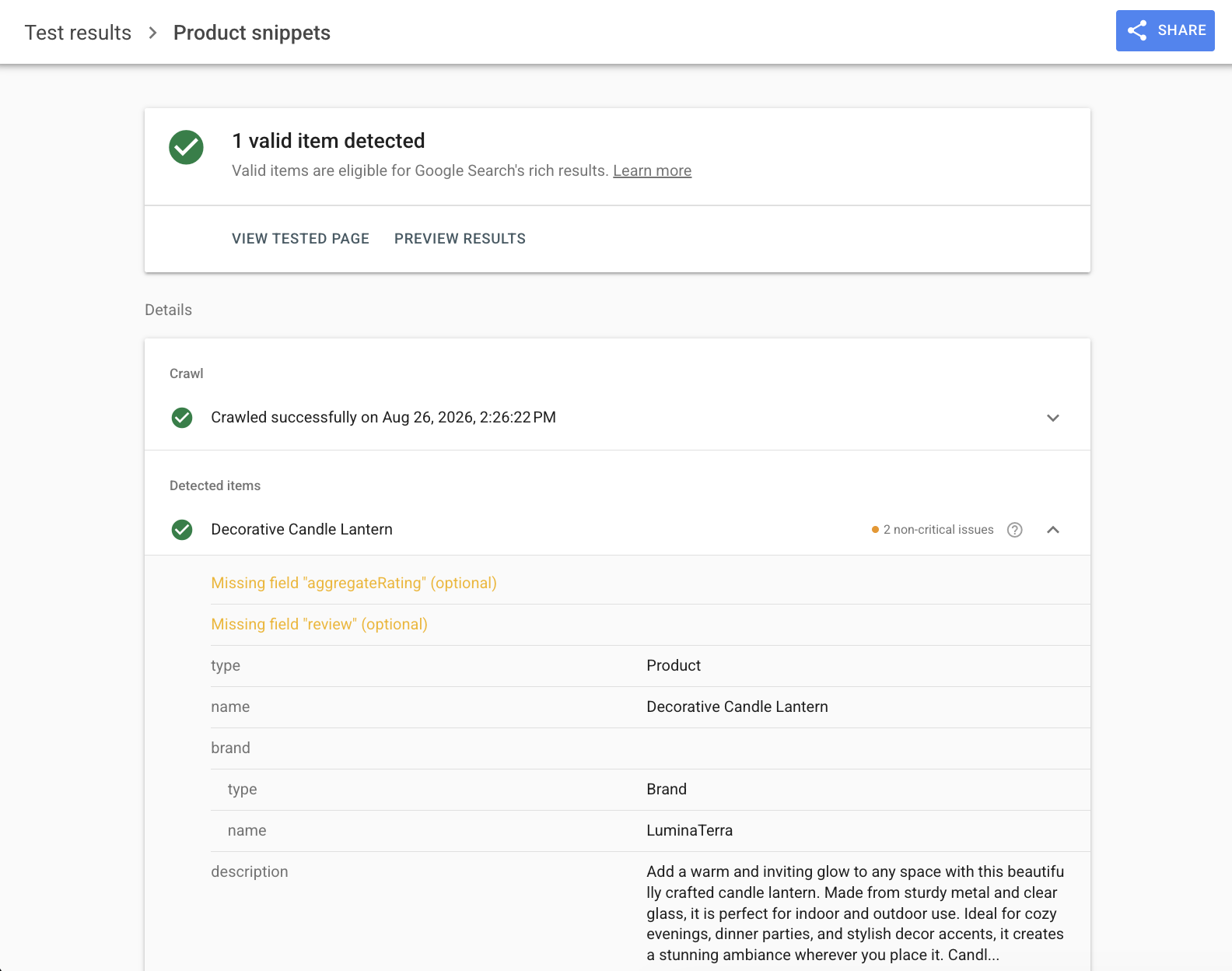
Behind the scenes, storefronts rely on structured data—hidden, machine-readable code that allows AI crawlers to extract product facts without human-style page parsing. While many e-commerce platforms generate this markup automatically upon website creation, merchants must routinely run validation checks to identify missing properties. Optional tags in traditional search engine optimization often function as mandatory fields for AI assistants performing rigorous cross-platform price and feature comparisons.
Ensuring that structured data accurately reflects real-time realities prevents mismatched expectations. Currency codes, for instance, must adhere to uppercase ISO standards, and pricing must remain synchronized across all active channels to prevent discrepancies that could cause an assistant to quote outdated or inaccurate figures.
Matching Product Images to Exact Variants
The rise of agentic commerce also elevates the importance of visual accuracy within structured data. Each product variant requires a distinct image URL corresponding directly to that specific version. A generic photograph deployed across a color-specific page creates a data mismatch within the underlying markup. If a shopper requests a specific color combination and the assistant extracts an incorrect image URL, the system may flag the error or omit the product entirely from consideration. Maintaining a strict standard of one high-quality, consistently framed photo per variant ensures both visual professionalism for human browsers and absolute data integrity for AI crawlers.
Maintaining Accurate Pricing and Stock Levels
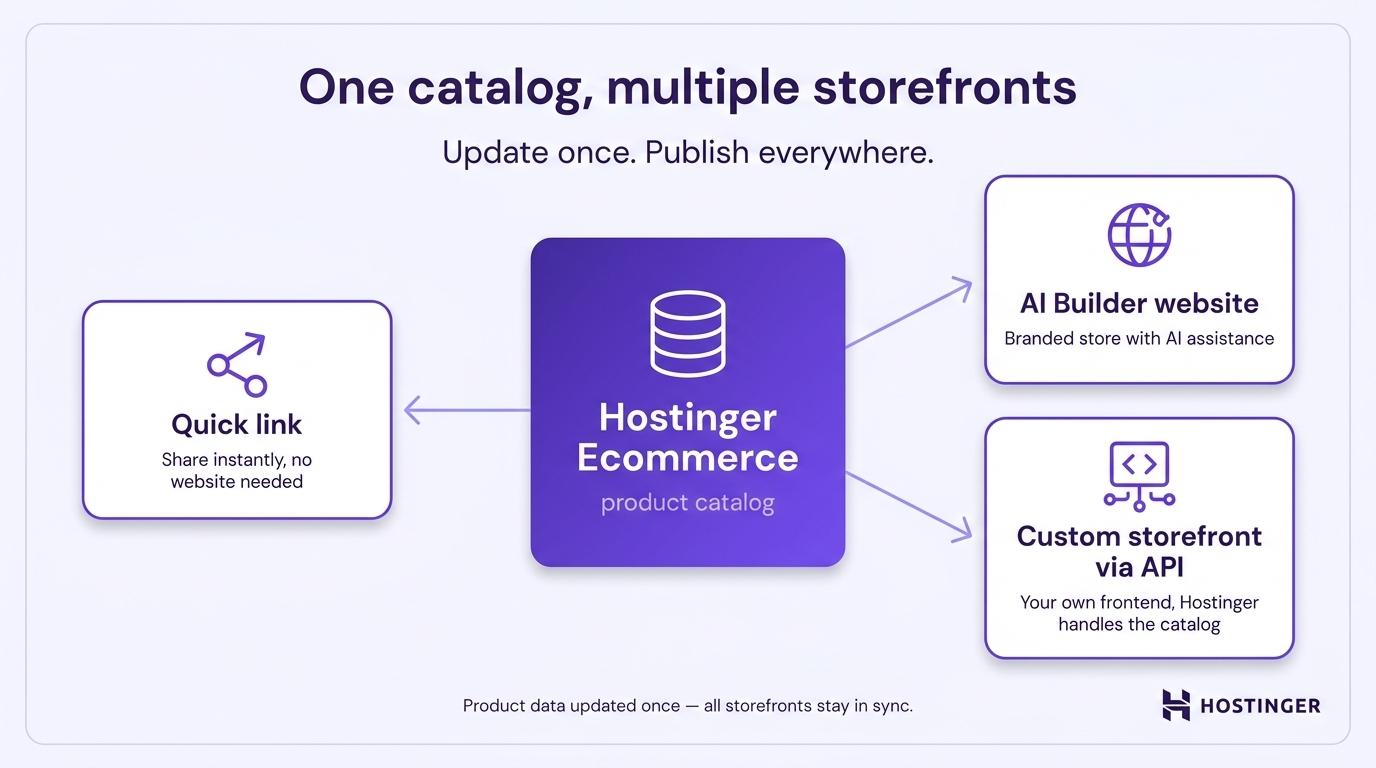
Price and availability must remain uniform across all touchpoints, including product editors, storefront interfaces, and emitted structured data. When an assistant quotes a price or stock status that a retailer cannot honor, the business loses both the transaction and the consumer’s trust. Inventory tracking must be explicitly enabled for physical products, and availability statuses must accurately reflect whether an item is ready for immediate order, preorder, or backorder. Centralizing catalog management allows multi-channel retailers to push updates instantly across every active storefront, mitigating the risk of cross-channel data drift.
Clarifying Shipping, Tax, and Return Policies
AI assistants frequently evaluate products on a landed-cost basis, combining base prices with shipping fees and taxes to determine the total financial outlay. Without explicit figures, systems may exclude an offer from comparison or present incomplete pricing. Consequently, return policies, tax configurations, and shipping terms must be stated plainly with exact numbers and clear parameters rather than vague placeholders. Publishing these operational details in direct, straightforward prose enables assistants to provide immediate, accurate answers to complex pre-purchase inquiries.
Removing Friction from Checkout and Payment
Because the dominant agentic commerce workflow involves an AI assistant recommending a product and the shopper executing the final purchase directly on the merchant’s site, the checkout experience serves as the ultimate conversion point. Given that a significant share of these interactions occur on mobile devices and tablets, foundational mobile commerce principles—such as streamlined layouts, thumb-friendly navigation, and robust autofill support—are indispensable. Offering recognized payment methods and eliminating forced account creation further reduces drop-off rates during the final stages of the buying journey.
Structuring Support Content for Machine Parsing
To assist AI models in answering granular follow-up questions regarding sizing, care, or compatibility, support content must be organized logically. Placing direct answers in plain prose directly beneath clear headings—avoiding JavaScript accordions or hidden tabs—ensures that crawlers can index the material effectively. Maintaining separate, dedicated pages for shipping, returns, and warranties, each outlining specific windows, costs, and procedures, further empowers AI assistants to guide shoppers confidently through the pre-purchase phase.
As the retail industry continues to adapt to the realities of AI-driven discovery, merchants who proactively refine their data architecture, inventory synchronization, and checkout workflows will be uniquely positioned to capture the growing segment of high-intent shoppers directed by digital assistants.


Leave a Reply