
The Dragon Quest franchise has stood as a towering pillar of the video game industry for generations, with its inaugural release in 1986 acting as one of the true foundational pioneers of the Japanese role-playing game genre. Over the decades, the launch of a new title in the storied series has consistently remained a monumental cultural event, particularly in Japan. Long before contemporary players began calling in sick to navigate the chaotic streets of Grand Theft Auto 6, legions of dedicated fans were utilizing precious sick days to topple wicked dragonlords and save fantasy realms.
In North America, however, the series faced a rockier path to widespread adoption. Dragon Quest VII—which arrived in the region under the localized banner of Dragon Warrior VII on November 1, 2001—landed after two previous installments had famously skipped Western releases entirely. Consequently, consumer interest had waned significantly. When the game finally hit store shelves, it proved to be as frustratingly difficult to find as its classic Nintendo Entertainment System predecessors. Worse still, when loyal fans finally tracked down copies and began playing, many wound up wrestling with a deep sense of disappointment.
Yet, over the subsequent years, publisher Square Enix demonstrated a remarkable willingness to revisit the misfire, adjusting, refining, and trying again on multiple occasions. Looking back across the decades, each successive release of Dragon Quest VII has proven notably better than the one that came before it, turning a notoriously plodding classic into a modern triumph.
A Relic of the Past on the Original PlayStation
Dragon Quest VII spent an extraordinarily long time in active development, ultimately arriving so late in the original PlayStation’s hardware life cycle that it felt decidedly antiquated by the time players finally got their hands on it. The visual presentation was certainly a step above anything offered by the 16-bit Super Nintendo era, finally rendered in fully realized 3D with a camera that players could manually rotate.

Despite these technological upgrades, the overall experience still felt like a step backward when compared to the flatter yet vastly more detailed pre-rendered environments of late PlayStation-era contemporaries like Final Fantasy IX. In many respects, the game felt like a nostalgic relic from a bygone era that many role-playing game enthusiasts had already moved past.
The quest’s notoriously slow opening hours did little to correct that lingering first impression. Many early players recall spending upwards of three hours exploring without encountering a single hostile enemy mob, a pacing choice that felt profoundly disorienting. In a typical Dragon Quest game from earlier years, players could step outside castle walls within a matter of minutes, battling dozens or even hundreds of monsters and leveling up their party characters several times within the first hour. Instead, the opening of Dragon Quest VII forced players to wade through tedious, prolonged puzzle-solving sessions before the actual adventure could begin.
While those notoriously sluggish opening hours eventually gave way to a massive, sprawling quest filled with plenty of underlying charm and imaginative storytelling, a significant portion of the player base never stuck around to experience those later events. That dynamic finally shifted in the West when Dragon Quest VII: Fragments of the Forgotten Past launched on the Nintendo 3DS on September 16, 2016. Despite making its long-awaited return on portable hardware, the release provided a vastly superior way to experience the grand adventure.
The Nintendo 3DS Revival and Quality-of-Life Progress
The single most impactful change introduced in the 3DS iteration was a comprehensive streamlining of those previously tedious opening hours. The notoriously drawn-out introductory dungeon, complete with its endless array of frustrating levers and mandatory backtracking, was entirely re-architected. While the opening sequences still consumed more time than many modern players were accustomed to, they were condensed to fit neatly within a single gaming session, leaving players with both the time and the enthusiasm required to progress toward more engaging activities.

The handheld release offered a wealth of other thoughtful enhancements as well. The system’s bottom screen provided a helpful visual glow whenever players approached hidden stone tablet shards, which served as a major component of overall game progression. This eliminated a tremendous amount of pointless guesswork in tracking down essential items, effectively cutting out a major source of player frustration.
Another vital new feature introduced in the 3DS version was an automated story recap system. Designed to assist players who might step away from the game for a few days, weeks, or even longer, this chronological log could be accessed directly from the pause menu. It listed every major narrative event that had transpired up to that point, alongside helpful hints pointing toward the next objective. This quality-of-life addition proved so successful that subsequent entries in the franchise, all the way up to Dragon Quest XI, adopted similar mechanics. Furthermore, exploring party members would occasionally offer direct suggestions if consulted by the player, cutting down on the cryptic ambiguity that had remained a franchise staple since its earliest days.
The quality-of-life improvements extended far beyond mere narrative tracking. The 3DS version introduced visible enemy mobs roaming the field maps, allowing players to choose whether to engage or bypass skirmishes. Leveling up required noticeably less grinding, and user menus were thoroughly modified and streamlined for efficiency. A dedicated map displayed on the bottom screen made it remarkably easy to spot nearby points of interest at a glance. Crucially, players were given the ability to execute quick saves outside of traditional churches whenever they needed to suspend play suddenly—an absolute necessity for any portable role-playing experience.
The Modern Masterpiece: Dragon Quest VII Reimagined
For nearly a decade, the 3DS port remained the definitive way to experience the sprawling adventure, until Square Enix released Dragon Quest VII Reimagined in February 2026. Made available across a broad contemporary ecosystem including the Nintendo Switch, Switch successor hardware, PlayStation 5, Windows PC, and Xbox Series X, this thoroughly modern update introduced a breathtaking new artistic direction. Presented with the visual charm of a living diorama, the gorgeous aesthetics paired seamlessly with high-quality voice acting to bring the world’s emotional narrative to life in a way previous iterations could only hint at.
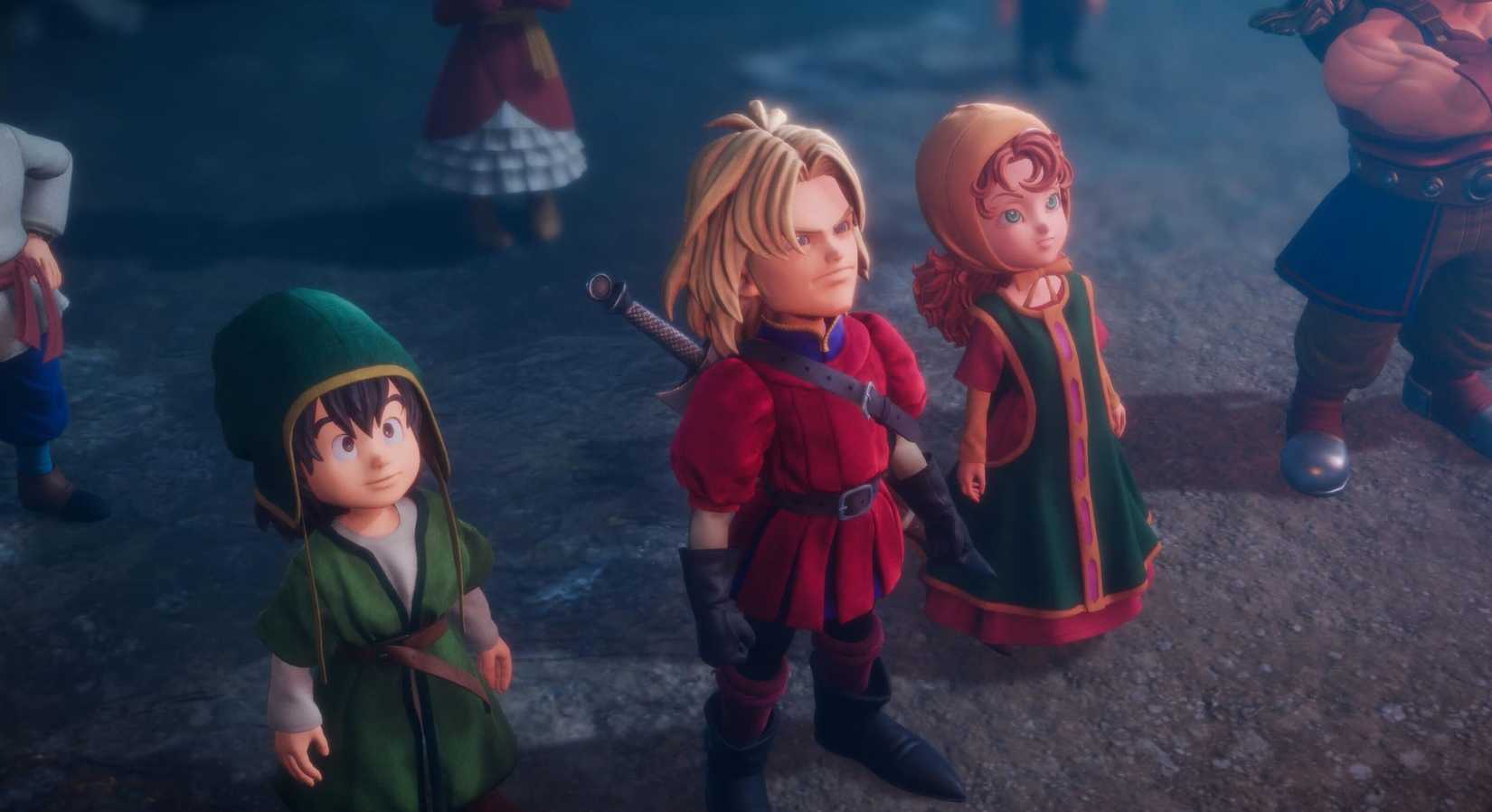
This latest release also implemented sweeping structural updates to the franchise’s classic character vocation system. Most notably, party members were granted the ability to adopt two distinct vocations simultaneously, gaining mastery in both disciplines concurrently. Furthermore, changing a class no longer required time-consuming, tedious visits to Alltrades Abbey.
Exploration on the world map received a similar modernization: striking significantly weaker monsters now defeated them automatically in exchange for scaled-down rewards, a welcome compromise that entirely eliminated the need to endure low-level skirmishes while traversing previously cleared areas. Additional enhancements included multiple difficulty presets, a shared inventory system, and an automatic revival mechanic after battle for party members who fell in combat.
For role-playing game fans navigating the gaming landscape in 2026, these adjustments represented a masterclass in modernization. Modern players have little patience for excessive busywork and arbitrary random encounters that artificially bloat game pacing beyond necessity. The ongoing evolution of Dragon Quest VII stands as a powerful testament to the value of developers revisiting past triumphs and refining them so contemporary audiences can appreciate their foundational brilliance.