Authorities in the Netherlands have arrested a 24-year-old convicted cybercriminal on suspicion of aiding in massive data thefts and high-stakes extortions carried out by the prolific hacker collective known as ShinyHunters. The high-profile arrest has triggered a volatile reaction across the global cybersecurity landscape. In the days immediately following the suspect’s detention, remaining members of the ShinyHunters network dramatically escalated their operations, executing brazen attacks that included stealing highly sensitive data from the Federal Bureau of Investigation (FBI) and extorting the notorious Russian ransomware syndicate Cl0p.
According to three sources familiar with the matter, the Dutch man taken into custody by law enforcement this month is Pepijn van der Stap, a convicted cybercriminal originally from Almere and Lelystad in the Netherlands. Van der Stap was previously convicted in late 2023 for his involvement in a sweeping series of data thefts and corporate extortions. Dutch prosecutors stated at the time that those earlier cybercrimes generated illicit profits estimated between €1.5 million and €2.7 million.
During his trial in late 2023, van der Stap openly admitted to living a double life akin to a modern Dr. Jekyll and Mr. Hyde. By night, he secretly utilized the hacker handle "Umbreon"—named after the fictional Pokémon character—to extort corporate victims and dump stolen data onto English-language cybercrime forums, including the now-defunct platforms RaidForums and Breached. By day, however, van der Stap maintained a respectable professional façade as a software engineer working for Hadrian, an Amsterdam-based cybersecurity startup. He also dedicated his time as a volunteer for the Dutch Institute for Vulnerability Disclosure (DIVD), a nonprofit organization dedicated to independent security research and vulnerability mitigation.
Van der Stap fully confessed to his extensive data theft and extortion activities during judicial proceedings and was subsequently sentenced to four years in prison, with one year suspended. Bizarrely, during his trial proceedings, van der Stap chose to remain in correctional custody rather than return home, asserting that he could not find adequate treatment on the outside for his ongoing psychological struggles. He claimed these issues included post-traumatic stress disorder stemming from severe childhood trauma. He was eventually released from prison in December 2025.
In an interview conducted with KrebsOnSecurity on September 9, 2026, van der Stap portrayed himself as a fundamentally reformed individual who was earnestly trying to turn his life around and make a positive, constructive contribution to society. At the time of the interview, van der Stap was employed as an offensive security lead at Neo Security, a Dutch cybersecurity firm that ultimately did not respond to multiple media requests for comment regarding the arrest.
During the conversation, van der Stap noted that he was still navigating lingering civil lawsuits and financial restitution demands tied to his past cybercrime victims, emphasizing that he was doing his absolute best to make amends. However, shortly after that interview concluded, the Dutch hacker abruptly stopped responding to messages. Efforts by associates and individuals close to him to establish contact repeatedly failed over the subsequent two weeks.
According to two sources with direct knowledge of the situation, Dutch law enforcement officers arrested van der Stap on or around September 16. He has since been held in secure custody for intensive questioning. One source reported that a colleague personally witnessed Dutch authorities carting physical evidence and personal items out of van der Stap’s residence during the operation.
For months, Dutch authorities have been actively appealing to the public for assistance in identifying a crucial voice captured in a recorded telephone call from February 2026. In the audio, a native Dutch-speaking member of ShinyHunters successfully social-engineered their way into Odido, the largest mobile telecommunications provider in the Netherlands. During that sophisticated intrusion, the hackers tricked an unwary Odido employee into authenticating their credentials on a heavily spoofed phishing website. The attackers then leveraged that unauthorized access to exfiltrate personal data belonging to more than 6.2 million Dutch citizens.

Responding directly to inquiries from Dutch news media, representatives for ShinyHunters confirmed that the suspect heard in the controversial audio clip is indeed an active member of their decentralized hacker collective.
"Our team member has our full support — emotionally, mentally, and financially," the hackers declared in a public statement shared with the NL Times. "Everything has been arranged, including a criminal defense lawyer. We do not look down on our staff and members; we take excellent care of them."
It remains unclear whether Dutch police have successfully matched the voice of the Odido caller to a confirmed real-world identity. The specific Dutch police unit handling the Odido investigation declined to provide comments to journalists.
The collective also launched a furious tirade against law enforcement agencies in the Netherlands. "The Dutch police will need all the luck in the world — and everyone’s prayers — if they want to catch him before we carry out another large-scale data theft in the Netherlands," the ShinyHunters statement warned. "Frankly, the Dutch police are a big joke; they are incapable of doing anything. Incompetent. Irrelevant. Unimportant. Useless."
FBI and Cl0p Hacks
Just days after sources confirmed van der Stap’s detention by Dutch authorities, ShinyHunters claimed responsibility for an unusually brazen and disruptive breach targeting the FBI’s official job application portal, apply.fbijobs.gov. According to investigative reporting published by 404 Media, the data extracted from the FBI portal included Social Security numbers and deeply sensitive personal information concerning more than 5,000 current and prospective officials.
Both 404 Media and Reuters reported that the compromised FBI records contained specific job titles and organizational team assignments. These included personnel working within special agent divisions, threat intake examiners, major cybercrimes units, and professionals tasked with investigating sophisticated cyber threats originating from foreign state-backed actors. Furthermore, Reuters examined documentary evidence shared by the hackers, confirming that the files included confidential psychiatric and medical records belonging to FBI personnel. The bureau subsequently issued a brief public statement acknowledging the unauthorized compromise of the portal.
ShinyHunters asserted that they gained initial access to the FBI job site and other corporate systems by exploiting a recently patched zero-day vulnerability, tracked as CVE-2026-35273, affecting PeopleSoft. PeopleSoft is a widely utilized software-as-a-service platform created by technology giant Oracle, heavily relied upon across global industries for human resources management, candidate hiring, benefits administration, and payroll processing. Oracle swiftly released a security update to remediate the vulnerability after discovering that ShinyHunters had been weaponizing it as a zero-day exploit since June. Concurrently, security firm Mandiant published specialized web application firewall (WAF) rules designed to protect organizations unable to immediately deploy the official patch.
However, security researchers at BleepingComputer reported that ShinyHunters managed to bypass Mandiant’s recommended mitigation rules by employing a clever URL-encoding trick. In a comprehensive threat report published on September 25, analysts from Mandiant and the Google Threat Intelligence Group (GTIG) confirmed that ShinyHunters executed a mass-exploitation campaign targeting the PeopleSoft flaw, successfully extracting data from dozens of enterprise systems across diverse sectors, including higher education, technology, healthcare, agriculture, transportation, and government.
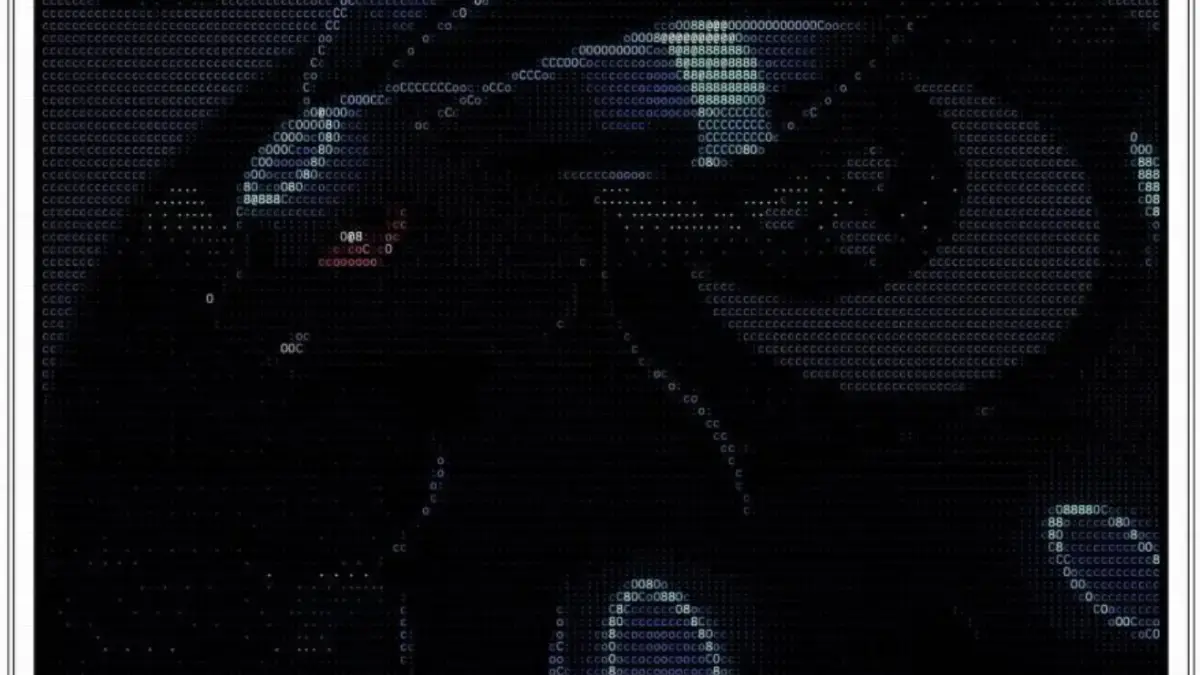
Van der Stap’s former hacker alias, Umbreon, was prominently hidden in plain sight within the digital imagery utilized by ShinyHunters to publicize the FBI breach. The defacement graphic left behind on the compromised FBI jobs site featured an intricate ASCII art rendering of the Pokémon character Umbreon. A banner message at the top boldly proclaimed: "This site has been seized by ShinyHunters. rooting your systems since ’19 ;)." The visual layout appeared identical to a defacement banner previously deployed by ShinyHunters during their 2020 hack of the English-language cybercrime forum Hackforums.

Multiple sources close to the ongoing investigation into ShinyHunters noted that the group’s recent, highly risky attacks against the FBI and one of Russia’s most entrenched ransomware syndicates represented a sharp departure from the gang’s historically calculated operational style. Insiders revealed that this sudden strategic shift followed a hostile internal takeover of ShinyHunters by a teenage cybercriminal from Amman, Jordan. Operating under the alias "Rey," this individual acts as a core administrator for ScatteredLapsussHunters (SLSH)—a sprawling cybercrime coalition that security experts describe as an amalgamation of three distinct threat groups: Scattered Spider, LAPSUS$, and ShinyHunters.
According to those familiar with underground dynamics, Rey maintained a persistent personal feud with the Dutch hacker regarding ultimate control over the ShinyHunters brand and its repository of stolen data. Investigators believe the inclusion of the oversized Umbreon Pokémon imagery in the FBI job site defacement was a deliberate attempt by Rey to frame the incarcerated Dutchman for the high-profile attack.
Rey was first unmasked publicly by security firm KELA in March 2025. Ahead of a detailed investigative profile published by KrebsOnSecurity in November 2025, reporters contacted Rey’s father to request an interview with his teenage son. Rather than intervening, Rey’s father simply forwarded the message directly to the youth. Rey subsequently admitted to participating in various ransomware operations while simultaneously claiming he was actively attempting to extricate himself from the SLSH hacker collective.
Blaming Umbreon
Immediately after news of the FBI job site breach broke across mainstream media outlets, Rey’s primary account on Twitter/X, operating under the handle Ryan Moran (@rmoskovy), began taunting both the Cl0p ransomware group and the FBI. One shared meme crudely depicted the twin towers in New York City being struck by aircraft labeled "cl0p drama" and "fbi breach claim," with a giant float-sized figure of the Pokémon character Umbreon looming in the foreground.
On September 24, KrebsOnSecurity again reached out to Rey’s father to request an interview regarding his son’s apparent rise to leadership within ShinyHunters. Merely hours after that inquiry was sent, Rey’s long-standing Twitter/X account was deleted. Meanwhile, Rey’s father, an employee of Royal Jordanian Airlines, failed to respond to multiple emailed requests for comment concerning his son’s alleged illicit activities.
The deep animosity between SLSH and traditional ShinyHunters factions stems from recent operational entanglements. According to an investigative piece published by Wired, members of ShinyHunters and SLSH briefly formed an alliance earlier in the year to better monetize corporate credentials harvested by TeamPCP. TeamPCP was an upstart hacker cell that had achieved notable success compromising global code supply chains using malicious software, though they initially struggled to convert their stolen data into substantial profits. Two alleged leaders of TeamPCP were arrested in Australia, where one claimed in an interview that the group netted a meager $20,000 from their operations.
Wired’s reporting revealed that Mandiant had successfully infiltrated TeamPCP and was secretly responsible for burning the group’s stolen credentials. Mandiant funneled the compromised keys directly to major cloud infrastructure providers like Amazon and Microsoft, which promptly invalidated the credentials. As the operation collapsed, the cooperating cybercrime factions began accusing one another of sabotaging the scheme.
Mandiant researcher Austin Larsen noted that ShinyHunters has maintained a highly lucrative extortion spree throughout the year, keeping the collective on track to amass nearly $100 million in extortion payouts by the end of 2026.
Despite his extensive history of cybercrime, van der Stap consistently maintained that his motivations were never financial. During interviews with Bloomberg reporters in 2024, he explained that his illegal pursuits were driven by an obsessive compulsion to compile the world’s most comprehensive repository of stolen databases.

"The hacking was very easy for me, and it wasn’t a compulsion," van der Stap told Bloomberg. "My habit was collecting. Collecting data, organizing data, downloading data, creating folders."
Meanwhile, the Dutch Institute for Vulnerability Disclosure (DIVD), where van der Stap previously volunteered, disclosed an internal cybersecurity incident involving the malicious use of artificial intelligence. While DIVD released sparse details regarding the breach, a nonprofit spokesperson confirmed to KrebsOnSecurity that the internal incident is entirely unrelated to ShinyHunters and shows no indication of involvement by any former volunteer.
Dutch police officially confirmed the arrest of a 24-year-old individual in connection with the ongoing ShinyHunters investigation. In a public statement issued via social media, law enforcement announced that the suspect would appear before the chambers of the Rotterdam District Court, promising further updates as the judicial process unfolds.
In a related development, the RTL news network in the Netherlands reported that investigators suspect van der Stap of orchestrating at least two contract murders to be carried out abroad, with indications pointing to the suspect issuing direct orders for the plots.
Reinforcing the international gravity of the case, the FBI released a short video statement delivered by Brett Leatherman, assistant director of the FBI’s Cyber Division. Leatherman thanked Dutch law enforcement partners for their critical assistance and issued a direct warning to the remaining members of ShinyHunters who remain at large.
"Arrests have a way of changing who is willing to talk, and seized infrastructure has a way of showing us who’s left," Leatherman stated. "The longer you stay in this, the more we learn about you. You know how to find us, and we know how to find you. I suggest you reach out to us while the choice is still yours."